
To prevent skin irritation from tights, choose high-quality, breathable fabrics like nylon and spandex that fit properly without digging or rubbing. Make sure your skin is clean and moisturized before wearing, and opt for tights with moisture-wicking properties. Change into fresh tights daily, and take breaks to let your skin breathe. If you notice irritation or allergies, identify triggers and switch to hypoallergenic options. Keep exploring for more expert tips to keep your skin healthy and comfortable.
Key Takeaways
- Choose tights made from natural, hypoallergenic, and high-quality fabrics to reduce skin irritation risks.
- Ensure proper fit to prevent chafing, rubbing, and discomfort during wear.
- Maintain good skin hygiene by showering regularly and applying fragrance-free moisturizers.
- Take regular breaks from tight clothing to allow skin to breathe and recover.
- Monitor for signs of irritation or allergic reactions and switch to hypoallergenic tights if needed.
Choosing the Right Materials for Tights

When selecting tights, choosing the right materials can make a significant difference in preventing skin irritation. Opt for fabrics known for their durability, so they won’t easily tear or lose shape after washing. Look for tights made from high-quality blends like nylon and spandex, which offer strength and elasticity. Additionally, consider colorfastness concerns—some dyes can bleed or fade, causing staining or skin irritation. Choosing tights with colorfast dyes ensures you won’t experience unexpected discoloration or allergic reactions. Avoid cheap, low-quality materials that may contain irritating fibers or chemicals. Always check labels for fabric composition and care instructions. Investing in well-made tights helps protect your skin and keeps your wardrobe looking fresh and vibrant longer. Incorporating high-quality fabrics into your wardrobe not only enhances comfort but also supports mindful and sustainable fashion choices.
Ensuring Proper Fit to Reduce Friction

Make sure your tights fit comfortably without being too tight or too loose. Choose the right size to prevent unnecessary rubbing and chafing. Also, adjust your waistband so it stays in place without digging into your skin. Selecting the appropriate size and dimensions ensures a better fit and reduces discomfort.
Comfortable Sizing Choices
Choosing the right size tights is essential for minimizing skin irritation caused by friction. When selecting tights, pay attention to your body measurements rather than just size labels, which can vary by brand. Fashion trends and seasonal styles often influence tight designs, but comfort should always come first. Tights that fit properly stay in place without digging into your skin, reducing chafing and irritation. If tights are too tight, they can cause unnecessary pressure, while loose ones may bunch up and create friction points. Try different brands and styles to find what fits best. Remember, a properly fitted pair will move with you comfortably, allowing you to enjoy seasonal styles without sacrificing skin health. Your choice of size directly impacts both comfort and skin integrity. Incorporating proper fit can also promote better circulation and prevent long-term skin issues.
Properly Adjusted Waistbands
Ensuring your waistband fits properly is key to preventing skin irritation caused by friction. When the waistband tension is just right, it won’t dig into your skin or cause unnecessary rubbing. Prioritize elastic comfort to avoid tightness that can lead to irritation. Adjust the waistband so it sits snug but not too tight, allowing for natural movement without bunching or slipping. Using a waistband with adjustable features can help customize the fit for optimal comfort. – Check for even tension around your waist – Opt for adjustable waistbands when possible – Avoid overly tight or loose fits – Look for soft, flexible elastic materials – Test the fit by bending and stretching
A well-adjusted waistband reduces friction, preventing chafing and skin irritation. Proper fit not only feels better but also keeps your tights comfortable throughout the day.
Preparing Your Skin Before Wearing Tights
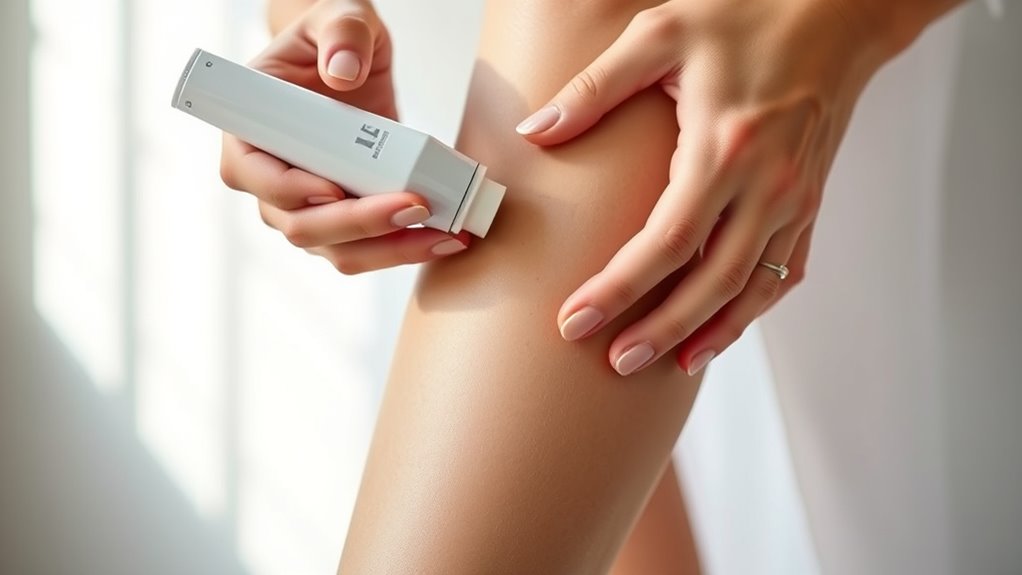
Before slipping into tights, it’s important to prepare your skin to reduce irritation and maximize comfort. Start with clean, dry skin to prevent trapped moisture that can cause chafing. Applying a gentle, fragrance-free moisturizer creates a smooth barrier, reducing friction and irritation. Proper fabric care is essential; choose tights made from breathable, hypoallergenic materials to prevent allergies and skin reactions. Avoid using harsh soaps or products with irritants that can strip your skin’s natural oils, increasing sensitivity. If you’re prone to allergies, consider applying a barrier cream or powder to areas prone to friction. Additionally, selecting breathable fabrics can help maintain skin health and prevent irritation. These steps help minimize skin irritation, making it easier to enjoy tights comfortably while protecting your skin’s health.
Maintaining Good Hygiene and Skincare Routines
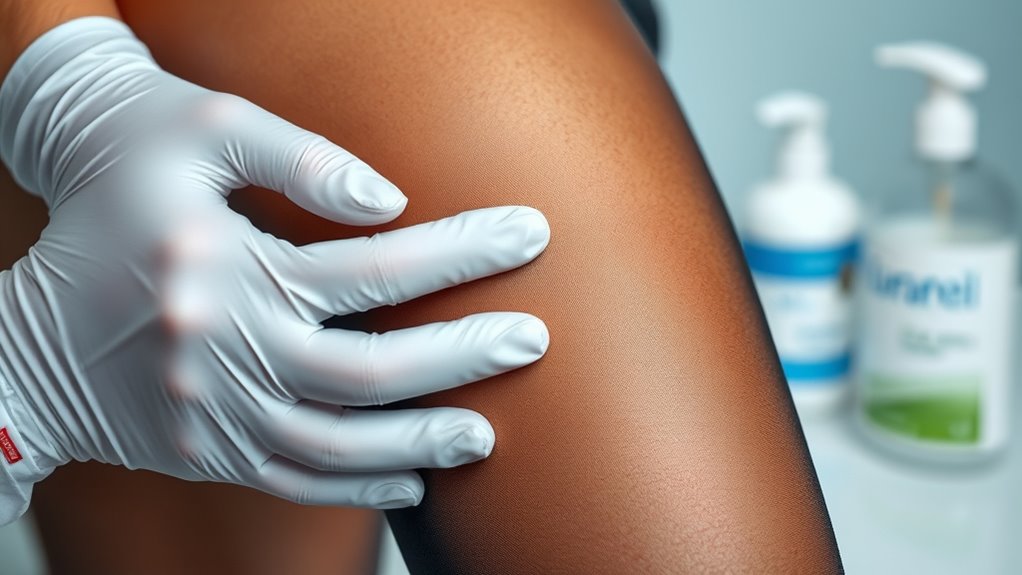
Maintaining good hygiene and skincare routines helps keep your skin healthy and less prone to irritation when wearing tights. Proper hygiene habits, like showering regularly and thoroughly cleaning your skin, remove sweat and bacteria that can cause irritation. Focus on fabric care by washing your tights with gentle detergents and avoiding harsh chemicals. Keep your skin moisturized to prevent dryness and chafing. Additionally, change into clean tights daily to reduce bacteria buildup. Proper hygiene habits and fabric care create a barrier against irritation, especially in sensitive areas. Being aware of affairs and digital boundaries can help prevent emotional and physical discomfort related to online interactions and infidelity.
Tips for Wearing Tights Comfortably Throughout the Day

To wear tights comfortably all day, start by choosing the right fit that isn’t too tight or loose. It’s also helpful to pick breathable fabrics that keep your skin cool and dry. Remember to take regular breaks to give your skin a chance to breathe and stay comfortable. Additionally, being aware of skin irritation prevention techniques can help you avoid discomfort during prolonged wear.
Choose Proper Fit
Choosing the right fit is essential for wearing tights comfortably all day. When selecting tights, verify they aren’t too tight or loose, as improper fit can cause skin irritation or restrict movement. Properly fitted tights also help maintain fabric durability and prevent excessive color fading over time.
Here are some tips:
- Check size charts carefully before purchasing
- Opt for tights with a slight stretch for comfort
- Avoid overly tight waistbands that dig in
- Look for reinforced seams for durability
- Test the fabric’s stretch to prevent unnecessary stretching that leads to damage
A proper fit minimizes friction, reduces irritation, and extends the lifespan of your tights, keeping you comfortable and looking fresh throughout the day.
Opt for Breathable Fabrics
Since your skin comes into direct contact with tights all day, opting for breathable fabrics is essential to prevent irritation and discomfort. Look for tights made with lightweight, open fabric weaves that allow air circulation, reducing sweat buildup and moisture. Natural fibers like cotton or blends with moisture-wicking materials can help keep your skin dry. Additionally, pay attention to dye sensitivities; brightly colored or heavily dyed tights may contain dyes that irritate sensitive skin. Choose products labeled hypoallergenic or dye-free if you’re prone to reactions. Breathable fabrics not only improve comfort but also minimize the risk of skin irritation caused by trapped moisture and harsh dyes. Incorporating automation technologies into the manufacturing process can improve the quality and consistency of fabric production, ensuring better skin-friendly options. Selecting the right fabric guarantees your tights feel comfortable and gentle on your skin throughout the day.
Take Regular Breaks
Taking regular breaks from wearing tights can substantially reduce discomfort and skin irritation. It’s essential to give your skin a breather, especially if you wear tights daily. During breaks, remove your tights and let your skin breathe. This practice helps prevent moisture buildup and chafing that can lead to irritation. To incorporate this into your tights wardrobe seamlessly, plan outfit changes that allow for skin recovery without sacrificing fashion coordination. Incorporating protective styling benefits like changing fabrics or styles during breaks can further enhance skin health.
- Switch to loose, breathable pants during breaks
- Keep a pair of comfortable tights for rest periods
- Avoid wearing tights for extended hours straight
- Use cotton or moisture-wicking fabrics during breaks
- Schedule time to air out your legs daily
Recognizing and Addressing Skin Irritation Symptoms
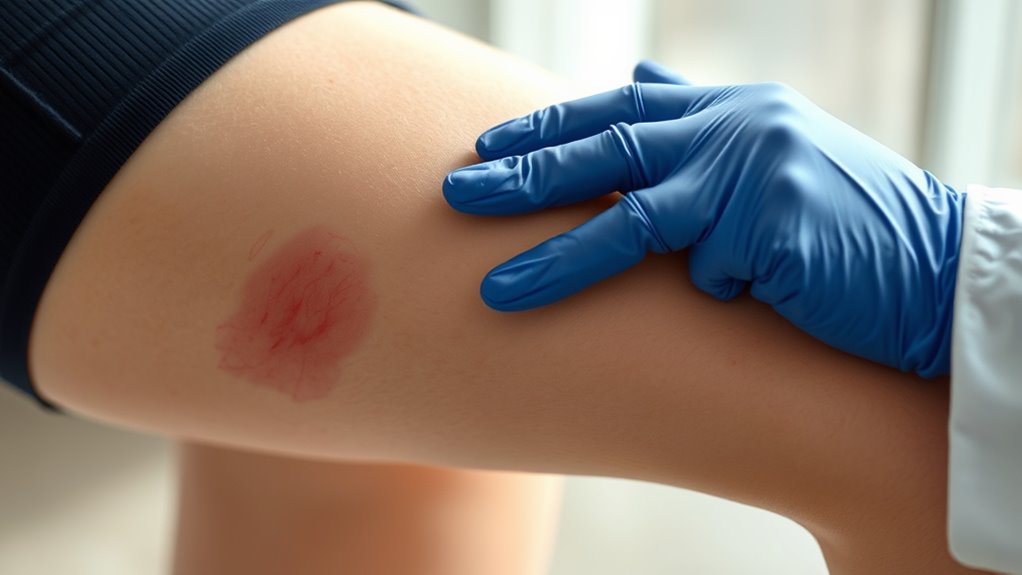
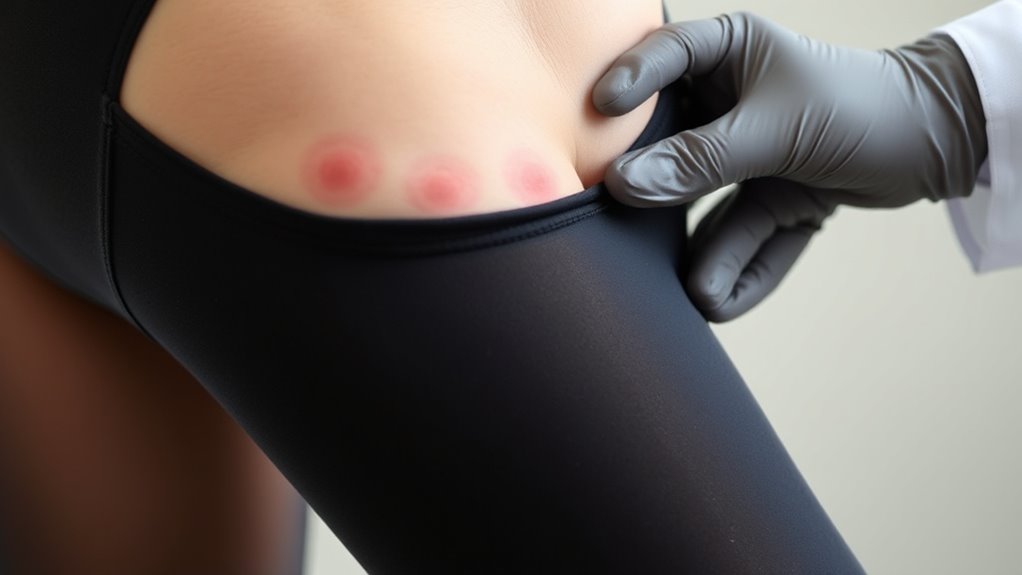
Skin irritation from tights often presents as redness, itching, or a rash that can develop quickly if not addressed. You might notice swelling or discomfort after wearing them. To identify allergy triggers, consider keeping track of when symptoms appear and what fabrics or products you used. If irritation persists, consult a dermatologist for skin patch testing, which helps pinpoint specific allergens like dyes or synthetic fibers. Recognizing these symptoms early allows you to take prompt action, such as changing to hypoallergenic tights or removing the irritant. Don’t ignore persistent signs—continuing to wear irritating tights can worsen your skin. Addressing symptoms swiftly minimizes discomfort and prevents more serious reactions, helping you find suitable alternatives for comfortable, irritation-free wear.
Frequently Asked Questions
How Often Should I Replace My Tights to Prevent Skin Issues?
You should replace your tights regularly to maintain skin health and avoid irritation. The tights lifespan varies, but a good replacement schedule is every 6 to 8 wears, or when you notice signs of wear like thinning or holes. Frequent replacement helps prevent bacteria buildup and skin issues. Pay attention to how your tights look and feel, and don’t hesitate to swap them out sooner if they show damage.
Can Specific Detergents Cause or Worsen Skin Irritation From Tights?
Certain detergent ingredients and fabric softener effects can cause or worsen skin irritation from tights. Harsh chemicals like fragrances, dyes, and preservatives may trigger reactions. Fabric softeners can leave residues that clog pores and irritate sensitive skin. To prevent issues, choose gentle, fragrance-free detergents with mild ingredients and avoid fabric softeners altogether. Rinsing tights thoroughly also helps remove any residual detergent, reducing the risk of skin irritation.
Are There Any Natural Remedies to Soothe Irritated Skin From Tights?
Imagine your skin is a delicate flower wilting from tight, irritating tights. You can soothe it with herbal remedies like aloe vera, which acts like a cooling rain, or chamomile, providing gentle relief. Moisturizing techniques also help restore your skin’s barrier, preventing further irritation. Applying natural oils such as coconut or jojoba can lock in moisture, calming your skin and reducing discomfort. These remedies create a soothing, protective shield around your sensitive skin.
Do Tights Made for Sensitive Skin Reduce Irritation Risks?
Tights made for sensitive skin can help reduce irritation risks, especially if you pay attention to fabric composition. Look for options with softer, hypoallergenic materials like organic cotton or bamboo, which are gentler on skin sensitivity. These tights are designed to minimize itching and redness, making them a better choice if you have delicate skin. Always check labels to confirm the fabric suits your skin type and avoid potential irritation.
How Do I Identify if My Tights Are Causing My Skin Problems?
Pinpoint your skin problems by paying attention to fabric texture and skin reactions. If you notice redness, itching, or a rash after wearing tights, they might be the culprit. Try removing tights and observing if symptoms improve. Swapping to softer, sensitive-skin-friendly fabrics can also help. Keep a journal of when symptoms occur, and consult a dermatologist if irritation persists, ensuring you identify tights that truly treat your skin with care.
Conclusion
By following these expert tips, you can prevent skin irritation from tights and keep your skin happy and healthy. Choosing the right materials, ensuring a perfect fit, and maintaining good hygiene are your best defenses against discomfort. Remember, your skin is your body’s largest organ—it deserves the same care and attention as the most precious treasure. With these simple steps, you’ll enjoy all-day comfort and avoid irritation, turning your tights into your unstoppable armor of style and comfort.