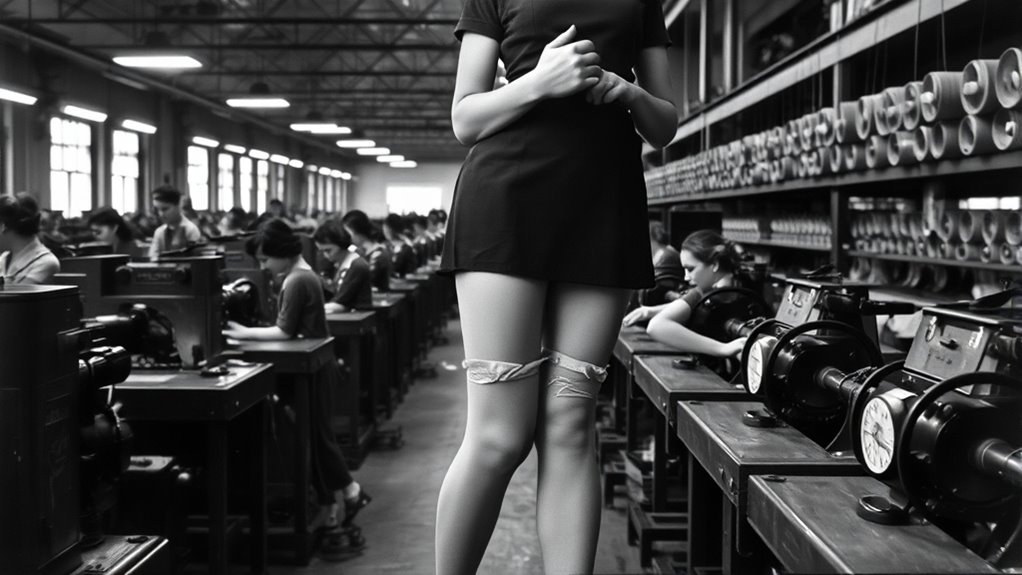

During WWII, nylon stockings became scarce as silk supplies from Japan were cut off, forcing women to ration, repair, or create illusions with makeup. The shortage sparked riots and frustration, with store lines stretching for hours and store windows smashed. Society shifted from glamour to practicality, embracing casual fashion and resourcefulness. The nylon crisis highlighted how war impacts everyday life and industry. To discover how these struggles influenced culture and industry long-term, keep exploring this fascinating history.
Key Takeaways
- WWII caused nylon shortages due to resource reallocation for military use, affecting civilian stockings and fashion.
- Silk supplies were disrupted by Japan’s wartime expansion, increasing demand for synthetic fibers like nylon.
- Women adapted by repairing stockings, using leg makeup, and adopting casual clothing due to limited nylon availability.
- Nylon’s shift from fashion to military applications highlighted its strategic importance, influencing industry innovations.
- Stocking scarcity symbolized femininity and social status, fueling frustration, store riots, and cultural shifts during wartime.
The Rise of Nylon and Its Pre-War Popularity

Before World War II, nylon was a groundbreaking innovation that captured public attention. DuPont introduced it at the 1939 New York World’s Fair, showcasing a new synthetic fiber that promised durability and versatility. In May 1940, nylon stockings launched nationwide, selling over 750,000 pairs on the first day. They matched silk stockings in price but far exceeded them in strength, shrink-resistance, and moth-proof qualities. Women quickly embraced nylon, making it a fashion staple. Within two years, nylon captured about 30% of the silk-stocking market. Its sleek look, affordability, and practicality made it a symbol of modernity and glamour. Nylon’s rapid rise transformed the hosiery industry and marked a significant shift in consumer preferences just before the war disrupted global supply chains. This technological innovation also influenced the development of other synthetic fibers, further revolutionizing textile manufacturing and consumer goods. Its success was driven by the consumer demand for affordable, durable, and fashionable materials, which spurred continued research and development in synthetic textiles. This technological innovation ultimately contributed to the broader impact of synthetic materials in everyday life.
How Global Tensions Disrupted Silk Supplies

Nylon’s popularity grew rapidly in the early 1940s, but its rise was soon challenged by shifting global tensions that severely impacted silk supplies. As Japan’s expansion in Asia threatened trade routes, silk exports to the US plummeted. Japan was the only significant silk supplier, so wartime conflicts cut off this vital resource. This disruption forced the US to seek alternatives and tighten restrictions. You notice that:
- Trade restrictions and wartime blockades halted silk imports entirely.
- The US seized remaining silk stocks for military use, especially parachutes.
- Manufacturers faced shortages, pushing consumers toward synthetic options like nylon.
These tensions made silk scarce and expensive, accelerating the shift toward synthetic fibers. The disruption reshaped fashion and military priorities, highlighting silk’s strategic importance beyond mere aesthetics.
The Shift From Fashion to Military Necessities

As priorities shifted during WWII, the focus moved from fashion to supporting military needs. Resources like nylon were reallocated quickly, with factories producing parachutes, ropes, and other essential equipment instead of stockings. This change transformed how materials were used and influenced fashion trends, as civilian supplies became scarce. The use of industrial materials in civilian clothing also diminished, emphasizing practicality over innovation. Additionally, the material scarcity prompted designers to innovate with alternative fabrics and styles, often leading to more utilitarian fashion choices during the war years. The material shortages further limited the availability of luxurious fabrics, encouraging a shift towards simpler, more functional clothing styles. The generative AI tools used for designing clothing also saw limited use during this period due to resource constraints, emphasizing practicality over innovation. This shift not only affected fashion but also accelerated the adoption of innovative and sustainable recycling practices in clothing manufacturing.
Prioritizing Military Needs
With the outbreak of World War II, the priorities of nylon production shifted dramatically from fashion to military needs. The War Production Board took control, redirecting nylon’s focus to essential war materials. You can see this in actions like:
- Manufacturing parachutes, ropes, and bomber tires from nylon, indispensable for troop safety and aircraft performance.
- Seizing silk supplies to guarantee availability for military applications, such as gun barrel lining.
- Limiting civilian access to nylon stockings, as the fabric became a strategic resource.
- The importance of color accuracy and other technical factors in military-grade nylon products further underscored the shift from fashion to functionality. This transition also influenced home decor choices, as consumers had to adapt to the scarcity of fashionable nylon items.
- The shift in nylon’s purpose also reflected broader wartime resource management strategies aimed at maximizing the impact of limited materials during the conflict. Additionally, the adaptation of nylon for military durability demonstrated its critical role in ensuring the effectiveness and safety of wartime equipment.
This shift meant that nylon no longer served fashion but became a vital component in the war effort. It supported military operations directly and reinforced the importance of strategic resource allocation during wartime.
Material Reallocation Strategies
When the war effort demanded more resources, authorities swiftly redirected nylon from its usual fashion role to support military operations. The War Production Board prioritized nylon for parachutes, ropes, and aircraft components, effectively halting commercial production of stockings. This reallocation was a strategic move to meet urgent military needs, leaving civilian consumers without their usual luxury. To compensate, manufacturers adapted by repurposing leftover nylon from tents, parachutes, and other military gear into new products like bags and accessories. The government also encouraged rationing and conservation, urging women to repair stockings or switch to alternative clothing. This shift exemplified how resource management focused on supporting wartime priorities, transforming nylon from a fashion staple into an essential military material. Notably, the WWII nylon shortage led to innovations in fabric durability and alternative materials for everyday use. Additionally, the scarcity prompted advancements in fabric technology, which influenced post-war textile manufacturing. These developments underscored the importance of material reallocation strategies in wartime resource management. Furthermore, the experience with nylon shortages highlighted the need for increased material innovation to prevent future disruptions in critical supplies.
Impact on Fashion Trends
The shift from fashion to military necessity dramatically transformed women’s clothing trends during World War II. As nylon and silk prioritized military needs, women adapted their wardrobe choices, moving away from glamour and traditional femininity. Stockings became scarce and expensive, prompting a shift toward practicality and resourcefulness. To cope, women adopted strategies like:
- Wearing pants or shorter skirts to reduce stocking wear.
- Using makeup tricks like liquid stockings or drawn seams for the illusion of hosiery.
- Repairing and reusing garments to extend their lifespan. This resourcefulness also reflected the broader societal effort to conserve materials and adapt to wartime shortages, demonstrating a collective drive for material efficiency during challenging times.
This change reflected a broader societal shift, emphasizing utility over style. Fashion became more functional, and women’s dressing habits evolved to meet wartime realities, reducing emphasis on luxury and highlighting resilience and adaptability amidst scarcity. Additionally, the increased focus on ethical hacking and security measures during wartime underscored the importance of protecting critical information and infrastructure, mirroring the need for resourcefulness and innovation in challenging circumstances. Recognizing the importance of creative problem-solving, women and industries alike sought inventive ways to adapt to the scarcity of traditional materials. The era also saw a rise in virtual collaboration as people worked remotely to support war efforts and innovation, fostering a culture of shared ideas despite physical limitations.
The Civilian Response to Stocking Shortages

How did women respond to the scarcity of nylon stockings during World War II? You quickly adapted by repairing worn stockings with needle and thread, stretching their lifespan. When supplies ran low, you turned to “liquid stockings,” a leg makeup that mimicked the look of silk hosiery. Eyebrow pencils and eyeliners became tools to draw seams and create illusion, making it seem like you wore stockings even when you didn’t. Many women reserved their limited stockings for special occasions, opting for pants or skirts to reduce wear. Some got creative, repurposing nylon from parachutes and tents into makeshift hosiery or accessories. Overall, you demonstrated resilience and ingenuity, embracing new practices to maintain femininity and style despite shortages.
Post-War Frustration and the First Riots

As World War II ended, the promise of plentiful nylon stockings fueled high expectations, but initial supply shortages quickly dashed hopes and sparked frustration among women keen to restore their fashion routines. Limited shipments from DuPont caused long lines and fierce competition at stores. Crowds of women, sometimes numbering in the tens of thousands, clashed over scarce pairs. Riots broke out in cities like New York and Pittsburgh, with windows smashed and fainting shoppers amid chaos. Store owners struggled to handle the demand, and some accused DuPont of deliberately delaying production to inflate prices. The frustration grew as women faced:
Post-war nylon shortages sparked riots and chaos as women fought for scarce stockings, reflecting deep longing for normalcy and femininity.
- Disappointment over unmet expectations
- Anger at ongoing shortages
- Anxiety about returning to pre-war fashion norms
These tensions reflected the deep longing for normalcy and the importance of stockings as symbols of femininity.
Cultural Significance and Changing Women’s Styles

Nylon stockings became more than just a fashion item—they symbolized femininity, elegance, and social status. As shortages made them scarce, women turned to casual styles like pants and simpler dress, shifting societal norms. This change reflected how material shortages influenced not only fashion but also women’s self-expression and cultural identity.
Stockings as Femininity Symbols
Stockings have long stood as a powerful symbol of femininity, elegance, and social status. During WWII, their scarcity heightened their cultural significance, transforming them into coveted icons of glamour and femininity. Women associated stockings with allure and sophistication, making them essential to their personal presentation. When supplies dwindled, women resorted to creative solutions, such as sewing, drawing seams, or using makeup for the illusion of stockings. The high value placed on stockings led to increased theft and social obsession. This scarcity emphasized the importance of appearance even amid hardships, reinforcing traditional gender roles. Stockings became more than fashion; they embodied a woman’s identity and societal standing. Their symbolic power persisted, influencing attitudes toward beauty, modesty, and femininity during and after the war.
Casual Dress Trends Rise
The scarcity of nylon stockings during WWII prompted women to embrace more practical and comfortable clothing styles, marking a significant shift in fashion norms. With stockings hard to find and expensive, women started prioritizing comfort over glamour, opting for pants, skirts, and simpler outfits. This shift challenged traditional notions of femininity, encouraging a more casual and utilitarian approach to dress. Women adapted by sewing their own clothing, using leftover fabrics, or choosing less formal styles for daily wear. The move toward casual dress also reflected wartime needs, as practicality became essential. Over time, these changes influenced post-war fashion, normalizing relaxed styles that emphasized function and comfort, ultimately transforming women’s fashion into a more diverse and accessible landscape.
Nylon’s Cultural Icon Status
During the 1940s, nylon stockings became more than just a practical clothing item—they transformed into a powerful symbol of femininity, glamour, and modernity. They represented status, beauty, and a sense of liberation, especially as women challenged traditional norms. Their scarcity heightened their allure, making them coveted symbols of elegance. You’d see women’s fashion and social attitudes shift as stockings epitomized femininity, inspiring songs, stories, and cultural references. The high demand and limited supply fueled:
- The perception of stockings as a symbol of femininity and social status
- The desire for glamour amidst wartime austerity
- The emergence of women’s increased independence and fashion experimentation
Nylon stockings became a cultural icon, shaping women’s styles and societal expectations during and after WWII.
Lasting Effects on Industry and Society

Have the wartime nylon shortages and consumer reactions left a lasting mark on industry and society? Absolutely. The shortages prompted industries to innovate, like creating synthetic alternatives and improving repair techniques. Society adapted by embracing rationing, resourcefulness, and new fashion norms such as pants and casual wear. These changes shifted perceptions of femininity and consumer behavior. The following table highlights key industry and societal impacts:
| Industry Impact | Societal Impact |
|---|---|
| Shift to synthetic fibers | Greater emphasis on resourcefulness |
| Stocking production and rationing | Changes in fashion and modesty norms |
| Military-driven material innovation | Increased value placed on durability |
| Post-war manufacturing growth | Long-term influence on consumer culture |
These effects shaped future manufacturing, fashion, and attitudes toward sustainability.
Frequently Asked Questions
How Did Women Creatively Adapt to the Nylon Stocking Shortages?
You adapt to nylon stocking shortages by repairing worn stockings with needle and thread, extending their life. You use liquid leg makeup or draw seam-lines with eyebrow pencils to mimic the look of stockings. Sometimes, you reserve stockings for special occasions and wear pants more often. You also get creative by making clothing and accessories from leftover nylon parachutes and tents, showing ingenuity during tough times.
What Role Did Nylon Play in Military Equipment Beyond Stockings?
Nylon played a vital role in military equipment beyond stockings by being used extensively for parachutes, ropes, and bomber tires. You’d see nylon’s durability and strength supporting soldiers and aircraft, making it an essential strategic resource. Its ability to withstand harsh conditions and disintegrate cleanly in gun barrels made nylon indispensable for military gear, emphasizing its importance on the battlefield and in supporting wartime logistics.
Were There Any Health Risks From Homemade Nylon Substitutes?
Yes, homemade nylon substitutes could pose health risks. When women used homemade liquid stockings or drew seams with pencils, they risked skin irritation or allergic reactions from chemicals in makeup or dyes. Inhaling fumes from homemade solutions or using untested materials might cause respiratory issues or skin burns. Additionally, improper handling of sewing tools or chemicals increased the chance of cuts, infections, or other injuries.
How Did Nylon Shortages Influence Post-War Fashion Trends?
You find that nylon shortages post-war led to significant fashion changes. Women start embracing pants, skirts, and more casual styles, moving away from traditional hosiery. Stockings become a symbol of glamour and femininity, making them highly desirable yet scarce. This scarcity encourages creativity, such as repairing stockings or using alternative accessories. Ultimately, the shortage pushes fashion toward practicality, comfort, and innovation, shaping modern trends and challenging social norms of the era.
Did Nylon Scarcity Affect Women’s Societal Roles During WWII?
You notice how nylon stockings, once symbols of glamour and femininity, suddenly become rare treasures during WWII. This scarcity challenged traditional societal roles, pushing women to adapt, innovate, and embrace new styles like pants. As stockings symbolized status and beauty, their absence shifted perceptions, empowering women to defy norms. The shortage revealed that resilience and adaptability could transform societal expectations, shaping women’s roles beyond mere fashion into symbols of strength and independence.
Conclusion
The nylon shortage during WWII symbolizes more than just fabric—it’s a mirror of a world at war, where scarcity reshaped desires and priorities. As stockings faded into the past, you see how society’s delicate thread of beauty and freedom was tested, yet resilient. This period reminds you that even in hardship, the human spirit weaves strength from adversity, transforming symbols of vanity into icons of perseverance and change.