

In winter, your skin and fabrics face harsh conditions like cold air and indoor heating, which strip moisture and cause dryness. Your hands, legs, and clothing need extra care to stay comfortable and protected. Regular moisturizing, gentle cleansing, and choosing cozy fabrics help prevent irritation, chapping, and damage. If you want to keep your skin soft and clothes in good shape, understanding these tips will show you how to stay cozy all season long.
Key Takeaways
- Cold air and indoor heating increase skin dryness, requiring extra moisture for hands and legs.
- Dry, rough fabrics can irritate skin, making fabric care essential during winter.
- Proper skincare and fabric choices help prevent chapping, irritation, and discomfort.
- Maintaining indoor humidity levels supports overall skin hydration and fabric longevity.
- Enhanced skin and fabric care routines protect against winter-induced dryness and damage.
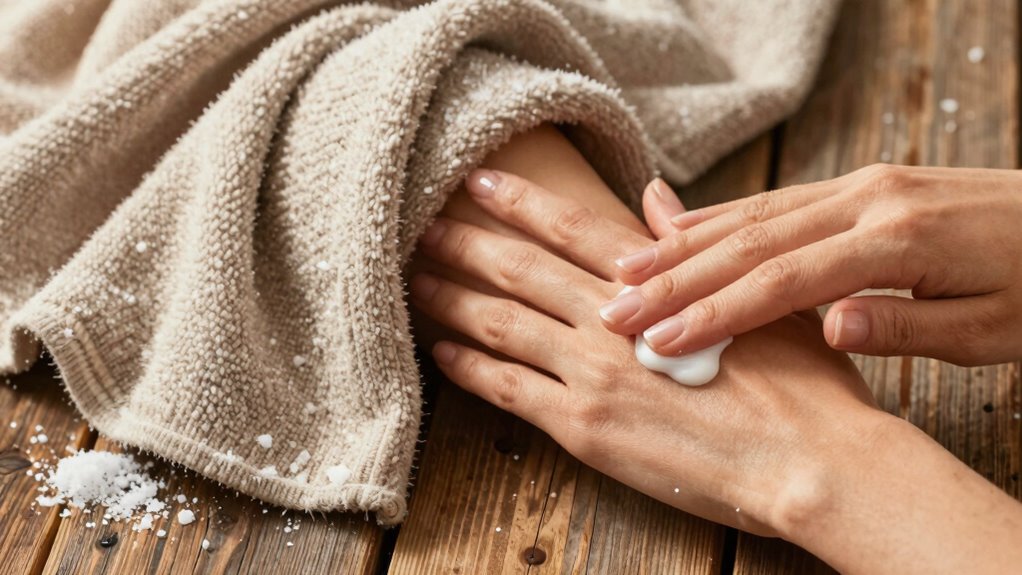
Winter’s cold weather can take a toll on your skin and fabrics, making proper care essential to stay comfortable and healthy. As temperatures drop, your skin loses moisture more quickly, and fabrics become prone to damage from the harsh conditions. That’s why winter skincare routines are more important than ever. You need to adapt your daily skincare to combat dryness and irritation caused by the cold, wind, and indoor heating effects. Indoor heating, while cozy, strips moisture from the air and your skin, leading to increased dryness and flakiness. To counteract this, you should incorporate rich moisturizers, hydrating serums, and gentle cleansers into your routine. Applying a thick hand cream multiple times a day is crucial, especially since frequent hand washing and exposure to cold air can severely dry out your skin.
Your legs also require special attention during winter. The skin on your legs can become rough, itchy, and cracked if you neglect proper hydration. Regular exfoliation helps remove dead skin cells, allowing moisturizers to penetrate deeper. Use body oils or creams that contain ingredients like shea butter or glycerin to lock in moisture. Wearing layers of soft, breathable fabrics minimizes chafing and irritation, especially when your skin is already vulnerable due to dryness. When dressing, avoid rough fabrics that can exacerbate skin irritation and instead opt for smooth, natural fibers like cotton or wool blends that are gentle on your skin. Additionally, understanding fabric care can help extend the lifespan of your winter wardrobe. Furthermore, maintaining indoor humidity levels can significantly improve skin hydration and reduce discomfort. Ensuring proper humidifier maintenance can also prevent the buildup of mold and dust, which can irritate sensitive skin. To further protect your skin, consider applying humidifiers indoors to maintain optimal moisture levels and prevent dryness.
Frequently Asked Questions
How Often Should I Moisturize My Hands During Winter?
You should moisturize your hands multiple times daily during winter, especially after washing or exposure to cold air. Regular moisturizing helps maintain winter skin elasticity and prevents dryness. Incorporate simple hand exercise routines, like finger stretches, to boost circulation. Doing this consistently keeps your skin supple, reduces cracking, and maintains overall hand health despite harsh winter conditions. Don’t forget to choose rich, nourishing creams for best results.
What Fabrics Are Best for Winter Clothing?
Think of winter fabrics as your armor against the cold. Wool and down are top picks because they’re durable and keep warmth in, making them great for winter. Look for breathable winter textiles, like merino wool or technical fleece, that wick moisture away and prevent overheating. These fabrics balance durability and breathability, ensuring you stay cozy without feeling trapped. Stick to these, and winter won’t stand a chance!
Can Winter Dryness Cause Long-Term Skin Damage?
Yes, winter dryness can cause long-term skin damage if you don’t take care of your skin barrier. When your skin loses moisture, it becomes more vulnerable to irritation, cracking, and infections. Over time, this can weaken your skin’s defenses, leading to lasting damage. To prevent this, keep your skin well-hydrated, use gentle moisturizers, and avoid harsh soaps. Proper winter skincare helps maintain your skin’s health and resilience.
Are There Specific Ingredients to Look for in Winter Hand Creams?
When choosing winter hand creams, look for ingredients like natural oils and barrier repair agents. They work together to nourish your skin and strengthen its natural defenses against harsh cold. These ingredients help lock in moisture and prevent dryness, which is especially important during winter’s dry months. By focusing on natural oils and barrier repair, you’ll keep your hands soft, protected, and healthy all season long.
How Can I Prevent Fabric Pilling in Cold Weather?
To prevent fabric pilling in cold weather, focus on winter fabric care and pilling prevention techniques. Always wash clothes inside out and use gentle cycles with cold water. Avoid overloading your washer, which causes friction. When drying, opt for air drying or low heat. Regularly remove pills with a fabric shaver or a razor, and choose high-quality, tightly woven fabrics. These steps keep your winter wardrobe looking fresh and pill-free.
Conclusion
As winter’s chill sets in, prioritizing hand, leg, and fabric care becomes essential for maintaining comfort and health. You might think these routines are just about vanity, but they’re really about protecting your skin and extending the life of your belongings. By investing a little extra effort now, you’ll enjoy warmth and resilience all season long. So, don’t overlook these small steps—they’re your best defense against winter’s harsh effects, ensuring you stay cozy and confident.