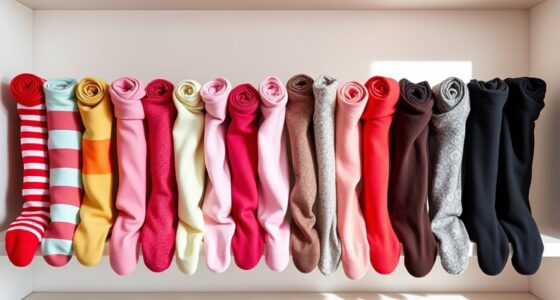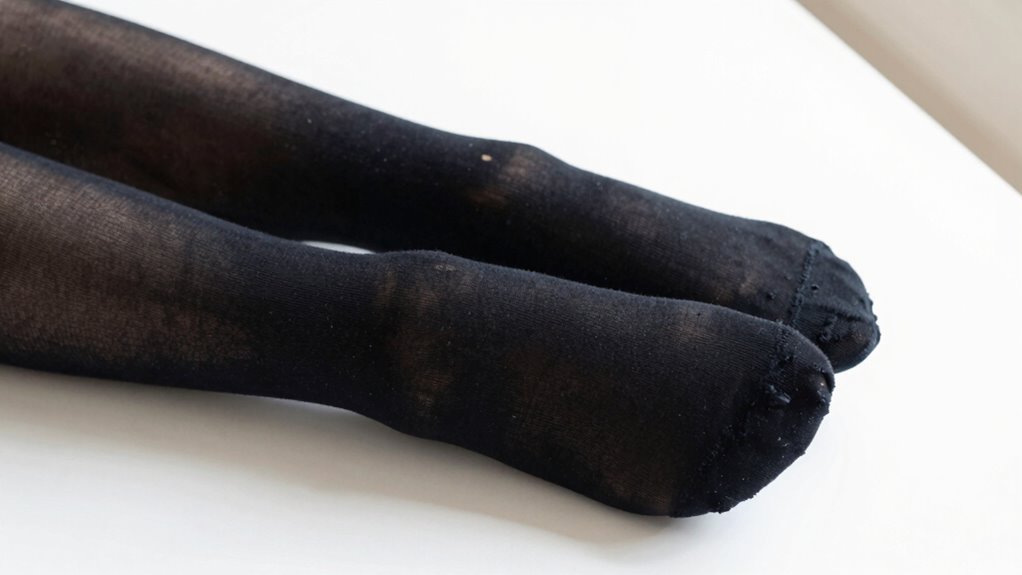

Focus on replacing tights that show visible signs of wear, like runs, snags, or thinning fabric, especially if you wear them often or need them for specific occasions. Check for tears or holes that threaten durability. Prioritize those that are essential for your wardrobe to keep your look polished. High-quality, well-maintained tights last longer and save money. For more tips on maximizing your tights’ lifespan, keep exploring what’s next.
Key Takeaways
- Prioritize replacing tights with tears or holes that compromise appearance and durability.
- Focus on frequently worn pairs showing significant wear, such as thinning or pilling.
- Replace tights that no longer match your wardrobe style or are outdated.
- Consider the material quality; worn-out, low-quality tights should be replaced sooner.
- Balance cost and longevity by investing in durable tights for high-use, replacing them first.
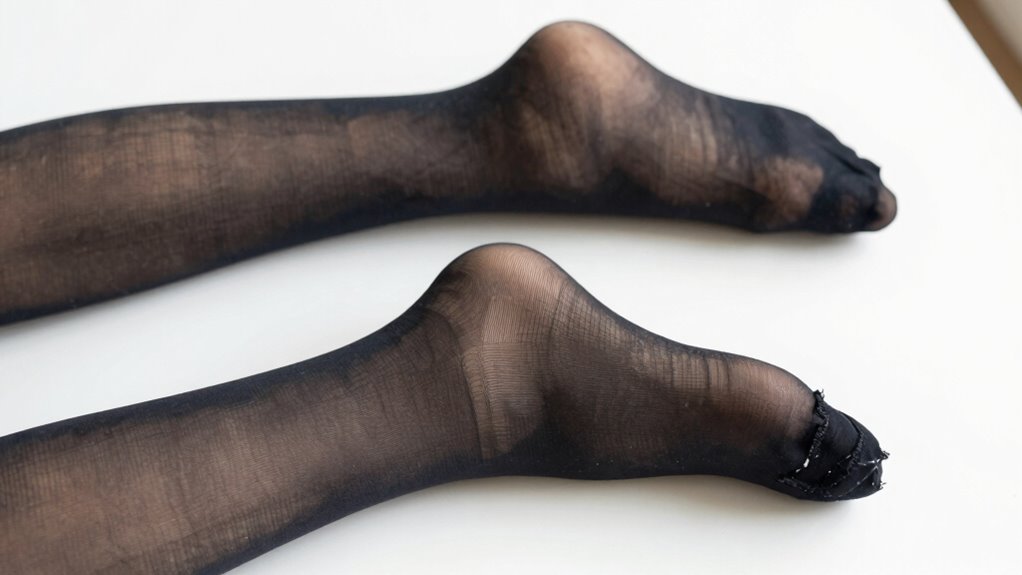
Ever wondered which tights you should replace first to get the most value out of your wardrobe? When it comes to maintaining your collection, understanding the concept of fashion durability is key. Not all tights wear out at the same rate, and knowing which ones are worth keeping versus swapping can save you time and money. Your goal should be to prioritize replacements based on both how long they last and how often you wear them. This way, you make smarter choices that align with your budget prioritization, ensuring you’re investing in pieces that offer the greatest return in style and function.
First, assess the condition of your tights. Look for signs of wear such as runs, snags, thinning fabric, or discoloration. Tights with minor imperfections might still be usable, especially if you wear them under layers or for less visible parts of an outfit. However, once tears or holes appear, they lose their fashion durability and should be replaced promptly. This is particularly important if you rely on certain pairs for specific occasions, like professional settings or formal events. Replacing these first ensures your wardrobe remains polished and functional without overspending on less essential items.
Assess tights for tears or holes to maintain a polished, functional wardrobe.
Next, consider how often you wear certain tights. Those that get daily or frequent use tend to wear out faster and should be prioritized for replacement. For example, if you wear a favorite pair weekly, you’ll notice signs of aging sooner, such as pilling or thinning fabric. On the other hand, tights reserved for special occasions might last longer because you wear them less frequently. By focusing your budget prioritization on the pairs that get the most wear, you extend your overall wardrobe lifespan and avoid wasting money on replacements that aren’t needed immediately. Additionally, understanding the durability of materials can help you choose better quality tights that last longer. Incorporating proper care techniques can also significantly prolong their lifespan, saving you money in the long run. Recognizing the importance of material quality can further influence your purchasing decisions and help you select tights that stand up to regular use. Moreover, selecting tights made from resilient fabrics can contribute to increased longevity and reduce the frequency of replacements. Being aware of wear patterns can also help you identify which pairs are most vulnerable to damage and need replacement sooner.
Another factor to weigh is the style and compatibility of your tights. Fashion durability isn’t just about how long they last physically but also how well they fit into your current wardrobe. If a pair no longer complements your style or doesn’t match your outfits, it might be time to replace them regardless of their condition. Replacing outdated or mismatched tights can refresh your look without a significant investment, especially if you choose versatile, timeless options.
Finally, keep an eye on cost-effective options. When replacing tights, look for quality within your budget. Sometimes, investing a little more in durable, well-made tights pays off in the long run because they last longer. Balancing fashion durability with budget prioritization ensures you’re making thoughtful decisions that keep your wardrobe functional and stylish without breaking the bank. By focusing on these factors, you’ll know exactly which tights to replace first, maximizing your wardrobe’s value and your style consistency.
Frequently Asked Questions
How Often Should I Replace My Tights for Optimal Comfort?
You should replace your tights every 4 to 6 months for maximum comfort, especially if you wear them often. As fashion trends evolve, newer tights can enhance your style and accessories, making your outfits look fresh. Regularly updating your tights also prevents discomfort caused by wear and tear. Keep an eye on snags or thinning fabric; replacing them sooner ensures you stay comfortable and fashionable with the latest trends.
Are There Specific Brands Known for Longer-Lasting Tights?
Brands like Wolford and Falke are known for their longer-lasting tights, offering impressive durability and tights longevity. While they may cost more upfront, their brand durability guarantees you get more wear from each pair. Cheaper options often lack this endurance, wearing out quickly. If you prioritize quality over price, investing in these reputable brands means fewer replacements, saving you time and money while maintaining a polished look.
Can Washing Methods Extend the Life of My Tights?
Yes, washing methods can extend the life of your tights. By reducing washing frequency and practicing proper fabric care, you prevent unnecessary wear and tear. Always hand wash or use a delicate cycle with cold water, and avoid harsh detergents. Gently air dry instead of using a dryer. These steps preserve elasticity and fabric integrity, helping your tights last longer and stay in good shape.
What Are Eco-Friendly Options for Replacing Tights?
Think of choosing eco-friendly tights like planting a garden—you want sustainable fabrics that grow your conscience as much as your wardrobe. Opt for tights made from bamboo, recycled nylon, or organic cotton. Look for brands with eco-friendly packaging, too. These choices support a healthier planet, just like nurturing a garden guarantees future blooms, making your wardrobe both stylish and sustainable.
How Do I Store Tights to Prevent Damage?
To prevent damage, you should store your tights carefully. Use proper folding techniques to avoid snags and tears, folding them gently and flat. Place them in designated storage containers, like drawer dividers or small boxes, to keep them organized and protected from rough handling. Avoid overstretching or hanging tights, as this can weaken the fabric. Proper storage guarantees your tights stay in good shape and last longer.
Conclusion
Ultimately, choosing which tights to replace first depends on their condition and your needs. While some might argue that the most worn or damaged pairs are the obvious choice, others believe prioritizing tights with the most sentimental value or the best fit can be more satisfying. Notably, studies on material durability suggest that tights with reinforced fibers often last longer, challenging the idea that frequent wear always equals quicker replacement. So, weigh both practicality and personal preference to make the best choice.