
In hosiery production, managing MOQ guarantees you get the right balance between cost, inventory, and lead times. Larger orders may lower unit costs but risk excess stock, while smaller orders offer flexibility but can increase expenses. Proper dye lot control is vital for maintaining color consistency across batches, preventing mismatched shades. Coordinating dye lots with your supplier helps keep the quality high. Keep exploring to discover how optimizing these factors benefits your overall production process.
Key Takeaways
- MOQ influences production costs, inventory levels, and lead times, impacting overall hosiery manufacturing efficiency.
- Managing dye lots ensures fabric color consistency, preventing mismatched shades in hosiery products.
- Requesting fabric from the same dye lot for large orders minimizes color variations and maintains product uniformity.
- Balancing MOQ and dye lot considerations helps optimize costs, inventory, and quality in hosiery production.
- Clear communication with suppliers about dye lot handling and MOQ requirements ensures consistent, high-quality hosiery outputs.

Understanding MOQ (Minimum Order Quantity) and dye lots is essential when producing hosiery, as these factors directly impact your production costs, quality, and lead times. When you’re planning your hosiery production, knowing the MOQ helps you determine how much you need to order from your supplier. This threshold guarantees that manufacturing remains cost-effective for the factory, but it can also influence your inventory planning. If your MOQ is high, you might end up with surplus stock, which ties up capital and storage space. Conversely, a low MOQ gives you more flexibility to order smaller quantities, but it might come at a higher unit cost. Balancing these aspects requires understanding your sales volume, storage capacity, and budget constraints.
Knowing your MOQ helps balance costs, inventory, and quality in hosiery production.
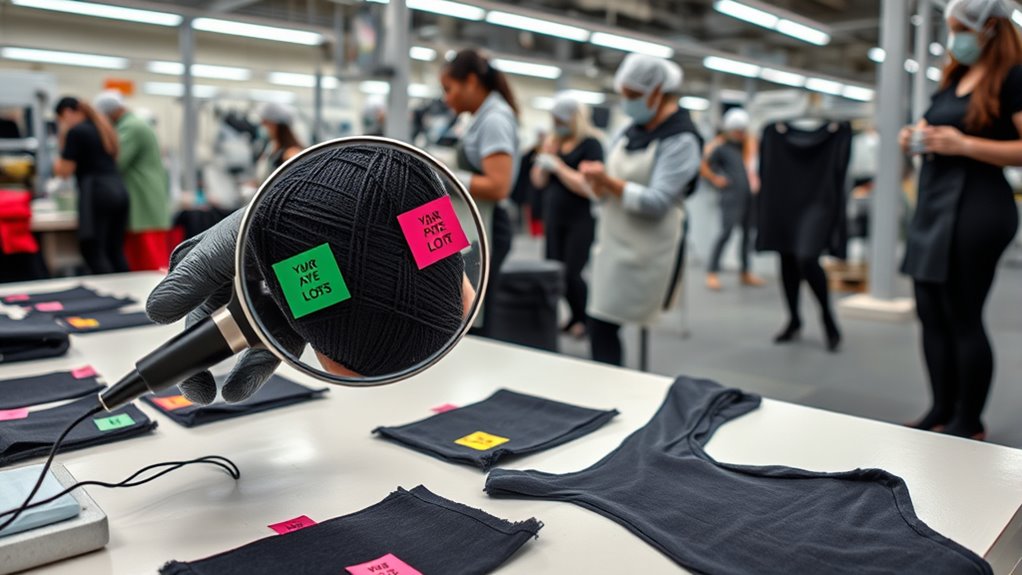
Dye lots refer to the batch of fabric dyed together, which guarantees uniform color across your hosiery. If you’re not careful with dye lots, you risk ending up with mismatched shades, especially if your production involves multiple batches or colors. Changes in dye lots can be subtle or noticeable, depending on the fabric and dyeing process, but they can compromise your product’s visual appeal. To maintain consistency, you need to coordinate dye lot management closely with your supplier. This might mean specifying dye lot numbers for each batch or requesting fabric from the same dye lot for a particular production run. Proper management ensures your hosiery looks uniform and meets your quality standards, which is critical for brand reputation and customer satisfaction.
It’s also important to understand that dye lots can be affected by various factors, such as differences in dyeing equipment, raw material variations, and environmental conditions. These factors can cause slight color deviations, even within the same dye lot. If you’re producing a large order, requesting fabric from the same dye lot minimizes these issues. For smaller or multi-batch orders, you might need to accept minor color variations or plan for post-production adjustments. When managing dye lots, communication with your supplier is key—clarify how they handle dye lot changes, and confirm that your order specifications include dye lot numbers to avoid surprises. This proactive approach ensures your hosiery maintains a consistent appearance, which is crucial for retail presentation and customer trust.
Additionally, understanding the cost implications of dye lot management helps in budgeting and pricing strategies, ensuring profitability across your product line.
Frequently Asked Questions
How Do Dye Lots Affect Color Consistency Across Batches?
Dye lots substantially impact color consistency across batches because each lot may have slight variations in dye formulation or application. When you produce multiple batches, differences in dye lots can cause color discrepancies, making socks look mismatched. To maintain uniformity, you should use the same dye lot for large orders or carefully match dye lots during production. This helps ensure your hosiery products stay consistent in color.
What Factors Determine the Minimum Order Quantity in Hosiery?
You might think size is the only factor, but surprisingly, your production costs, supplier policies, and desired customization levels play big roles. The minimum order quantity is often set to cover setup expenses, guarantee efficiency, and meet quality standards. So, while it seems straightforward, your MOQ is really a balancing act between what you want and what it costs to deliver it, making it more strategic than you’d expect.
Can Dye Lots Be Matched After Production Begins?
Yes, dye lots can be matched after production begins, but it’s challenging. You should communicate your color requirements early to minimize differences. If you need an exact match later, you might have to re-dye or order a new batch, which can be costly and time-consuming. To guarantee consistency, it’s best to plan your dye lots carefully before production starts and request sample swatches for approval.
How Do MOQ and Dye Lots Impact Overall Production Costs?
MOQ and dye lots directly impact your production costs. Smaller MOQs often lead to higher per-unit expenses because setup costs are spread over fewer items. Similarly, dye lot variations can cause additional costs if re-dyeing or adjustments are needed to match colors across batches. By understanding these factors, you can plan more efficiently, reduce waste, and keep costs in check while maintaining quality standards in your hosiery production.
Are There Ways to Reduce Dye Lot Variations in Hosiery?
You can reduce dye lot variations by standardizing your dyeing process, which minimizes color inconsistencies. Studies show that consistent procedures cut color variation by up to 30%. Use precise color matching and batch control, ensuring the same dye recipes are used each time. Regularly monitor and adjust dyeing parameters, and consider investing in advanced dyeing technology. These steps help achieve uniform coloration and improve overall product quality.
Conclusion
Understanding MOQ and dye lots is like mastering the keys to a well-orchestrated symphony—you keep everything in harmony. By paying attention to these details, you guarantee consistent quality and efficiency in your hosiery production. Don’t overlook their importance; otherwise, you risk chaos like a jarring discord. Stay informed and organized, and your hosiery line will run smoothly, hitting all the right notes from start to finish.