
Pantyhose used to be a strict part of professional dress codes, symbolizing formality and conformity. Today, workplace policies have shifted towards inclusivity, comfort, and personal expression, reflecting cultural changes and diversity efforts. Market demand now favors sustainable, versatile, and culturally sensitive options, with brands innovating for all-day wear. If you want to understand how these evolving norms influence dress code politics and fashion trends, stay with us for more insights.

Get your wardrobe favorites delivered free — and shop member deals
- Fast, free delivery on millions of items
- Access to Prime Big Deal Days deals on October 6–7
- Prime Video, Amazon Music and more included
Key Takeaways
- Evolving dress codes now emphasize comfort and individuality, reducing strict pantyhose requirements in professional settings.
- Market demand favors sustainable, inclusive, and versatile pantyhose options aligned with modern workplace values.
- Cultural and social movements promote gender equality, influencing companies to adopt more flexible hosiery policies.
- Fashion trends and ethical practices drive innovation toward eco-friendly, diverse, and seasonally adaptable pantyhose products.
- The shift reflects a broader redefinition of professionalism, balancing tradition with personal expression and inclusivity.
Historical Perspectives on Pantyhose in Professional Attire

Pantyhose didn’t always hold a place in professional attire, but their popularity grew rapidly in the late 20th century. Back then, vintage hosiery was a staple for many women aiming to meet dress code enforcement standards. Employers often emphasized polished appearances, making hosiery a key part of professional dress codes. Wearing pantyhose conveyed a sense of formality and adherence to workplace expectations. As fashion evolved, so did the perception of hosiery, shifting from a strict requirement to a personal choice. Despite fluctuations, the early days set the foundation for how pantyhose became intertwined with workplace professionalism. Understanding this history helps explain why pantyhose once symbolized both professionalism and conformity in many office environments.
Evolving Workplace Policies and Dress Code Standards

As workplace dress codes continue to shift, you’ll notice a move toward more flexible and inclusive policies. These changes reflect evolving gender norms and a broader understanding of professional attire. How do you think these trends impact what’s considered appropriate clothing in your industry? Additionally, the adoption of vetting procedures helps ensure that workplace attire remains safe and suitable for all employees.
Corporate Dress Code Trends
Have workplace policies on dress code shifted substantially in recent years? Absolutely. Today’s trends focus more on workplace comfort and flexibility, rather than strict, outdated standards. You’ll notice many companies relaxing dress code enforcement, allowing employees to choose attire that suits their comfort and productivity. Some key trends include:
- Moving towards business casual or smart casual dress codes
- Emphasizing comfort without sacrificing professionalism
- Allowing casual Fridays or relaxed dress days
- Prioritizing individual expression within professional boundaries
- Reducing rigid rules around pantyhose and hosiery requirements
- Additionally, some workplaces are adopting water-resistant fabrics and breathable materials to enhance comfort during the workday.
These changes reflect a broader shift to create inclusive, comfortable work environments. As a result, dress code policies now support personal choice while maintaining a professional appearance, fostering a more positive workplace culture.
Gender Norms Evolution
Over recent years, workplace policies around dress codes have increasingly reflected changing gender norms, promoting inclusivity and challenging traditional stereotypes. You’ll notice a shift toward embracing gender neutrality, where clothing no longer signals gender roles. Employers encourage you to wear what feels authentic, moving beyond rigid expectations of masculine attire. This shift aligns with evolving fashion standards, which now support diverse identities and foster a more accepting environment. Dress codes now accommodate a broader range of styles, allowing employees to express themselves without fear of judgment. As a result, traditional distinctions between male and female attire blur, and organizations aim to create a space where everyone feels comfortable. This shift not only reflects societal progress but also responds to market demand for more inclusive, flexible workplace standards.
Societal Attitudes and Cultural Influences
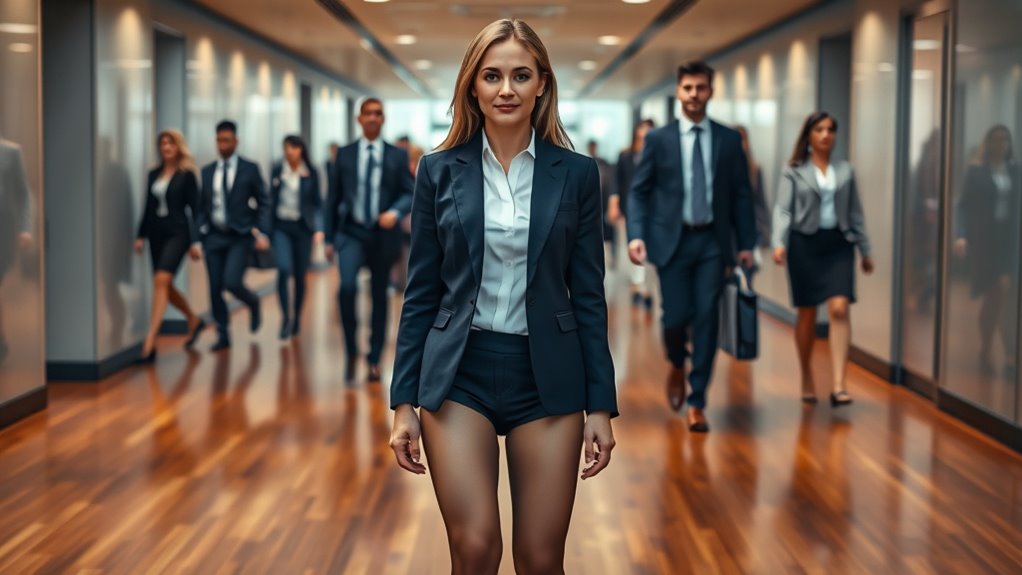
Societal attitudes and cultural influences shape how pantyhose are viewed in the workplace today. Traditional gender norms often influence expectations about professional attire, including hosiery choices. Meanwhile, cultural fashion trends can either reinforce or challenge these norms, impacting what’s considered appropriate. Additionally, perceptions of dog names and their suitability in various contexts can reflect broader societal values and preferences.
Traditional Gender Norms
Traditional gender norms have long shaped expectations about how men and women should present themselves in the workplace, often dictating specific clothing choices like pantyhose for women. These norms reinforce gender stereotypes that associate femininity with certain attire, influencing dress code enforcement. As a result, women may feel pressured to conform to these standards to be seen as professional. You might notice that dress codes subtly favor traditional gender roles, making it harder for individuals to challenge outdated standards. Recognizing the importance of well-sourced coverage can help challenge and change these biased dress codes.
- Gender stereotypes influence what’s considered appropriate attire for women
- Dress code enforcement often targets women more than men
- Societal expectations reinforce the idea that women should appear polished
- Men are rarely subjected to similar dress restrictions
- These norms perpetuate a cycle of conformity and cultural bias
Cultural Fashion Trends
Cultural fashion trends markedly influence workplace attire by reflecting society’s evolving attitudes and values. Pantyhose symbolism has shifted from a strict professional norm to a statement of individual style and empowerment. Today, many see wearing or skipping pantyhose as a form of fashion activism, challenging traditional dress codes and gender expectations. These trends demonstrate how societal attitudes toward gender roles and professionalism are changing, encouraging personal expression in the workplace. As cultural influences evolve, so does the perception of what’s appropriate, making fashion a vehicle for societal commentary. You may notice that embracing or rejecting pantyhose now signals your stance on gender equality and workplace diversity. Ultimately, these cultural fashion trends highlight a broader movement toward inclusivity and authenticity in professional settings. Additionally, cultural influences play a significant role in shaping perceptions of professional attire, emphasizing the importance of embracing diverse expressions of identity.
Market Trends and Consumer Preferences

Have you noticed how consumer preferences for pantyhose in the workplace are shifting? Today’s buyers prioritize comfort, sustainability, and style. They seek options made from sustainable fabrics that reduce environmental impact. Luxury branding also influences choices, with some consumers opting for premium labels that guarantee quality and sophistication.
Consider these trends:
- Increased demand for eco-friendly, biodegradable materials
- Preference for seamless, stretchable designs for all-day comfort
- Rise of minimalist, neutral shades that match professional wardrobes
- Growing interest in luxury branding as a status symbol
- Shift toward versatile, durable pantyhose suitable for multiple seasons
- Awareness of raw food ingredients influences consumers’ expectations for natural and healthy materials in fashion
These changes reflect a market responding to environmental concerns and a desire for high-end, fashionable options that align with modern workplace standards.
The Impact of Diversity and Inclusion Movements

As diversity and inclusion movements gain momentum in the workplace, they are profoundly influencing fashion choices, including pantyhose options. Employers emphasizing workplace inclusivity encourage employees to express their identities comfortably, which impacts dress code policies. Diversity initiatives often challenge traditional standards that favor certain skin tones or styles, prompting brands to expand their color palettes and product ranges. You may notice more inclusive options designed for a variety of skin tones, reflecting a broader commitment to representation. This shift enables employees to choose pantyhose that align with their personal identity and comfort, fostering a more welcoming environment. Additionally, cultivating Cultural Intelligence among staff helps organizations better understand and respect diverse expression styles, further supporting inclusive fashion choices. Ultimately, these movements drive the market to offer diverse, inclusive products that meet the evolving needs of a modern, respectful workplace.
Future Directions and Emerging Fashion Norms
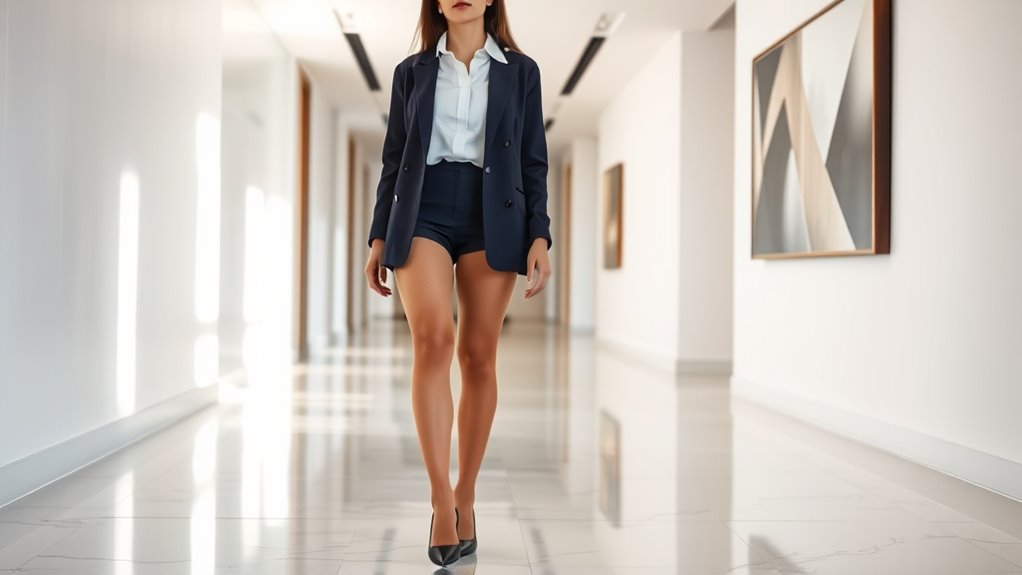
Looking ahead, the future of pantyhose in the workplace will be shaped by evolving fashion norms that prioritize comfort, sustainability, and individuality. You can expect a shift toward innovative textiles that offer better breathability, stretch, and durability. Sustainable production methods will become standard practice, reducing environmental impact and appealing to eco-conscious consumers. Fashion designers will focus on versatile designs that blend professionalism with personal expression. Brands may experiment with biodegradable fibers or recycled materials to meet market demand for eco-friendly options. Additionally, transparency about supply chains will grow, emphasizing ethical manufacturing. The emphasis on comfort and sustainability will redefine workplace dress codes, making pantyhose both functional and aligned with modern values. As sustainable fashion gains momentum, companies will increasingly adopt eco-friendly practices to meet consumer expectations. This evolution signals a more inclusive, responsible, and innovative approach to workplace fashion.
Frequently Asked Questions
How Do Pantyhose Affect Comfort During Long Work Hours?
Pantyhose can impact your comfort during long work hours, especially if you experience breathability issues that cause sweating or discomfort. However, they also offer compression benefits, which can improve circulation and reduce fatigue. Choosing breathable, well-fitting pantyhose helps you stay comfortable and focused throughout the day. Opt for materials designed for breathability and support to maximize comfort without sacrificing style or professionalism.
Are There Specific Industries That Prefer or Reject Pantyhose?
Some industries, like finance and law, prefer pantyhose, where dress code policies emphasize polished professionalism. Imagine a sleek, tailored suit paired with sheer hosiery, creating a seamless, confident look. Conversely, creative fields like tech or startups often reject pantyhose for comfort and casual dress codes. Your choice depends on industry preferences, dress policies, and the image you want to project, balancing professionalism with personal comfort.
What Are Sustainable or Eco-Friendly Alternatives to Traditional Pantyhose?
You can choose eco-friendly pantyhose made from biodegradable fibers or plant-based materials, which break down naturally and reduce environmental impact. These alternatives often use sustainable resources like bamboo, hemp, or recycled nylon, offering comfort and durability. By selecting these options, you support environmental conservation while maintaining a professional look. Eco-conscious brands now prioritize biodegradable fibers and plant-based materials, helping you dress sustainably without sacrificing style or comfort.
How Do Gender Norms Influence Pantyhose Policies in the Workplace?
Gender norms shape pantyhose policies in the workplace more than you might think. You see, gender stereotypes often influence dress code enforcement, making it seem like certain attire, like pantyhose, is only for women. This creates a double standard, where rules are unevenly applied, reinforcing stereotypes. To level the playing field, workplaces need to challenge these assumptions and focus on professionalism rather than outdated gender expectations.
What Role Does Social Media Play in Shaping Pantyhose Fashion Trends?
Social media influence plays a huge role in shaping pantyhose fashion trends today. Trendsetting platforms like Instagram and TikTok showcase new styles, encouraging you to experiment with colors, textures, and accessories. You can see real-time updates from fashion enthusiasts and influencers, which helps you stay current and inspired. By engaging with these platforms, you actively participate in trend creation, making social media a powerful tool for defining modern pantyhose fashion.
Conclusion
As you navigate changing workplace norms, you might notice how societal attitudes subtly influence dress codes, often reflecting broader cultural shifts. Pantyhose, once a symbol of professionalism, now intertwines with diversity and inclusion efforts, revealing that fashion and policy evolve together. Sometimes, what seems like coincidence—such as market demand shifting alongside social movements—reminds you that dress codes are never just about appearance but about understanding the deeper currents shaping your environment.
Halloween Picks
halloween
As an affiliate, we earn on qualifying purchases.