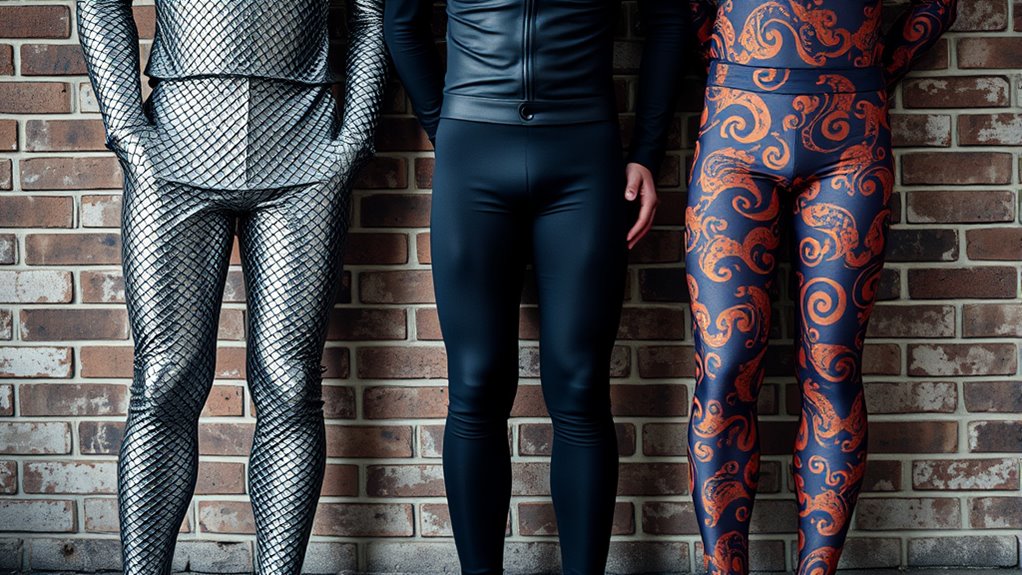

Men’s tights have a long history, starting as functional armor and protective gear in medieval times. Over the centuries, they evolved into colorful and embroidered garments symbolizing status and power. Today, men embrace tights as bold fashion statements and performance wear, breaking traditional norms. Modern icons, athletes, and performers use tights to express confidence and creativity. To discover how these garments transformed from knights’ armor to contemporary style icons, explore the fascinating journey ahead.
Key Takeaways
- Historically, men wore tights for protection, social status, and military purposes, often featuring intricate embroidery and vibrant dyes.
- Tights evolved from functional leg coverings in ancient civilizations to symbols of wealth, power, and political allegiance in medieval and Renaissance eras.
- The 20th-century nylon revolution made tights more affordable and accessible, encouraging fashion experimentation and challenging traditional masculinity norms.
- Modern icons and celebrities wear colorful and patterned tights to express confidence, challenge gender norms, and promote body positivity.
- Contemporary fashion integrates tights as bold statements of style and empowerment, reflecting societal shifts toward gender fluidity and individual expression.
The Origins of Leg Coverings in Ancient Civilizations
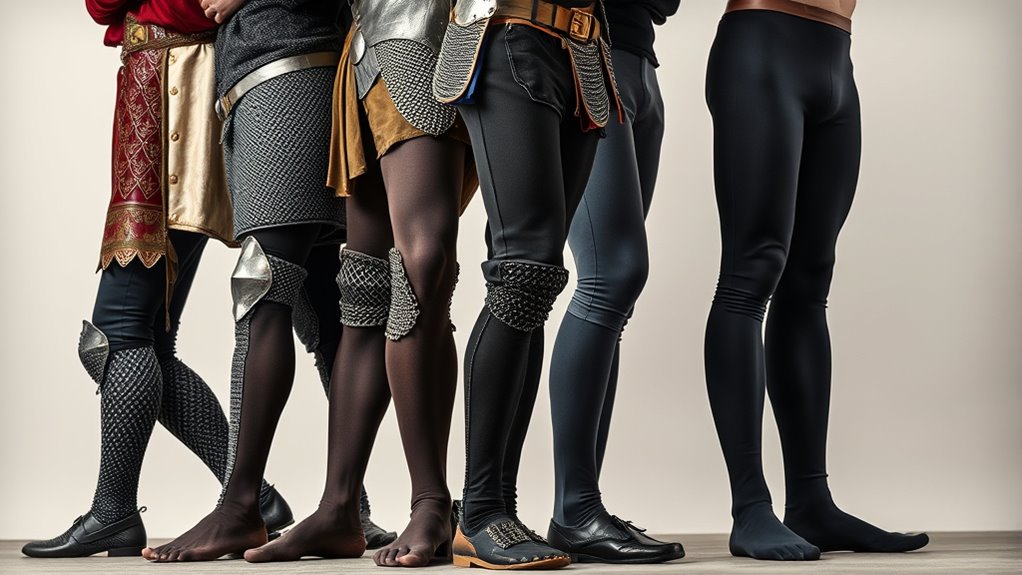
Leg coverings for men have roots that stretch back to ancient civilizations, where their primary purpose was functional rather than fashionable. In ancient Egypt and Greece, men wore leggings made from linen, wool, or leather to protect their legs during work, combat, or travel. These early garments served practical needs, such as safeguarding against the elements or injuries. Archaeological findings show that these coverings were often tight-fitting, allowing for ease of movement and durability. In Greek and Egyptian cultures, leggings also indicated social status or military rank, adding a symbolic element to their utility. Over time, these practical leg coverings laid the groundwork for more elaborate and decorative styles seen in later eras, but their core purpose remained rooted in function. Additionally, the development of functional clothing during these periods influenced the evolution of modern legwear styles. The craftsmanship involved in creating these early garments reflects a deep understanding of material durability and comfort, which continues to inform modern athletic and utilitarian designs. As techniques in clothing construction advanced, the shift toward more specialized and stylish leg coverings became increasingly prominent.
Evolution of Hose and Tights During the Middle Ages and Renaissance
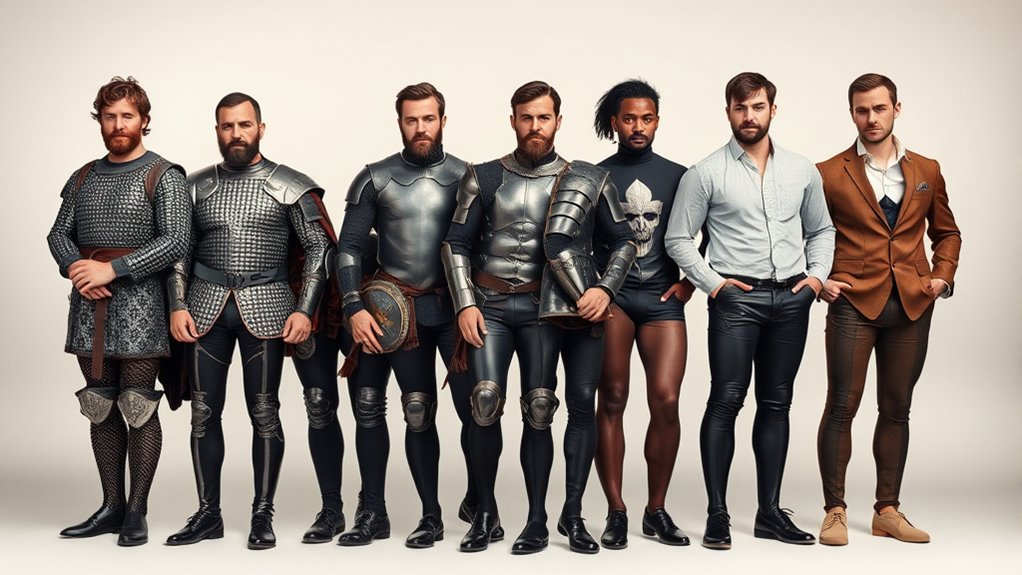
During the Middle Ages and Renaissance, men’s hose and tights evolved to feature intricate embroidery styles that showcased wealth and status. Bright colors became symbolic, often indicating allegiance or rank within court society. You’ll notice how these decorative elements transformed hosiery from simple coverings into bold statements of power and prestige.
Decorative Embroidery Styles
Decorative embroidery styles on hose and tights evolved markedly throughout the Middle Ages and Renaissance, transforming these garments from simple coverings into symbols of status and fashion. You’ll notice intricate patterns, often symmetrical, featuring floral motifs, heraldic symbols, and geometric designs. During the Middle Ages, embroidery focused on reinforcing areas like the ankles with decorative stitches, such as clocked hose. Renaissance artisans expanded this by adding lavish embellishments using gold thread, silks, and pearls, showcasing wealth and craftsmanship. Embroiderers developed techniques like couching and appliqué to create textured effects. These elaborate designs signaled social rank, with royalty and aristocrats sporting the most ornate tights. Embroidery became a visual language, elevating hose from mere utility to a statement of prestige and artistic expression. The use of embroidery techniques during this period also reflected the evolving craftsmanship and artistic trends of the time. Moreover, advancements in textile dyes allowed for more vibrant and lasting colors in embroidered designs, further enhancing their visual appeal. Additionally, innovations in dyeing processes contributed to the richness and durability of the colors, making the embroidered garments even more striking and long-lasting. The development of dye fastness techniques ensured that colors remained vibrant despite frequent washing and wear. Furthermore, the introduction of new stitching methods increased the complexity and beauty of embroidered patterns, demonstrating the skill of the artisans and the importance of fashion in social hierarchy.
Symbolism of Bright Colors
Have you ever wondered what bright colors on medieval and Renaissance tights signified? These vivid hues weren’t just for show—they conveyed social status, wealth, and power. Bright reds, blues, and greens were expensive dyes, so only the elite could afford them. Nobility and royalty wore bold, vibrant tights to display their prestige and to stand out at court. Sometimes, colors also symbolized allegiance to a particular faction or family. For example, certain colors might be associated with a noble house or political cause. The use of bright colors elevated tights from simple clothing to markers of identity and social hierarchy. Over time, these colors became more elaborate, reflecting not just wealth but also political symbolism and personal expression within the strict codes of medieval and Renaissance society.
The Transition From Hose to Trousers in 19TH Century Fashion
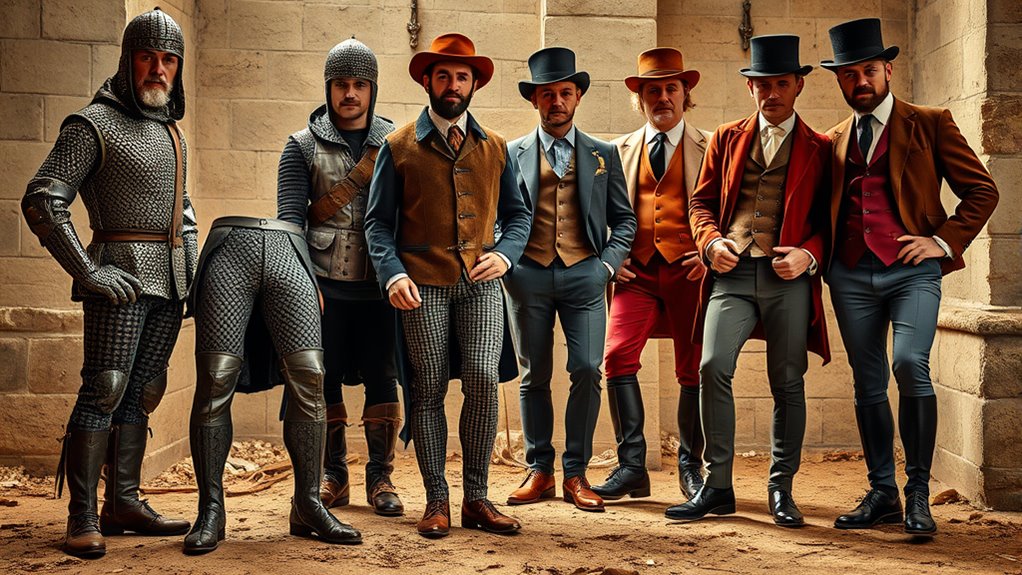
The 19th century marked a decisive shift in men’s fashion as trousers began replacing hose as the preferred everyday garment. You’d notice that trousers moved from formal or workwear into casual daily attire, offering more comfort and practicality. The early 1800s saw a changeover from tight-fitting hose to looser, fuller trousers, reflecting changing tastes and social norms. Innovations like fall front waistbands and foot straps streamlined the look, making trousers more functional. Influenced by military and workwear styles, trousers became versatile and suitable for various activities. You’d also see a variety of cuts emerging, from slim to wide-leg, accommodating different fashion trends. This transformation signified a move away from ornate, restrictive legwear toward simpler, more comfortable clothing that remains central in men’s fashion today.
Women Embrace Tights: Breaking Fashion Norms in the 20th Century

As women sought practical and fashionable alternatives to traditional petticoats, tights emerged in the early 19th century as a revolutionary garment. Initially, they served as a functional layer, providing coverage under dresses and protecting modesty. However, societal norms often viewed tights as inappropriate or lewd, and women preferred stockings made of silk or cotton. It wasn’t until the 20th century, especially during the 1920s, that tights gained popularity with flappers embracing shorter hemlines and bold fashion statements. World War II further accelerated their adoption, as nylon stockings became scarce, prompting women to switch to tights. By the mid-20th century, tights broke free from their utilitarian roots, transforming into a symbol of modern femininity and fashion rebellion. Additionally, the shift towards body positivity and comfort in fashion helped solidify tights as an essential wardrobe staple for women.
The Post-War Boom: Nylon Stockings and the Rise of Modern Tights
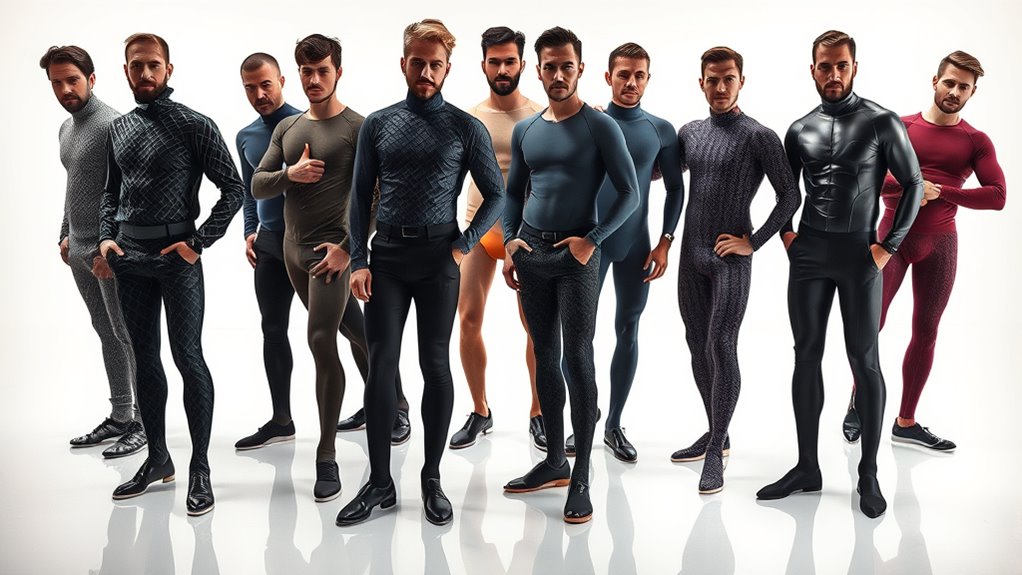
After the war, nylon transformed hosiery by making stockings more affordable and durable, changing how people viewed legwear. This material revolution led to innovative designs that balanced fashion with everyday function. As a result, tights gained popularity beyond traditional roles, becoming a versatile staple in modern wardrobes. Additionally, the rise of automation in manufacturing helped produce tights more efficiently, further driving their widespread adoption. The development of new textile technologies also contributed to creating more comfortable and elastic tights, appealing to a broader audience. Furthermore, advancements in stretch fabrics allowed tights to better conform to different body shapes, enhancing both comfort and style. These technological improvements are closely linked to the reliability and safety of textile production processes.
Nylon’s Material Revolution
Following World War II, the fashion industry experienced a revolutionary shift with the introduction of nylon stockings, which transformed the production and accessibility of leg coverings. Nylon’s invention made hosiery more affordable, durable, and easier to produce at scale. It replaced silk, lowering costs and broadening appeal. This material enabled designers to experiment with new shapes and styles, fueling the rise of modern tights. The shift also changed perceptions, turning tights into a fashion statement. To visualize, here’s a snapshot:
| Aspect | Details |
|---|---|
| Material | Nylon replaced silk, offering strength and affordability |
| Production | Mass-produced with less labor, easier to scale |
| Style | Enabled sleek, vibrant, and diverse designs |
| Accessibility | Became widely available to the masses |
| Cultural Impact | Shifted tights from luxury to mainstream fashion |
Additionally, the development of nylon contributed to the democratization of fashion by making stylish legwear accessible to a broader audience through mass production techniques. This breakthrough also influenced the fashion industry to embrace more innovative and diverse designs in hosiery, fostering a new era of modern style icons.
Affordable Hosiery Innovation
The post-war era sparked a revolution in hosiery with the advent of nylon stockings, making leg coverings more affordable and accessible than ever before. Nylon’s introduction drastically lowered production costs, allowing more people to enjoy stylish, durable hosiery without breaking the bank. This innovation enabled brands to mass-produce tights and stockings, expanding options for both men and women. You’ll notice several key developments:
- Increased affordability led to widespread adoption of tights and stockings in everyday fashion
- Manufacturers experimented with new designs, colors, and textures to appeal to diverse tastes
- The rise of mass-market brands made hosiery a staple accessory rather than a luxury item
- The accessibility of hosiery also fostered a culture of self-expression and individual style choices empowering consumers to explore new fashion trends and boost their confidence. Additionally, the shift towards mass production showcased the importance of economies of scale in reducing costs and increasing reach for clothing manufacturers. This era also saw innovations in manufacturing techniques that further improved the quality and variety of hosiery available. The increased production capacity was partly driven by advances in automation, which helped streamline the manufacturing process and reduce errors. These changes transformed hosiery from a costly luxury into a practical, fashionable, and accessible garment for all.
Fashion and Function Shift
In the post-war era, nylon stockings revolutionized hosiery by making leg coverings more affordable and accessible. This shift transformed fashion from a luxury into a daily necessity for many women, encouraging shorter hemlines and greater freedom of movement. As nylon replaced costly silk, stockings became durable, easy to maintain, and widely available, fueling a surge in popularity. The rise of the mini skirt in the 1960s further boosted tights’ appeal, making them a staple of youthful, modern style. Men’s fashion also experienced a subtle change: tights and leggings gained popularity for athletic and performance purposes. Over time, tights transitioned from purely functional to fashionable, with designers and entertainers redefining their role in gender expression and style. This evolution marked a significant shift in how leg coverings served both function and fashion.
Challenging Norms: Men Reclaiming Tights in Contemporary Culture
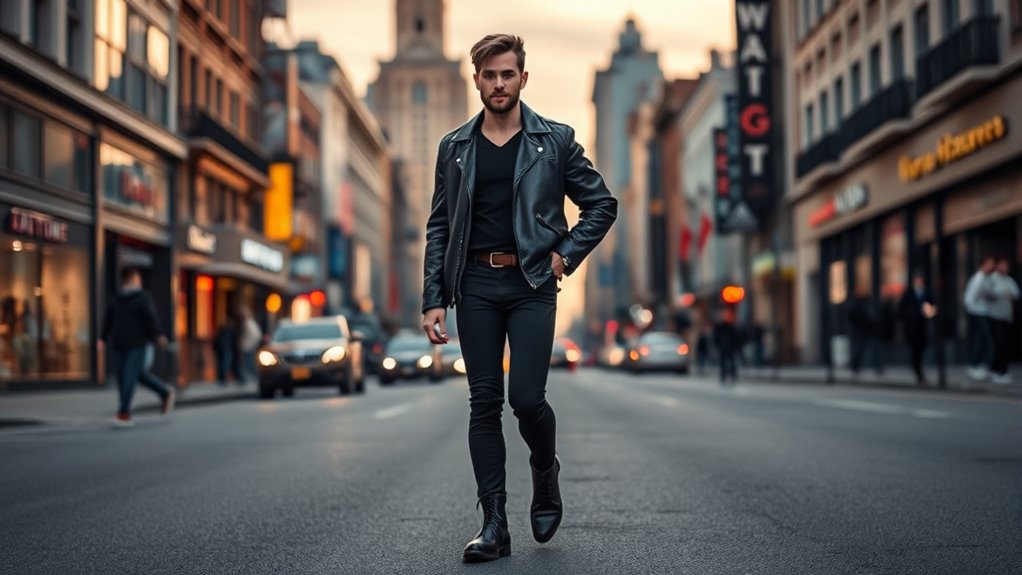
Men are increasingly challenging long-standing stereotypes by reclaiming tights as a powerful and versatile fashion statement. Today, more guys wear tights confidently, breaking gender norms and embracing self-expression. You’ll see this shift in various ways:
- Fashion runways and streetwear showcase men pairing tights with bold patterns, colors, and layered looks.
- Celebrities and influencers sport tights as part of their signature style, inspiring wider acceptance.
- Subcultures and movements use tights to challenge traditional masculinity and promote body positivity.
- The growing use of cross-gender fashion highlights how social perceptions are evolving to embrace diverse expressions of identity.
This movement isn’t just about style; it’s a statement of freedom and empowerment. By reclaiming tights, men push back against outdated notions of masculinity, demonstrating that fashion is a personal choice, not a gendered rule.
Athletic and Performance Wear: Tights in Sports and Stage
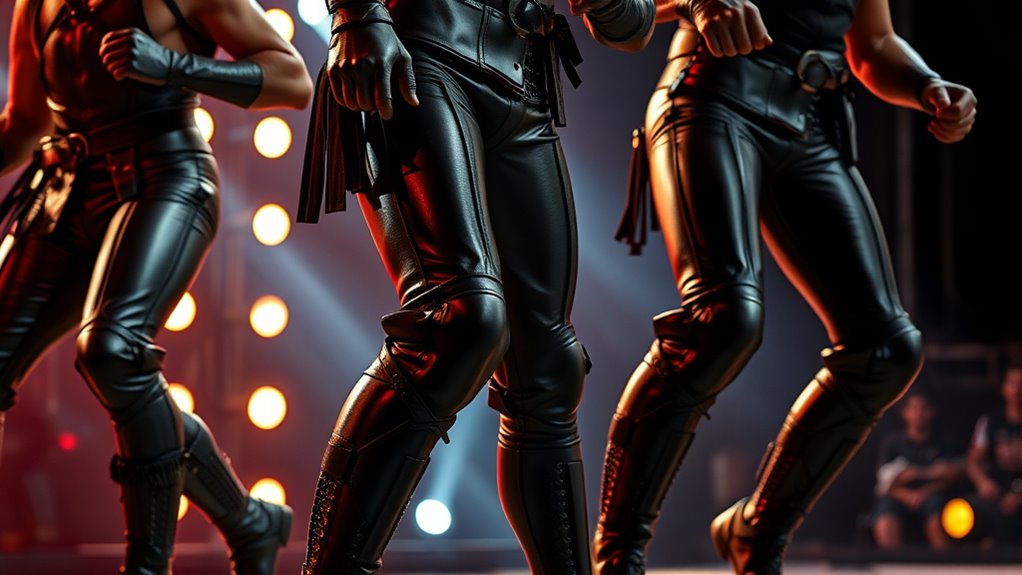
Tights have become an essential component of athletic and stage performance attire, offering performers enhanced flexibility, support, and comfort. In sports, athletes rely on compression tights to improve circulation, reduce muscle fatigue, and prevent injuries. Runners, cyclists, and gymnasts wear them during training and competitions for peak performance. On stage, performers like dancers, acrobats, and singers use tights to allow unrestricted movement and showcase their physiques. The snug fit minimizes chafing and provides muscle stabilization, boosting endurance. Modern fabrics like Lycra and spandex ensure durability, breathability, and quick drying. By offering both functionality and a sleek appearance, tights help performers push their limits and deliver polished, dynamic performances while maintaining comfort throughout demanding routines.
Tights in Popular Culture and Fashion Icons Today
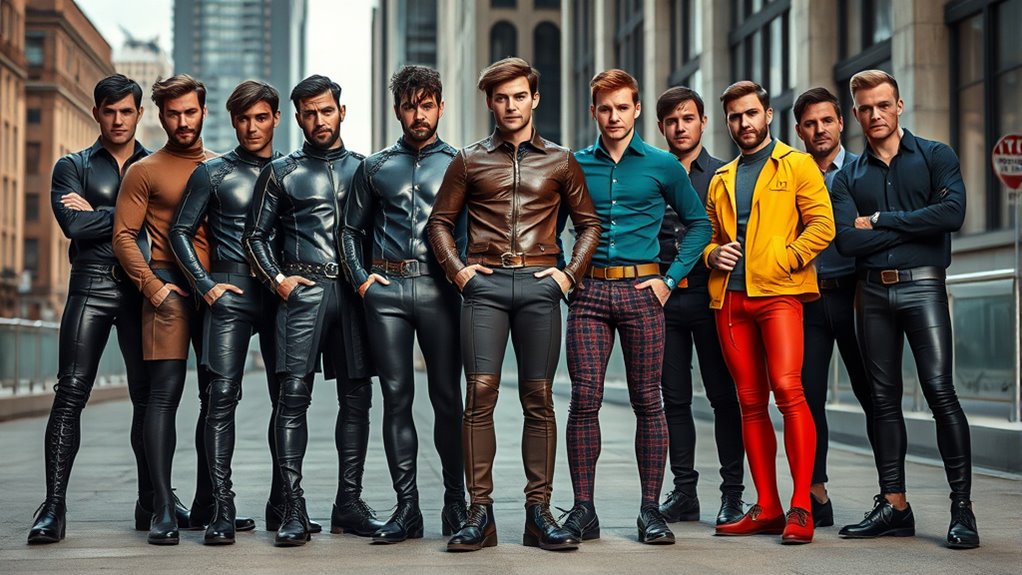
Today, fashion icons and pop culture influencers are redefining how tights are perceived, transforming them from practical garments into bold statements of style and individuality. You see this in celebrity outfits, music videos, and runway shows that challenge traditional gender norms. Tights now symbolize confidence and self-expression, regardless of gender.
- Celebrities like Harry Styles and Billy Porter wear colorful, daring tights, breaking stereotypes
- Fashion designers incorporate tights into high-concept runway collections, emphasizing creativity
- Social media platforms showcase everyday people experimenting with tights as part of their personal style
This shift encourages you to view tights as versatile, empowering accessories that push boundaries and celebrate uniqueness. Tights have become a symbol of modern rebellion and artistic expression in popular culture.
Frequently Asked Questions
How Did Tights Symbolize Power and Status in Medieval European Courts?
You see, in medieval European courts, tights symbolized power and status because they were crafted from rich wool or silk and often decorated with embroidery, making them expensive and exclusive. When you wear brightly colored or elaborately embroidered hose, it signals wealth and prestige. Kings like Henry VIII wore such tights to showcase their authority, turning fashion into a display of dominance and social hierarchy among the aristocracy.
What Cultural Factors Led to the Decline of Men Wearing Tights in the Late 20TH Century?
You might notice how tights fell out of favor in the late 20th century, like a fashion tide retreating from the shore. Cultural shifts towards more conservative gender roles and the rise of casual, relaxed clothing discouraged men from wearing form-fitting legwear. Media and societal norms painted tights as unmasculine, creating a stigmatized image. This combination of conservatism and changing perceptions pushed tights into the shadows of fashion history.
How Have Modern Athletes Influenced the Perception of Men Wearing Tights?
Modern athletes have played a key role in changing perceptions of men wearing tights. By confidently sporting performance gear like compression leggings and spandex, they demonstrate that tights are practical and stylish. Their visibility in sports, fitness, and entertainment pushes societal norms, encouraging you to see tights as legitimate athletic wear rather than taboo. This influence helps challenge outdated gender stereotypes and promotes acceptance of men confidently embracing tights today.
In What Ways Did Hollywood Shape Public Acceptance of Men’s Tights?
Hollywood played a big role in shaping public acceptance of men’s tights by showcasing them as stylish and performance-enhancing attire. You see actors and performers wearing tights in movies, music videos, and stage productions, which helps normalize and even glamorize the look. As a result, you might feel more comfortable or inspired to wear tights yourself, recognizing them as both functional and fashionable rather than taboo or purely athletic gear.
Are There Specific Fashion Movements That Have Challenged Traditional Gender Norms With Tights?
You see, fashion movements like the 1960s mini skirt craze and the punk era challenged traditional gender norms by embracing tights for men. Punk rockers and avant-garde designers used tights as bold statements of rebellion and individuality, breaking stereotypes around masculinity. Today, contemporary movements continue to push boundaries, with athletes, performers, and fashion icons redefining what men can wear, making tights a symbol of gender fluidity and self-expression.
Conclusion
Just like a chameleon adapts to its surroundings, men in tights have evolved from practical armor to bold fashion statements. You’ve seen how these garments have challenged norms and embraced change over centuries. So next time you see someone rocking tights, remember it’s a symbol of transformation and self-expression—proof that fashion, like life, is always in motion, constantly blending tradition with innovation.