In today’s workplace, whether bare legs are now the norm depends on your office culture. Casual and creative environments tend to be more accepting of uncovered legs, while formal settings might still expect hosiery or modest attire. To stay professional, observe what colleagues wear and follow your supervisor’s cues. If you’re unsure, opt for a neat, polished look that balances comfort with professionalism. Keep exploring to discover how to adapt confidently to your workplace dress code.

Get your wardrobe favorites delivered free — and shop member deals
- Fast, free delivery on millions of items
- Access to Prime Big Deal Days deals on October 6–7
- Prime Video, Amazon Music and more included
Key Takeaways
- Workplace culture and dress code policies significantly influence whether bare legs are considered appropriate.
- Business casual environments increasingly accept bare legs, especially in summer or creative workplaces.
- Observing colleagues and supervisors helps determine accepted attire, including whether bare legs are suitable.
- In conservative or formal settings, covering legs with tights or stockings remains the standard.
- When unsure, opting for more coverage and professional grooming ensures adherence to office etiquette.

Office etiquette often sparks lively debates because what’s acceptable to one person may be considered rude or unprofessional to another. One of the more recent topics stirring discussions is whether bare legs in the workplace are now acceptable or if they cross a line of professionalism. You might find yourself wondering if showing skin during warmer months is okay or if it risks offending colleagues or clients. The answer isn’t straightforward, and it largely depends on your office culture, dress code, and the expectations set by your employer.
Office dress codes vary; consider your workplace culture and dress standards before going bare-legged.
In many workplaces, especially those with a business casual dress code, wearing skirts, dresses, or pants without tights or stockings is increasingly common. If your office leans toward a relaxed, creative atmosphere, you may feel comfortable sporting bare legs without drawing any negative attention. However, if your workplace emphasizes a more conservative or formal environment—think law firms or corporate finance—you might need to contemplate whether your attire aligns with the expected standards. The key is to observe how others dress and follow the cues set by your supervisors or HR policies.
Some workplaces have explicit policies about professional attire, but many rely on unspoken norms. If you’re unsure, it’s best to err on the side of caution. Opt for neutral colors and modest styles, especially when meeting clients or attending important meetings. If you decide to go bare-legged, ensure your clothing is neat, your shoes are polished, and your overall look remains polished and appropriate. Tiny details, like well-groomed legs and clean footwear, can make a difference in how your outfit is perceived.
You should also take into account the season and your comfort. In summer, bare legs might be more practical, and many see it as a simple way to stay cool. Still, even then, it’s wise to keep your presentation professional. Sometimes, adding a blazer or cardigan can help maintain a professional appearance if you’re concerned about appearing too casual. Remember, dressing appropriately isn’t just about following dress codes but also about showing respect for your colleagues and the organization’s culture.
Ultimately, the debate about bare legs boils down to context. What’s acceptable in a tech startup might not fly at a law firm. Be observant, adapt your wardrobe accordingly, and when in doubt, choose a more conservative approach. It’s always better to be slightly overdressed than underdressed, especially when your goal is to project professionalism and respect in your workplace. By paying attention to your office’s unique environment, you can navigate this debate confidently and maintain a positive, professional image.
Additionally, staying informed about office dress codes and workplace expectations can help you make more confident clothing choices and avoid potential missteps.
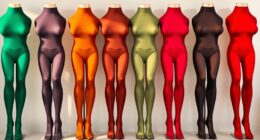
professional tights and stockings
As an affiliate, we earn on qualifying purchases.
As an affiliate, we earn on qualifying purchases.
Frequently Asked Questions
How Do Dress Codes Vary Across Different Industries?
You’ll find dress codes vary widely across industries. In corporate settings, formal business attire like suits and ties is common, while creative fields often embrace casual or trendy outfits. Tech companies might prefer relaxed styles, whereas finance firms enforce strict professionalism. Healthcare and hospitality require uniforms. Understanding industry norms helps you dress appropriately; always observe colleagues and follow company policies to stay aligned with expectations.
Are There Specific Rules for Remote or Hybrid Work Environments?
In remote or hybrid work environments, there are no strict dress code rules, giving you more flexibility. Notably, a 2023 survey found that 60% of employees prefer casual attire at home. You should still dress professionally for virtual meetings to make a good impression, but outside of those, you can opt for comfort. Just remember to keep your appearance neat and appropriate for the occasion.
What Are Cultural Considerations in Office Attire Choices?
You should consider cultural norms when choosing office attire, as they influence what’s appropriate. In some cultures, formal clothing like suits or traditional garments is expected, while others embrace more casual or expressive styles. Be mindful of local customs, religious practices, and company policies. When in doubt, observe colleagues and ask HR for guidance to make certain your attire respects cultural sensitivities and fosters a respectful workplace environment.
How Does Gender Influence Dress Code Expectations?
Gender influences dress code expectations by often framing what’s considered appropriate for men and women. You might feel pressure to adhere to traditional standards, like men wearing suits and women choosing more revealing or fashionable attire. These norms can vary across workplaces and cultures, but typically, you’re expected to dress in a way that aligns with gendered stereotypes, which can limit your comfort and self-expression.
What Are the Legal Implications of Dress Code Policies?
You should know that dress code policies must comply with anti-discrimination laws, meaning they can’t unfairly target specific gender expressions or religious attire. If your employer’s rules are too rigid or discriminate based on gender or appearance, you could face legal challenges. Be aware that employers should accommodate reasonable requests, and any policy that restricts personal expression without justification might be considered unlawful.
women's office-appropriate skirts
As an affiliate, we earn on qualifying purchases.
As an affiliate, we earn on qualifying purchases.
Conclusion
In this evolving office environment, embracing open-mindedness and understanding can foster a friendlier, more flexible workspace. As debates about bare legs and professional dress heat up, remember that respect, receptiveness, and reason reign supreme. By balancing boundaries with boldness, you create a culture where comfort and courtesy coexist. Ultimately, your open attitude and adaptable approach can help turn workplace worries into winning ways, making every workday a wonderful, welcoming way to work.
As an affiliate, we earn on qualifying purchases.
As an affiliate, we earn on qualifying purchases.
Fall Picks
fall essentials
As an affiliate, we earn on qualifying purchases.