
School dress codes, especially rules about tights, reflect how societies enforce gender norms and control personal expression worldwide. These policies often aim to maintain discipline and uniformity but can spark debates about fairness and student rights. Restrictions on tights reveal broader cultural values and struggles over authority and individual freedom. By exploring how these rules vary across regions, you’ll see the complex politics behind school uniforms and their impact on student identity—if you continue, you’ll learn more about these important issues.
Key Takeaways
- Tights restrictions in school uniforms often reflect societal gender norms and can enforce traditional expectations of modesty and discipline.
- Enforcement of tights policies varies globally, highlighting cultural differences in dress code standards and student rights.
- Controversies around tights symbolize broader debates over personal expression, gender roles, and authority within school dress codes.
- Policies banning tights may disproportionately impact female students, raising issues of gender fairness and inclusivity.
- Movements for dress code reform advocate for flexible, culturally sensitive guidelines that respect student autonomy and diversity.
Historical Perspectives and Cultural Variations
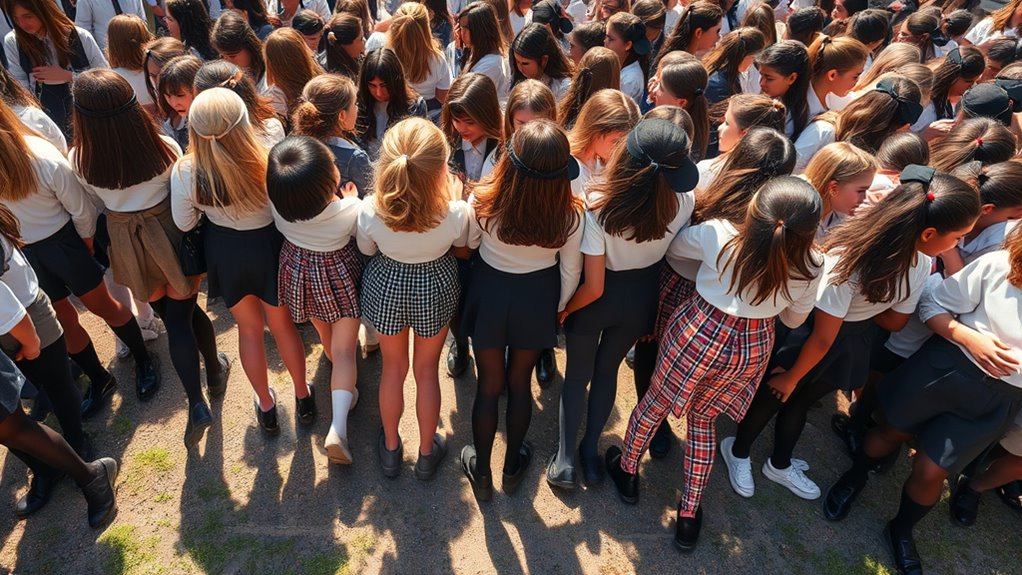
Throughout history, school dress codes have reflected the cultural values and societal norms of their time. You’ve likely noticed how dress code enforcement varies across regions and eras, often mirroring broader social attitudes. In some periods, strict rules aimed to uphold modesty and discipline, while at others, they became tools of fashion activism, challenging traditional standards. These variations reveal how schools have historically used dress codes to reinforce societal expectations or push back against them. Cultural differences influence what’s deemed appropriate, from uniform styles to restrictions on personal expression. By understanding these historical perspectives, you can see how dress codes serve not just as rules but as reflections of the values and struggles embedded within different societies. Additionally, the influence of school dress code enforcement on student identity and social dynamics continues to evolve in modern educational settings.
Gender Norms and Expectations in School Uniforms
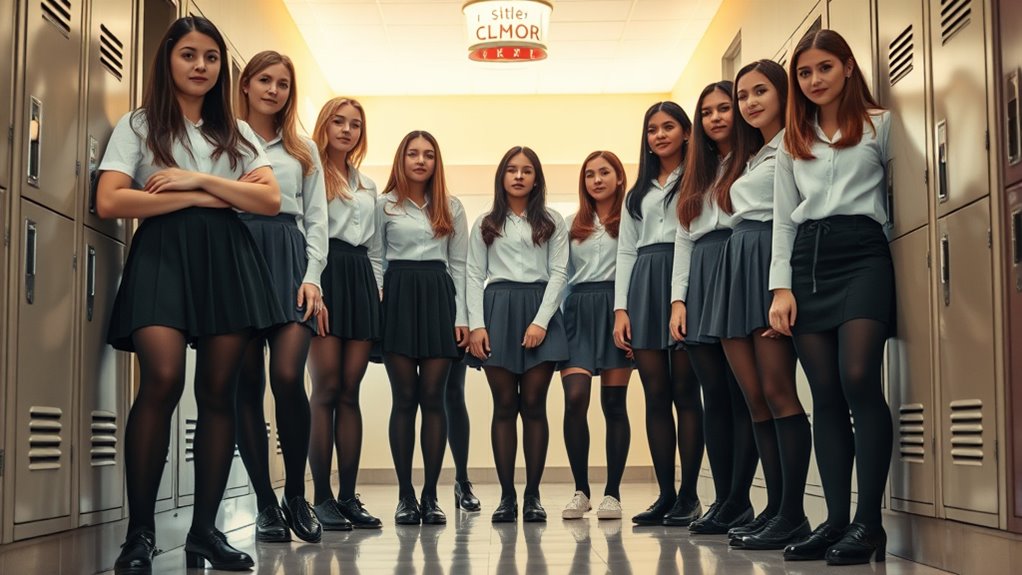
You might notice that school uniforms often reinforce specific gender expectations, shaping how students express themselves. Cultural dress norms also influence what is considered appropriate, affecting students from diverse backgrounds. These standards can impact how you see yourself and your identity within the school environment. Additionally, the design choices, such as the inclusion of tights or skirts, play a role in perpetuating gender norms that can limit individual expression.
Gendered Uniform Expectations
Gendered uniform expectations often reflect and reinforce societal norms about what boys and girls should wear, shaping students’ experiences and perceptions of themselves. These expectations influence dress code enforcement, making it more strict for one gender or another. You might notice that girls are often required to wear skirts or dresses, while boys wear trousers, reinforcing traditional gender roles. Such gendered expectations can create discomfort and limit self-expression. To understand this better, consider:
- How dress codes enforce specific clothing choices based on gender
- The impact of these expectations on students’ confidence
- Whether uniform policies perpetuate stereotypes
- The role of societal norms in shaping school dress standards
- Recognizing that creativity can be cultivated by anyone, regardless of skill level, which encourages challenging traditional dress norms and promoting individual self-expression.
Cultural Dress Norms
Cultural dress norms heavily influence school uniform policies by reflecting and reinforcing societal expectations about gender and identity. These norms shape what is considered appropriate attire, often emphasizing fashion conformity to uphold traditional values. Uniforms serve as social signaling tools, communicating students’ adherence to cultural standards and group belonging. For instance, certain cultures may expect girls to wear skirts and boys to wear pants, reinforcing gender roles through clothing choices. Such expectations can limit individual expression and perpetuate stereotypes. By aligning uniform policies with cultural dress norms, schools inadvertently maintain societal hierarchies and gender distinctions. Understanding these influences helps reveal how uniforms do more than standardize appearance—they also uphold deeper cultural values regarding gender and social order.
Impact on Student Identity
School uniform policies do more than create a uniform appearance; they also shape how students perceive and express their identities. These policies influence gender norms and expectations, often reinforcing stereotypes that affect dress code compliance and peer conformity. When uniforms restrict certain clothing choices, you might feel pressured to conform to gendered standards, impacting your sense of self. Uniforms can either suppress individuality or shape it within narrow boundaries. Additionally, such policies can have a significant impact on cultural perceptions of identity, further influencing how students navigate their personal and social roles. Consider these points: 1. Uniforms may limit personal expression, reinforcing traditional gender roles. 2. Dress code compliance pressures can lead to conformity, reducing diversity in style. 3. Peer conformity influences how students navigate their identity within the uniform standards. 4. These dynamics can either empower or suppress your authentic self, depending on how the policies are enforced.
Policies and Controversies Surrounding Tights Restrictions

Tights restrictions in school dress codes often spark heated debates, as they can be seen as both a matter of discipline and personal expression. Schools enforce dress code policies to maintain uniformity, but disagreements arise over how strictly these policies should be applied. Some argue that banning tights is necessary for consistent policy enforcement, ensuring all students adhere to standards. Others believe such restrictions unfairly target personal choices and comfort. Controversies often center on whether dress codes are equitable or discriminatory, especially when enforcement varies among students. Schools face the challenge of balancing discipline with respect for individuality. Additionally, dress code policies may sometimes conflict with personal comfort and the desire for self-expression. Ultimately, policies around tights reflect broader debates about authority, fairness, and the limits of dress code enforcement within educational environments.
The Role of Authority and Student Rights
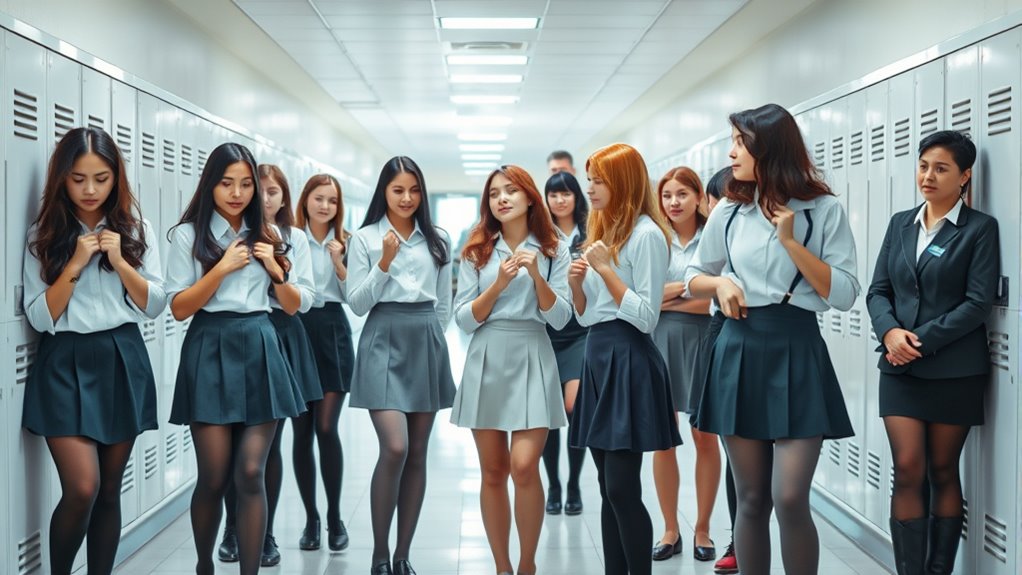
As a student, you’re impacted by how authority figures enforce uniform policies and make decisions about dress codes. You might wonder how much control you should have over your choices while ensuring safety and respect in school. Finding the right balance between authority’s influence and your right to express yourself is essential in this discussion. Considering the importance of color accuracy and how it affects visual perception can also shed light on the significance of individual expression within uniform standards.
Authority’s Influence on Uniforms
When authorities set dress code policies, they directly influence what students can wear, often balancing institutional rules with individual rights. You’ll notice that administration enforcement varies, impacting how strictly rules are applied. Compliance challenges arise when students push boundaries or interpret guidelines differently. To understand this influence, consider these points:
- Administrators enforce dress codes through inspections and disciplinary actions.
- Policies often reflect cultural or moral standards established by authority figures.
- Enforcement inconsistencies can lead to perceptions of unfair treatment.
- Balancing authority with student rights involves steering legal and ethical considerations.
- The cultural context of a community also plays a significant role in shaping dress code policies and their enforcement.
Ultimately, authority’s influence shapes uniforms’ role in education, but it can also create tension when enforcement clashes with personal expression.
Student Autonomy Concerns
While authorities set dress code policies to maintain order and uphold standards, students often seek to assert their independence through their clothing choices. This creates tension around dress code enforcement, as students view some rules as restrictions on their student autonomy. You might feel that strict dress codes limit your ability to express individuality or challenge authority. When rules are enforced rigidly, it can spark frustration or rebellion, especially if students believe their rights are being overlooked. Balancing the need for discipline with respect for personal expression becomes complex, and some argue that overly strict enforcement stifles student autonomy. Recognizing recurring patterns, such as the emphasis on uniform components like tights, can provide insight into how these policies reflect broader societal values and recognize student perspectives. Ultimately, the debate centers on how to respect students’ rights while maintaining a constructive learning environment.
Balancing Safety and Expression
Balancing safety and expression requires careful consideration of both students’ rights and the authority’s responsibility to maintain a secure environment. When it comes to dress code enforcement, you face the challenge of respecting individuality while ensuring safety. Fashion activism has empowered students to push boundaries, advocating for more inclusive policies. To navigate this, consider these points:
- Establish clear guidelines that prioritize safety without suppressing personal style.
- Recognize students’ rights to express themselves through clothing, especially in movements like fashion activism.
- Use consistent enforcement to prevent perceptions of bias or unfair treatment.
- Engage students in policy discussions to balance safety concerns with their desire for self-expression.
- Understanding the tax implications of personal choices can influence how students and schools approach clothing and accessories, ensuring policies are both practical and fair.
This approach helps create a respectful environment where safety and personal expression coexist.
Impact on Personal Expression and Identity
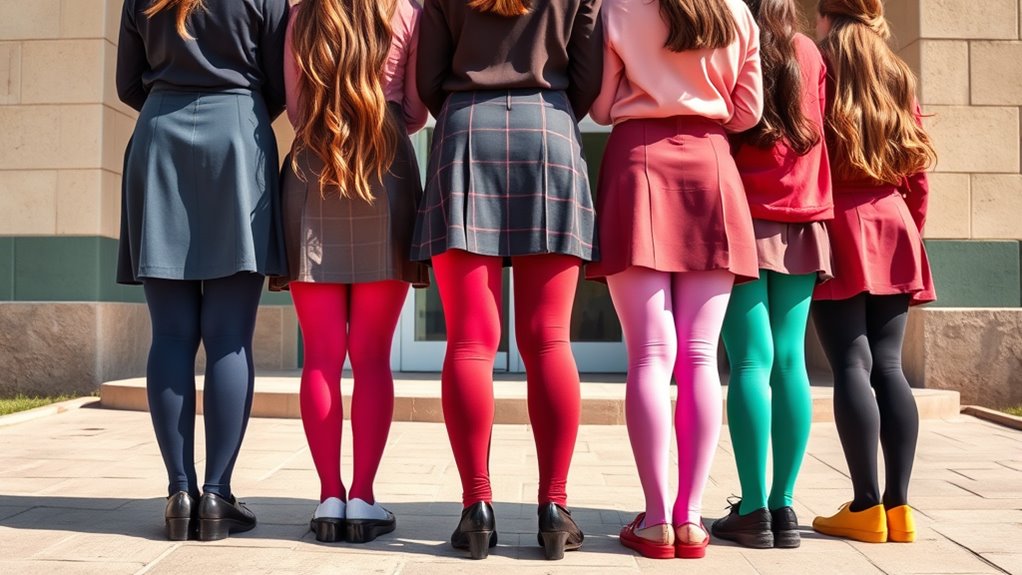
School dress codes can considerably shape how students express their personal identities, often limiting their ability to showcase individuality through clothing choices. When you focus on dress code compliance, you might feel restricted from wearing what truly reflects your personality. Peer influence also plays a role; classmates may pressure you to conform or push boundaries. Sometimes, dress codes suppress unique styles, making it harder to stand out or feel authentic. Here’s a quick look at how dress codes impact self-expression:
| Aspect | Positive Impact | Negative Impact |
|---|---|---|
| Creativity | Limits distractions, promotes focus | Restricts personal style |
| Peer Influence | Fosters group cohesion | Suppresses individuality |
| Confidence | Encourages professionalism | Reduces self-expression |
| Cultural Identity | Promotes uniformity | Diminishes cultural expression |
| Personal Comfort | Ensures appropriateness | May ignore comfort preferences |
Additionally, dress codes can limit personal freedom by constraining students’ choices beyond just appearance.
Future Trends and Changing Attitudes Toward Dress Codes
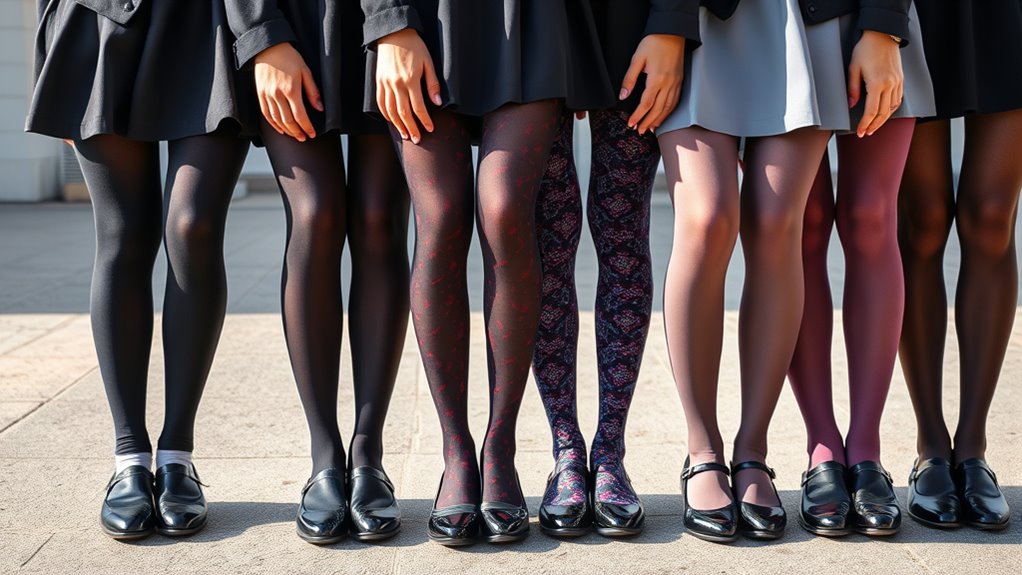
As attitudes toward dress codes continue to evolve, schools and communities are increasingly favoring policies that balance uniformity with personal expression. Future trends point toward greater dress code flexibility, allowing students to showcase individuality while maintaining discipline. You can expect schools to adopt more inclusive guidelines that accommodate diverse styles and cultural attire. Fashion innovation will play a key role, introducing new fabrics and designs that blend comfort with self-expression. Here are four ways this shift might unfold:
- Implementing flexible dress code policies that adapt to student needs
- Incorporating innovative fabrics for comfort and style
- Offering designated days for personalized outfits
- Emphasizing a culture of respect alongside dress code adherence
This evolving landscape aims to empower students without compromising school standards.
Frequently Asked Questions
How Do Tights Influence Student Academic Performance and Focus?
Tights can impact your academic performance and focus by affecting your comfort levels. If they’re too tight or uncomfortable, you might become distracted by sensory distractions, making it harder to concentrate in class. On the other hand, comfortable tights help you stay focused and feel confident, which can improve your engagement and overall performance. Choosing the right fit guarantees comfort, reducing sensory distractions and supporting your learning experience.
Are There Notable Differences in Tights Policies Between Private and Public Schools?
You’ll find notable differences in tights policies between private and public schools. Private schools often have greater autonomy over dress code enforcement, allowing them to set specific rules on tights, including color and style. Public schools may follow standardized regulations, which can be more relaxed or strictly enforced depending on district policies. These distinctions influence how students adhere to dress codes, impacting overall uniform policies and their enforcement.
What Legal Challenges Have Been Made Against Tights Restrictions in Schools?
You may encounter legal challenges or dress code lawsuits if tights restrictions infringe on students’ rights. Schools face lawsuits when policies are seen as discriminatory or overly restrictive, especially against gender norms. Legal challenges often argue that such tights restrictions violate students’ rights to dress and express themselves freely. These cases prompt schools to review and sometimes modify their dress codes to make certain they align with constitutional protections and avoid legal repercussions.
How Do Tights Policies Impact Students’ Mental Health and Self-Esteem?
Tights policies can negatively impact your mental health and self-esteem by shaping your body image and increasing peer pressure. When restrictions limit your choices or make you feel judged for what you wear, you might struggle with confidence and self-acceptance. This can lead to anxiety, frustration, and a sense of exclusion, making it harder to focus on learning and socializing. It’s important that dress codes promote comfort and respect for individual differences.
What Role Do Parents Play in Shaping School Dress Code Decisions?
Did you know that 68% of parents actively advocate for more inclusive dress codes? You play a crucial role in shaping school dress code decisions through parental influence and advocacy. Your voice can push for policies that respect students’ individuality and comfort. By engaging with school officials and participating in meetings, you help guarantee dress codes are fair and inclusive, making a positive impact on students’ well-being and self-esteem.
Conclusion
As you consider the politics behind tights in school uniforms, ask yourself: should personal expression be limited by outdated rules? Dress codes reflect broader societal norms, but they also shape student identities and freedoms. By understanding the cultural and gender dynamics at play, you can see how these policies impact more than just appearances. Will we move toward more inclusive, flexible uniforms that respect individuality, or stay confined by restrictive traditions? The choice is yours.