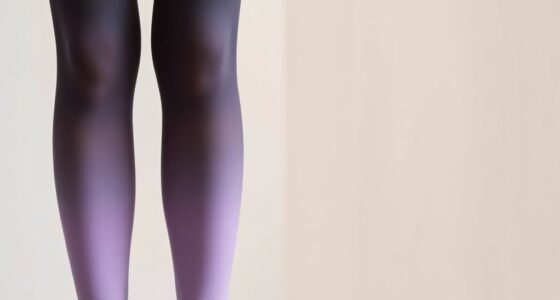

Mastering ombre dyeing on nylon blends involves careful preparation, precise color mixing, and smooth application techniques. You’ll want to set up an organized workspace, select harmonious hues, and blend colors gradually to achieve natural gradients. Controlling dye absorption and avoiding streaks require practice and patience. With proper fixing and care, your fabric will showcase vibrant, long-lasting ombre effects. Keep exploring these methods, and you’ll discover how to create stunning, seamless progressions every time.

Get your wardrobe favorites delivered free with Prime
- Fast, free delivery on millions of items
- Prime Video, Amazon Music and more included
- Member-only deals all year
Key Takeaways
- Prepare nylon fabric by thorough cleaning and pre-wetting to ensure smooth dye absorption and minimize texture issues.
- Use gradual, controlled dye application with blending tools like sponges or brushes to achieve seamless ombre gradients.
- Mix dyes carefully, selecting harmonious shades that transition smoothly from dark to light for a natural gradient effect.
- Fix the color with gentle rinsing and proper drying techniques to preserve the vibrancy and longevity of the ombre design.
- Troubleshoot common issues like streaks or uneven color by re-blending, adjusting dye concentration, and testing on sample swatches first.
Gathering Supplies and Preparing Your Workspace
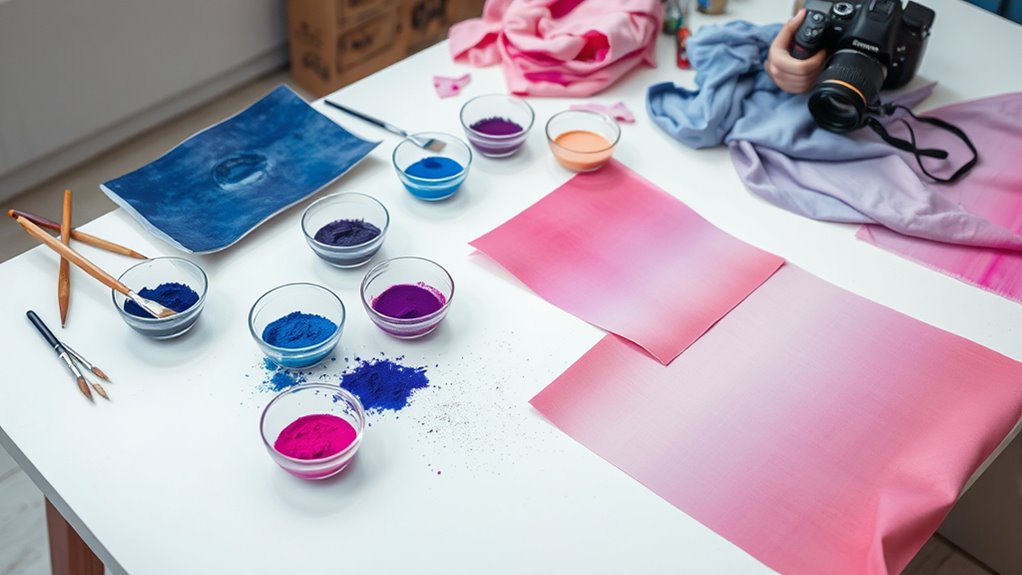
Before you begin ombre dyeing on nylon blends, it’s essential to gather all your supplies and set up a clean, organized workspace. Understanding dye color theory helps you choose harmonious shades, so plan your color progressions thoughtfully. Make certain your workspace is ergonomically arranged to prevent fatigue—position your dye containers, brushes, and tools within easy reach. Use protective coverings like plastic or old newspapers to keep the area tidy. Wearing gloves and aprons protects your skin and clothing. Prepare your dyes in advance, following manufacturer instructions, to streamline the process. Good lighting is vital for accurate color application and blending. Proper color calibration ensures consistent hues throughout your project. A well-organized, ergonomic setup not only makes dyeing easier but also helps you achieve a professional-looking ombre effect on nylon blends.
Choosing and Mixing the Perfect Dye Colors
Choosing the right dye colors sets the foundation for a stunning ombre effect on nylon blends. To achieve smooth color blending and seamless shade progressions, select hues that complement each other. Start with a darker shade at the bottom and gradually lighten toward the top. Use the table below to plan your color palette:
| Base Color | Transition Shade | Final Shade |
|---|---|---|
| Deep Blue | Sky Blue | Pale Blue |
| Burgundy | Rose Pink | Soft Pink |
| Forest Green | Lime Green | Mint Green |
| Charcoal | Light Gray | White |
Mix colors carefully to ensure consistent shade transition, creating a harmonious gradient. Remember, the importance of color harmony and mixing precisely will help you create a beautiful ombre effect.
Techniques for Achieving a Smooth Gradient Effect

To achieve a smooth gradient effect in ombre dyeing on nylon blends, you need to master blending techniques that create seamless shifts between shades. Focus on smooth color blending to guarantee a natural gradient transition. Start by gradually lowering the fabric into the dye bath, moving slowly to prevent harsh lines. Use a sponge or brush to softly blend colors at the transition zone, softening any abrupt edges. Keep the dye bath at a consistent temperature to promote even diffusion. Constantly monitor your fabric to control the gradient’s smoothness.
- Feel the thrill of watching colors meld effortlessly
- Experience the satisfaction of flawless gradient transitions
- Embrace patience as your masterpiece takes shape
- Revel in the beauty of seamless color blending
- Celebrate your skill in creating stunning ombre effects
Dyeing Process: Step-by-Step Application on Nylon Blends
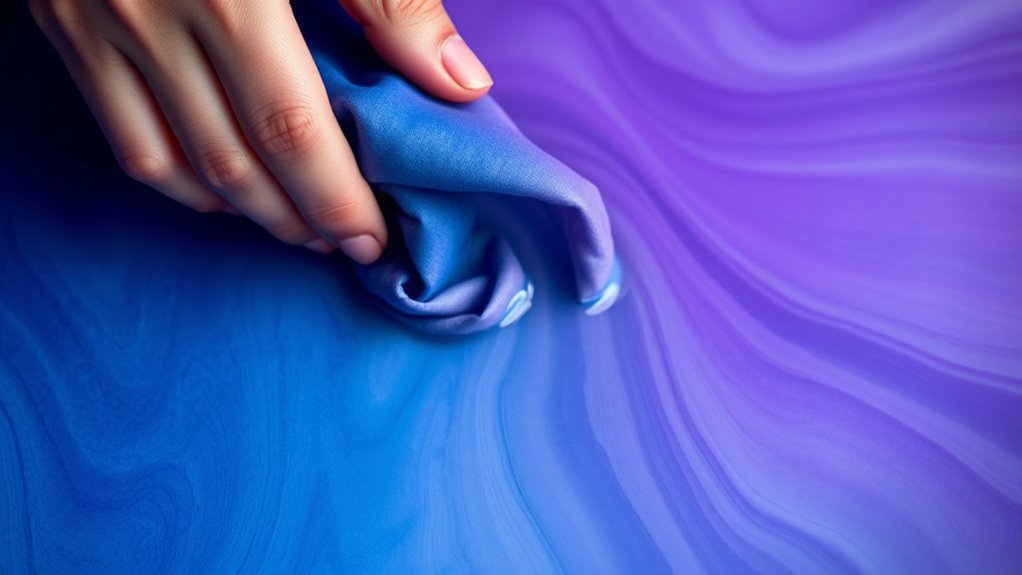
To start, you’ll need to prepare your nylon blend by cleaning it thoroughly to guarantee even dye absorption. Next, apply the dye gradually, working carefully to create a smooth ombre effect. Finally, fix the color with proper rinsing and setting steps to achieve a vibrant, lasting gradient. Incorporating high-quality dyes can significantly improve the vibrancy and durability of the ombre effect.
Preparing the Nylon Base
Have you prepared the nylon blend properly before applying the dye? Ensuring the base is ready is essential for vibrant, even results. Start by cleaning the fabric thoroughly to remove oils and residues that hinder dye absorption. Check the fiber elasticity; flexible fibers absorb dye more evenly, preventing streaks. Submerge the fabric in a pre-wetting solution to open up the fibers and promote uniform dye uptake. Handle the nylon gently to avoid stretching or distortion. Remember, a well-prepared base sets the stage for stunning ombre effects. Additionally, considering the fiber type can influence how the dye interacts with the material, so selecting the appropriate nylon blend can lead to more consistent dyeing outcomes.
Gradual Dye Application Technique
Begin by applying dye gradually, starting from the lightest shade at one end of the fabric and working toward the darker area. This technique guarantees seamless color blending, creating a smooth ombre progression. For best results, choose the right fabric selection—nylon blends with a tight weave absorb dye evenly, making the gradient more consistent. Use a sponge or brush to apply dye in layers, gradually increasing saturation as you move along the fabric. Keep your strokes light and controlled to prevent harsh lines. Continuously blend the edges where the colors meet to achieve a natural gradient effect. Patience is key; taking your time during this step helps you create a flawless ombre dye with a seamless color transition. Understanding fabric absorption is essential in achieving a smooth gradient.
Fixing and Rinsing Process
After completing the dye application, it’s vital to fix the color to guarantee it sets properly and resists fading. Proper dye fixation ensures vibrant, long-lasting results. Use gentle rinse techniques to carefully wash out excess dye without disturbing the ombre effect. Here are key steps to follow:
- Use cool water to prevent color bleeding.
- Gently swirl the fabric to remove unbound dye.
- Avoid wringing to protect the dye fixation.
- Add a mild, dye-settling solution if needed.
- Pat dry with a soft towel instead of twisting.
These steps help lock in the color, giving your nylon blend a stunning, gradient finish. Rinsing techniques are crucial for achieving a smooth, professional look while maintaining the fabric’s integrity and vibrant hues.
Caring for Your Dyed Nylon Fabric to Ensure Longevity
To keep your dyed nylon fabric looking vibrant and fresh, proper care is essential. Addressing colorfastness issues begins with gentle washing—use cold water and mild detergent to prevent fading. Avoid harsh chemicals or bleach, which can damage the dye. When drying, air-dry your fabric away from direct sunlight to preserve its color. Store your nylon blends properly to prevent unnecessary wear; fold them neatly and keep them in a cool, dry place. Using airtight containers or garment bags can help protect against dust and moisture. Avoid hanging wet or damp fabric for long periods, which could cause stretching or color bleeding. Regular maintenance and understanding proper priming techniques can also help extend the life of your dyed fabric. Following these storage tips and care practices guarantees your ombre dye job remains stunning and lasts longer.
Troubleshooting Common Challenges in Ombre Dyeing
Ombre dyeing can sometimes present challenges, but understanding common issues can help you troubleshoot effectively. One frequent problem is uneven color blending, often caused by inconsistent fabric texture or uneven application. Another issue is color bleeding, which can ruin your gradient if the dye isn’t fully set or rinsed properly. To prevent these, check your fabric’s texture—smooth, tightly woven fabric yields better results. Watch for excessive dye saturation that causes blotches or streaks. Also, verify you’re using the right dye concentration and timing. Proper sound healing science principles, such as controlling the environment and technique, can also influence dye absorption and result in a more even gradient. Here are common challenges to watch for:
- Uneven color transition or streaks
- Excessive color bleeding
- Fabric texture inconsistencies affecting fade
- Hard-to-achieve smooth gradient
- Uneven dye absorption or patchiness
Address these issues promptly for a flawless ombre effect.
Frequently Asked Questions
How Can I Prevent Color Bleeding During the Dyeing Process?
To prevent color bleeding during dyeing, you should focus on improving colorfastness issues and adjusting your dye formulation. Start by thoroughly rinsing your fabric before dyeing to remove any residues, then choose a dye specifically formulated for nylon blends. Use the right concentration and fixatives as recommended, and avoid over-soaking. Proper heat and time control also help set the dye, minimizing bleeding and ensuring vibrant, long-lasting results.
What Are the Best Methods to Fix Uneven Color Transitions?
Imagine your piece as a canvas waiting for harmony. To fix uneven color shifts, you should focus on precise color correction, gradually blending the shades for a seamless gradient. Lightly re-dye or gently feather the edges with a sponge or brush, working from dark to light. Patience is key—this technique ensures smooth gradient blending and transforms your work into a flawless ombre masterpiece.
How Do Different Nylon Blend Ratios Affect Dye Absorption?
When you consider how nylon blend ratios affect dye absorption, you notice that nylon composition plays a key role in dye affinity. Higher nylon content generally results in better dye uptake, leading to richer, more vibrant colors. Conversely, blends with less nylon may absorb dye unevenly, causing patchiness. Understanding the specific nylon composition helps you control dye affinity, ensuring consistent and smooth ombre progressions in your dyeing projects.
Can Ombre Dyeing Be Achieved on Synthetic Fabrics Besides Nylon?
You can achieve ombre dyeing on synthetic fabrics beyond nylon by using proper synthetic dyeing techniques. Start with thorough fabric preparation, ensuring the surface is clean and pre-treated to help dye absorption. Synthetic dyes, like polyester dyes, work well on materials such as polyester or acrylic. By carefully controlling immersion and gradient application, you can create smooth ombre effects on various synthetic fabrics, expanding your creative options beyond nylon blends.
What Safety Precautions Should I Take When Working With Chemical Dyes?
When working with chemical dyes, you want to prioritize your safety through protective gear and ventilation safety. Wear gloves, goggles, and a mask to prevent skin and eye contact, and make sure you’re in a well-ventilated area to avoid inhaling fumes. Keep a clean workspace, follow manufacturer instructions carefully, and dispose of chemicals responsibly. Staying cautious and prepared helps you enjoy dyeing while minimizing health risks effectively.
Conclusion
With patience and a steady hand, you’ve transformed your nylon blend into a flowing watercolor masterpiece. Like a painter blending hues on a canvas, your ombre technique breathes life into the fabric, turning it into a work of art. Remember, each subtle shift of color narrates a story of your craftsmanship. Cherish your creation, and let it inspire your next vibrant journey into the colorful world of dyeing.
Halloween Picks
halloween
As an affiliate, we earn on qualifying purchases.