
Wearing tights daily can harm your skin by trapping heat and moisture, which fosters bacteria and fungi growth. This can lead to infections, irritation, and clogged pores. Tight garments also cause friction, leading to redness, rashes, and long-term skin damage like calluses. They may even compress nerves and blood vessels, causing numbness or pain. To protect your skin, it’s important to choose breathable fabrics and give your skin breaks. Keep going for more tips and insights.
Key Takeaways
- Tight tights trap heat and moisture, promoting bacterial and fungal growth, which can lead to infections and skin irritation.
- Continuous friction from tight clothing damages the skin’s natural barrier, increasing redness, rashes, and calluses over time.
- Prolonged wear may impair circulation and compress nerves, causing numbness, tingling, and long-term nerve or blood flow issues.
- Synthetic fabrics prevent sweat evaporation, worsening pore congestion and microbial buildup, raising infection risks.
- Proper hygiene, choosing breathable fabrics, and limiting daily wear can reduce skin problems associated with tights.
The Impact of Synthetic Materials on Skin Health
Synthetic materials like nylon and polyester are common in tights because they’re affordable and stretchy. However, these fabrics can trap heat and moisture against your skin, creating a perfect environment for bacteria and fungi to thrive. When you wear non-breathable tights daily, sweat and oils can’t evaporate, increasing the risk of infections like athlete’s foot and fungal toenail infections. These materials don’t allow your skin to breathe, leading to irritation and a higher chance of developing conditions like jock itch. Over time, the constant moisture buildup can weaken your skin’s natural barrier, making it more vulnerable to damage. Additionally, wearing tight synthetic clothing can sometimes affect skin health, which reflects a playful and friendly nature. Proper care and occasional breaks from tight, synthetic garments can help maintain your skin’s integrity and reduce the risk of issues. Regularly choosing breathable fabrics and ensuring proper hygiene can also significantly improve skin comfort and health.
How Tight Clothing Can Lead to Fungal and Bacterial Infections
Wearing tight clothing traps moisture and warmth against your skin, creating the perfect environment for bacteria and fungi to grow. When your clothing doesn’t allow air to circulate, these microbes thrive, increasing your risk of infections like athlete’s foot or bacterial abscesses. The more you wear non-breathable tights daily, the higher your chances of developing these skin issues. Additionally, self watering plant pots exemplify how controlled moisture levels can promote healthy environments, contrasting with how excess moisture against the skin can lead to problems. Monitoring microbial growth on the skin can help detect early signs of infection before they worsen.
Moisture Traps Promote Bacteria
Tight clothing creates a warm, moist environment on your skin that encourages bacteria and fungi to thrive. When you wear tights daily, sweat and oil get trapped, making it easier for germs to multiply. Imagine this:
- Sweat pooling in the fabric, turning your tights into a breeding ground.
- Dead skin cells accumulating, providing food for bacteria and fungi.
- Friction causing tiny skin cracks, letting pathogens enter and spread.
This environment promotes infections like athlete’s foot, bacterial abscesses, and even jock itch. Without proper ventilation, your skin can’t breathe, heightening the risk. The longer you wear tight tights without breaks, the more likely you are to develop these irritating and sometimes harmful skin conditions. Additionally, AI safety measures are crucial in developing better tools to detect and prevent such infections through innovative skincare solutions. Proper hygiene practices and regular skin checks can help reduce these risks and keep your skin healthy. Regularly airing out your skin allows moisture to evaporate and reduces the chances of bacterial buildup.
Warmth Favors Fungal Growth
When your skin is trapped in a warm, moist environment created by tight tights, fungi and bacteria find ideal conditions to grow rapidly. The synthetic fabrics and close fit prevent air from circulating, raising skin temperature and humidity levels. This creates a perfect breeding ground for fungi like those responsible for athlete’s foot, jock itch, and toenail infections. Bacteria also thrive in these conditions, increasing the risk of skin abscesses and cellulitis. The constant moisture and heat weaken your skin’s natural defenses, making it easier for infections to take hold. Wearing tights daily without giving your skin time to breathe considerably raises your chances of developing these fungal and bacterial problems, especially in areas where sweat and moisture tend to accumulate. Regularly changing and washing tights can help reduce the bacterial buildup and protect your skin health. Additionally, skin barrier function may be compromised by prolonged exposure to such conditions, further elevating infection risk.
Poor Ventilation Increases Risk
Lack of proper ventilation in tight clothing traps heat and moisture against your skin, creating an ideal environment for fungal and bacterial growth. When your skin can’t breathe, sweat and oils build up, increasing infection risk. Imagine:
- Sweat pooling in folds of fabric, turning damp and sticky.
- Fungi like athlete’s foot thriving in warm, moist areas between toes or on thighs.
- Bacteria multiplying on sweaty skin, causing redness, rashes, or odor.
This environment fuels infections and skin irritation. Without airflow, your skin remains damp longer, making it easier for pathogens to take hold. Tight tights that don’t breathe cut off your skin’s natural ability to dry and recover, considerably raising the chance of fungal and bacterial issues over time. Proper airflow and ventilation can help reduce these risks and promote healthier skin. Ensuring your clothing allows for proper skin breathability is key in preventing unwanted infections and maintaining skin health. Additionally, choosing breathable fabrics can further enhance moisture-wicking and support skin health.
Friction and Skin Damage From Prolonged Wear
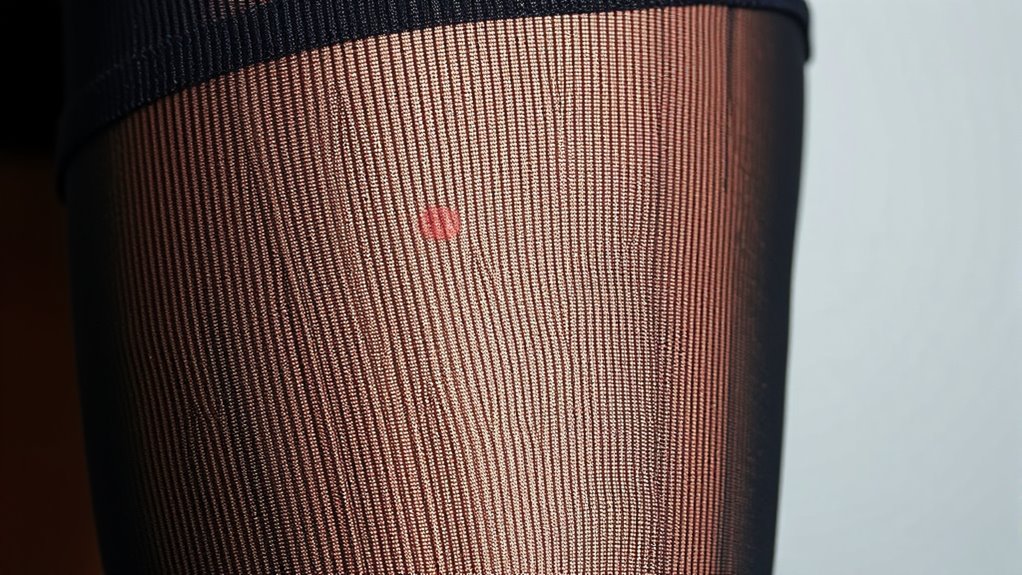
Wearing tights for long periods can cause your skin to become red and irritated from constant friction. This ongoing rubbing may lead to calluses and rough patches over time. If you keep this up, your skin’s natural barrier could weaken, making it more prone to damage and discomfort.
Skin Redness and Rashes
Prolonged wear of tight tights can lead to skin redness and rashes caused by constant friction against the skin. This repeated rubbing irritates the skin’s surface, making it inflamed and prone to redness. You might notice these issues in areas like your thighs or calves, where the fabric presses tightly against your skin. Imagine:
- Bright red patches spreading across your skin, feeling warm to the touch.
- Itchy, uncomfortable rashes that become more irritated with movement.
- Small bumps or soreness developing in areas of high friction.
These reactions weaken your skin’s natural barrier, increasing vulnerability to infections and long-term damage. To avoid this, it’s essential to limit tight tights’ wear, especially without breaks, and choose breathable fabrics to reduce friction-related skin issues.
Friction-Induced Calluses
Constant rubbing and pressure from tight tights can lead to the formation of calluses on your skin. When skin repeatedly irritates against fabric, it thickens to protect itself, resulting in hardened, rough patches. This process is your body’s way of cushioning areas exposed to continuous friction. Over time, these calluses can become painful and may crack or fissure, increasing infection risk. To understand where calluses may form, consider this table:
| Area of Friction | Common Callus Sites |
|---|---|
| Thighs | Inner thighs |
| Knees | Front of knees |
| Ankles | Bony prominences |
| Toes | Top of toes |
| Waist | Waistband contact points |
If you wear tights daily without relief, you’re more prone to developing these thickened skin patches, which can cause discomfort and long-term skin issues. Prolonged wear of tight clothing can significantly increase the likelihood of callus formation and skin damage. Additionally, skin protection strategies like moisturization can help reduce friction and prevent calluses from forming, especially if you include regular moisturizing routines. Incorporating exfoliation into your skincare regimen can also help remove dead skin cells and minimize thickening. Moreover, proper footwear fit can play a crucial role in minimizing unnecessary pressure and friction on your skin.
Acne and Pore Blockage Caused by Moisture Trapped in Tights
Moisture trapped beneath tight tights creates an ideal environment for bacteria and oil to clog your pores. As sweat and sebum build up, your skin struggles to breathe, leading to breakouts and blackheads. Imagine:
- Sweat pooling in the creases of your thighs, turning sticky and heavy.
- Oils mixing with dirt on your skin’s surface, forming stubborn clogs.
- Bacteria thriving in the damp, warm environment, causing inflamed pimples and pustules.
- The lack of airflow due to synthetic fabrics preventing sweat evaporation, making the problem worse. Wearing tights without breaks traps moisture against your skin, blocking pores and increasing acne risk. Synthetic fabrics prevent sweat from evaporating, making the problem worse. Over time, this environment fuels breakouts, leaving your skin irritated and congested. Recognizing narcissistic traits in behavior can help you better understand and address underlying issues that may contribute to emotional stress.
Nerve Compression and Circulatory Concerns
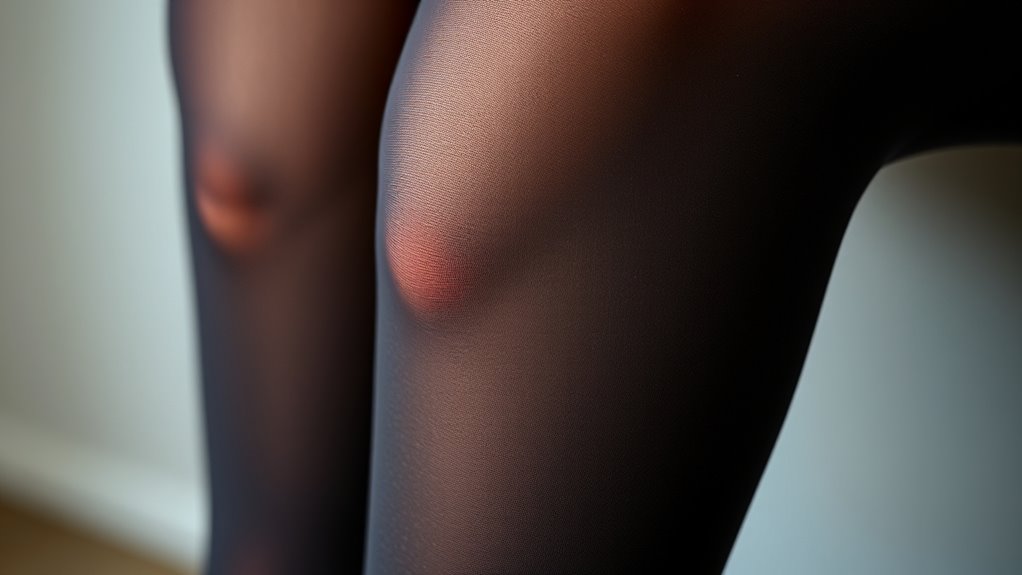
Wearing tights that are too tight can put pressure on your nerves, leading to tingling, numbness, or even temporary paralysis. You might notice signs of poor circulation, like skin redness or coldness, especially after extended wear. If you ignore these symptoms, you risk long-term nerve damage or circulatory problems.
Nerve Compression Risks
Wearing tights that are too tight can compress your nerves, leading to tingling, numbness, and sometimes pain in your legs and feet. This pressure can cause:
- Sharp sensations that feel like pins and needles, making your legs feel prickly.
- Loss of feeling or numbness, as nerve signals get blocked.
- Weakness or difficulty moving, if nerve compression persists.
Over time, this compression may cause lasting nerve damage or chronic discomfort. You might notice these symptoms after long hours of tight wear, especially around your thighs and calves. Severe cases could result in temporary paralysis or require medical intervention. Always pay attention to persistent numbness or pain, and loosen your tights if you experience these warning signs.
Circulation Impairment Signs
Tight tights can restrict blood flow, leading to noticeable signs of circulation impairment. You might notice skin redness, especially around the thighs or calves, because restricted blood causes increased sensitivity. Indentations or marks on your skin after removing tights are common and indicate pressure on blood vessels. You may also feel tingling, numbness, or a “pins and needles” sensation in your legs or feet, signaling impaired circulation. Over time, persistent tightness can cause swelling or varicose veins due to blood pooling. If you experience cold extremities or prolonged discomfort, it’s a sign your circulation is compromised. These symptoms highlight how wearing tight tights can interfere with proper blood flow, risking long-term circulatory issues if not addressed.
Skin Irritation, Redness, and Long-term Damage
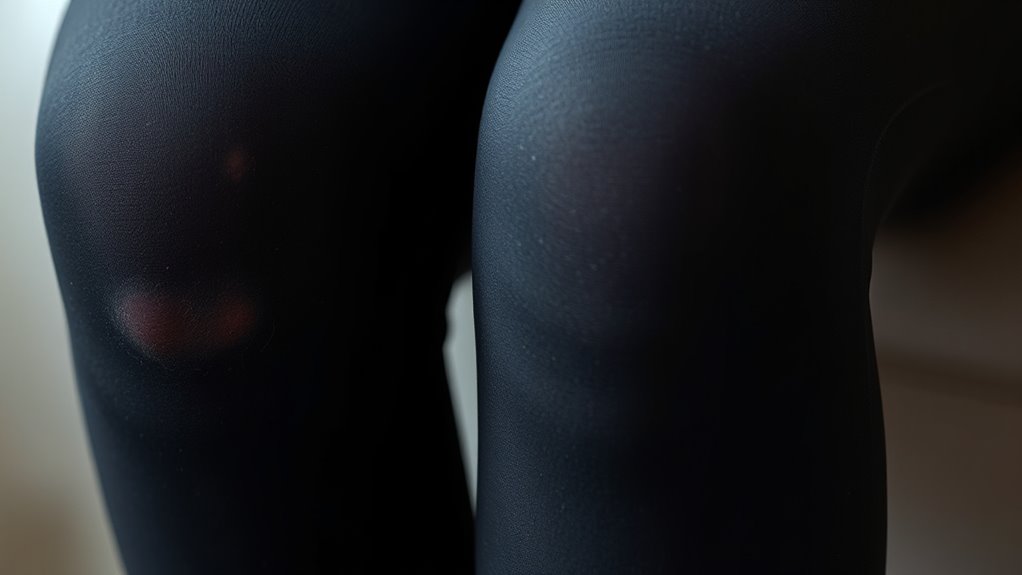
Constant friction from tight tights can cause skin irritation, leading to redness, itching, and rashes. Over time, this repeated rubbing weakens your skin’s natural barrier, making it more vulnerable to infections and damage. Long-term effects include:
Wearing tight tights repeatedly damages skin, causing irritation, redness, and long-term barrier weakness.
- Thickened, calloused skin that develops in areas of continuous friction, creating rough patches.
- Persistent redness and sensitivity that can evolve into chronic inflammation.
- Potential for lasting skin barrier dysfunction, which hampers your skin’s ability to heal and defend itself.
If you wear tights daily without giving your skin a break, you risk cumulative damage that might lead to permanent skin issues. Proper ventilation and occasional skin rest are key to preventing these long-term consequences.
The Risks of Pressure Marks and Bruising
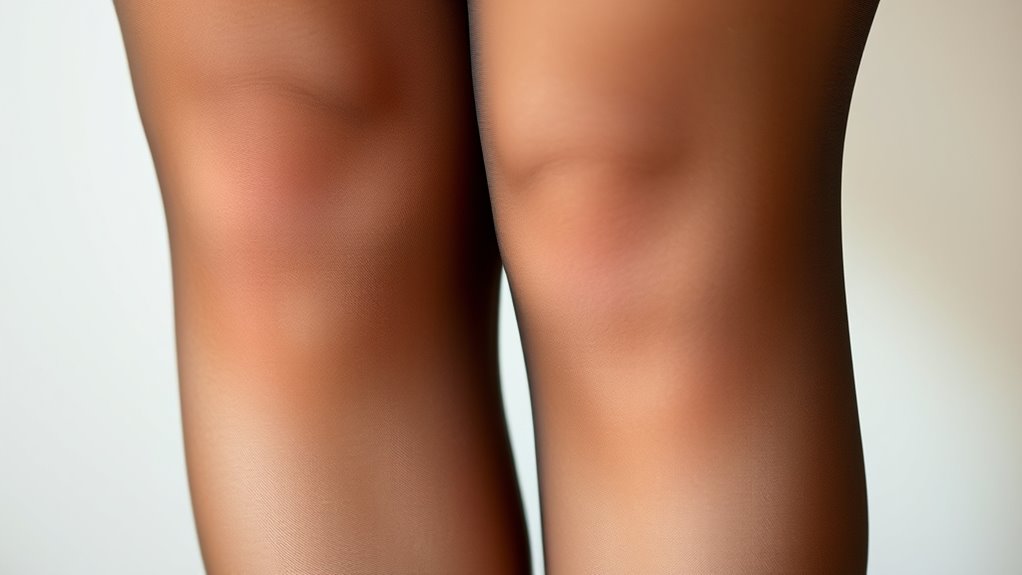
Pressure marks and bruising are common risks when tight tights compress your skin for extended periods. You may notice indentations or red lines after wearing them, especially around your waist, thighs, or hips. These marks occur because the pressure restricts blood flow and causes temporary damage to small blood vessels. If you frequently wear tight tights, these marks can become more pronounced and persistent, leading to discoloration and skin sensitivity. Bruising may also develop if pressure damages blood vessels beneath the skin, especially if your skin is fragile or if you bump into objects while wearing tight garments. Over time, repeated pressure can weaken the skin’s elasticity and contribute to long-term skin discoloration or even vascular issues. To prevent this, opt for well-fitting tights that don’t overly restrict circulation.
How Tight Garments Affect Digestive and Overall System Health
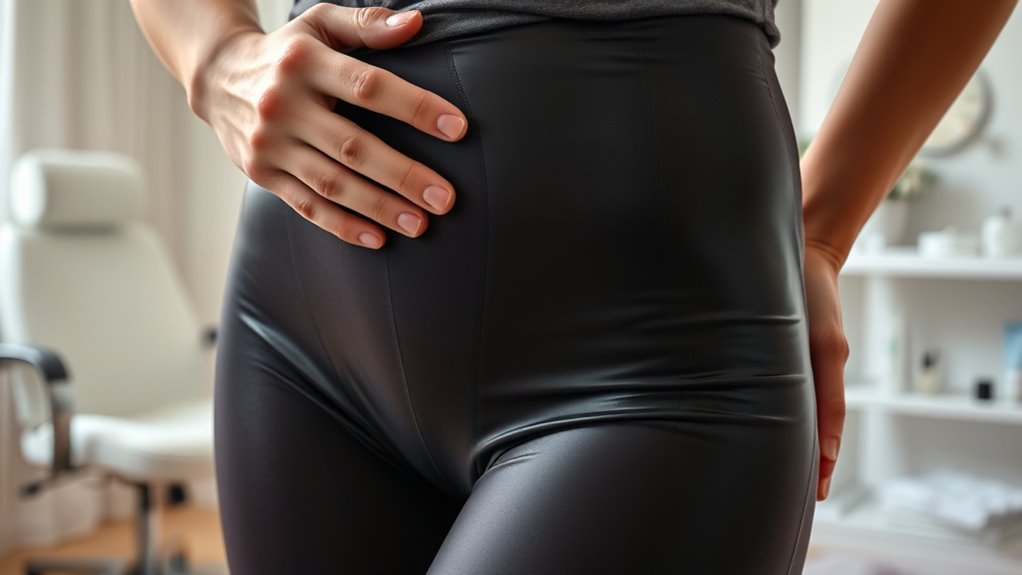
Wearing tight garments doesn’t just affect your skin; it can also disrupt your digestive and overall health. When garments compress your abdomen, they put pressure on your stomach and intestines, which can worsen conditions like IBS, Crohn’s disease, and GERD. Imagine:
- Your stomach squeezed tight, making acid reflux and heartburn worse.
- Your digestion slowed down, causing bloating and discomfort.
- Your breathing restricted, reducing oxygen and increasing systemic stress.
This pressure hampers proper digestion and can lead to long-term issues like nutrient absorption problems. Reduced airflow from tight clothing also causes your body to work harder to breathe, adding to overall fatigue and strain. Over time, these effects can compromise your digestive health and systemic well-being.
Recognizing Signs of Skin and Nerve Damage From Daily Tight Wear
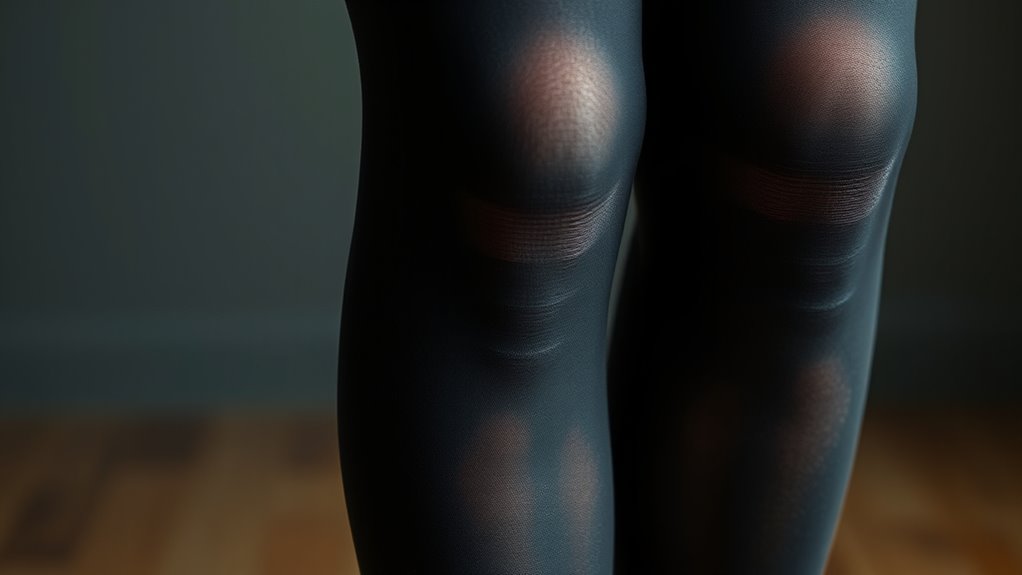
If you wear tights daily without giving your skin and nerves a break, you might notice early warning signs of damage. Look for persistent redness, itching, or rashes on your legs or thighs, which indicate irritation from friction or trapped moisture. Numbness or tingling sensations, especially after long wear, suggest nerve compression. You may also experience a loss of sensation or weakness in your lower limbs over time. Keep an eye out for visible pressure marks, bruising, or calluses where the tights press against your skin. If you notice skin becoming fragile, developing sores, or feeling numb, it’s a sign that your nerves and skin are under strain. Recognizing these signs early helps prevent more serious, long-term damage.
Tips for Wearing Tights Safely and Minimizing Skin Risks
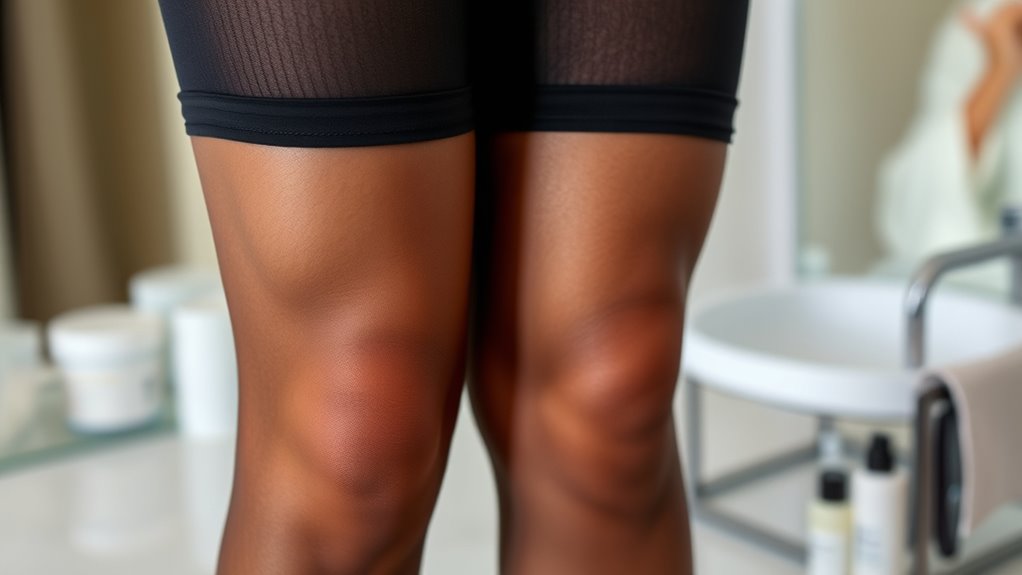
To reduce the risk of skin irritation and infections, it’s important to choose your tights carefully and wear them mindfully. First, opt for breathable, natural fibers like cotton or bamboo, which allow airflow and wick moisture away from your skin. Second, avoid tight-fitting styles that compress your legs excessively—look for a snug but comfortable fit. Third, give your skin breaks from tights daily; remove them periodically to let your skin breathe and recover. Additionally, wash your tights after each wear with gentle detergent to prevent bacterial buildup. Consider alternating different pairs to reduce prolonged contact. Ultimately, pay attention to your skin; if you notice redness, itching, or irritation, give your skin a break and consult a dermatologist if needed.
Frequently Asked Questions
Can Wearing Tights Daily Cause Chronic Nerve Damage?
Wearing tights daily can cause nerve damage if they’re excessively tight and worn for long periods. The pressure from tight tights can compress nerves in your legs and feet, leading to tingling, numbness, and even long-term nerve issues. To avoid this, make sure your tights fit comfortably, take breaks from wearing them, and choose breathable fabrics to reduce pressure and improve circulation, preventing potential nerve damage.
How Does Tight Clothing Influence Long-Term Skin Barrier Health?
Ever wonder if tight clothing can damage your skin barrier long-term? Wearing tight tights regularly weakens your skin’s natural defense by causing friction, redness, and irritation. These repeated stresses break down the protective layers, making your skin more vulnerable to infections and dehydration. Without giving your skin breathing room, you risk chronic barrier dysfunction. To keep your skin healthy, opt for breathable fabrics and avoid constant compression.
Are There Hidden Systemic Health Risks From Prolonged Tight Garment Use?
Wearing tight garments daily can pose hidden systemic health risks. You might experience poor blood circulation, which can lead to numbness or long-term vascular issues. It can also restrict your digestive system, worsening conditions like acid reflux or IBS. Additionally, prolonged compression may impair nerve function, causing tingling or pain. These risks develop gradually, so it’s essential to give your body regular breaks and choose properly fitting clothing to protect your overall health.
What Are Early Signs of Circulatory Issues Caused by Tight Tights?
You might notice your skin feeling a bit dull or tender, especially around the thighs and calves, when tight tights start to affect circulation. You could experience mild numbness or tingling that comes and goes, and your skin may appear slightly flushed or feel warmer than usual. These gentle signs indicate blood flow is becoming a little sluggish. Pay attention to these hints, and consider giving your skin some breathing room to stay healthy.
Can Tight Tights Worsen Existing Gastrointestinal Conditions?
Wearing tight tights can worsen existing gastrointestinal conditions by increasing abdominal pressure, which may exacerbate symptoms like acid reflux, bloating, and discomfort. The compression can put extra strain on your stomach and digestive tract, making conditions like IBS or GERD more uncomfortable. If you already have digestive issues, avoid overly tight clothing to prevent worsening your symptoms and promote better digestion and comfort.
Conclusion
Wearing tights daily can be like walking a tightrope—it’s easy to lose balance and cause harm. By paying attention to your skin’s signals and choosing breathable fabrics, you can keep your fashion game strong without sacrificing your health. Remember, your skin is your body’s first impression; treat it kindly. With mindful choices, you’ll avoid the pitfalls and keep your skin happy, healthy, and glowing—like a star shining bright in the night sky.