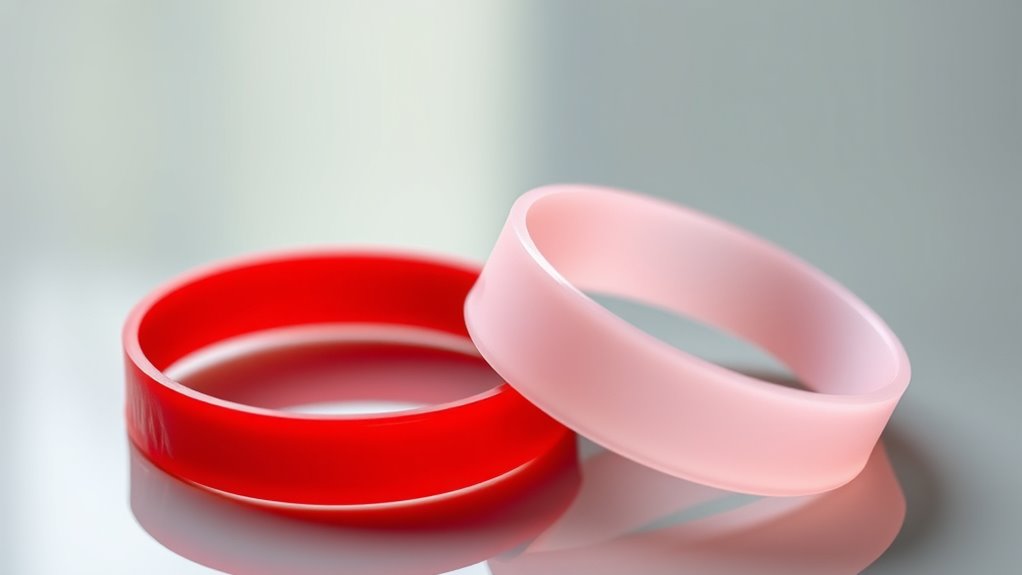

If you’re cautious about allergies, silicone bands are generally safer than latex, which can cause skin irritation or more severe reactions due to proteins it releases. Silicone is hypoallergenic, flexible, and less likely to trigger sensitivities, making it a better choice for sensitive skin. However, if you want to learn more about the differences, durability, or environmental impact of these materials, explore how each option might fit your needs and safety concerns.

Get your wardrobe favorites delivered free — and shop member deals
- Fast, free delivery on millions of items
- Access to Prime Big Deal Days deals on October 6–7
- Prime Video, Amazon Music and more included
Key Takeaways
- Latex bands can trigger allergies due to proteins that cause skin irritation and respiratory symptoms in sensitive individuals.
- Silicone bands are hypoallergenic, making them a safer choice for those with latex sensitivities or allergies.
- Latex may degrade over time, releasing allergens, whereas silicone offers greater chemical stability and durability.
- Individuals with latex allergies should avoid latex bands and opt for silicone to reduce allergy risks.
- Always check product labels for hypoallergenic or allergy-tested materials to ensure safety with hold-up bands.
Understanding Material Composition and Properties

Understanding what materials are made of is essential when evaluating allergy risks. Material flexibility plays a key role in comfort and fit, influencing how well the band conforms to your body. Flexible materials like silicone tend to adapt easily, reducing pressure points. Chemical stability is equally important, as it determines how the material reacts over time or with exposure to sweat, lotions, or other substances. Silicone boasts high chemical stability, making it resistant to degradation and less likely to cause irritation. Latex, while flexible, can break down over time, releasing proteins that may trigger allergies. Knowing the differences in material flexibility and chemical stability helps you choose a band that not only fits comfortably but also minimizes allergy risks. Material composition significantly impacts the likelihood of allergic reactions and overall durability.
Common Allergic Reactions to Latex and Silicone
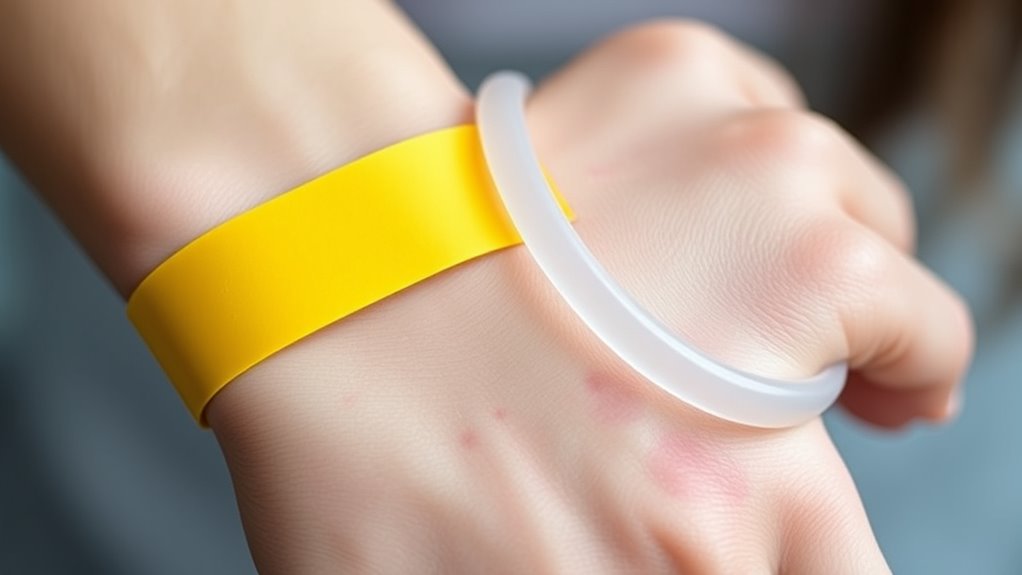
Both latex and silicone can cause allergic reactions, but the symptoms and their severity often differ. If you have latex sensitivity, you might experience skin redness, itching, hives, or swelling where the band contacts your skin. In more severe cases, latex allergies can trigger respiratory issues like sneezing, coughing, or asthma symptoms. Silicone allergy, while less common, can also cause skin irritation, such as redness, rash, or itching. You might notice swelling or discomfort after wearing silicone bands. Unlike latex sensitivity, silicone allergies are rarely linked to respiratory problems. Recognizing these reactions early helps you avoid complications. If you notice any allergic symptoms, stop using the bands immediately and consult a healthcare professional for proper diagnosis and guidance. Additionally, staying informed about AI security advances can help you better understand allergy testing technologies and safety protocols.
Durability and Performance of Hold-Up Bands
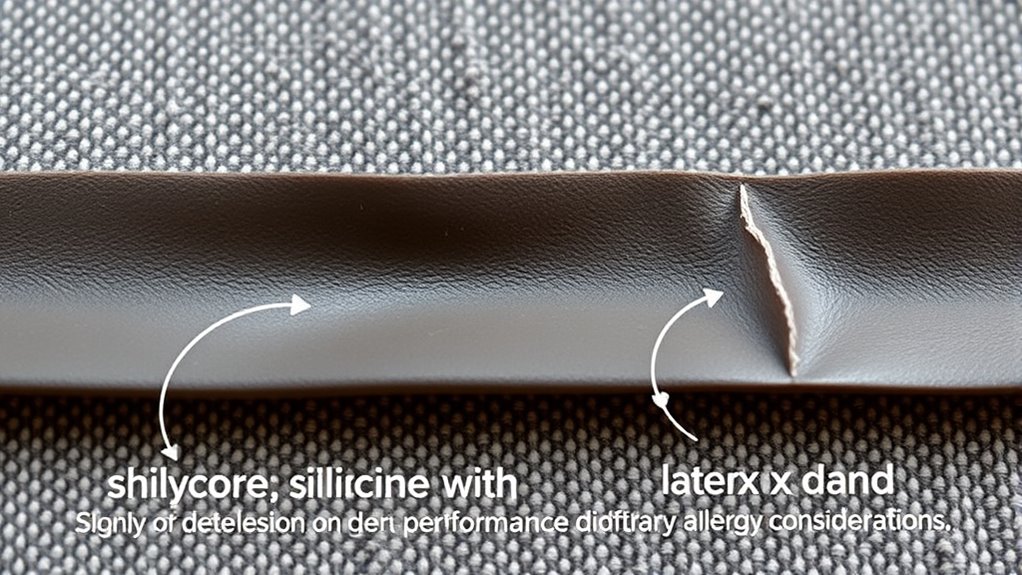
Hold-Up Bands are designed to withstand daily wear and tear, making them a reliable choice for long-term use. Their durability relies heavily on band elasticity, which allows the bands to stretch and return to shape without losing strength over time. Material flexibility also plays a key role, ensuring the bands adapt comfortably to your body while maintaining their performance. Silicone bands typically offer greater flexibility, providing a snug fit without sacrificing elasticity. Latex bands, on the other hand, tend to retain their elasticity longer but may degrade faster if exposed to harsh conditions or chemicals. Overall, both materials deliver dependable performance, but your choice might depend on how well the band maintains its elasticity over extended periods. Proper care enhances their durability, ensuring they stay effective longer.
Safety Considerations for Sensitive Skin
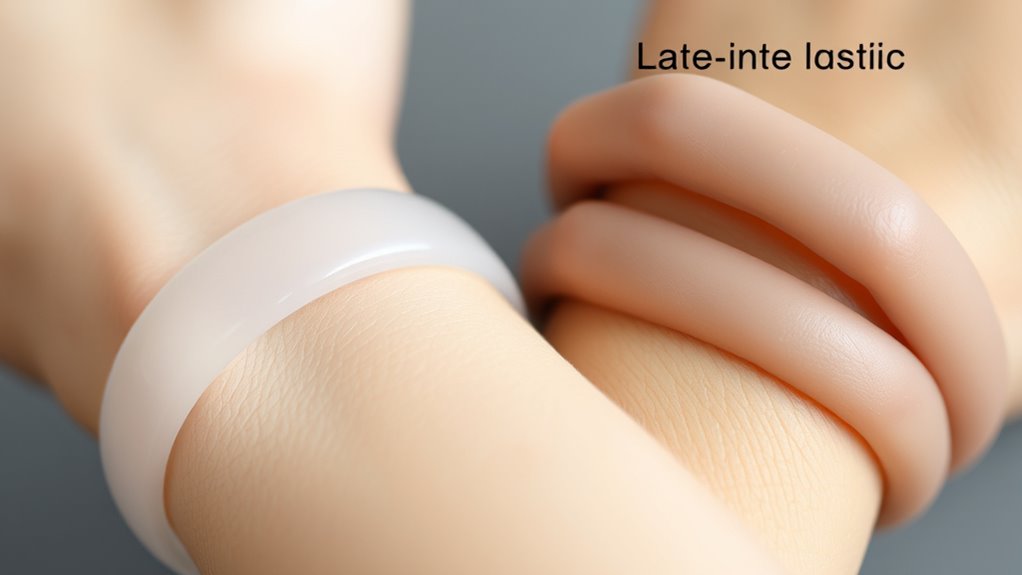
If you have sensitive skin, choosing the right hold-up band requires caution to prevent irritation or allergic reactions. Opt for hypoallergenic options that are designed for skin sensitivity. These bands reduce the risk of redness, itching, and discomfort. Always check product labels for materials labeled as hypoallergenic or dermatologist-tested. Consider silicone-based bands, which are generally gentler and less likely to cause reactions. Avoid latex if you know you’re allergic or highly sensitive. Testing a small patch before full use can help determine skin compatibility. Remember, prioritizing skin-friendly materials helps you stay comfortable and avoid potential allergic responses. Your skin’s health depends on selecting products tailored for sensitive skin, so choose wisely and stay safe. Product safety is an essential aspect when selecting materials for sensitive skin, ensuring you make an informed and safe choice.
Environmental Impact and Sustainability Aspects

You should consider how products break down after disposal, as biodegradable items reduce environmental harm. It’s also important to evaluate where resources come from and how they’re used during production. Making sustainable choices helps lessen the overall ecological impact of the products you use. Additionally, selecting eco-friendly materials like those used in popular beaches can promote Best Beaches and support conservation efforts.
Biodegradability and Disposal
Biodegradability plays an essential role in minimizing the environmental impact of allergy-related products, as it determines how quickly and safely they break down after disposal. When comparing latex and silicone bands, understanding their biodegradability comparison helps you choose eco-friendlier options. Proper disposal practices are critical to prevent environmental harm and promote sustainability. Latex, being biodegradable, decomposes faster but may release allergens during breakdown. Silicone, on the other hand, is more durable but less biodegradable, lasting longer in landfills. To reduce your ecological footprint, consider recycling or disposing of these bands responsibly. Here are some key points to keep in mind:
- Latex decomposes more quickly than silicone
- Silicone may persist in the environment for years
- Recycling options vary by material
- Proper disposal minimizes pollution
- Compatibility factors in astrological charts can influence personal choices about eco-friendly products.
Resource Extraction and Production
Have you ever considered how the extraction of raw materials for allergy-related products impacts the environment? Harvesting methods for latex and silicone vary, affecting sustainability. Latex relies on tapping rubber trees, which can harm trees if not done properly, and often involves chemical treatments to improve quality. Silicone production, on the other hand, starts with silica extraction, which consumes energy and releases emissions. These processes can lead to habitat disruption and pollution. Additionally, the environmental impact of each material is influenced by sustainable harvesting practices that aim to minimize ecological damage.
Making the Right Choice for Your Comfort and Health

Choosing the right allergy relief options is essential for ensuring both your comfort and health. When selecting bands, consider how fashion trends influence style and whether the brand’s reputation emphasizes quality and safety. Your comfort depends on avoiding allergens that can cause irritation or allergic reactions.
To make an informed choice, think about:
- Material labels to identify latex or silicone content
- The brand’s reputation for allergy-safe products
- How current fashion trends incorporate hypoallergenic designs
- Your personal sensitivities and allergy history
- Advances in AI-powered materials detection that help identify allergenic substances in products.
Frequently Asked Questions
Are Silicone Bands Hypoallergenic for All Skin Types?
You’re wondering if silicone bands are hypoallergenic for all skin types. Generally, silicone has excellent hypoallergenic properties, making it highly compatible with most skin. It’s less likely to cause allergic reactions compared to latex. However, individual sensitivities vary, so some people with very sensitive skin might still experience irritation. Overall, silicone bands are considered safe and skin-friendly, but it’s always best to test a small area first if you have sensitive skin or allergies.
Can Latex Allergies Develop Over Time With Repeated Exposure?
Imagine someone who’s used latex gloves daily for years, thinking they’re safe. Over time, they notice skin irritation and realize it’s latex sensitivity. This illustrates how allergy progression can occur with repeated exposure. You might develop latex allergies even if you’ve previously tolerated it well. Continuous exposure can trigger allergy development, so be aware that latex sensitivity can increase over time, especially with frequent contact.
How Should I Properly Clean and Care for Latex vs. Silicone Bands?
To properly care for latex and silicone bands, focus on band maintenance and cleaning techniques. For latex, gently wash with mild soap and water, then air dry to prevent deterioration. Silicone bands are more durable; clean them with soap and water or a damp cloth. Avoid harsh chemicals or excessive scrubbing, as this can damage both materials. Regular cleaning guarantees longevity and maintains their elasticity and safety for your skin.
Are There Any Age Restrictions for Using Silicone or Latex Hold-Up Bands?
Like a gentle river, age restrictions for silicone and latex hold-up bands help guarantee safety flows smoothly. Generally, these products are suitable for adults and older children, but product safety guidelines caution against use by very young children due to choking hazards or latex allergies. Always check manufacturer instructions, and consult a healthcare professional if you’re unsure about age restrictions, to keep everyone safe and comfortable.
Do Silicone Bands Offer Better Odor Resistance Than Latex?
Silicone bands generally offer better odor resistance than latex, helping you stay fresh longer. They resist odor-causing bacteria more effectively, making them a practical choice if odor control matters. Plus, silicone’s material durability means it withstands daily wear and tear better than latex. So, if you’re looking for hold-up bands that last and stay odor-free, silicone is a smart option for comfort and hygiene.
Conclusion
Choosing between latex and silicone hold-up bands is about prioritizing your comfort and health. Did you know that over 10% of people allergic to latex experience skin reactions? Silicone bands offer a hypoallergenic alternative, reducing this risk. By selecting the right material, you not only protect yourself from potential allergic reactions but also contribute to a more sustainable choice. Make informed decisions to feel confident and comfortable every day—your skin will thank you.
Halloween Picks
halloween
As an affiliate, we earn on qualifying purchases.