To avoid itchy tights, choose hosiery made from natural, breathable fabrics like organic cotton or bamboo, and opt for hypoallergenic options. Always wash new tights with gentle, fragrance-free detergent before wearing, and avoid harsh chemicals or fabric softeners. Maintain good skin care by moisturizing and wearing zinc oxide or anti-itch cream if needed. Stay aware of environmental factors, and select hosiery suitable for your activities. Keep exploring tips that can help you wear comfortable, irritation-free tights daily.
Key Takeaways
- Opt for natural, breathable, hypoallergenic fabrics like organic cotton, bamboo, or merino wool to reduce skin irritation.
- Wash hosiery with gentle, fragrance-free detergents before wearing to remove chemicals and residues.
- Choose properly fitted tights made from moisture-wicking materials for comfort and to prevent chafing.
- Moisturize skin regularly and apply soothing barriers like zinc oxide before wearing tights.
- Avoid synthetic blends and dark-colored hosiery with heavy dyes to minimize chemical exposure and allergic reactions.
Selecting the Right Fabrics for Sensitive Skin

Choosing the right fabrics is essential if you have sensitive skin and want to avoid itchy tights. Opt for natural, breathable materials like organic cotton or soft merino wool, which minimize irritation and allow your skin to breathe. Bamboo fibers are an excellent choice because they’re hypoallergenic, antibacterial, and gentle on delicate skin. High-quality synthetics, like moisture-wicking polyester, can also work if they’re made from premium fibers that don’t cause dryness or itchiness. Avoid cheap, low-quality fibers or fabrics with rough textures that can cause friction and irritation. Medical compression stockings should be made with natural fibers and changed daily to prevent buildup of sweat and irritants. Selecting fabrics suited for sensitive skin helps reduce the risk of itchiness and keeps your skin comfortable throughout the day.
Tips for Proper Laundry and Clothing Maintenance

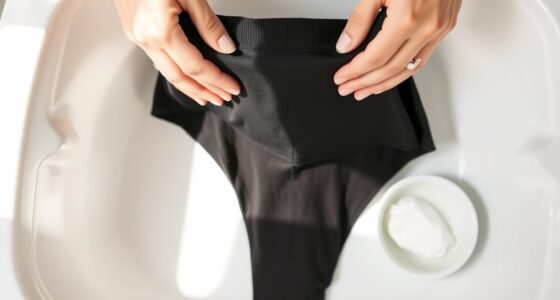
Proper laundry and clothing maintenance are essential for preventing itchy tights, especially if you have sensitive skin. Always wash new tights before wearing them to remove manufacturing chemicals and residues that could cause irritation. Use mild, fragrance-free, and sensitive-skin detergents to minimize chemical exposure. Avoid fabric softeners, harsh dyes, or fragrances that can cling to the fabric and irritate your skin. Opt for light-colored hosiery with less dye, as darker shades often contain more chemicals. Avoid clothing treated with permanent press, no-iron, or dirt-repellent finishes, since these treatments may have irritating chemical coatings. Dry tights thoroughly and store them in a clean, dry place. Proper care guarantees your tights stay soft, chemical-free, and less likely to cause itchiness during wear.
Establishing a Skin Care Routine to Prevent Itching
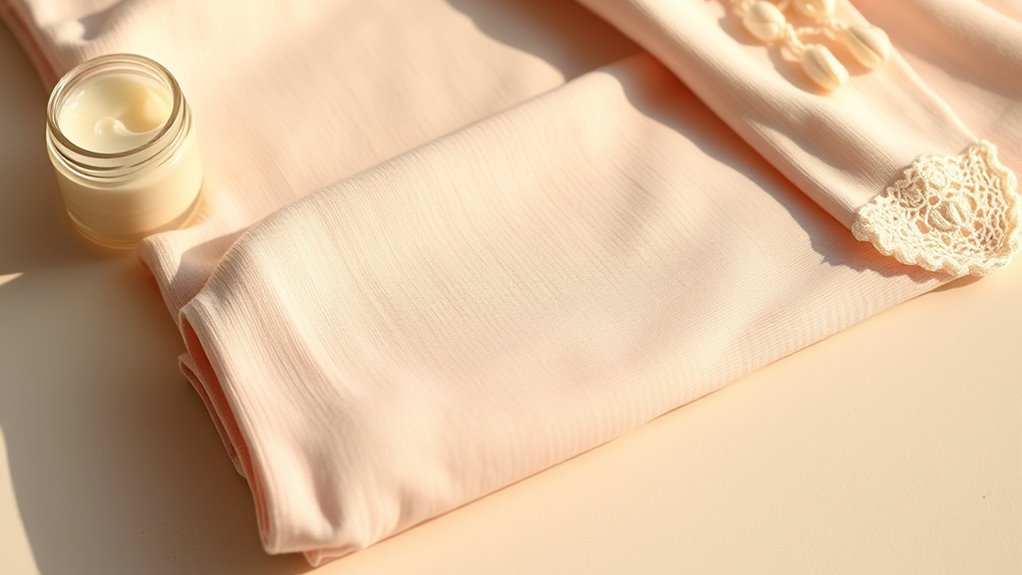
A consistent skin care routine is essential to prevent itching caused by tights, especially if you have sensitive skin. Start by showering with lukewarm water and gentle, fragrance-free soap to keep your skin clean without stripping natural oils. Exfoliate regularly to remove dry, flaky skin that can trap moisture and cause irritation under hosiery. Immediately after showering, apply a rich, fragrance-free moisturizer while your skin is still damp to lock in hydration and prevent dryness. Before putting on tights, consider using zinc oxide powder or an anti-itching cream on your legs to soothe sensitive skin. Avoid scratching if you feel discomfort, as it can worsen irritation. Incorporating skin barrier maintenance can help strengthen your skin and reduce the risk of itchiness over time.
How to Wear Hosiery Comfortably During Exercise

Wearing hosiery comfortably during exercise starts with selecting the right fit and fabric. Choose tights that aren’t too tight, causing friction, or too loose, which can bunch up and cause chafing. Opt for moisture-wicking fabrics like high-quality polyester, bamboo, or merino wool to keep sweat away from your skin. Proper fit and breathable materials prevent irritation and chafing. Here’s a quick guide:
| Fit Tips | Fabric Suggestions |
|---|---|
| Avoid overly tight or loose | Use moisture-wicking fibers |
| Check for smooth seams | Choose hypoallergenic options |
| Ensure proper waistband fit | Select breathable fabrics |
| Avoid stiff, restrictive tights | Opt for soft, flexible fibers |
| Make sure tights aren’t bunching | Use lightweight, quick-drying material |
Additionally, selecting appropriate materials that align with your activity level can further enhance comfort and prevent irritation.
Recognizing and Managing Allergies and Skin Conditions
Recognizing the signs of skin allergies and conditions helps you prevent discomfort when wearing tights. Pay attention to symptoms like redness, swelling, or persistent itchiness, which may indicate sensitivities or reactions. Managing these issues requires identifying triggers and adopting effective skin care routines to keep your skin healthy and irritation-free. Additionally, choosing hosiery with advanced fabric technology can help reduce skin irritation and enhance comfort throughout the day. The use of sound vibrations and other therapeutic techniques can also promote skin healing and relaxation, further supporting your skin health. Incorporating hydrotherapy techniques, such as warm water baths or aquatic exercises, can also promote skin healing and relaxation, further supporting your skin health. Recognizing dog breeds known for their hypoallergenic qualities may help you select more suitable hosiery options. Using air purifiers in your living space can improve overall indoor air quality, reducing airborne irritants that may exacerbate skin sensitivities.
Common Skin Allergies Signs
Skin allergies often present with specific signs that indicate an immune response to irritants or allergens. You might notice redness, swelling, or itching that feels intense or persistent. Rash development, hives, or small bumps can also appear, especially where the tights contact your skin. Dryness, flakiness, or cracking might accompany these symptoms, making your skin more sensitive. You could experience a burning or stinging sensation as well. If you notice these signs after wearing new tights, using certain lotions, or applying detergents, it’s likely an allergic reaction. Pay attention to localized symptoms versus widespread issues, as this helps identify the cause. Recognizing these signs early allows you to take action, such as switching fabrics or consulting a healthcare professional to prevent worsening irritation. Understanding allergic reactions can help you better manage skin sensitivities and choose appropriate hosiery. Being aware of specific skin responses can also guide you in selecting fabrics that are less likely to cause irritation, especially if you have sensitive skin. Additionally, choosing brewing guides or similar resources can provide insight into selecting comfortable, irritation-free clothing options. Moreover, awareness of local skin symptoms can assist in identifying whether the issue stems from an allergy or another skin condition. To further reduce the risk of irritation, consider using hypoallergenic hosiery made from natural, breathable fibers.
Identifying Sensitive Skin Triggers
To effectively identify sensitive skin triggers, you need to observe how your skin reacts to different fabrics, products, and environments. Pay attention to itching, redness, or irritation after wearing certain tights or using specific skincare items. Keep a journal to track symptoms and note any patterns, such as reactions after laundry or exposure to particular materials. Test new tights by washing them with mild, fragrance-free detergent before wearing them. Watch for reactions when applying lotions or sprays. Be aware of environmental factors like cold or dry weather, which can worsen sensitivity. Recognizing these triggers helps you avoid irritants and choose hosiery suited to your skin’s needs, ultimately reducing discomfort and preventing itchy tights. Monitoring color temperature adjustments can also help minimize skin irritation caused by harsh lighting conditions. Additionally, understanding how skin sensitivities respond to different environmental factors can guide you in selecting suitable hosiery and skincare routines. Being aware of fabric composition can further assist in avoiding materials that may cause irritation or allergic reactions, and paying attention to air purifier maintenance can help reduce airborne irritants that aggravate sensitive skin. Regularly inspecting your environment for airborne allergens can prevent exposure to irritants that might trigger skin reactions.
Managing Skin Conditions Effectively
Understanding your body’s responses is key to managing skin conditions effectively. Pay attention to how your skin reacts to different fabrics, detergents, and products. If you notice itching, redness, or irritation, identify potential triggers like synthetic fibers, fragrances, or harsh chemicals. Keep a journal to track symptoms and possible causes. Use gentle, fragrance-free soaps, and moisturize regularly to maintain your skin’s barrier. When wearing tights, choose breathable, hypoallergenic materials and avoid tight-fitting garments that cause friction. Incorporating low light office plants can also improve indoor air quality, potentially reducing skin irritants. Additionally, selecting hypoallergenic fabrics designed to minimize allergic reactions can significantly enhance comfort. If allergies or skin conditions worsen, consult a healthcare professional for diagnosis and treatment options. Managing stress and avoiding environmental irritants also help reduce flare-ups. With careful observation and appropriate care, you can minimize irritation and enjoy comfortable, itch-free tights.
Avoiding Irritants in Your Hosiery and Body Products

To prevent irritation, choose fragrance-free products for your hosiery and body care. Natural fibers like organic cotton or bamboo are gentler on sensitive skin and reduce the risk of allergic reactions. By making these simple swaps, you can keep your skin comfortable and itch-free during wear. Additionally, selecting products with appropriate Glycolic Acid concentrations can help in maintaining smooth, irritation-free skin. Using moisturizing ingredients in your skincare routine can further strengthen your skin barrier and prevent dryness that leads to itching.
Choose Fragrance-Free Products
Choosing fragrance-free products is essential if you want to prevent irritation and itching caused by chemicals and synthetic scents. Fragrances in body lotions, soaps, and detergents often contain allergens that can trigger skin reactions, especially in sensitive areas. Opt for products labeled as unscented or fragrance-free, and check ingredient lists to verify no added fragrances are present. These products help reduce the risk of chemical irritation and keep your skin calm. When washing your hosiery, use gentle, fragrance-free detergents designed for sensitive skin. Avoid fabric softeners and scented dryer sheets, as they can leave residues that irritate the skin. By selecting fragrance-free options, you minimize exposure to potential irritants, promoting healthier skin and more comfortable tights.
Opt for Natural Fibers
Opting for natural fibers in your hosiery and body products can substantially reduce skin irritation and allergies. Natural materials breathe better, wick moisture, and are gentler on sensitive skin. To make better choices:
- Choose organic cotton tights for softness and breathability, minimizing irritation.
- Look for bamboo fibers, which are hypoallergenic, antibacterial, and temperature-regulating.
- Select merino wool or other high-quality natural fibers that wick sweat and reduce friction.
- Avoid synthetic blends, as they trap moisture and can cause dryness, itching, or allergic reactions.
Monitoring Environmental Factors That Affect Skin Comfort
Environmental conditions can considerably impact your skin’s comfort when wearing tights. Changes in temperature, humidity, and airflow can cause skin dryness, sweating, or irritation. To stay ahead, monitor these factors regularly. For example, dry winter air can lead to cracking skin, while humid summer weather increases sweat and potential chafing. Using a journal or weather app helps you identify patterns that trigger discomfort.
| Condition | Effect on Skin | Action to Take |
|---|---|---|
| Cold & Dry | Skin dryness & irritation | Moisturize frequently & wear breathable tights |
| Hot & Humid | Excess sweat & chafing | Choose moisture-wicking hosiery |
| Wind | Skin dehydration & irritation | Cover legs & apply emollients |
Frequently Asked Questions
What Are the Signs That Tights Are Causing Skin Irritation?
You’ll notice signs that tights are causing skin irritation when your skin feels itchy, red, or inflamed after wearing them. You might see small bumps, rashes, or dry patches, especially around areas where the tights press or rub. Swelling, burning sensations, or a persistent itch that worsens with continued wear are also common indicators. If you experience these symptoms, it’s a clear sign your tights may be irritating your skin.
How Often Should I Replace My Compression Stockings?
Did you know that medical compression stockings should be replaced every 3 to 6 months? You should replace yours regularly to maintain proper pressure and hygiene. Check for signs of wear like thinning fabric, stretched elastic, or discomfort. If they no longer fit snugly or feel less supportive, it’s time to get new ones. Regular replacement guarantees you get the best benefits and prevents skin irritation or circulation issues.
Can Certain Body Lotions Make Tights More Irritating?
Yes, certain body lotions can make tights more irritating. Lotions containing alcohol, fragrances, dyes, or harsh chemicals may irritate sensitive skin when you wear tights, especially if your skin is already prone to dryness or allergies. These products can clog pores or cause allergic reactions, increasing itchiness. To prevent this, opt for fragrance-free, gentle moisturizers and apply them well before putting on tights, allowing your skin to absorb fully.
Are There Specific Brands Known for Hypoallergenic Hosiery?
Think of hypoallergenic hosiery as a gentle tide that eases your skin’s journey. Brands like Mediven, Sigvaris, and Juzo craft stockings with natural fibers and minimal chemicals, acting like soft ocean waves caressing sensitive skin. They’re designed to prevent irritation, just as a calm sea avoids stormy waters. When you choose these brands, you create a soothing, irritation-free environment, letting your skin breathe and relax with every wear.
How Can I Tell if I Have a Hosiery Allergy?
You can tell if you have a hosiery allergy by paying attention to skin reactions like redness, itching, or swelling after wearing tights. If these symptoms appear consistently, especially with new hosiery or after using certain laundry products, you might be allergic. Try switching to hypoallergenic fabrics and gentle detergents. If symptoms persist, see a healthcare professional for allergy testing to confirm the cause and get personalized advice.
Conclusion
By choosing gentle fabrics, maintaining proper care, and listening to your skin’s signals, you can keep your tights comfy and itch-free. Think of your skin as a delicate garden—tend to it with love, avoid harsh chemicals, and create a cozy environment for it to thrive. With these simple steps, you’ll transform your hosiery experience from a prickly thorn to a soft, soothing breeze, letting you move confidently through your day.