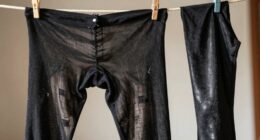
To care for wool and cotton tights, you should handle them differently from nylon ones. For wool, turn them inside out, wash in cold water with wool-specific detergent, and lay flat to dry away from heat. Cotton tights should be washed on a gentle cycle in warm water, turned inside out, and air-dried or tumble dried on low. Proper storage and gentle handling help maintain their shape and softness—discover more tips to keep them looking their best.
Key Takeaways
- Turn wool and cotton tights inside out before washing to reduce pilling and fading.
- Wash wool tights in cold water with wool-specific detergent; use gentle cycles for cotton tights.
- Lay wool tights flat to dry; tumble dry low or air dry cotton tights to maintain elasticity and shape.
- Store tights folded in breathable containers, avoiding hanging or plastic bags to prevent stretching and moisture buildup.
- Avoid heat sources like radiators or sunlight, and do not tumble dry wool to prevent shrinkage and fiber damage.
Understanding the Unique Properties of Wool and Cotton Tights

Wool and cotton tights have distinct properties that influence how you should care for them. Wool is a natural fiber known for its warmth, elasticity, and water resistance, thanks to lanolin. It’s resilient but sensitive to heat, friction, and agitation, which can cause shrinking or felting. Wool tights resist odors and can be worn multiple times between washes. Cotton, on the other hand, is a breathable, absorbent fiber that’s softer and less elastic than wool. It’s more durable but can shrink with improper washing or drying. Cotton tights handle warmer water better but are prone to pilling and fading if not cared for properly. Knowing these differences helps you choose the right cleaning methods to extend their lifespan and maintain their appearance. Additionally, selecting appropriate fabric care techniques can significantly impact how well your tights hold up over time. Understanding fiber properties can guide you in using the correct washing and drying methods to prevent damage and preserve their shape.
Proper Washing Techniques for Wool Tights
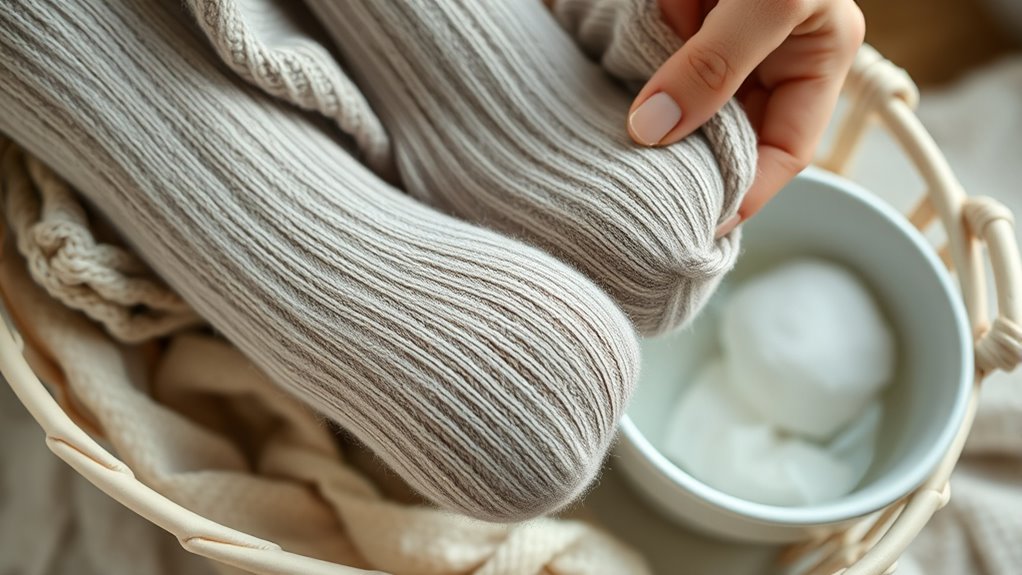
To properly wash wool tights and preserve their softness and elasticity, you should start by turning them inside out to minimize surface abrasion and color fading. Use cold or lukewarm water (around 30°C) and a wool-specific detergent to protect fibers and lanolin. Gently swirl the tights in the water, avoiding rubbing or aggressive agitation, and soak for at least 10 minutes. Rinse thoroughly with cool water at least twice, ensuring all detergent is removed. Do not wring or twist the tights, as this can stretch or damage the fibers. Instead, gently press out excess water. Lay the tights flat on a towel or drying rack, reshaping if needed. Keep them away from direct heat or sunlight to prevent shrinking and fiber degradation. Regular cleaning with gentle methods helps maintain their durability and appearance, ensuring they stay in good condition over time. Additionally, AI safety measures and proper handling are crucial when dealing with delicate fabrics to avoid accidental damage. To further protect the integrity of wool fibers, consider gentle drying techniques such as air drying rather than using a dryer. Proper storage environment can also help prolong their lifespan by preventing pests and fabric deterioration, especially since natural fibers are more susceptible to damage from insects and humidity.
Best Practices for Caring for Cotton Tights

Properly caring for cotton tights helps extend their lifespan and maintain their appearance. Always wash them in warm water with similar colors to prevent bleeding. Turn your tights inside out before washing to reduce surface pilling and wear. Use gentle, eco-friendly detergents without bleach or fabric softeners, which can weaken fibers. Avoid high heat during drying—prefer tumble drying on low or air drying to prevent shrinkage and fabric damage. Store your tights folded in breathable containers, avoiding plastic bags to prevent moisture buildup.
| Aspect | Best Practice |
|---|---|
| Water Temperature | Warm, with similar colors |
| Detergent | Gentle, eco-friendly, no bleach |
| Drying Method | Low tumble dry or air dry |
Drying Methods That Preserve Fit and Fabric Quality

Choosing the right drying method is essential to maintain the fit and quality of your tights. For wool tights, lay them flat on a clean towel or drying rack to help preserve their shape and prevent stretching. Avoid hanging wool tights, as their weight can cause them to stretch out. Never tumble dry wool, as heat damages elastic fibers and causes shrinkage. For cotton tights, you can either tumble dry on low heat or air dry, but avoid high temperatures to prevent shrinking and fabric weakening. Turn them inside out before drying to minimize surface pilling and wear. Whichever fabric you have, keep tights away from direct heat sources like radiators and sunlight, which can degrade fibers and cause deformation. Proper drying guarantees your tights stay snug and retain their original quality. Additionally, understanding the different fiber properties can help you choose the best drying method for each material, ensuring longevity and comfort. Being aware of wood stove safety standards and proper installation can also help prevent damage to your clothing from accidental exposure to heat or fire hazards. Using the appropriate drying techniques can also prevent fabric damage caused by improper handling or heat exposure, especially when considering the impact of sound vibrations on textile fibers, as research indicates that vibrations can influence material integrity over time. Incorporating gentle air circulation during drying can further help preserve delicate fibers and maintain their elasticity.
Storage Tips to Extend the Life of Your Tights
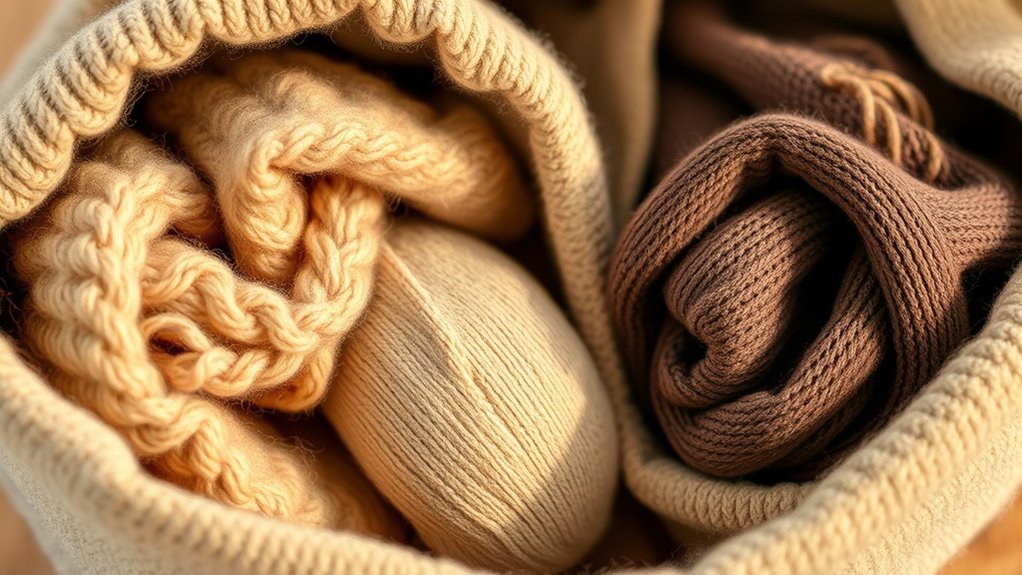
Storing your tights correctly can considerably extend their lifespan and keep them looking their best. To prevent damage, always fold wool and cotton tights gently, avoiding hanging, which can stretch fibers. Keep them in breathable containers like cotton pouches or dedicated drawers, not plastic bags that trap moisture. Use natural moth repellents such as lavender or cedar for wool to prevent pests. For added protection, store tights flat or rolled to maintain shape and prevent creases. Avoid placing heavy items on top, which can cause deformation. Proper storage minimizes pilling, stretching, and fiber breakage, ensuring your tights stay soft and vibrant longer. Additionally, handling your tights carefully and following proper storage guidelines can preserve their elasticity and overall appearance over time. To further protect delicate fibers, consider using fiber-specific storage techniques that cater to wool and cotton properties. Being mindful of fiber characteristics can help you select the best storage method for each type of fabric. Using proper cleaning methods before storage can also prevent any residual moisture or dirt from damaging the fibers over time.
Key Differences Between Caring for Wool and Cotton Tights
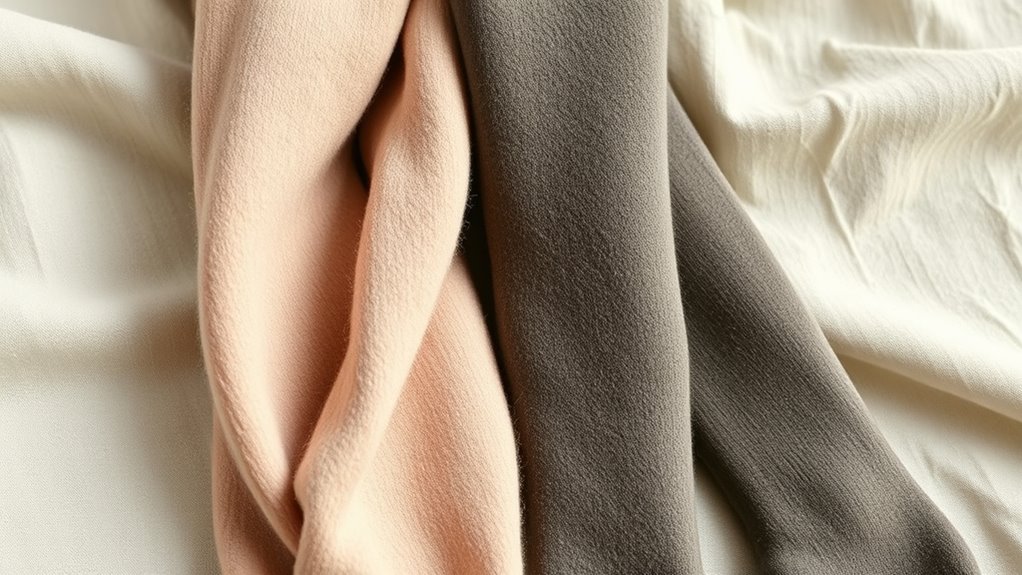
Caring for wool and cotton tights involves distinct techniques because their fiber properties respond differently to cleaning and handling. Wool tights need gentle washing in cold or lukewarm water with wool-specific detergents to prevent shrinking and fiber damage. Always turn them inside out and lay flat or hang to dry, avoiding heat sources. Cotton tights, on the other hand, tolerate warmer water and can be machine washed with mild detergent. They dry best on low heat or air-dried to prevent shrinkage. Wool is more sensitive to heat, agitation, and harsh chemicals like bleach, which can cause felting or damage. Cotton is more durable but still benefits from gentle care. Understanding these differences helps you maintain both fabrics’ softness, elasticity, and longevity.
Frequently Asked Questions
Can I Wear Wool Tights Multiple Days in a Row Without Washing?
Yes, you can wear wool tights multiple days in a row without washing, especially if you wear them over seamless underwear or if they don’t get heavily soiled or sweaty. Wool naturally resists odors and has self-cleaning properties, so they stay fresh longer. However, if they start to smell or feel sweaty, it’s best to air them out or wash them to maintain their softness and prevent odor buildup.
How Do I Prevent Pilling on Cotton Tights?
Think of pilling as tiny fabric rebels trying to break free. To prevent it on cotton tights, turn them inside out before washing to shield the surface. Use gentle detergents and avoid harsh agitation in the machine. Air dry or tumble dry on low heat, and never forget to remove any pills gently with a fabric shaver or comb. Regular care keeps your tights smooth as silk and pill-free.
Is It Safe to Iron Wool or Cotton Tights?
You shouldn’t iron wool or cotton tights directly, as heat can damage or shrink the fibers. Instead, turn them inside out and use a low heat setting if necessary. For wool tights, steaming is safer to remove wrinkles, while cotton tights can be gently pressed with a cloth between the iron and fabric. Always check care labels for specific instructions, and avoid high temperatures to keep your tights in good shape.
What Indicators Show My Tights Need Replacing?
Imagine pulling on your favorite tights and noticing they feel saggy or develop persistent holes. That’s a clear sign they need replacing. Look for thinning fabric, stretched-out areas, or fabric pilling that won’t smooth out. If your tights no longer fit snugly or have lost their elasticity, it’s time to say goodbye. Regularly inspecting for these signs guarantees you enjoy fresh, comfortable tights and prevents wardrobe mishaps.
Can I Use Eco-Friendly Detergents for Both Types?
Yes, you can use eco-friendly detergents for both wool and cotton tights. Just make sure the detergent is gentle and free of harsh chemicals or bleach, which can damage fibers. For wool tights, choose a wool-specific or mild eco-friendly detergent to preserve lanolin and prevent shrinking. For cotton tights, use a gentle, eco-friendly detergent to maintain fabric integrity. Always follow care instructions for ideal results.
Conclusion
Caring for wool and cotton tights is essential to keep them in top shape, just like a precious treasure. Remember, each fabric has its quirks—wool needs gentle handling, while cotton loves breathability. By following these tips, you’ll extend their life far beyond your expectations—your tights will thank you with countless cozy wears. Treat them well, and they’ll remain your wardrobe’s shining stars for ages to come!