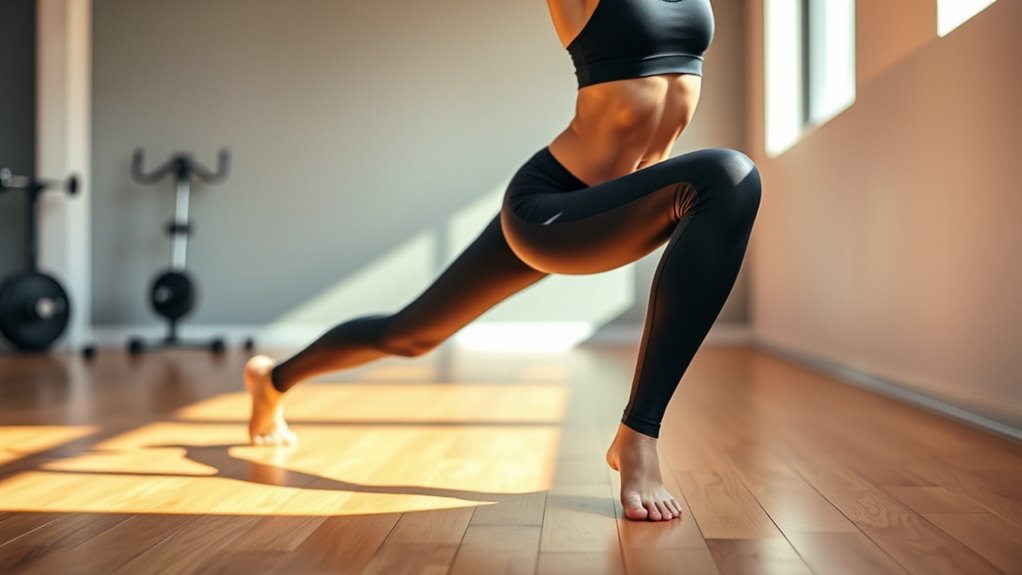

Before pulling on compression tights, do dynamic stretches like leg swings to loosen your hip flexors and hamstrings, followed by walking lunges with a torso twist to activate your core and hips. Incorporate hamstring and quadriceps stretches to improve flexibility, then perform hip circles and openers to enhance joint mobility. Finish with calf stretches and ankle rolls to prepare your lower legs. Exploring these warm-ups can help you move better and stay injury-free.

Get your wardrobe favorites delivered free — and shop member deals
- Fast, free delivery on millions of items
- Access to Prime Big Deal Days deals on October 6–7
- Prime Video, Amazon Music and more included
Key Takeaways
- Perform dynamic leg swings to warm up hip flexors, hamstrings, and glutes, increasing blood flow and flexibility.
- Incorporate walking lunges with torso twists to activate lower body muscles and open hips.
- Stretch hamstrings and quadriceps to enhance muscle flexibility and prepare legs for compression wear.
- Do hip circles and openers to improve hip joint mobility and reduce stiffness before compression tights.
- Engage calves with calf stretches and ankle rolls to ensure proper lower leg flexibility and circulation.
Dynamic Leg Swings
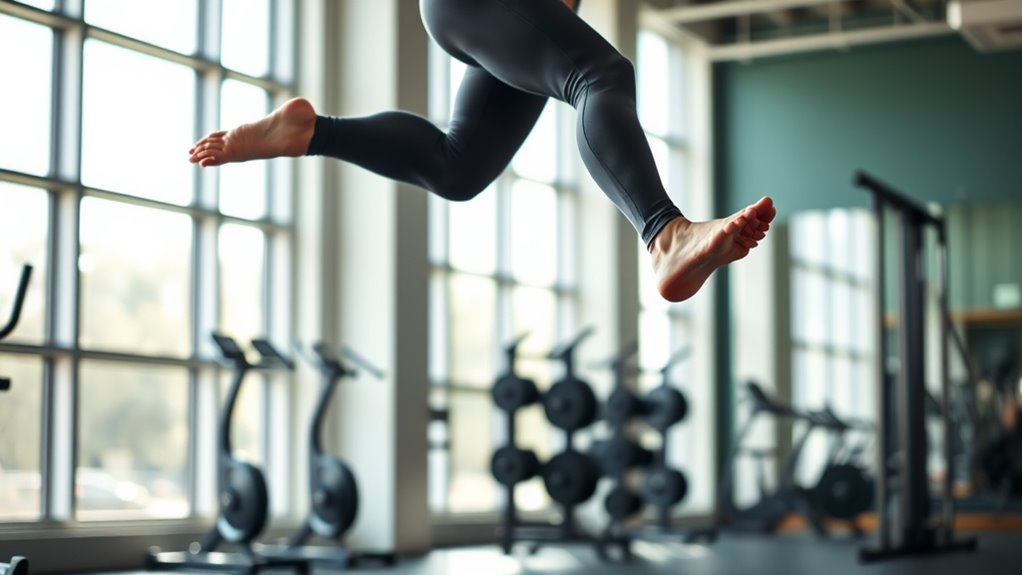
Before diving into your workout, incorporating dynamic leg swings can effectively warm up your muscles. These swings boost your warm-up cardio, increasing blood flow and preparing your legs for activity. Stand next to a wall or support, then swing one leg forward and back, gradually increasing the range of motion. Switch legs and repeat. Dynamic leg swings loosen up your hip flexors, hamstrings, and glutes, reducing injury risk. For added benefit, combine this with foam rolling beforehand, which helps release muscle tension and enhances mobility. Keep the movements controlled and fluid, avoiding any jerking motions. This simple stretch primes your muscles, improves circulation, and sets a solid foundation for more intense exercises or a run. Incorporating proper warm-up techniques can further optimize your performance and prevent injuries.
Walking Lunges With Torso Twist

Walking lunges with a torso twist are an effective dynamic stretch that engages your lower body and core simultaneously. As you step forward into each lunge, rotate your torso toward the front leg, opening up your hips and spine. Focus on controlled movement, maintaining steady breathing to optimize muscle activation. Incorporate breathing techniques by inhaling deeply before the twist and exhaling as you rotate, helping you stay calm and centered. This stretch not only warms up your muscles but also promotes mental preparation, signaling your body to get ready for activity. Keep your core engaged throughout to enhance stability. Additionally, using proper technique ensures you maximize benefits while minimizing the risk of injury. By practicing these lunges with mindful breathing, you prepare both your body and mind for the upcoming workout, reducing injury risk and improving overall performance.
Hamstring and Quadriceps Stretch

To effectively prepare your legs for activity, incorporating hamstring and quadriceps stretches is essential. These stretches activate the muscles, improving flexibility and ensuring they’re ready for movement. By doing so, you boost muscle activation, which helps your body respond better during exercise. Proper stretching also plays a key role in injury prevention, reducing the risk of strains and pulls when you pull on compression tights. To stretch your hamstrings, sit on the ground with one leg extended and reach toward your toes, feeling the stretch along the back of your thigh. For your quadriceps, stand on one leg, pull your ankle toward your glutes, and hold. These stretches warm up key muscle groups, helping you perform better and stay safe.
Hip Circles and Openers

Hip circles and openers are dynamic movements that loosen up your hip joints and surrounding muscles, preparing them for activity. These exercises boost your hip mobility, making your movements smoother and more efficient. As you perform hip circles, you rotate your hips in wide, controlled motions, which helps increase flexibility and reduce stiffness. Openers, like side lunges or leg swings, stretch and activate the muscles around your hips. Incorporating these stretches before wearing compression tights can improve your range of motion and prevent strain during activity. They’re quick and effective ways to warm up your hips, ensuring they’re ready for movement. Focus on controlled, deliberate motions to maximize benefits and keep your hips limber and flexible.
Calf Stretch and Ankle Rolls

Before slipping into compression tights, it’s essential to prepare your calves and ankles with targeted stretches and rolls. The calf stretch helps engage your calves, promoting proper muscle activation and reducing injury risk. Stand facing a wall, place your hands on it, and step one foot back, keeping it straight and pressing the heel into the ground. Lean forward slightly to deepen the stretch. Complement this with ankle rolls—sit or stand on one leg, and gently rotate your ankles clockwise and counterclockwise. These ankle rolls improve ankle flexibility, helping you move more freely and reducing stiffness. Incorporating both stretches and rolls primes your lower legs, ensuring your calves are engaged and your ankles are flexible before you put on compression tights. Additionally, understanding the importance of contrast ratio can help you appreciate how proper lighting and surface reflectivity influence your comfort and performance during exercise.
Frequently Asked Questions
How Long Should I Hold Each Stretch Before Putting on Compression Tights?
For ideal stretch duration, hold each stretch for about 15 to 30 seconds, ensuring you feel a gentle tension without pain. This stretch timing allows your muscles to loosen effectively without overstretching. Focus on slow, controlled movements and breathe deeply. Repeat each stretch 2-3 times if needed. Proper stretch duration helps improve flexibility and prepares your muscles for compression tights, reducing injury risk and enhancing comfort during wear.
Are There Any Stretches I Should Avoid Before Wearing Compression Gear?
Before wearing compression gear, avoid stretches that increase muscle tension or compromise joint stability. You should steer clear of ballistic stretches or deep, bouncing movements, as they can overstretch muscles and cause injury. Instead, focus on gentle, static stretches that help relax your muscles without risking overstretching. This approach guarantees your muscles stay prepared without risking discomfort or instability once you put on your compression tights.
Can Stretching Help Prevent Injuries When Wearing Compression Tights?
Think of stretching as your secret superhero cape—ready to boost muscle activation and flexibility enhancement. When you wear compression tights, stretching can help prevent injuries by warming up your muscles and improving blood flow. It’s like giving your body a heads-up before the workout, ensuring your muscles are prepared for action. So yes, a good stretch can be your injury-fighting sidekick, making your compression gear even more effective.
Is It Better to Stretch Before or After My Workout With Compression Tights?
You should stretch after your workout when wearing compression tights, as it helps cool down muscles and improve flexibility. Remember to use breathing techniques to deepen each stretch and stay relaxed. Hydration tips are essential—drink water before, during, and after exercise to prevent cramps. Stretching post-workout maximizes recovery, reduces soreness, and keeps your muscles flexible, making it a smarter choice than stretching beforehand.
Should I Do Static or Dynamic Stretches Prior to Compression Wear?
For your warm-up routines, dynamic stretching techniques are the way to go before putting on compression tights. They actively prepare your muscles for activity, increase blood flow, and improve mobility. Static stretches, on the other hand, are better after your workout to help with recovery. So, focus on dynamic stretches beforehand to maximize your warm-up and make certain you’re ready to move comfortably in your compression gear.
Conclusion
Think of your muscles as a garden ready to bloom. By doing these stretches, you’re watering and nurturing each part, preparing them to flourish. Skipping this step is like planting seeds in dry soil—nothing will grow strong. So, take a few moments to loosen up and awaken your body. When you gear up in those compression tights, you’ll feel as energized as a garden bursting with vibrant colors, ready to thrive through every move.
Fall Picks
fall essentials
As an affiliate, we earn on qualifying purchases.