The chemistry behind stretchy, silky tights involves advanced synthetic fibers like nylon, elastane, and microfibers that provide stretch, softness, and moisture-wicking. Yarn structures, such as tight twists and smooth surfaces, enhance comfort and flexibility. Elastane’s polyurethane chains stretch and recover thanks to hydrogen bonds, delivering a second-skin fit. Specialized finishes and seamless knitting reduce irritation and waste, while innovations in fiber chemistry improve durability and eco-friendliness. Discover how these elements work together to give you your perfect fit.
Key Takeaways
- Elastane fibers, composed of polyurethane, enable tights to stretch up to five times their length with excellent recovery thanks to reversible hydrogen bonds.
- Synthetic fibers like nylon and polyester are blended with elastane and microfibers to enhance softness, moisture-wicking, and durability.
- Fine, smooth yarns and specialized cross-sectional shapes contribute to a silky feel and improved breathability of the fabric.
- Fabric finishing processes, including precise dyeing and chemical softeners, enhance colorfastness and create a soft, skin-like touch.
- Seamless knitting technologies minimize material waste, improve fit, and enhance comfort by reducing friction and pressure points.

SHARICCA Womens Seamless Underwear No Show Hipster Panties Invisible Lightweight Nuage Bikinis Briefs Microfiber Pack,5P01,M
❤【So Thin Lightweight Microfiber Ribbed Material】 SHARICCA seamless underwear for women is made with 75% polymide and 25%...
As an affiliate, we earn on qualifying purchases.
The Role of Synthetic Fibers in Tights Composition

Synthetic fibers play an essential role in tights by providing the stretch, durability, and recovery needed for a comfortable, second-skin fit. Nylon offers strength and flexibility, ensuring the fabric resists tearing and maintains its shape after multiple wears. Elastane, also known as spandex, gives tights their exceptional elasticity, allowing them to stretch smoothly over your body and bounce back without losing form. These fibers are lightweight and resistant to abrasion, making tights long-lasting and comfortable. Polyester and microfibers contribute softness and moisture-wicking properties, keeping you dry. Specialized fibers like XOSKIN™ enhance comfort and skin-like feel, blending performance with luxury. Additionally, advancements in synthetic fiber technology have led to improved fabric performance, which enhances the overall wearing experience. Modern innovations also focus on breathability to ensure comfort during extended wear. Incorporating innovative moisture-wicking fibers helps keep skin dry and comfortable throughout the day. By selecting these synthetic materials, manufacturers create tights that mold to your body, providing support, flexibility, and a silky touch that feels almost like a second skin.

Caterlove Women's Seamless Underwear No Show Stretch Bikini Panties Silky Invisible Hipster 6 Pack (A, Medium)
SEAMLESS UNDERWEAR: It's made of high quality soft stretchy fabric with 100% cotton health and breathable lining. Fabric...
As an affiliate, we earn on qualifying purchases.
How Yarn Structure Influences Fabric Feel and Flexibility
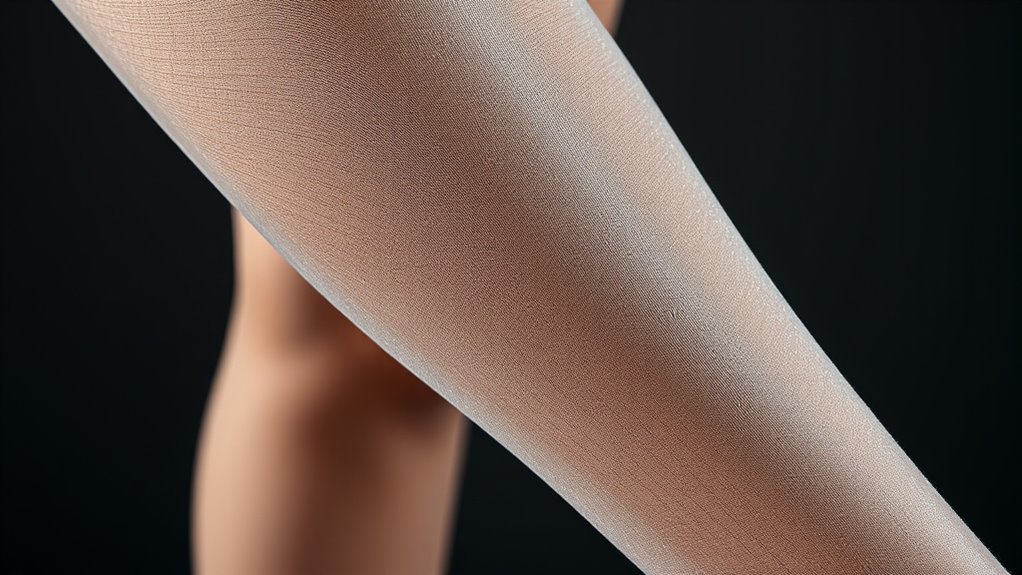
The structure of the yarn itself plays an essential role in determining how tights feel against your skin and how flexible they are. Fine, smooth yarns produce a silky, soft touch, making the fabric feel gentle and comfortable. Tighter yarn twists create a denser fabric, adding durability and stretch without sacrificing flexibility. Loop-based or textured yarns introduce slight bumps or elasticity, enhancing movement and comfort. The yarn’s cross-sectional shape—such as round, trilobal, or hollow—affects breathability, drape, and softness. Additionally, blending fibers influences the hand feel; combining smooth nylon with softer microfibers results in a luxurious feel. Understanding the efficiency ratings of yarns and fibers helps in selecting fabrics that optimize comfort and performance. The fiber content also impacts how the fabric interacts with moisture and temperature regulation. The internal structure and surface characteristics of the yarns, such as fiber twist and ply, directly shape the fabric’s stretch, softness, and how it conforms seamlessly to your body.

FINETOO 6 pack Seamless Underwear for Women Sexy Low Rise Hipster Wave Edge No Show Bikini Panties Womens Cheeky S-XL
SEAMLESS UNDERWEAR FOR WOMEN: 82% Polyamide 18% Elastance. It is silky and smooth, won't irritate the skin and...
As an affiliate, we earn on qualifying purchases.
The Chemistry of Elastane: The Stretching Powerhouse
Elastane’s remarkable ability to stretch and recover stems from its unique chemical makeup. It’s a synthetic fiber composed of long chains of polyurethane, a polymer made from diisocyanates and polyols. These chains form flexible, elastic segments that can extend up to five times their original length without breaking. When you stretch elastane, these segments straighten out, storing energy. Once you release the tension, the segments recoil, returning the fabric to its original shape. This elasticity results from the reversible breaking and reforming of hydrogen bonds between polymer chains, which gives elastane its exceptional recovery properties. Its lightweight, flexible nature makes it ideal for creating garments that move with your body while maintaining their shape and support. Additionally, the flexibility of elastane allows it to be blended with other fibers, enhancing the overall stretch and durability of the fabric. Understanding the molecular structure of elastane helps explain how it achieves such impressive elasticity and resilience. The hydrogen bonding mechanism is fundamental to its ability to stretch repeatedly without losing integrity. Moreover, the reversible hydrogen bonds contribute to its quick recovery after stretching, making it ideal for activewear and form-fitting clothing. Furthermore, the ability of elastane to withstand repeated stretching without degradation makes it a popular choice in stretchable clothing and fashion innovation.

FallSweet No Show High Waist Briefs Underwear for Women Seamless Panties Multi Pack (Multi6 (5-Pack), Large)
Body:86% Nylon, 14% Spandex.
As an affiliate, we earn on qualifying purchases.
Polymer Blends and Their Impact on Durability and Comfort

Combining different polymers in fiber blends allows manufacturers to enhance both the durability and comfort of tights. This synergy creates fabrics that stretch, recover, and feel silky against your skin. For example:
Blending polymers boosts tights’ durability, comfort, and silky feel for all-day wear.
- Nylon and elastane work together to provide resilience and a second-skin fit, ensuring the tights stay in shape after repeated wear.
- Polyester and microfiber blends improve softness, moisture-wicking, and breathability, keeping you comfortable all day.
- Specialized fibers like XOSKIN™ enhance skin-like feel and longevity, resisting pilling and color fading.
- Incorporating mindfulness techniques during manufacturing processes can improve focus and precision, resulting in higher-quality products.
These blends optimize performance, balancing stretch and recovery with a silky texture. The right combination makes your tights both resilient and luxuriously comfortable, ensuring they move seamlessly with your body.
Knitting Technologies and Their Effect on Material Performance

Knitting technologies directly influence the performance and comfort of tights by determining fabric structure, stretchability, and fit. Circular knitting machines create seamless, tubular fabrics that hug your body without seams, enhancing comfort and appearance. The needle count controls fabric density and pattern complexity, affecting stretch and softness. Computer-Aided Design (CAD) allows precise control over stitches and patterns, enabling targeted zones for compression or reinforcement. Seamless knitting integrates texture and thickness variations directly into the fabric, reducing bulk and preventing chafing. These techniques produce a second-skin feel by optimizing elasticity and fit. Seamless knitting enables the creation of garments with fewer disruptions and enhanced durability, further improving comfort and aesthetics. The ability to vary knit structures within a single garment ensures better support, flexibility, and comfort, making your tights move naturally with you while maintaining a sleek, smooth silhouette. Additionally, self-watering plant pots utilize innovative materials and reservoir designs that can also incorporate seamless construction techniques for improved durability and aesthetics.
Colorfastness and Finishing: Achieving Vibrant, Soft Textures
Achieving vibrant, soft textures in tights depends heavily on effective dyeing and finishing processes that lock in color and enhance comfort. During dyeing, you’ll see the fabric immersed in controlled temperature baths, ensuring even color absorption. Finishing treatments then follow, using techniques like steaming, softening agents, and antimicrobial coatings to improve feel and durability. Here’s what happens:
Dyeing and finishing processes ensure vibrant color, silky softness, and lasting comfort in tights.
- You’ll notice the fabric’s color deepening, becoming rich and uniform, thanks to precise dyeing control. colorfastness is essential to ensure the dye remains vibrant through wear and washing.
- The application of chemical softeners makes the fabric silky, reducing roughness and friction.
- Proper setup and equipment calibration during the dyeing and finishing processes are crucial for consistent, high-quality results sound recording techniques.
- Incorporating modern safety features in the equipment can help prevent mishaps during the finishing treatments, ensuring a safer work environment.
- Additionally, understanding advanced techniques can help optimize the finishing process, leading to better product quality and performance.
These steps create tights that are both vivid and irresistibly soft, ready to mold seamlessly to your skin.
Seamless Construction and Its Chemical Advantages

Seamless construction reduces material waste by eliminating the need for cutting and sewing, making production more efficient. It also improves comfort and fit by creating a smooth, second-skin feel without bulky seams. Additionally, this method enhances durability, as fewer stitched areas mean less wear and tear over time. Moreover, understanding the wave and wind dynamics of the beach environment can help in designing textiles that better adapt to movement and stress. Incorporating advanced textile technologies can further improve the stretchability and resilience of these fabrics.
Reduced Material Waste
Reducing material waste is a significant advantage of seamless construction in tights and pantyhose. When you manufacture without seams, you eliminate the need for cutting fabric panels, which often produce scraps. This process minimizes leftover material, making production more efficient and eco-friendly. Imagine: 1. Continuous tubular fabric forming the entire garment, with no excess edges. 2. Precise knitting that adjusts fabric thickness and texture directly during manufacturing. 3. Less need for sewing, reducing thread and energy consumption. Additionally, seamless knitting techniques often utilize advanced textile technology, which optimizes material usage and reduces waste during production. A high-quality fiber used in seamless knitting also contributes to better durability and stretch, further enhancing the sustainability of the garment.
Enhanced Comfort and Fit
The absence of seams in tights and pantyhose directly enhances comfort by eliminating pressure points and friction that can cause chafing during wear. Without stitched seams, there’s less bulk against your skin, reducing irritation and discomfort over time. Chemically, seamless fabrics benefit from continuous knitting, which creates uniform structures that mold smoothly to your body. This process minimizes weak spots and uneven textures, thanks to precise control of fiber orientation and tension during knitting. Additionally, the use of elastane fibers provides excellent stretch and recovery, ensuring a snug, second-skin fit that moves with you. Finishing treatments like chemical softeners and moisture-wicking agents further boost comfort by maintaining softness and controlling sweat. Overall, seamless construction offers a tailored, irritation-free experience that feels natural and supportive all day.
Improved Durability
Because seamless knitting eliminates the need for sewing, tights and pantyhose become inherently more durable by reducing points of weakness where seams might split or fray over time. This seamless construction offers several chemical advantages:
- Enhanced Fiber Cohesion: The continuous yarns form a unified fabric, minimizing weak spots where fibers could break under stress.
- Strong Bonding of Fibers: Special chemical agents during knitting create covalent bonds between fibers, increasing tensile strength and resistance to wear.
- Reduced Friction Points: Uniform surface textures prevent snagging and pilling, extending the garment’s lifespan.
Together, these factors make your tights more resistant to stretching, tearing, and environmental damage, ensuring they stay intact longer and maintain their second-skin feel through repeated use.
Functional Finishes: Moisture-Wicking and Antimicrobial Treatments
Moisture-wicking and antimicrobial finishes are essential functional treatments that enhance the performance and comfort of stretchy tights. Moisture-wicking treatments draw sweat away from your skin, keeping you dry and reducing chafing during activity. They often involve hydrophilic fibers or chemical finishes that absorb moisture and promote evaporation. Antimicrobial finishes inhibit the growth of bacteria and fungi, controlling odor and improving hygiene. These treatments are typically applied through chemical bonding during the finishing process, ensuring they withstand washing and wear. By integrating these finishes, your tights offer increased comfort, freshness, and durability, especially during active use. The chemistry behind these treatments involves specialized polymers and biocidal agents that work together to maintain fabric performance while remaining gentle on your skin.
Sustainability in Manufacturing: Recycling and Eco-Friendly Chemicals
Sustainable manufacturing practices are transforming the production of stretchy tights by prioritizing recycling and eco-friendly chemicals. You can imagine these shifts as:
- Recycling waste fibers from imperfect tights into elastic bands, reducing landfill waste.
- Using eco-friendly dyes that require less water and energy, cutting chemical runoff.
- Replacing harmful solvents with biodegradable alternatives during finishing processes.
These steps help minimize environmental impact without sacrificing quality. Manufacturers now employ closed-loop systems that reuse chemicals and water, lowering pollution. They also select sustainable fibers and recycled materials for yarns, reducing reliance on virgin resources. Eco-conscious chemicals ensure your tights stay soft and durable while protecting ecosystems. By adopting these practices, the industry moves toward greener methods that support both your comfort and the planet’s health.
Innovations in Fiber Chemistry for Enhanced Second-Skin Properties

Advancements in fiber chemistry are driving the development of textiles that better mimic natural skin, offering enhanced comfort and performance in stretchy tights. Researchers are creating specialized fibers with improved elasticity, moisture management, and softness. Innovations include microfibers and patented materials like XOSKIN™ that deliver a silky feel and skin-like stretch. These fibers often incorporate skin-friendly coatings or blends to enhance breathability and reduce irritation. By tailoring fiber composition, manufacturers can optimize recovery, durability, and tactile sensation. The table below highlights key fiber innovations:
| Fiber Type | Key Benefit |
|---|---|
| Microfibers | Ultra-soft, moisture-wicking |
| Elastane | Superior stretch and recovery |
| Patented fibers | Enhanced durability and feel |
| Coated fibers | Improved breathability and comfort |
Frequently Asked Questions
How Do Synthetic Fibers Enhance the Durability of Second-Skin Tights?
Synthetic fibers like nylon and elastane make your tights durable by providing excellent stretch, recovery, and resistance to wear. You benefit from their strength, which prevents tearing, and their flexibility, ensuring a snug, second-skin fit that maintains its shape over time. These fibers also resist snagging, shrinking, and fading, so your tights stay looking and feeling great through repeated wears and washes, offering long-lasting comfort and performance.
What Chemical Treatments Improve the Softness and Elasticity of the Fabric?
You can improve the softness and elasticity of your tights through chemical treatments like softeners and elasticizers. Softening agents reduce friction between fibers, making the fabric feel silky and smooth against your skin. Elasticizers enhance stretch and recovery, ensuring a snug yet comfortable fit. These treatments are applied during finishing processes, helping your tights maintain their flexibility, softness, and shape retention even after multiple wears and washes.
How Does Fiber Molecular Structure Influence Stretch Recovery?
Your tights’ stretch recovery depends entirely on the fiber’s molecular structure. When the polymer chains in elastane or nylon are highly flexible and precisely aligned, they bounce back like a superball after stretching. These flexible chain networks store and release energy efficiently, ensuring your tights regain their shape instantly. The more uniform and elastic the molecular structure, the better the fabric stretches seamlessly, giving you that second-skin fit you crave.
What Eco-Friendly Chemicals Are Used in Finishing Processes?
You can find eco-friendly chemicals like plant-based softeners, such as those derived from coconut or soybean oils, in finishing processes. These natural alternatives soften fabrics without harmful residues. Additionally, biodegradable antimicrobials and moisture-control agents reduce environmental impact while maintaining performance. These greener options help you enjoy comfortable, silky tights that are better for the planet, aligning with sustainable fashion practices and reducing chemical pollution.
How Do Polymer Blends Optimize Comfort and Longevity of Tights?
Polymer blends optimize comfort and longevity by combining fibers like nylon and elastane, offering a perfect balance of stretch, softness, and durability. You’ll experience a silky, flexible fit that recovers well after stretching, reducing sagging and pilling. These blends also resist wear and tear, maintaining their shape longer. By tailoring the blend ratios, manufacturers can enhance moisture-wicking and breathability, ensuring your tights stay comfortable and last through repeated wears.
Conclusion
Understanding the chemistry behind tights helps you appreciate their perfect blend of stretch, comfort, and durability. Imagine wearing eco-friendly tights made from recycled fibers that also resist odors and keep you dry—all thanks to innovative finishes. As manufacturers continue to innovate, you’ll benefit from even more sustainable, high-performance tights that feel like a second skin. Next time you slip into your favorite pair, you’ll know the science making it possible.