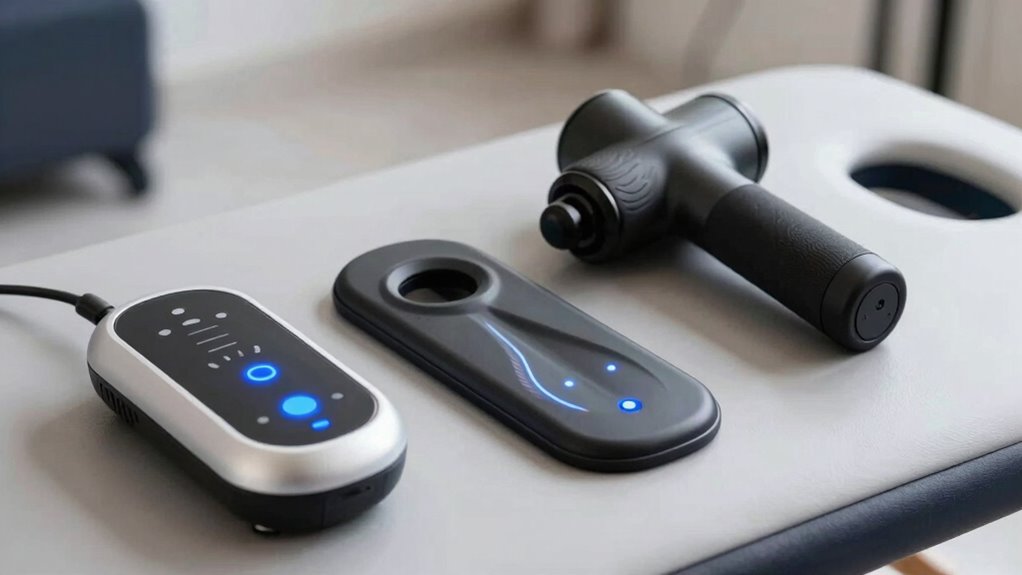

EMS sends electrical impulses directly to your muscles to boost strength and improve circulation, especially when exercise isn’t possible. Massage guns deliver rapid pulses to loosen tight muscles, offer quick pain relief, and enhance flexibility. Recovery devices like compression wraps and cold therapy accelerate healing and reduce inflammation. Each plays a different role in your fitness and recovery plan. Keep exploring to see how combining these tools can optimize your performance and recovery efforts.

Get your wardrobe favorites delivered free — and shop member deals
- Fast, free delivery on millions of items
- Access to Prime Big Deal Days deals on October 6–7
- Prime Video, Amazon Music and more included
Key Takeaways
- EMS stimulates muscles electrically to improve strength and circulation, often used during or after workouts.
- Massage guns deliver percussive pulses to loosen muscles, reduce soreness, and promote relaxation.
- Recovery devices, like compression or cold therapy tools, enhance healing, reduce inflammation, and prevent injuries.
- EMS targets muscle activation directly; massage guns focus on relieving tightness; recovery devices support overall healing.
- Combining these tools offers a comprehensive approach to enhancing performance and speeding up recovery.
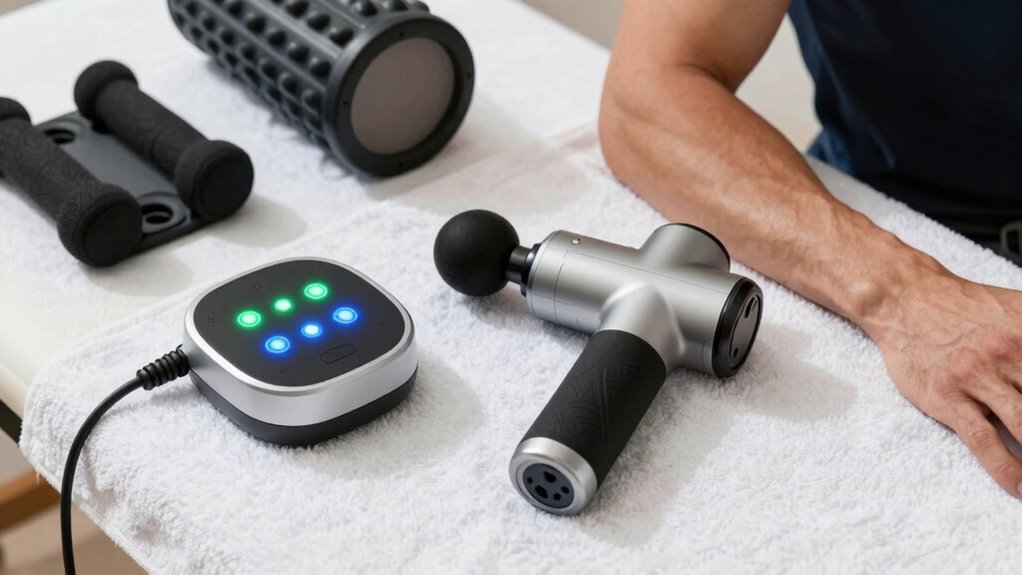
In recent years, EMS (Electrical Muscle Stimulation), massage guns, and recovery devices have become essential tools for athletes and fitness enthusiasts alike. These devices each serve unique purposes, yet they often overlap in their ability to enhance performance and recovery. When it comes to muscle stimulation, EMS stands out as a technology that sends electrical impulses directly to your muscles, causing them to contract. This process can improve muscle strength, prevent atrophy, and enhance circulation. You might use EMS during your workout to activate specific muscle groups or after training to promote recovery. Its ability to stimulate muscles electrically makes it a valuable tool for targeted muscle engagement, especially when traditional exercise isn’t feasible. Electrical muscle stimulation can also be used to complement physical therapy routines, making it a versatile recovery option.
EMS uses electrical impulses to stimulate muscles, boosting strength and circulation for targeted recovery and engagement.
Massage guns, on the other hand, are handheld devices that use percussive therapy to deliver rapid, repetitive pulses to soft tissues. These pulses penetrate deep into muscles, helping to loosen tightness, reduce soreness, and improve blood flow. You’ll likely find massage guns effective for pain relief, especially after intense workouts or long periods of inactivity. They are portable and easy to use, allowing you to target specific areas of discomfort quickly. The rhythmic percussions can break up knots and adhesions in muscles, providing immediate relief and increasing flexibility. Additionally, percussive therapy has been shown to promote relaxation and reduce muscle tension more effectively than manual massage. Incorporating body recovery tools into your routine can further enhance these benefits by supporting overall muscle health.
Recovery devices encompass a broad range of equipment designed to accelerate healing and reduce fatigue. These might include compression sleeves, cold therapy wraps, or vibration platforms. Their common goal is to promote circulation, decrease inflammation, and facilitate faster recovery. When you incorporate these devices into your routine, you’re actively supporting muscle recovery and minimizing downtime. Many recovery devices also help with pain relief by reducing swelling and easing muscle tension. For example, compression therapy can enhance lymphatic drainage, reducing soreness and helping muscles recover more efficiently after strenuous activity. Proper usage of recovery devices can also help prevent injuries caused by overtraining or muscle fatigue.
While all three tools—EMS, massage guns, and recovery devices—aim to optimize your athletic performance and recovery, understanding their differences allows you to use them more effectively. EMS is particularly suited for muscle stimulation and strength building, whereas massage guns excel at providing immediate pain relief and loosening tight muscles. Recovery devices, meanwhile, support overall healing and inflammation reduction. Combining these tools in your regimen can give you an all-encompassing approach to recovery, helping you stay active, reduce discomfort, and improve your athletic output. Each one plays a crucial role, and knowing when and how to use them makes all the difference in achieving your fitness goals.
Electric Muscle Stimulation (EMS) device for muscle recovery
As an affiliate, we earn on qualifying purchases.
As an affiliate, we earn on qualifying purchases.
Frequently Asked Questions
Are EMS Devices Safe for Everyday Use?
Yes, EMS devices are generally safe for everyday use if you follow the instructions. They use electrical stimulation to promote muscle relaxation and recovery. However, you should consult a healthcare professional if you have medical conditions or are pregnant. Overuse or improper placement can cause discomfort or skin irritation. Use EMS devices responsibly, start with low settings, and listen to your body to guarantee safe, effective muscle relaxation and recovery.
How Long Should I Use a Massage Gun per Session?
Think of your muscles as a busy city; a massage gun helps clear traffic. Use it for 1-2 minutes per muscle group, up to 15 minutes total, to prevent muscle fatigue and promote tissue relaxation. Avoid overuse, which can lead to irritation. Pay attention to how your body responds and adjust accordingly. Consistent, moderate sessions keep your muscles happy and ready for action without overloading them.
Can Recovery Devices Replace Professional Physiotherapy?
Recovery devices can’t fully replace professional physiotherapy, especially for complex injuries or chronic issues. While home remedies and recovery devices can support your athletic performance and aid in minor recovery, they lack the personalized assessment and targeted treatment a physiotherapist provides. For ideal results and safety, consult a professional for serious concerns, and use recovery devices as complementary tools rather than substitutes for expert care.
Do These Devices Work Equally Well for Everyone?
These devices don’t work equally well for everyone because individual muscle activation and pain relief responses vary. Factors like your body type, injury level, and sensitivity influence effectiveness. While some find quick relief and better muscle activation, others may see limited results. It’s essential to tailor usage to your needs and consider consulting a professional for maximum results. Don’t assume they’ll work identically for all users.
Are There Any Side Effects From Prolonged Use?
Like a double-edged sword, prolonged use of these devices can cause muscle soreness or skin irritation. You might notice increased discomfort or redness if you overdo it. While generally safe, excessive or improper use may lead to adverse effects. To avoid this, follow recommended guidelines, take breaks, and listen to your body. If symptoms persist, consult a healthcare professional to prevent long-term issues.
Percussive massage gun for muscle soreness relief
As an affiliate, we earn on qualifying purchases.
As an affiliate, we earn on qualifying purchases.
Conclusion
Understanding the differences between EMS, massage guns, and recovery devices helps you choose what’s best for your needs. Did you know that over 60% of athletes use recovery devices regularly to prevent injuries and improve performance? By incorporating the right tools into your routine, you can reduce soreness, boost circulation, and recover faster. So, next time you’re pushing your limits, remember these options and give your body the care it deserves for best results.
Compression therapy recovery wraps
As an affiliate, we earn on qualifying purchases.
As an affiliate, we earn on qualifying purchases.
Cold therapy ice wraps for injury recovery
As an affiliate, we earn on qualifying purchases.
As an affiliate, we earn on qualifying purchases.
Fall Picks
fall essentials
As an affiliate, we earn on qualifying purchases.