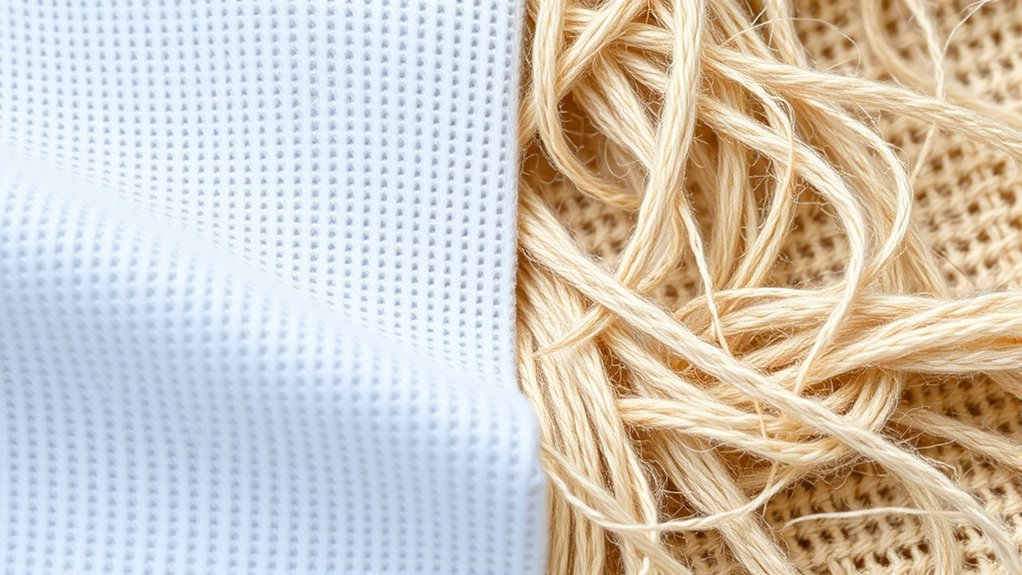

When comparing moisture management, microfibers outperform natural blends by quickly wicking sweat away from your skin and drying faster, making them ideal for intense activities. Microfiber fabrics are engineered to draw moisture to the surface, where it evaporates rapidly, keeping you dry and comfortable. Natural blends like cotton or wool absorb moisture but take longer to dry and may retain odors. Keep going to discover which fabric suits your activity and environment best.

Get your wardrobe favorites delivered free with Prime
- Fast, free delivery on millions of items
- Prime Video, Amazon Music and more included
- Member-only deals all year
Key Takeaways
- Microfibers efficiently wick moisture away from the skin and dry quickly, ideal for high-intensity activities.
- Natural blends like cotton absorb moisture but may retain it longer, making them less quick-drying.
- Wool and bamboo fibers offer good moisture-wicking while maintaining warmth and comfort.
- Microfibers resist odors and mold, maintaining freshness during repeated use.
- Natural fibers provide breathability and comfort but may require more care to manage moisture effectively.
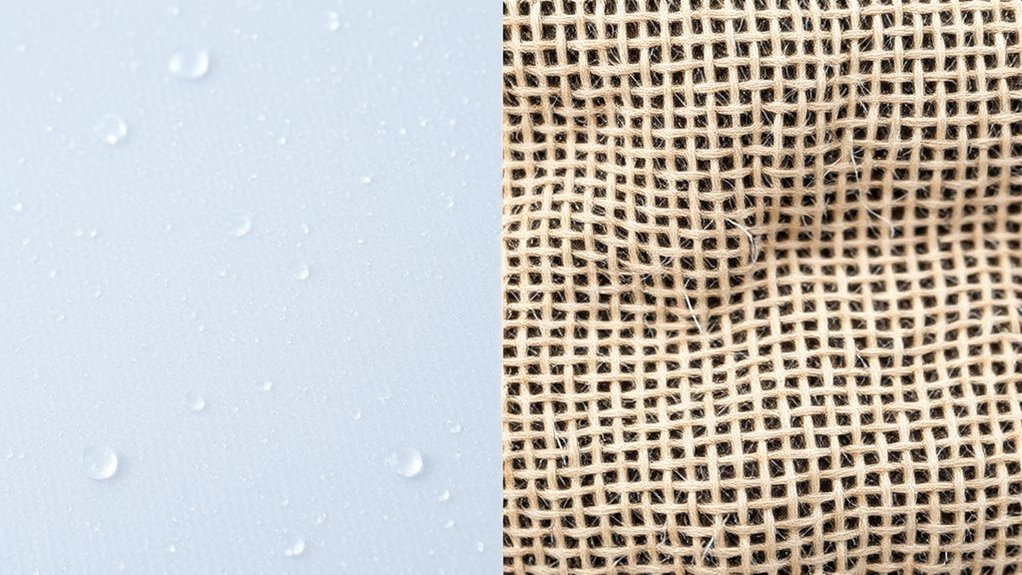
Have you ever wondered how to keep your clothing comfortable and dry during intense workouts or in humid environments? Moisture management plays a *vital* role in staying comfortable and performing at your best. When you’re active, sweat is inevitable, but how your clothing handles that moisture can make a big difference in your overall experience. Two main options dominate the market: microfiber fabrics and natural blends. Understanding their differences helps you choose the right gear for your needs.
Microfiber fabrics are engineered with synthetic fibers, often polyester or nylon, that are incredibly fine—thinner than a human hair. Their small fiber size creates a dense fabric structure that excels at wicking moisture away from your skin. When you sweat, microfibers quickly draw moisture to the fabric’s surface, where it can evaporate faster. This process helps keep you dry and cool during intense activities. Microfibers are also lightweight, durable, and quick-drying, making them popular in high-performance sportswear. They resist odors and mold, maintaining freshness over multiple uses. However, because microfiber is synthetic, it may not breathe as well as natural fibers, which can sometimes lead to a slight feeling of dampness if you’re sweating heavily for extended periods. Additionally, microfiber’s engineered design is often used in performance fabrics, optimizing moisture and temperature regulation.
Natural blends, on the other hand, incorporate fibers like cotton, wool, or bamboo. These materials are inherently breathable and offer excellent comfort, especially in casual or low-intensity settings. Cotton, being highly absorbent, soaks up sweat and keeps it close to your skin, but it can also hold moisture longer, leading to a damp feeling that might cause chafing or discomfort. Wool and bamboo have better moisture-wicking properties than plain cotton; wool, in particular, can absorb a significant amount of moisture without feeling wet and still insulate when damp. Natural fibers tend to be more breathable, allowing air to circulate freely, which helps in cooling your body down. Plus, they’re often softer and more environmentally friendly. The downside is that natural blends may take longer to dry and can retain odors if not properly treated.
In the end, your choice depends on your activity level, climate, and personal preference. If you need quick-drying, moisture-wicking gear for intense workouts, microfiber is likely the better option. If comfort, breathability, and natural feel matter more for your daily wear or leisure activities, natural blends might suit you better. Both have their strengths, but understanding how each manages moisture helps you make more informed choices so you stay comfortable and dry no matter what your day or workout throw at you.
Frequently Asked Questions
How Do Microfiber Fabrics Affect Skin Health Over Time?
Microfiber fabrics can affect your skin health over time by trapping sweat and bacteria against your skin, which may lead to irritation or breakouts. They’re less breathable than natural blends, so you might feel uncomfortable or develop rashes if you wear them for extended periods. To protect your skin, opt for breathable, natural fabrics when possible, and wash microfiber items regularly to reduce potential skin issues.
Are Natural Blends Better for Environmental Sustainability Than Synthetics?
Yes, natural blends are generally better for environmental sustainability than synthetics. You’ll find that they often use renewable resources like cotton, wool, or hemp, which biodegrade more easily and require less energy to produce. Synthetics, like polyester and nylon, rely on petrochemicals, contributing to pollution and waste. By choosing natural blends, you help reduce your ecological footprint, support sustainable farming practices, and promote a healthier planet.
Can Microfiber Moisture-Wicking Properties Vary by Brand?
Yes, microfiber moisture-wicking properties can vary by brand. Different brands use various manufacturing techniques, fiber blends, and fabric treatments that influence how well the material pulls moisture away from your skin. Some brands incorporate advanced technologies or specialized coatings to enhance moisture management, while others may rely on standard fibers. To find the best performance, you might need to compare product reviews, fabric specifications, and testing results across brands.
What Maintenance Practices Optimize Moisture Management in Blends?
To optimize moisture management in blends, wash your fabrics with gentle, cold water and avoid fabric softeners, which can clog fibers. Always follow the care instructions, and air dry or tumble dry on low. Store your clothing properly to prevent damage. Regularly cleaning the fibers prevents buildup, ensuring they retain their moisture-wicking abilities. Proper maintenance keeps your blends performing their best, keeping you comfortable during active use.
How Do Blend Compositions Influence Odor Control and Durability?
Did you know that blends with natural fibers like wool or cotton last up to 30% longer than synthetic-only fabrics? Your choice of blend directly impacts odor control and durability. Natural fibers excel at absorbing sweat and fighting odors, while synthetic fibers boost strength and resilience. Combining these materials creates a fabric that both manages moisture effectively and withstands wear and tear, ensuring your clothing stays fresh and durable over time.
Conclusion
When it comes to moisture management, choosing between microfibers and natural blends is like picking a superhero for your wardrobe. Microfibers might just sweep away sweat faster than a lightning bolt, keeping you dry through every adventure. Natural blends, on the other hand, offer a cozy hug, but sometimes can’t keep up with a marathon. Whichever you pick, remember—you’re arming yourself with the ultimate moisture-fighting hero to conquer your day!
Evergreen bestsellers Picks
bestsellers
As an affiliate, we earn on qualifying purchases.