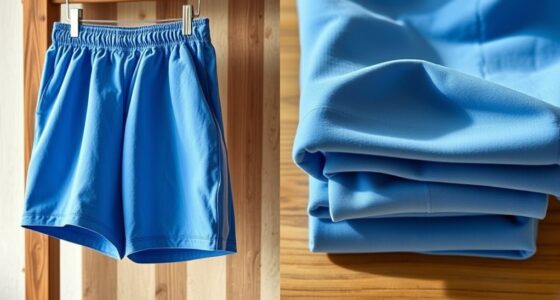
Nylon appears sheer because its fibers have a microscopic structure with crystalline and amorphous regions that scatter light. When light hits the fabric, some is reflected, absorbed, or transmitted, but irregularities in the fibers cause scattering in many directions. Thinner fibers and smooth surfaces enhance transparency, while weave patterns also influence how much light passes through. To discover the detailed science behind this delicate effect, keep exploring how these factors work together.
Key Takeaways
- Thin nylon fibers with small diameters enhance light transmission and scattering, contributing to a sheer appearance.
- The crystalline and amorphous regions within nylon fibers cause irregular light scattering, softening transparency.
- Smooth fiber surfaces minimize reflection and maximize light passage, increasing fabric transparency.
- Fine weave patterns allow more light to pass through, boosting the fabric’s translucency.
- The microscopic structure and controlled surface finish work together to create nylon fabric’s delicate, luminous look.

Have you ever wondered how nylon fabrics achieve their delicate, transparent appearance? It all comes down to the way light interacts with the material at a microscopic level. Nylon, especially when woven into sheer fabrics, isn’t completely transparent; instead, it allows light to pass through while scattering it in different directions. This scattering effect is what gives the fabric its soft, translucent quality that feels both delicate and elegant. The key factor behind this phenomenon is the fabric’s microscopic structure, which is engineered to manipulate light in specific ways.
At the core of nylon’s transparency is its molecular makeup. When nylon fibers are manufactured, they form a highly ordered crystalline structure interwoven with amorphous regions. This structure influences how light travels through the material. When light hits the surface of the fabric, some of it is reflected, some is absorbed, and the rest penetrates the fibers. As the light continues through, it encounters tiny irregularities and differences in the fiber’s density and structure. These minute variations cause the light to scatter in different directions rather than passing straight through or being absorbed completely.
This scattering is further influenced by the fiber’s diameter and surface characteristics. Thinner fibers tend to scatter light more effectively, contributing to the fabric’s transparency. Additionally, the surface finish of the fibers—whether smooth or slightly textured—affects how light interacts with the material. A smooth surface minimizes reflection and maximizes the transmission of light, enhancing the sheer appearance. On the other hand, a textured surface can increase scattering, leading to a more diffuse, softer glow.
The weave of the fabric also plays a significant role. A finely woven nylon sheer fabric allows more light to pass through with minimal obstruction, amplifying its transparency. Loose weaves, with larger gaps between threads, scatter light even more, creating an airy, delicate look. Conversely, tighter weaves can reduce transparency but still maintain a soft, luminous quality by controlling how the fibers and gaps interact with light. Essentially, the combination of fiber properties, surface finish, and weave pattern all collaborate to produce the characteristic light scattering that makes nylon sheer fabrics so visually appealing. Additionally, the microscopic structure of the fibers is carefully engineered to optimize both durability and optical properties, further enhancing its sheer quality.

IUGA Compression Leggings with Pockets for Women Tummy Control Leggings No Front Seam Workout High Waist Yoga Pants, Black
*PowerTight Collection: Power Through Every Move. Crafted from 69% nylon and 31% spandex, IUGA PowerTight sandwich waistband compression...
As an affiliate, we earn on qualifying purchases.
Frequently Asked Questions
How Does Nylon’s Molecular Structure Influence Its Transparency?
Nylon’s molecular structure influences its transparency because its uniform, tightly packed molecules minimize light scattering, allowing more light to pass through. When the polymer chains are orderly and smooth, they create fewer imperfections, making the material more transparent. Conversely, irregularities or crystalline regions scatter light more, reducing clarity. So, your nylon’s transparency depends on how its molecules are arranged, with more uniform structures offering greater clarity and a sheer appearance.
Can Processing Methods Alter Nylon’s Light Scattering Properties?
Processing methods can definitely alter nylon’s light scattering properties. For example, stretching nylon fibers can reduce surface roughness, making the material appear more transparent. Studies show that controlled heat treatments can refine the crystalline structure, increasing clarity by decreasing light scattering. So, if you want nylon to be more sheer, adjusting manufacturing techniques like orientation and heat treatment allows you to fine-tune its transparency and achieve the desired look.
What Role Does Fiber Diameter Play in Nylon’s Sheer Appearance?
Fiber diameter considerably influences nylon’s sheer appearance. When fibers are thinner, they scatter light more effectively, making the fabric look more transparent or sheer. You’ll notice that finer nylon fibers allow more light to pass through, enhancing their delicate, airy look. Conversely, thicker fibers reflect more light, resulting in a more opaque appearance. So, choosing a smaller fiber diameter helps achieve that lightweight, sheer quality you desire in nylon fabrics.
How Does Moisture Content Affect Nylon’s Light Transmission?
Imagine moisture content as a subtle painter’s brush, softly touching nylon fibers. When moisture is high, it fills tiny gaps and smooths the surface, allowing more light to pass through like a clear stream. Conversely, low moisture makes fibers more rigid and rough, scattering light like a turbulent river. So, moisture levels directly influence nylon’s transparency, with higher moisture boosting light transmission and lower moisture diminishing it.
Are There Environmental Factors That Impact Nylon’s Clarity Over Time?
Environmental factors like UV exposure, temperature fluctuations, and humidity can impact nylon’s clarity over time. When exposed to sunlight, UV rays break down the polymer chains, causing yellowing or cloudiness. High temperatures may cause deformation or discoloration, while moisture can lead to mold or weakening of the material. To maintain nylon’s clarity, you should store it in a cool, dry place away from direct sunlight and harsh environmental conditions.

Compression Leggings for Women 20-30mmHg - Footles High Waist Compression Tights for Circulation during Pregnancy, Sports, Workout, Running - Black, Medium - A717BL2
IMPROVED CIRCULATION - Experience enhanced blood flow with 20-30 mmHg compression, ideal for daily wear and recovery.
As an affiliate, we earn on qualifying purchases.
Conclusion
Understanding why nylon appears sheer helps you appreciate its unique light-scattering properties. Did you know that nylon fibers can scatter up to 30% of incoming light, making them look more transparent? This light interaction is what gives nylon that delicate, sheer quality. So, next time you wear or see nylon fabric, you’ll know it’s the fascinating result of how its fibers manipulate light—an elegant blend of science and textile artistry.
CompressionZ Women's High Waisted Compression Leggings Performance Shaping Gym, Pilates, Travel, Yoga, Workout Pants Black Medium
Tight Yet Comfortable Compression Leggings for Women: Experience ultimate comfort with our compression recovery leggings, suitable for running,...
As an affiliate, we earn on qualifying purchases.

Compression Pantyhose for Women, 20-30 mmHg Footless Medical Compression Stockings, Waist High Opaque Graduated Support Compression Hose Tights for Edema, Varicose Veins, Swelling
HELPS PREVENT & RELIEVE: Our support hose for women & men are ideal for preventing and relieving: fatigue,...
As an affiliate, we earn on qualifying purchases.