
The stretchiness of spandex and elastane comes from their unique molecular structure, which consists of long, flexible polymer chains that can uncoil and slide past each other when stretched. These fibers are manufactured through specialized chemical processes that align and set the polymer chains, giving them exceptional elasticity and recovery. Cross-linking bonds further enhance strength and durability, while environmental factors can influence their performance. If you want to understand how chemistry enables this remarkable flexibility, keep exploring the details behind these advanced fibers.
Key Takeaways
- Spandex and elastane are made from polyurethane-based polymers with flexible, long-chain molecules that enable high stretchability.
- Their molecular chains are arranged with crystalline and amorphous regions, allowing elongation and recovery without breaking.
- Cross-linking bonds between polymer chains enhance elasticity and durability, influencing how fibers stretch and return to shape.
- The fibers’ flexibility results from uncoiling and sliding of polymer chains under tension, then reverting to original form when tension is released.
- Manufacturing processes control polymer orientation and cross-linking to optimize stretch, recovery, and dyeability of the fibers.

IUGA Compression Leggings with Pockets for Women Tummy Control Leggings No Front Seam Workout High Waist Yoga Pants, Black
*PowerTight Collection: Power Through Every Move. Crafted from 69% nylon and 31% spandex, IUGA PowerTight sandwich waistband compression...
As an affiliate, we earn on qualifying purchases.
What Are Spandex and Elastane? An Overview
Spandex and elastane are fundamentally the same stretchy fibers used in a wide range of clothing. These fibers are prized for their exceptional elasticity, allowing garments to stretch comfortably and return to their original shape. When creating fabrics, fiber blending combines elastane with other fibers like cotton or nylon, enhancing stretch and durability. This process also influences fabric dyeing, as elastane’s chemical structure affects how dyes bond with the material. You’ll find elastane in activewear, swimwear, and compression garments because of its flexibility and resilience. Despite different brand names, elastane and spandex are interchangeable, making them versatile for various fashion needs. Their unique properties stem from specialized manufacturing techniques that improve fabric performance and comfort.

Capezio Women's Ultra Soft Transition Tight,Light Suntan,Small-Medium
Transition for a footed or footless tight option
As an affiliate, we earn on qualifying purchases.
The Molecular Structure of Stretch Fibers
When you look at stretch fibers closely, you’ll notice their polymer chains are arranged in a way that allows for maximum flexibility. Cross-linking mechanisms connect these chains, giving the fibers their strength and elasticity. At the molecular level, this structure enables the fibers to stretch and return to their original shape without damage.
Polymer Chain Arrangement
Have you ever wondered what makes stretch fibers so flexible and resilient? It all comes down to how their polymer chains are arranged. In stretch fibers like spandex, high fiber crystallinity allows tightly packed regions that provide strength, while amorphous areas give flexibility. Polymer orientation plays a vital role, as the chains are aligned in the direction of stretching, enabling the fibers to elongate without breaking. This ordered arrangement allows the material to stretch and recover repeatedly. The balance between crystalline and amorphous regions, combined with the aligned polymer chains, gives your stretch garments their remarkable elasticity. Understanding this molecular structure helps explain why spandex can stretch so far and return to its original shape time after time.
Cross-Linking Mechanisms
Cross-linking mechanisms are essential in determining the durability and elasticity of stretch fibers. They form bonds between polymer chains, allowing fibers to stretch and recover without damage. These cross-links influence how fibers respond during fiber blending and dyeing techniques, affecting colorfastness and stretch retention. Different cross-linking methods, like chemical or physical bonds, create unique molecular structures that impact fiber performance. For example, some fibers are cross-linked to resist deformation during processing, maintaining their shape. To illustrate, consider this table:
| Cross-Linking Type | Effect on Fiber Properties | Common Use |
|---|---|---|
| Chemical cross-linking | Increased durability, reduced stretch | Textile finishing |
| Physical cross-linking | Enhanced elasticity, easy processing | Elastane fibers |
| Radiation-induced | Improved dye uptake, fiber stability | Special applications |
Understanding these mechanisms helps optimize fiber performance in various applications. Additionally, advancements in cross-linking techniques continue to improve the functional properties of stretch fibers in modern textiles.
Flexibility at Molecular Level
Ever wondered what makes stretch fibers so flexible at the molecular level? It all comes down to their molecular flexibility. The polymer chains in spandex and elastane are arranged in long, intertwined structures that can easily slide past each other. This flexibility allows the fibers to stretch and recover without breaking, giving them exceptional fiber elasticity. The molecular bonds are designed to be strong yet adaptable, enabling the fibers to elongate under tension and return to their original shape. The presence of soft segments within the polymer chain creates flexible zones that enhance elasticity. Additionally, understanding the Honda Tuning techniques for performance upgrades reveals how material properties influence durability and flexibility in various applications. This unique molecular structure is what grants stretch fibers their remarkable ability to stretch considerably while maintaining durability, making them ideal for clothing that needs to move with you.

Bloch Dance Women's Contour Soft Adaptatoe Tights, Bloch Tan, Small/Medium
Convertible styling allows the Dancer to wear the tight as footed or footless
As an affiliate, we earn on qualifying purchases.
How Spandex and Elastane Are Manufactured

The manufacturing process of spandex and elastane involves a series of precise chemical reactions that transform raw materials into highly elastic fibers. You start with a solution of polyurethane-based chemicals, which undergo polymerization through a process called diisocyanate formation. This creates long, flexible chains that can stretch considerably. During fiber production, manufacturing processes like fiber spinning convert this solution into fine filaments. Once spun, the fibers often go through fiber dyeing to achieve desired colors, ensuring uniformity and durability. After dyeing, the fibers are stretched and set to enhance their elasticity. Throughout these steps, careful control of temperature, chemical reactions, and processing conditions guarantees the fibers’ strength and flexibility, making spandex and elastane the versatile materials you see in stretch garments today. Additionally, understanding the potential vulnerabilities in the manufacturing process helps improve the security and quality of these fibers in commercial applications.

DANCEYOU Girls Ballet Tights Women Dance Stockings Skin Tone Convertible/Footed Opaque Tights for Toddler, Kids and Women Tan M
【DURABLE AND LONG-LASTING】DANCEYOU girls ballet tights are made with exceptional stretch and recovery. The high-quality spandex material making...
As an affiliate, we earn on qualifying purchases.
The Role of Polymers in Providing Flexibility
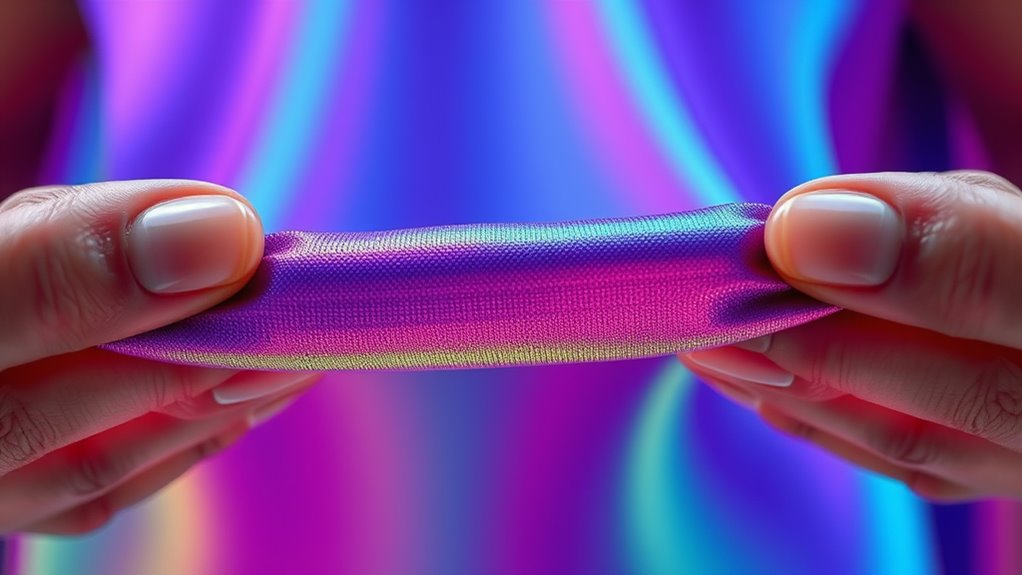
Polymers’ chain structures are key to their flexibility, allowing them to stretch and recover. When you pull on a polymer, its long, zigzag chains slide past each other, creating elasticity. This mechanism explains how materials like spandex can stretch tightly yet return to their original shape. The horsepower of electric dirt bikes also relies on the efficient energy transfer within the motor’s design, which is rooted in the properties of the polymers used in electrical components.
Polymer Chain Structure
How do polymer chain structures contribute to a material’s flexibility? The key lies in fiber crystallinity and molecular weight. Flexible polymers have less fiber crystallinity, meaning their chains aren’t tightly packed, allowing them to move easily past each other. This loose arrangement gives stretchable fabrics their ability to bend and elongate without breaking. Additionally, a higher molecular weight means longer polymer chains, which enhances flexibility because these chains can slide and deform under stress. Shorter chains tend to be more rigid. The combination of low fiber crystallinity and high molecular weight creates a structure that’s both durable and elastic, enabling fabrics like spandex and elastane to stretch comfortably while maintaining strength. This chain architecture directly influences how well the fibers perform in stretch garments.
Elasticity Mechanism
Understanding elasticity in polymers involves recognizing how their molecular structure enables materials to stretch and return to their original shape. In spandex and elastane, flexible polymer chains are arranged with fiber reinforcement that allows for significant elongation without damage. When you stretch these fibers, the polymer chains uncoil and slide past each other, creating flexibility. Once you release the tension, the natural elasticity of the chains pulls them back into their original configuration. This process is essential during textile dyeing, as the fibers’ ability to stretch ensures dyes penetrate evenly without damaging the material. The combination of fiber reinforcement and the inherent elasticity of polymers makes spandex ideal for garments that require both strength and flexibility, providing comfort and durability in everyday wear. Additionally, the molecular flexibility of the polymer chains is what allows for such remarkable stretch and recovery properties.
Cross-Linking and Its Effect on Elasticity

Cross-linking occurs when chemical bonds form between polymer chains, creating a network that considerably influences the material’s elasticity. This process strengthens fiber reinforcement, making the fabric more resilient and durable. When cross-links are present, the elastic fibers can stretch and recover better, maintaining their shape over time. Additionally, cross-linking affects dye affinity, as a tightly bonded network may limit dye penetration, influencing how colors appear and last on the fabric. By controlling the degree of cross-linking, manufacturers can fine-tune spandex or elastane’s stretchability and color retention. This balance ensures the fabric remains flexible yet stable, providing comfort and longevity. Understanding how cross-linking impacts these properties helps in designing high-performance stretch fabrics tailored to specific applications. Furthermore, the degree of cross-linking can influence the fabric’s elastic recovery, ensuring it maintains its shape after repeated stretching.
The Chemistry of Stretch and Recovery in Fabrics

The ability of fabrics to stretch and then recover their original shape relies on the intricate chemistry of their polymer structures. Elastomers like spandex feature flexible chains that bend and straighten, enabling stretch without permanent deformation. Knit patterns also influence recovery; tighter or more complex stitches can enhance elasticity by distributing stress evenly. Dyeing techniques play a role too, as dyes must penetrate the polymer without compromising its flexibility, often requiring specialized methods to preserve stretch properties. When you understand the chemistry behind these processes, you see how polymer chemistry, knit designs, and dyeing methods work together to create fabrics that stretch comfortably and bounce back swiftly. This synergy results in garments that maintain their shape, durability, and vibrant appearance through repeated wear and washing. Additionally, the structure of elastomer polymers allows for repeated elongation and recovery, making them ideal for stretchy fabrics.
Environmental Factors Influencing Material Performance
Environmental factors such as temperature, humidity, and exposure to sunlight can considerably impact the performance of fabrics. High temperatures may cause fibers to lose their elasticity or weaken, affecting the fabric’s textural properties. Humidity can lead to moisture absorption, which may alter the stretchability and comfort of spandex or elastane garments. Prolonged sunlight exposure can degrade fibers, reducing their durability and flexibility. These factors also influence dyeing compatibility; extreme conditions might cause uneven dye uptake or fading over time. To maintain ideal performance, you should consider proper storage and handling, especially in environments with fluctuating temperatures or high humidity. Additionally, exposure to UV radiation can accelerate fiber degradation, further diminishing fabric quality and lifespan. Understanding these environmental influences helps ensure your stretch fabrics retain their desired properties, durability, and appearance throughout their lifespan.
Innovations in Stretch Fiber Technology

Recent innovations in stretch fiber technology have revolutionized how fabrics combine flexibility with durability. Advances in fiber blending allow manufacturers to combine spandex or elastane with other fibers, enhancing performance and comfort. This blending improves stretch recovery and maintains shape over time, making textiles more resilient. Additionally, new dyeing techniques have emerged, enabling vibrant colors without compromising fiber integrity. These innovative dyeing methods reduce environmental impact while ensuring consistent, long-lasting hues. By refining fiber blending and dyeing processes, manufacturers create stretch fabrics that are stronger, more versatile, and easier to produce. Moreover, incorporating specialized coating techniques can further enhance the durability and elasticity of stretch fibers. These technological advancements push the boundaries of comfort and functionality, making stretch textiles suitable for a wide range of applications—from everyday wear to high-performance gear.
Benefits of Spandex and Elastane in Activewear
Innovations in stretch fiber technology have paved the way for activewear that combines comfort with high performance. Spandex and elastane offer excellent fabric breathability, helping you stay cool and dry during intense workouts. Their exceptional elasticity allows for unrestricted movement, enhancing your comfort and performance. Additionally, these fibers improve dye absorption, resulting in vibrant colors that last through repeated washes. This means your activewear stays looking fresh and bold longer. The lightweight nature of spandex and elastane also ensures your clothing fits snugly without feeling heavy or restrictive. Moreover, the elasticity of these fibers supports muscle recovery by reducing strain during movement. Overall, these fibers elevate activewear by providing durability, vibrant aesthetics, and comfort, making them essential for anyone serious about fitness or active lifestyles.
Frequently Asked Questions
How Does Temperature Affect the Elasticity of Spandex and Elastane?
When considering how temperature affects spandex and elastane, you notice that thermal expansion plays a role. As temperature rises, the fibers gain more molecular flexibility, making the fabric stretchier. Conversely, cooler temperatures reduce molecular movement, causing less elasticity. You’ll find that moderate warmth enhances comfort and stretch, but extreme heat can weaken fibers, while cold makes them stiffer. So, temperature directly influences their elasticity through changes in molecular flexibility.
Are There Any Eco-Friendly Alternatives to Traditional Stretch Fibers?
Imagine choosing a pair of jeans made from biodegradable fibers or plant-based alternatives. You can opt for materials like Tencel or Lyocell, which are eco-friendly and derived from sustainable sources. These fibers break down naturally, reducing environmental impact. Switching to such fibers helps lessen waste and promotes sustainability. As awareness grows, more brands are embracing eco-friendly options, making it easier for you to make greener choices in your wardrobe.
What Are the Potential Health Risks Associated With Prolonged Spandex Contact?
Prolonged contact with spandex can cause skin irritation or allergic reactions, especially if you have sensitive skin. You might notice redness, itching, or rashes where the fabric touches your skin. These issues happen because some people are allergic to chemicals used in manufacturing or the fiber itself. To minimize risks, it’s best to wear breathable clothing, wash new garments before wearing, and remove spandex items if you experience discomfort.
How Do Washing and Drying Impact the Longevity of Stretch Fabrics?
Imagine your stretch fabric as a delicate dance partner, needing gentle care to maintain its rhythm. Every wash is a new step; using harsh fabric softeners or high heat from drying can fray its fibers. Opt for gentle washing machine settings, avoid fabric softeners, and air-dry when possible. This preserves elasticity, keeping your favorite pieces lively and long-lasting, like a well-rehearsed dance.
Can Stretch Fibers Be Recycled or Reused Effectively?
You might wonder if stretch fibers like spandex can be recycled or reused effectively. Fiber recycling is possible, but reuse challenges exist due to their synthetic nature and complex blending with other fabrics. These factors make it difficult to break down stretch fibers for reuse, limiting sustainability efforts. Still, ongoing innovations aim to improve recycling processes, so your active participation in choosing sustainable options can help reduce environmental impact.
Conclusion
Now that you know the chemistry behind spandex and elastane, you can see how these fibers truly stretch the limits of innovation. Their unique molecular structure gives your activewear that perfect fit and flexibility, making sure you’re always on the ball. Remember, understanding the science helps you appreciate the comfort and performance you enjoy daily. So, next time you’re reaching for your favorite stretch gear, you’ll know it’s built to bend over backwards just for you.