During long hospital shifts, compression hosiery supports your legs by boosting circulation, reducing swelling, and easing muscle fatigue. It applies graduated pressure to keep blood flowing back to your heart and prevents fluid buildup, helping your legs feel energized and comfortable. These stockings also protect your veins, lowering the risk of varicose veins and venous issues over time. To discover how the right compression wear can make your shifts more manageable, keep exploring.
Key Takeaways
- Compression hosiery enhances blood flow, reducing vein strain and preventing issues like varicose veins during long hospital shifts.
- It minimizes swelling and edema by encouraging fluid drainage, keeping legs comfortable and healthy after extended periods on your feet.
- Supports muscle and vein health, reducing fatigue, soreness, and aiding quicker recovery after demanding shifts.
- Features seamless, breathable fabrics and flexible fits for all-day comfort and effective support during long hours.
- Graduated pressure stabilizes leg tissues, preventing discomfort and promoting optimal circulation for sustained energy.
Improving Circulation During Demanding Shifts

During demanding hospital shifts, maintaining proper circulation is essential to prevent fatigue and health issues. When you wear compression hosiery, it applies graduated pressure to your lower legs, encouraging blood to flow efficiently back toward your heart. This prevents blood from pooling in your veins, reducing the risk of swelling and vein-related problems. Enhanced circulation also supports the lymphatic system, helping your body drain excess fluids and toxins. As a result, your legs stay energized and less fatigued, even after hours on your feet. Incorporating compression therapy into your routine can further optimize your circulatory benefits and overall comfort. Regular use of compression stockings can also promote vascular health, reducing the likelihood of developing conditions like deep vein thrombosis or varicose veins over time.
Reducing Swelling and Edema for Comfort

Wearing compression hosiery helps prevent fluid buildup in your legs, reducing swelling and discomfort after long shifts. By improving blood flow, it eases tissue inflammation and keeps your legs feeling lighter. This support not only boosts comfort but also promotes healthier tissue long-term. Regular use can also help prevent the development of edema, ensuring sustained leg health. Additionally, choosing high-quality, durable materials can enhance the longevity and effectiveness of your compression stockings. Properly fitted compression hosiery with appropriate pressure levels can further optimize blood circulation and comfort during demanding shifts. Incorporating mindful decluttering strategies by organizing your hosiery and accessories can also make it easier to select the right support for each shift, maintaining an efficient routine.
Prevents Fluid Accumulation
Compression hosiery actively works to prevent fluid from pooling in your legs, which helps reduce swelling and edema after long shifts. By applying graduated pressure, these stockings encourage blood flow back toward your heart, minimizing fluid leakage into leg tissues. This improved circulation helps keep fluid levels balanced, preventing buildup that causes swelling. Enhanced circulation plays a crucial role in maintaining overall leg health during extended periods of activity. When fluid doesn’t accumulate, your legs stay lighter and more comfortable, reducing the heaviness and tightness that often follow extended standing or walking. Proper compression levels are essential to ensure effectiveness and comfort during wear. Additionally, understanding compression therapy can help you select the right hosiery for your needs. Using compression hosiery regularly can also support your body’s natural drainage systems, helping your legs stay free of excess fluid throughout demanding days. To maximize benefits, choosing the appropriate compression level based on your activity and health needs is key. With less fluid retention, you experience less discomfort and maintain better mobility, making it easier to perform your duties and recover afterward.
Eases Leg Discomfort
When you stand or walk for long hours, your legs can become uncomfortable and swollen from fluid buildup. Compression hosiery applies gentle pressure, supporting your veins and improving blood flow. This targeted support can also help prevent venous insufficiency, which is common among those who spend extended periods on their feet. This helps reduce the sensation of heaviness and aching in your lower limbs. By preventing fluid from pooling in your tissues, compression socks decrease swelling and inflammation, making your legs feel lighter and more comfortable. Many nurses find that wearing compression hosiery during shifts minimizes post-shift soreness and stiffness. The improved circulation helps ease muscle fatigue and discomfort, so you can stay more comfortable throughout your long shifts. Additionally, understanding the warning signs of a checked-out partner can help maintain emotional well-being during stressful work periods. Incorporating compression therapy into your routine can further enhance circulation and recovery, providing additional support for your active, demanding schedule. Proper use of compression hosiery can also promote overall vascular health, reducing the risk of developing more serious conditions related to poor circulation. Recognizing the importance of proper fit and compression level ensures maximum effectiveness and comfort during your shifts.
Promotes Tissue Health
By actively supporting your veins, compression hosiery helps prevent fluid buildup that causes swelling and discomfort in your legs. This improved venous return reduces inflammation and keeps your tissues healthy throughout long shifts. When your legs are swollen, it can be hard to move comfortably or recover quickly after work. Wearing compression stockings helps manage edema, keeping your legs lighter and more comfortable. Here’s how they work:
| Benefit | How It Works | Result |
|---|---|---|
| Reduces swelling | Enhances venous drainage | Less tissue inflammation |
| Prevents edema | Improves lymphatic flow | Maintains tissue health |
| Supports tissue | Applies graduated pressure | Promotes recovery and comfort |
| Boosts comfort | Keeps tissues healthy | Reduces long-term damage |
Alleviating Fatigue and Muscle Discomfort

Wearing compression hosiery can substantially reduce leg muscle strain during long shifts, helping you stay comfortable and focused. It supports your veins and muscles, easing heaviness and aching that often come with extended standing. Plus, it promotes quicker recovery afterward, so you’re ready for the next demanding day. Proper compression levels are essential for maximizing these benefits and ensuring comfort throughout your shift. Additionally, choosing the right type of compression hosiery can further enhance circulation and reduce fatigue during your work hours.
Reduces Leg Muscle Strain
Long hospital shifts can leave your legs feeling heavy and sore, but compression hosiery actively works to reduce muscle strain and discomfort. It supports your muscles, preventing excessive fatigue during long hours on your feet. The graduated pressure helps stabilize muscles, reducing micro-tears and soreness. As a result, you’ll feel less stiffness and quicker recovery after shifts. To illustrate, here’s how compression hosiery benefits your muscles: Wall organization systems can also help keep your workspace tidy, reducing the risk of tripping or accidents during busy shifts. Incorporating proper compression therapy techniques can further enhance circulatory benefits and promote faster muscle recovery.
Enhances Circulatory Support
Compression hosiery actively supports your circulatory system by applying graduated pressure to your legs, which helps blood flow back toward your heart more efficiently. This improved circulation prevents blood pooling and reduces the strain on your veins during long shifts. When blood moves effectively, you’ll notice less fatigue and muscle discomfort, keeping you energized throughout your day. Wearing compression stockings encourages better lymphatic drainage, minimizing swelling and heaviness. Plus, they help maintain vascular health, lowering your risk of developing vein-related issues over time.
- Promotes steady blood flow, reducing leg heaviness
- Prevents blood pooling and clot formation
- Supports lymphatic drainage for less swelling
- Maintains vein health with consistent use
- Keeps you energized and comfortable all shift long
Promotes Faster Recovery
After a demanding shift on your feet, your leg muscles can become sore, stiff, and fatigued, making recovery essential. Wearing compression hosiery helps speed up this process by reducing muscle soreness and stiffness. It supports blood flow and facilitates the removal of lactic acid, which accumulates during extended standing and walking. This improved circulation accelerates muscle repair, decreases post-shift discomfort, and restores your legs’ vibrancy. Continuing to wear compression socks after your shift can prevent fluid retention and swelling, promoting quicker relief. With better recovery, you’ll feel less fatigue and be ready for the next demanding day. Regular use of compression hosiery not only eases immediate soreness but also helps maintain long-term musculoskeletal health, ensuring you stay energized and resilient in your demanding nursing role.
Preventing Varicose Veins and Venous Health Issues
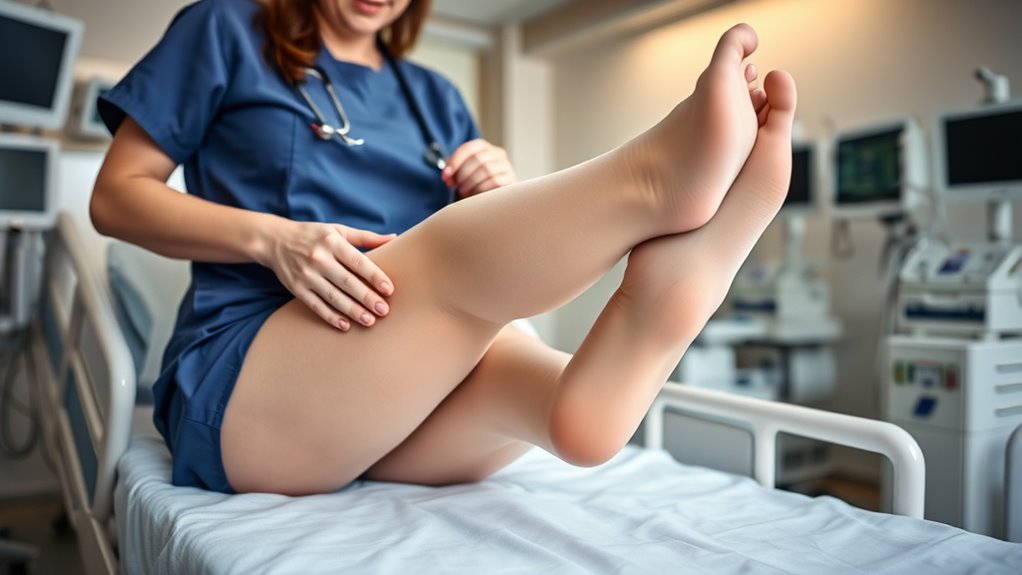
Preventing varicose veins and other venous health issues is essential for nurses who spend many hours on their feet. Wearing compression hosiery helps support your vein valves, preventing them from dilating and reducing the risk of varicose veins. It stabilizes venous pressure, decreasing discomfort and vein dilation over time. Consistent use can slow or stop the progression of venous disorders common in healthcare workers. Proper compression helps maintain healthy blood flow, lessening the likelihood of chronic venous disease. By incorporating compression stockings into your routine, you proactively protect your vascular health and improve comfort during long shifts.
Supporting vein health during long shifts reduces discomfort and prevents varicose veins for nurses.
- Keeps blood flowing smoothly, preventing pooling
- Supports vein valves to reduce dilation
- Slows formation of visible varicose veins
- Reduces discomfort from vein pressure
- Promotes long-term vascular health
Accelerating Recovery After Long Hours on Your Feet

Long hours on your feet can leave your legs sore, stiff, and fatigued, making recovery essential for maintaining your energy and comfort. Compression hosiery accelerates this process by promoting blood flow and reducing muscle soreness. It helps clear lactic acid buildup, decreases stiffness, and speeds muscle repair. Continuing to wear compression socks after your shift supports fluid drainage and prevents swelling. This reduces post-shift discomfort and prepares you for the next day. To understand how compression hosiery aids recovery, consider this comparison:
| Benefit | Explanation |
|---|---|
| Faster lactic acid removal | Clears waste products, reduces soreness |
| Reduced muscle stiffness | Maintains flexibility and mobility |
| Decreased swelling | Limits fluid retention and discomfort |
| Improved circulation | Supports tissue repair and recovery |
| Enhanced comfort | Helps you feel refreshed and ready for next shift |
Features and Benefits of Comfortable Compression Wear

Comfortable compression wear combines innovative design with high-quality materials to guarantee that you can wear it for extended periods without discomfort. You’ll appreciate its seamless construction, which prevents chafing, and breathable fabrics that keep your legs cool and dry during long shifts. The graduated compression technology applies the right amount of pressure, providing effective support without feeling tight or restrictive. Its versatile design fits smoothly under your scrubs, allowing full mobility and comfort. Plus, the variety of lengths—knee, thigh, or full-leg—ensures you get the right fit for your needs. The combination of durability, stretchability, and comfort makes compression hosiery an essential part of your work wardrobe, helping you stay energized and comfortable all day long.
- Seamless, irritation-free design
- Breathable, moisture-wicking materials
- Precise graduated compression
- Flexible, durable fit throughout shifts
- Available in multiple lengths for personalized support
Frequently Asked Questions
Can Compression Hosiery Be Worn With Regular Shoes Comfortably?
Yes, compression hosiery can be worn comfortably with regular shoes. Choose seamless, breathable designs that fit snugly without pinching. Opt for shoes with enough room to accommodate the stockings, especially if they’re thicker or longer. Many nurses find that wearing compression socks with comfortable, supportive shoes helps maintain circulation without sacrificing comfort, even during long shifts. Just make certain your footwear provides proper support and enough space for the hosiery.
How Do I Choose the Right Compression Level for Nursing Shifts?
You should choose a compression level based on your leg comfort and risk factors. For most nurses, 15-20 mmHg provides effective support without feeling restrictive, ideal for daily shifts. If you experience significant swelling or have venous issues, opt for 20-30 mmHg. Always consult a healthcare professional for personalized advice, and try different levels to find the one that offers relief while maintaining comfort during your long shifts.
Are There Any Risks or Side Effects From Wearing Compression Stockings?
Wearing compression stockings can cause risks if not used properly. You might experience skin irritation, redness, or discomfort if the fit is too tight or if you have sensitive skin. In rare cases, improper use can impair circulation or worsen existing conditions like peripheral artery disease. To avoid these issues, guarantee the stockings fit well, follow your healthcare provider’s advice, and remove them if you notice any pain or unusual symptoms.
How Often Should I Replace My Compression Hosiery for Optimal Benefits?
Think of your compression hosiery as a reliable partner that needs regular refreshment. You should replace them every 3 to 6 months, depending on wear and tear. Over time, the elastic loses its grip, reducing effectiveness. Check for thinning fabric, fraying, or diminished compression. If these signs appear, it’s time to say goodbye and get a new pair to keep your legs supported and circulation ideal.
Do Compression Socks Need to Be Worn During Off-Duty Hours?
You don’t need to wear compression socks during your off-duty hours unless your doctor recommends it. Typically, wearing them during long shifts is enough to promote circulation, reduce swelling, and prevent varicose veins. Taking breaks from compression hosiery allows your skin to breathe and prevents skin irritation. If you notice persistent swelling or discomfort even off-duty, consult your healthcare provider for personalized advice.
Conclusion
Stay strong, soothe soreness, and support your steps with smart compression hosiery. By boosting circulation, banishing swelling, and battling fatigue, you’ll breeze through your long shifts with less stress and more stamina. Compression wear isn’t just a comfort; it’s your secret shield against varicose veins and venous issues. Make your mobility manageable, your moments of rest more restful, and your workday worthwhile. Wear wisely, work well, and win with wellness!