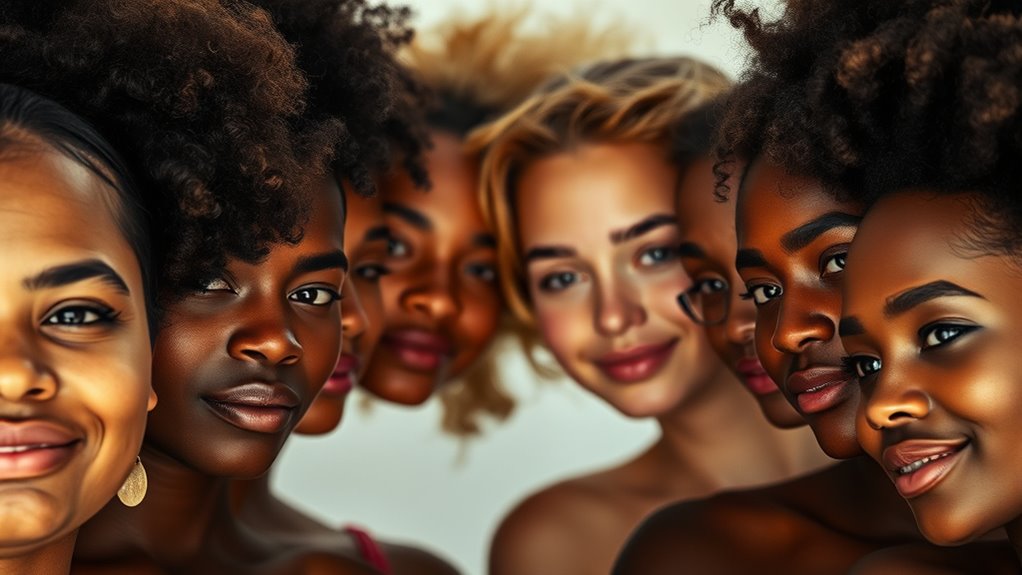

To match skin tones across diverse ranges, start by identifying your undertone—cool, warm, or neutral—as this guides your product and color choices. For foundation, pick shades that blend seamlessly into your jawline or neck in natural light. When choosing clothing or makeup, use contrasting colors to make your skin glow or similar tones for a polished look. Exploring these tips helps you enhance your natural beauty—continue to discover more ways to perfect your personal style.
Key Takeaways
- Identify skin undertones (cool, warm, neutral) to select complementary foundation, makeup, and clothing shades.
- Test products along the jawline or neck in natural light for accurate matching.
- Use diverse shade ranges from brands to find the best fit for various skin tones.
- Choose colors that enhance natural glow based on skin undertones and tone.
- Personalize makeup and clothing choices to highlight individual skin characteristics confidently.

Have you ever struggled to find makeup or clothing that truly complements your skin tone? You’re not alone. Many people face this challenge because skin tones are incredibly diverse, and what works for one person might not work for another. The key is understanding the range of skin tones and learning how to match products effectively across this spectrum. Whether you have fair, medium, deep, or a mix of undertones, recognizing your unique skin characteristics is essential to enhancing your natural beauty.
Skin tones are not just about light or dark shades; they also involve undertones, which can be cool, warm, or neutral. Cool undertones often reveal hints of blue or pink, while warm undertones tend to have golden or yellow hues. Neutral undertones are a balanced mix of both. When you’re shopping for makeup or clothing, identifying your undertone helps narrow down your choices. For example, if you have cool undertones, you might find that blue-based reds and pinks look more flattering, whereas warm undertones are complemented by earthy tones like golds, oranges, or warm browns.
Understanding your undertones—cool, warm, or neutral—guides you to shades that enhance your natural beauty.
In the domain of makeup, brands are increasingly offering a broader range of shades to cater to diverse skin tones. Many now provide foundation lines that include hundreds of options, making it easier to find a perfect match. But it’s not just about the shade; the undertone matters just as much. Testing products in natural light and applying small amounts to your jawline or neck can help you see how well they blend with your natural skin. If the product disappears into your skin without leaving a noticeable line, you’ve probably found your match.
Clothing, too, plays a big role in skin-tone matching. Colors that contrast with your skin tone can make your complexion pop, while similar tones can create a seamless, sophisticated look. For example, if you have a warm skin tone, try earthy colors like olive, mustard, or warm reds. If your skin has cool undertones, jewel tones like sapphire, emerald, or icy shades often look stunning. The goal is to select hues that enhance your natural glow rather than overshadow it.
Across diverse ranges of skin tones, the principle remains the same: understanding your unique characteristics allows you to choose shades that highlight your best features. It’s about confidence and celebrating what makes you unique. No matter your skin tone, there are colors and products out there that will flatter you, so don’t hesitate to experiment and discover what truly works for you.

IUGA Compression Leggings with Pockets for Women Tummy Control Leggings No Front Seam Workout High Waist Yoga Pants, Black
*PowerTight Collection: Power Through Every Move. Crafted from 69% nylon and 31% spandex, IUGA PowerTight sandwich waistband compression...
As an affiliate, we earn on qualifying purchases.
Frequently Asked Questions
How Do Environmental Factors Affect Skin-Tone Perception?
Environmental factors influence how you perceive skin tone by altering lighting and surroundings. Bright sunlight can make skin appear lighter or warmer, while indoor lighting, especially yellow or fluorescent, may cast cooler or uneven tones. Shadows and background colors also affect perception, making skin seem darker or more muted. You should consider these factors when matching skin tones, as they can considerably change how skin color looks in different settings.
Can Artificial Lighting Distort Skin-Tone Matching Accuracy?
A picture is worth a thousand words, and artificial lighting can definitely distort skin-tone matching accuracy. When you rely on unnatural light sources, colors may appear different, leading you to misjudge tones. You might think a shade matches perfectly under one light, only to find it doesn’t in natural daylight. Always test skin tones under various lighting conditions to guarantee a true match, as lighting can easily deceive your eyes.
Are There Specific Tools for Matching Skin Tones in Photography?
Yes, there are specific tools for matching skin tones in photography. You can use color calibration tools like X-Rite ColorChecker or Datacolor Spyder, which help you create accurate color profiles. Additionally, software like Adobe Lightroom or Capture One offers skin tone-specific adjustment sliders. These tools enable you to achieve natural, consistent skin tones across different lighting conditions, ensuring your portraits look true to life and professional.
How Does Skin Tone Variation Impact Makeup Selection?
Skin tone variation considerably impacts your makeup choices by influencing colors that complement your natural hue. Lighter skin tones may look stunning with soft pastels, while deeper tones often shine with vibrant, bold shades. By understanding your unique undertones, you can select foundation, blush, and lipstick that enhance your features. Experimenting with different shades helps you find what works best, ensuring your makeup looks natural and flattering across your diverse skin tone.
What Cultural Considerations Influence Skin-Tone Matching Preferences?
Imagine exploring a world rich with diverse beauty standards; cultural influences shape your skin-tone matching preferences. You might feel drawn to shades that honor your heritage or reflect societal ideals. Always consider local traditions, natural beauty ideals, and cultural symbolism when choosing makeup. Respect for cultural differences helps you select colors that celebrate individuality while honoring community values, making your look authentic and meaningful.

Compression Leggings for Women 20-30mmHg - Footles High Waist Compression Tights for Circulation during Pregnancy, Sports, Workout, Running - Black, Medium - A717BL2
IMPROVED CIRCULATION - Experience enhanced blood flow with 20-30 mmHg compression, ideal for daily wear and recovery.
As an affiliate, we earn on qualifying purchases.
Conclusion
When you master skin-tone matching across diverse ranges, you reveal a superpower that transforms your entire perspective. It’s not just about perfect shades—it’s about celebrating every unique hue that makes you, you. Imagine a world where no one ever feels overlooked or misunderstood because of their skin tone. By embracing this skill, you become a hero in creating a truly inclusive, vibrant world where every shade shines brighter than the last—because every tone deserves to be seen and celebrated.
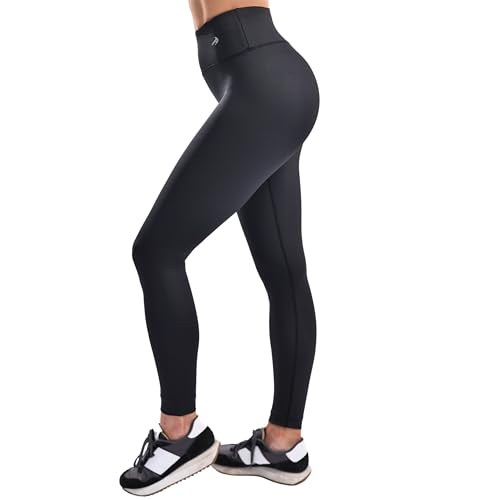
CompressionZ Women's Compression Leggings High Waisted Performance Shaping Gym, Pilates, Travel, Yoga, Workout Pants Black Medium
Tight Yet Comfortable Compression Leggings for Women: Experience ultimate comfort with our compression recovery leggings, perfect for running,...
As an affiliate, we earn on qualifying purchases.

Compression Pantyhose for Women, 20-30 mmHg Footless Medical Compression Stockings, Waist High Opaque Graduated Support Compression Hose Tights for Edema, Varicose Veins, Swelling
HELPS PREVENT & RELIEVE: Our support hose for women & men are ideal for preventing and relieving: fatigue,...
As an affiliate, we earn on qualifying purchases.