

Adding carbon labels to tights helps you understand their environmental impact, allowing you to make more eco-friendly choices. Since production involves energy use, raw materials, and greenhouse gas emissions, labels encourage brands to adopt sustainable practices. While implementing them faces challenges like calculation complexity, greater demand from consumers can push the industry toward transparency. If you’d like to discover how these labels can shape your wardrobe and support sustainability, keep exploring the details.
Listen free for 30 days with Audible
Thousands of audiobooks and originals — cancel anytime.
As an affiliate, we earn on qualifying purchases.
Key Takeaways
- Carbon labels increase transparency, enabling consumers to make eco-friendly choices when purchasing tights.
- Labeling can incentivize brands to adopt sustainable production practices, reducing environmental impact.
- Challenges include standardizing calculations and potential resistance from manufacturers concerned about transparency.
- Properly implemented labels can shift consumer demand toward more sustainable tights, influencing industry-wide change.
- Overall, carbon labels for tights support environmental awareness and responsible fashion choices, promoting sustainability.
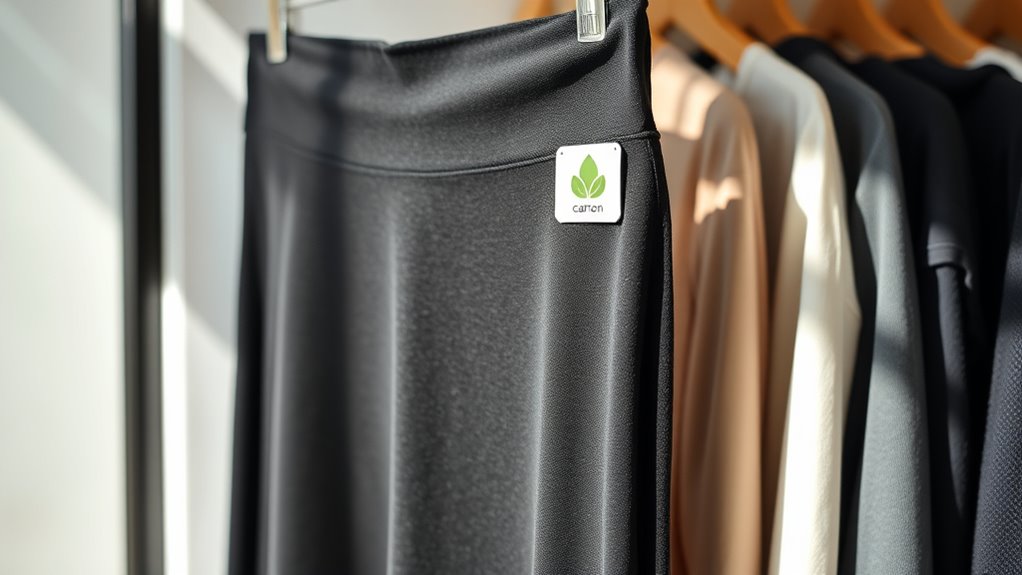
Have you ever wondered how your clothing choices impact the environment? It’s easy to overlook the journey behind the garments you wear daily, especially items like tights that often go unnoticed in sustainability conversations. But the truth is, every piece of clothing has a footprint, from raw material extraction to manufacturing, transportation, and disposal. That’s where carbon labels come into play, providing transparency about the environmental impact of each product. These labels aim to inform consumers like you, making it easier to make eco-friendly decisions. But should tights carry these labels? It’s a question worth exploring.
Tights are a small but significant part of your wardrobe, especially during colder months or for fashion purposes. Despite their size, their production involves various energy-consuming steps, such as the extraction of petroleum-based raw materials, textile manufacturing, dyeing, and packaging. These processes emit greenhouse gases, contributing to climate change. By attaching carbon labels to tights, manufacturers could offer you clear information about how much carbon was emitted during production. This transparency might influence you to choose brands that prioritize sustainable practices, encouraging the industry to adopt greener methods.
However, implementing carbon labels on tights isn’t without challenges. For one, calculating the carbon footprint of a single pair of tights can be complicated due to variations in manufacturing processes across different brands and factories. Some companies might resist adding these labels, fearing that increased transparency could deter consumers or highlight disparities between brands. Additionally, consumers need to understand and interpret the data correctly. If labels are confusing or overly technical, they might not serve their intended purpose.
Despite these hurdles, the benefits of labeling seem to outweigh the drawbacks. When you see a carbon label on tights, it empowers you to make more conscious choices. You might opt for a pair made with recycled materials or produced by a company committed to reducing its carbon footprint. Over time, this consumer demand could push the industry toward more sustainable practices, reducing overall emissions associated with garment production. Furthermore, carbon labels could encourage brands to improve transparency and accountability, fostering a culture of environmental responsibility. Recognizing how production processes contribute to climate change can help consumers make more informed decisions and advocate for change.
In the end, whether tights should carry carbon labels depends on your willingness to prioritize sustainability and the industry’s capacity to implement meaningful, clear labels. As a consumer, your awareness and choices can drive change. If you start demanding more transparency, brands will have an incentive to provide it. So yes, tights should carry carbon labels if they help you make informed, eco-conscious decisions and contribute to a more sustainable fashion industry.
eco-friendly tights with carbon labels
As an affiliate, we earn on qualifying purchases.
As an affiliate, we earn on qualifying purchases.
Frequently Asked Questions
How Do Carbon Labels Affect Clothing Prices?
Carbon labels can make clothing prices rise because they highlight the environmental impact of production. When companies add these labels, they often incur higher costs to reduce emissions, which can be passed on to you. However, some consumers are willing to pay more for eco-friendly products. While prices may increase slightly, these labels help you make more informed choices, encouraging brands to adopt greener practices.
Are Carbon Labels Voluntary or Mandated by Law?
Think of carbon labels as a modern compass guiding your choices—they’re often voluntary but can become mandated by law as governments push for transparency. Currently, some countries encourage brands to display these labels, while others leave it to industry initiative. You should stay informed about local regulations, because if laws change, what’s voluntary now might soon be required. This way, you’re always ahead in making eco-conscious decisions.
Do All Brands Carry Carbon Labels on Their Products?
Not all brands carry carbon labels on their products. Some brands voluntarily include them to showcase their eco-friendly efforts, while others haven’t adopted this practice yet due to costs or lack of consumer demand. You might notice some brands with labels, indicating transparency about their environmental impact, but many still don’t. As a shopper, you can support brands that prioritize sustainability by choosing products with clear carbon labeling.
How Accurate Are the Carbon Footprint Measurements?
You might wonder how accurate carbon footprint measurements are, and the truth is, they vary. They rely on complex data, assumptions, and estimations that can introduce margins of error. While companies endeavor for precision, factors like supply chain complexity and data gaps mean measurements are approximate, not exact. Still, they provide valuable insights, helping you compare products and make more sustainable choices, even if they’re not perfectly precise.
Can Consumers Trust the Sustainability Claims Behind Carbon Labels?
You can generally trust sustainability claims behind carbon labels, but it’s wise to stay cautious. Look for labels verified by reputable third-party organizations, as they ensure transparency and accuracy. Keep in mind that some labels might oversimplify or exaggerate environmental benefits. By researching the certifying bodies and understanding their standards, you can make more informed choices and support genuinely sustainable clothing options.
sustainable tights recycled materials
As an affiliate, we earn on qualifying purchases.
As an affiliate, we earn on qualifying purchases.
Conclusion
So, next time you’re about to buy tights, just scan that sneaky little label. Who knew that choosing between a carbon footprint or a fashion statement could be so thrilling? Maybe these labels will finally turn us into eco-warriors… or at least give us a good laugh at how seriously we take our clothing choices. After all, if tights can be guilt-tripped into being eco-friendly, maybe everything else should follow suit—literally.
organic cotton tights eco conscious
As an affiliate, we earn on qualifying purchases.
As an affiliate, we earn on qualifying purchases.
As an affiliate, we earn on qualifying purchases.
College move-in / dorm season Picks
dorm essentials
As an affiliate, we earn on qualifying purchases.