You can repurpose old tights in many ways to reduce waste. Turn them into hair accessories, cleaning cloths, or eco-friendly scrubbers. Use them in your garden as plant supports or pest barriers. Create pet toys, food storage bags, or organize small items at home. You can also recycle them at textile centers or donate to charities. Want more creative ideas? Keep going to discover how old hosiery can serve many purposes around your home and garden.
Listen free for 30 days with Audible
Thousands of audiobooks and originals — cancel anytime.
As an affiliate, we earn on qualifying purchases.
Key Takeaways
- Repurpose tights as household items like scrubbers, storage bags, or dust catchers to reduce waste and enhance sustainability.
- Use tights in gardening for plant support, pest protection, and eco-friendly ties that promote healthy growth.
- Create DIY pet toys, such as knots, balls, or tug strips, to recycle old hosiery into engaging, eco-conscious pet accessories.
- Recycle tights through textile recycling centers or donation, ensuring they are clean and intact to minimize environmental impact.
- Upcycle tights into fashion accessories, bath scrubbers, or storage solutions to transform old hosiery into practical, creative items.
eco-friendly cleaning cloths from tights
As an affiliate, we earn on qualifying purchases.
As an affiliate, we earn on qualifying purchases.
Creative Uses for Hair and Beauty Routines
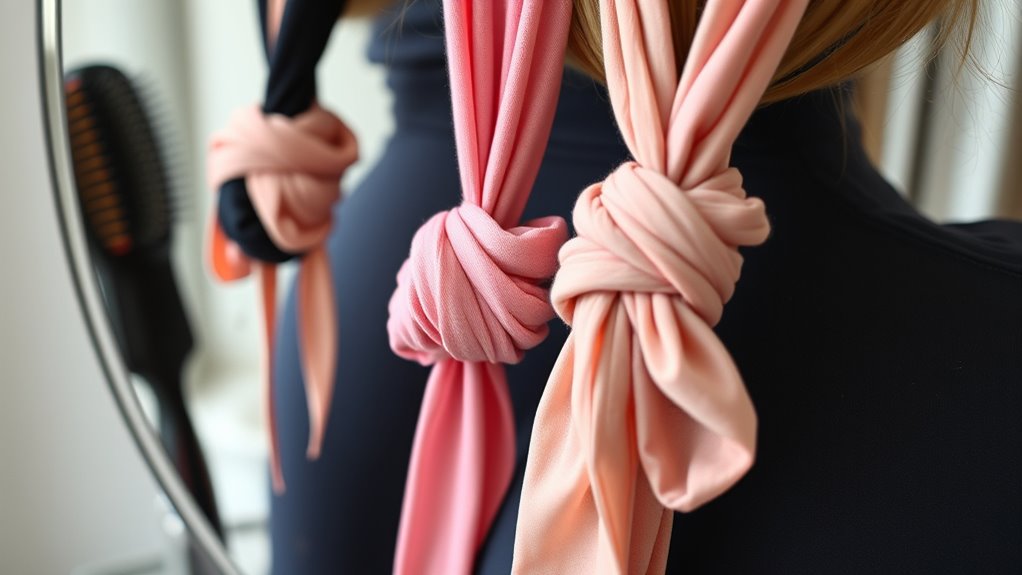
You can get creative with old tights and transform them into useful beauty tools, reducing waste and saving money. Cut tights into thin strips and tie them into loops to make durable hair ties or scrunchies. Sew strips into tubes with elastic to create stylish, eco-friendly hairbands. Use small squares of tights as gentle remover cloths for nail polish, replacing disposable cotton pads. Fill a single leg with soap scraps to make exfoliating scrubbers that are both sustainable and effective. You can also snip the toe end and cut one-inch strips to produce multiple hair accessories. These DIY solutions not only help cut down on single-use plastics but also allow you to personalize your beauty routine while practicing eco-conscious habits. Incorporating recycling habits into your routine supports environmental growth and reduces waste.
As an affiliate, we earn on qualifying purchases.
Supporting Your Garden With Tights

Using tights in your garden is a smart way to support delicate plant stems and prevent damage as they grow. Their softness means they won’t harm your plants or restrict airflow, making them ideal ties for vines and vegetables. Plus, they help keep pests and ground pests at bay, protecting your harvest naturally and sustainably. Additionally, their moisture control properties help maintain consistent soil moisture levels when repurposed in self-watering systems. Properly used, they can also contribute to sustainable gardening practices by reducing the need for synthetic ties and supports. Incorporating tights can also aid in watering techniques, ensuring your plants receive appropriate hydration and reducing the risk of overwatering. Understanding regional resources and local gardening tips can further enhance your sustainable gardening efforts.
Gentle Plant Ties
Gentle plant ties made from old tights offer a soft, flexible solution for supporting delicate stems in your garden. You can cut tights into strips or loops, creating ties that won’t damage fragile plant tissues. These ties are adjustable, so you can easily loosen or tighten them as your plants grow. Their elasticity helps maintain support without constricting, reducing the risk of damage. Tights are ideal for securing vines, tall flowers, or newly planted stems to stakes or trellises. Plus, they’re reusable—simply remove and store them for future use. Using tights as plant ties promotes sustainability while protecting your garden’s delicate growth. Additionally, incorporating eco-friendly materials like tights aligns with the principles of sustainable gardening by fostering mindful and responsible gardening habits. They’re an eco-friendly alternative to plastic ties and help you support your plants gently and effectively. The protective styling benefits of tights ensure your plants are supported without causing harm or stress. Since they are soft and elastic, tights can also act as flexible plant supports, accommodating growth and movement without damage.
Pest and Ground Protection
Old tights can be repurposed to protect your garden from pests and ground damage. They’re soft, stretchy, and gentle on delicate plants, making them perfect for ground cover and pest barriers. Using tights in gardening can also promote sustainable practices by reducing waste and reusing materials.
Here are three ways to use tights for protection:
- Cover young seedlings with tights to prevent insect damage while allowing airflow.
- Wrap tights around vulnerable stems or roots to shield them from pests like slugs and beetles.
- Use tights as a barrier under mulch or soil to discourage burrowing insects and weeds from reaching your plants. Incorporating mindfulness in gardening can help you stay attentive to your plants’ needs and adapt your protection strategies accordingly.
- Incorporating reusable garden protection like tights can help reduce waste and provide a sustainable gardening solution.
These simple solutions help safeguard your garden without chemicals or waste. Plus, tights are adjustable as plants grow, making them a flexible, eco-friendly choice for ongoing protection.
DIY pet toy made from old tights
As an affiliate, we earn on qualifying purchases.
As an affiliate, we earn on qualifying purchases.
Innovative Food Storage Solutions

Recycling tights offers innovative solutions for food storage that are both eco-friendly and practical. You can cut off a leg, knot it into sections, and use it as a reusable onion bag, keeping bulbs fresh and preventing skin flaking. Stretching the waistband over bins helps secure trash without slipping, reducing plastic waste. Stuffed tights with fabric scraps make eco-friendly scrubbers, replacing disposable sponges. You can also hang vegetables like squash or eggplants in tights to keep them off the ground and protected from pests. Additionally, tights can be used to store small produce, such as garlic or shallots, in a breathable, reusable container. Proper ventilation enhances the freshness and longevity of stored produce, preventing spoilage. Incorporating traditional tea ceremony principles, like mindfulness and respect, can inspire a more thoughtful approach to organizing your kitchen and food storage practices. Research into bioluminescent fungi shows how natural light-emitting organisms can inspire innovative, eco-friendly lighting and storage solutions. Exploring sustainable materials in household items further supports eco-conscious living and reduces environmental impact.
As an affiliate, we earn on qualifying purchases.
Organizing and Maintaining Your Home
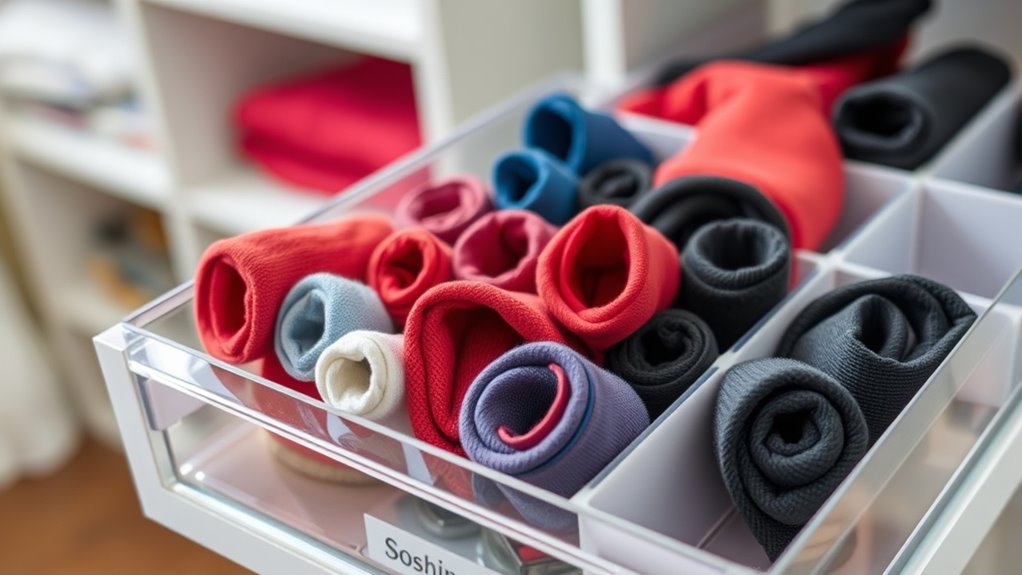
Using tights to organize and maintain your home offers practical, eco-friendly solutions that can simplify everyday chores. You can repurpose old pantyhose to keep things tidy and prevent messes. Here are three ideas to get you started:
Repurpose tights for eco-friendly home organization and simple everyday solutions.
- Lint and debris catcher: Tie a stocking around your washing machine outlet hose to trap lint and prevent drain clogs. This simple repair can also help prevent plumbing issues caused by buildup. Additionally, replacing worn-out hoses with DIY filters can improve suction efficiency and prolong appliance lifespan.
- Dust cover: Cut a piece of pantyhose to cover your computer’s cooling fan, shielding it from dust without blocking airflow.
- Pillow stuffing: Use strips of tights to refill or add support to cushions and pillows, extending their lifespan.
- Additionally, tights can help improve indoor air quality by blocking dust particles and other allergens from circulating in your home.
These simple tricks help reduce waste while keeping your home organized and efficient.
Pet Play and Care Ideas
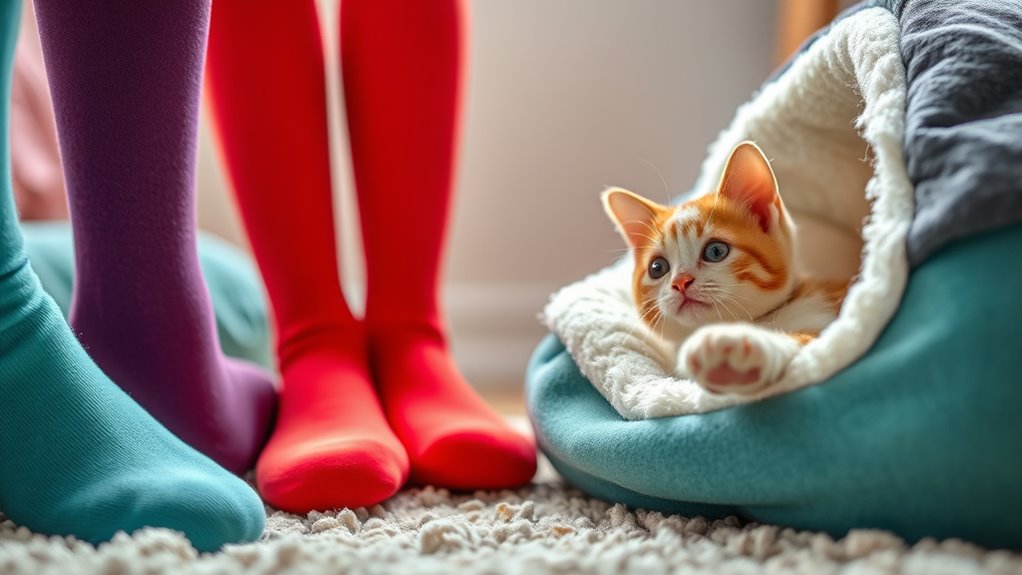
Tights and pantyhose are versatile materials that can add fun and enrichment to your pet’s playtime. You can create soft, lightweight toys by tying small balls of fabric from the tights, which cats and small dogs love to chase and bat around. Stretch the fabric into long strips for tug-of-war toys or knot them into crinkly chew toys. The gentle texture makes them safe for pets to interact with, reducing the risk of injury. Using recycled hosiery for toys not only saves money but also keeps waste out of landfills. Additionally, you can hide treats inside tightly knotted tights to stimulate your pet’s natural hunting instincts. Incorporating sustainable materials like old tights into pet play encourages eco-friendly habits while providing entertainment. These simple ideas turn old tights into engaging, eco-friendly pet accessories that encourage activity and mental stimulation.
Recycling and Donating Old Hosiery
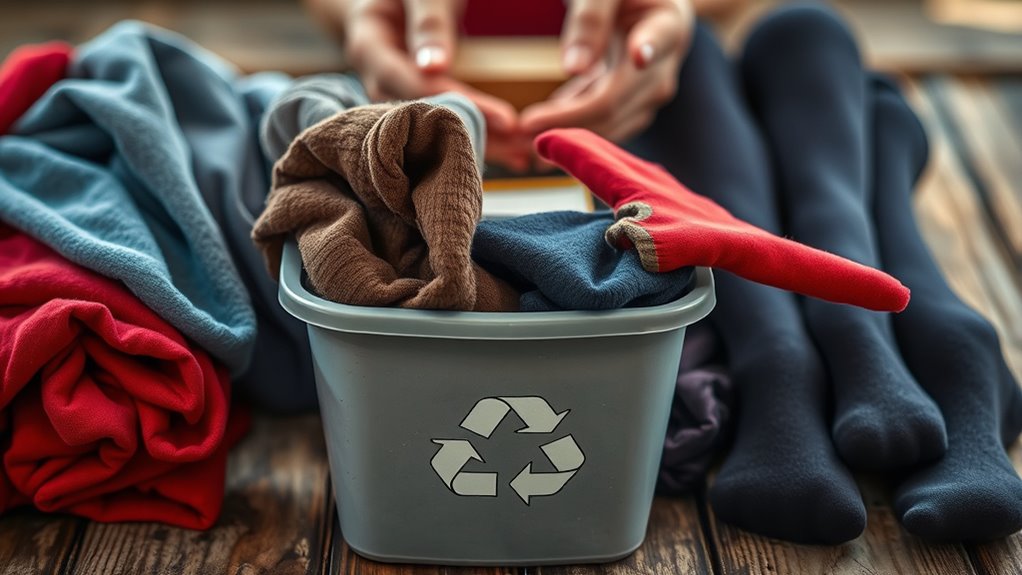
You can give your old tights a second life by recycling them at local centers or through specialized programs. Donating unused or gently worn hosiery to charity shops helps reduce waste and benefits others. Exploring these options guarantees your tights don’t end up in the trash but instead contribute to sustainable practices.
Recycling Options for Hosiery
Wondering what to do with old or unused hosiery? Recycling options are plentiful and eco-friendly. First, you can take your tights to local textile recycling centers or drop them off at clothes banks at supermarkets. Many facilities accept used tights for reuse or shredding into insulation materials. Second, some companies run mail-in programs—recycling services that accept tights and nylon stockings to turn into new products. Check if your community has a textile recycling initiative or participate in mail-in schemes like Recycled Crafts. Third, consider repurposing tights at home: cut them into strips for cleaning rags, garden ties, or pet toys. These options help reduce waste and give your old hosiery a second life instead of tossing it in the trash.
Donation Opportunities for Tights
Donating old or unused tights is an effective way to give them a second life while supporting charitable causes. Many local charity shops accept tights in good condition, especially new or unworn pairs in original packaging. These donations help provide affordable clothing options for those in need. You can also donate tights to textile recycling programs through clothes banks at supermarkets or specialized mail-in services. Some organizations repurpose tights for crafting projects or industrial use, reducing waste. Before donating, make sure the tights are clean and free of tears. Check with local charities or recycling centers for specific guidelines. By donating, you extend the lifespan of your hosiery and contribute to sustainability efforts, helping reduce textile waste while supporting communities in need.
Crafting and Upcycling Projects
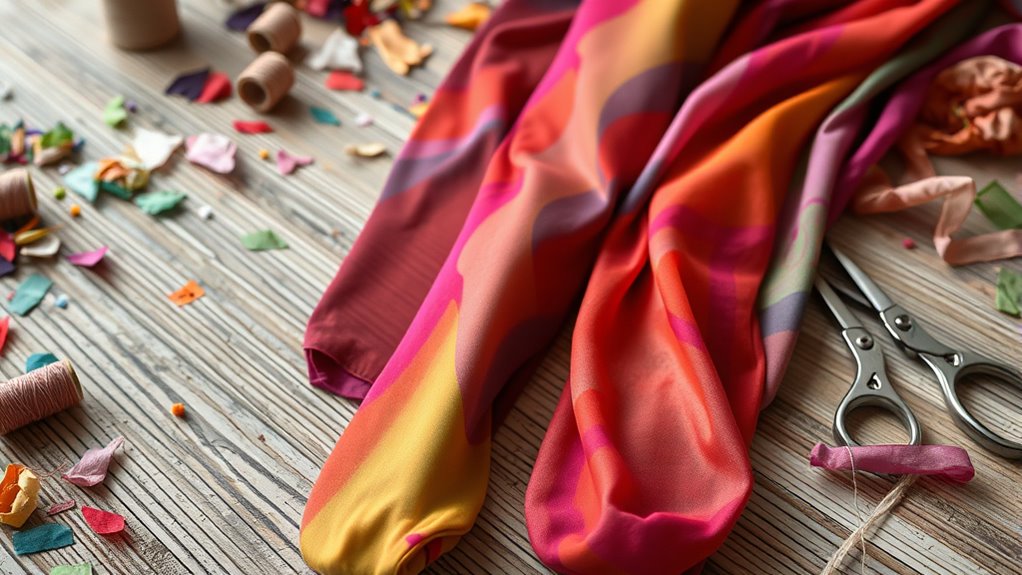
Crafting and upcycling projects offer an inventive way to breathe new life into old tights, transforming them into useful and decorative items. You can get creative and make practical or fun accessories from tights you no longer wear. For example:
- Make hair accessories: Cut the tights into strips, then tie or sew them into scrunchies, headbands, or bows.
- Create eco-friendly scrubbers: Fill a leg with soap scraps to craft sustainable bath scrubbers that replace disposable pads.
- Design storage solutions: Use tights to store onions or keep small items organized, knotting or cutting the fabric for your needs.
These projects reduce waste and give you personalized, eco-conscious items you’ll enjoy using daily.
Frequently Asked Questions
Can Tights Be Safely Used to Filter Water or Liquids?
You can use tights to filter water or liquids, but with caution. They can trap debris and sediment effectively, making them useful for pre-filtering in outdoor or emergency situations. However, they aren’t designed for purification or removing bacteria, so don’t rely on them for drinking water safety. Always boil or treat water after filtration, and use clean, undamaged tights to prevent contamination. This simple method helps improve clarity before proper purification.
Are There Any Health Risks in Reusing Tights for Beauty Routines?
Using tights for beauty routines generally poses minimal health risks if you keep them clean. However, since tights can harbor bacteria or mold if stored improperly, you should wash them thoroughly before reuse. Avoid sharing tights with others to prevent infections. Also, inspect for tears or wear that could cause skin irritation. Think of it as your own personal health ‘hacker’—being cautious guarantees safe, sustainable beauty practices.
How Long Do DIY Tights-Based Garden Ties Typically Last?
DIY tights-based garden ties usually last through an entire growing season, often several months, depending on weather conditions. You can expect them to withstand well against moisture, sun exposure, and plant movement. Over time, the elastic may weaken, so check periodically for signs of wear or tearing. When they show signs of deterioration, it’s best to replace them to ensure your plants stay supported and secure.
Can Tights Be Used as Insulation or for Thermal Purposes?
Yes, tights can provide some insulation or thermal purposes. Their stretchy, layered fabric traps air, offering modest warmth when wrapped around pipes, drafty windows, or small spaces. You might find it surprising how effective they can be in a pinch, especially for short-term solutions. Just cut and layer the tights to create a barrier, and you’ll add an extra layer of insulation without extra cost, making your home a bit cozier naturally.
What Are the Environmental Impacts of Recycling Tights Versus Landfilling?
Recycling tights reduces environmental harm by preventing them from ending up in landfills, where they take hundreds of years to decompose and can release microplastics into the soil and water. When you recycle, you help conserve resources, lower pollution, and reduce landfill overflow. Landfilling tights contributes to environmental degradation and waste accumulation, whereas recycling extends their lifecycle and minimizes ecological impact, making it a more sustainable choice.
Conclusion
Next time you toss out old tights, think again. Imagine turning a pair into durable plant ties for your garden—like Sarah did, saving money and helping her plants thrive. Recycling hosiery isn’t just eco-friendly; it’s creative and practical. So, get inspired to upcycle and donate your unused tights. With a little imagination, you’ll discover endless ways to give your old hosiery a new life—benefiting your home, garden, and the planet.
Flea & tick season Picks
flea and tick prevention
As an affiliate, we earn on qualifying purchases.