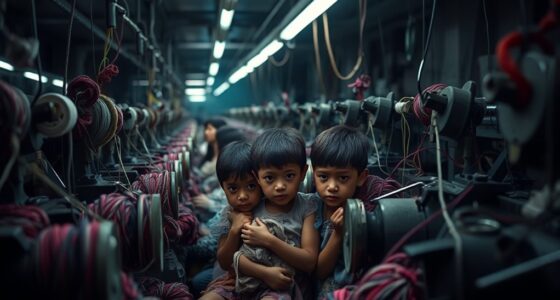
Tights are a great example of fast fashion waste because they’re mass-produced cheaply, designed for quick disposal, and have a short lifespan. You often replace them after only a few wears, contributing to landfill buildup and microfiber pollution in waterways. Their synthetic materials are hard to recycle, which worsens environmental impacts. By understanding why tights are a case study, you’ll see how fast fashion’s quick turnover affects sustainability—and there’s more to uncover if you keep exploring.
Key Takeaways
- Tights are mass-produced, inexpensive, and designed for quick disposal, exemplifying fast fashion’s disposable nature.
- Their synthetic materials are hard to recycle and release microfibers, contributing to environmental pollution.
- Short lifespan leads to frequent replacement and significant textile waste in landfills.
- The high volume of tights waste highlights the environmental cost of rapid trend cycles.
- Industry efforts to develop recycling solutions reflect the challenges and opportunities in addressing fast fashion waste.
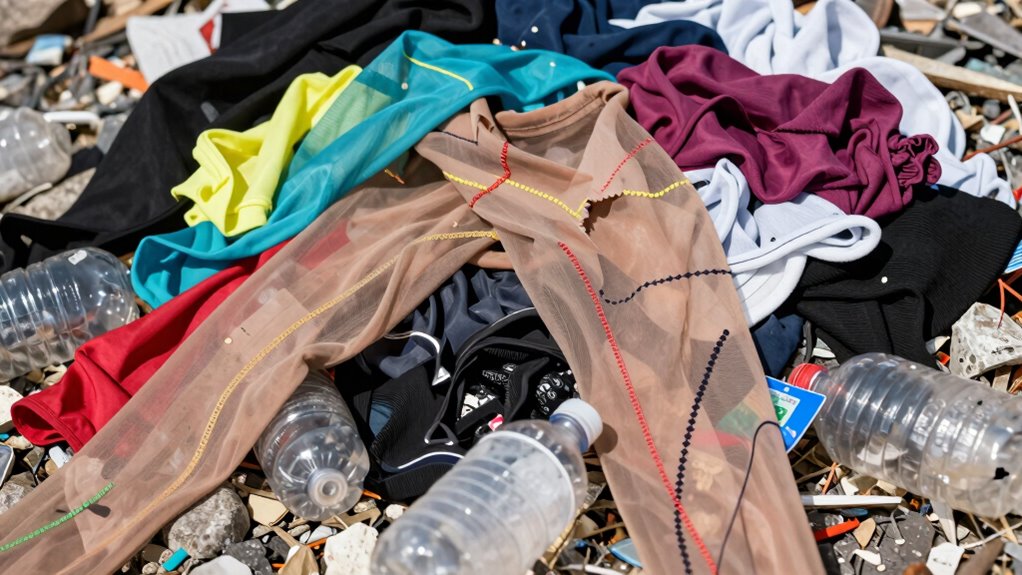
Fast fashion has made it easier than ever to keep up with trends, but it also comes with a hidden cost: waste. When it comes to tights, this issue becomes even more apparent. Tights are mass-produced, inexpensive, and widely worn, making them a perfect example of how fast fashion contributes to environmental problems. Their material durability is often limited, meaning that they don’t last very long before developing tears or runs. As a result, many people discard tights after only a few wears, fueling a cycle of constant consumption and waste. This short lifespan highlights a core challenge in fast fashion: products are designed for quick disposal, not longevity.
Recycling tights presents significant challenges that exacerbate the waste problem. Most tights are made from delicate synthetic fibers like nylon or spandex, which are difficult to recycle efficiently. Unlike metals or glass, these materials often break down into microfibers during washing, polluting waterways and harming marine life. When you try to recycle tights, you’ll find that many recycling facilities are ill-equipped to process such fragile fabrics, leading to most discarded tights ending up in landfills. Even specialized textile recycling programs struggle with tights because of their composition and the way they’re manufactured. This creates a paradox: the very materials that make tights affordable and stretchy also make them hard to recycle and environmentally costly. Moreover, the short lifespan of tights means that even if recycling was possible, the sheer volume of discarded pairs would still pose a significant environmental challenge.
Furthermore, the fast fashion industry’s relentless push for new styles means tights are replaced quickly and frequently. Trends change, and what was popular last season is often discarded in favor of the latest look. This constant turnover means that millions of tights are produced, purchased, and disposed of each year. Since they’re so inexpensive, consumers don’t think twice about tossing worn or outdated pairs. This cycle not only increases textile waste but also puts pressure on waste management systems to handle a growing pile of synthetic fibers, many of which cannot be truly recycled. Additionally, the short lifespan of tights contributes directly to the volume of textile waste generated, emphasizing the need for more sustainable practices. Some brands are now exploring innovative recycling methods to help address this issue and reduce environmental impact. Advances in CAD and 3D printing could also play a role in creating more durable, customizable tights that last longer and are easier to recycle.
In the end, tights serve as a small but telling example of the broader issues caused by fast fashion. Their limited material durability and recycling challenges reveal how deeply embedded the waste problem is in the fashion industry’s obsession with rapid turnover and low-cost production. If you want to make a difference, understanding these hidden costs can help you make more conscious choices—opting for higher-quality, durable tights or exploring brands that prioritize sustainable materials and recycling solutions.
Frequently Asked Questions
How Long Do Tights Typically Last Before Needing Replacement?
Tights typically last about 4 to 6 wears before needing replacement, depending on durability testing and material longevity. You might find that thinner fabrics or lower-quality tights wear out faster, developing runs or tears quickly. To extend their life, opt for higher-quality materials and handle them gently. Regularly inspecting your tights for signs of wear can help you replace them before they completely fail, reducing waste over time.
What Are the Environmental Impacts of Synthetic Fibers in Tights?
Imagine you’re in 1999, unaware of today’s environmental impacts. Synthetic fibers in tights contribute to significant environmental harm through synthetic fiber pollution and microplastic release. When you wash tights, tiny microplastics shed into waterways, harming marine life. These fibers are non-biodegradable, persisting in ecosystems for years, polluting oceans and harming wildlife. Reducing synthetic fiber use can lessen pollution and microplastic release, helping protect our environment for future generations.
Are There Sustainable Alternatives to Traditional Tights?
Yes, you can find sustainable alternatives to traditional tights. Look for products made from eco-friendly materials like recycled nylon or organic cotton. Many brands now participate in recycling programs, allowing you to return used tights for repurposing. By choosing these options, you reduce waste and environmental impact. Switching to tights made from recycled or sustainable fabrics supports eco-conscious fashion and minimizes your footprint.
How Do Pricing Strategies Influence Tights Consumption?
Pricing tactics directly influence your tights consumption by shaping your perception of value and affordability. When prices are low, you’re more likely to buy impulsively or in bulk, increasing waste. Conversely, higher prices may encourage mindful purchasing, reducing overconsumption. Fast fashion brands often manipulate pricing strategies to tap into consumer behavior, driving frequent purchases and contributing to environmental waste, making it essential to be aware of how these tactics impact your choices.
What Regulations Exist for Fast Fashion Textile Waste?
You should know that regulations for fast fashion textile waste are limited, creating significant regulatory gaps. Policies like extended producer responsibility and waste bans exist in some regions, but their effectiveness varies. You might find that current laws often lack enforcement or all-encompassing coverage, leaving much waste unregulated. To improve, policymakers need to strengthen regulations, close gaps, and guarantee they effectively promote sustainable practices within the fast fashion industry.
Conclusion
So, next time you pull on a pair of tights, think about their fleeting life—a delicate, shimmering thread that quickly tears or gets discarded. Visualize the vibrant pile of scraps and discarded pairs piling up like a silent, unnoticed mountain. Your choice can help break this cycle. By choosing sustainable options, you’re not just saving money—you’re helping to clear that mountain and keep the earth’s fabric of life intact.