The best winter-proof shoes balance warmth, waterproofing, grip, and comfort without feeling too bulky for your usual winter routes. My best overall pick is the NORTIV 8 Men’s Waterproof Ankle Hiking Boots for their versatile hiking-boot design; the SOREL Women’s Out N About Classic Waterproof Boot stands out for wet-weather city wear, while The North Face ThermoBall Traction Bootie suits quick, cold-weather errands. The main tradeoff is between insulation and breathability: heavily lined boots feel warmer but can be cumbersome indoors, while lighter shoes may not suit deep snow or long exposure. Tread, fit with thick socks, and the height of the waterproof barrier also affect how well a shoe handles real winter conditions. Read on for the full comparison, buying advice, and picks by need.

Get your wardrobe favorites delivered free with Prime
- Fast, free delivery on millions of items
- Prime Video, Amazon Music and more included
- Member-only deals all year
Key Takeaways
- The NORTIV 8 Men’s Waterproof Ankle Hiking Boots rank first for versatility: their hiking-boot format is a more adaptable starting point than a slipper-like bootie or a heavily insulated snow boot.
- Boot height changes the kind of winter protection you get: ankle-height options suit ordinary wet streets, while deeper snow calls for more coverage than a low shoe provides.
- Warmth and all-day flexibility are competing priorities: fur- and fleece-lined styles favor cold conditions, while the ThermoBall bootie is better suited to short outings and easy on-off use.
- The lineup includes distinct uses, not one universal winner: Sorel‘s women’s waterproof boot is the clearest city-oriented alternative, while NORTIV 8 hiking models are aimed at more active use.
- Many options are men’s styles, with one women’s-specific pick: buyers should check the available sizing and fit details rather than assume the same recommendation works across every foot shape.
| NORTIV 8 Men’s Waterproof Ankle Hiking Boots |  | Best for Lightweight Winter Hiking | Upper: Fabric and synthetic | Origin: Imported | Sole material: EVA and rubber | VIEW LATEST PRICE | See Our Full Breakdown |
| Men’s Waterproof Winter Snow Boots with Fur Lining |  | Best for Plush Warmth | Outer material: Waterproof nylon Oxford cloth and microfiber | Inner material: Synthetic fur and plush fabric | Sole material: Rubber and nylon | VIEW LATEST PRICE | See Our Full Breakdown |
| The North Face ThermoBall Traction Bootie |  | Best for Quick Cold-Weather Slip-On Use | Upper: Recycled P.E.T. ripstop polyester with non-PFC DWR finish | Insulation: 100% recycled polyester ThermoBall | Outsole: High-traction rubber, made with up to 20% recycled rubber | VIEW LATEST PRICE | See Our Full Breakdown |
| EQW Men’s Waterproof Insulated Snow Boots |  | Best for Severe Cold and Wet Conditions | Construction: Waterproof and breathable | Insulation: 200g 3M Thinsulate | Insulation material: 78% recycled fibers | VIEW LATEST PRICE | See Our Full Breakdown |
| NORTIV 8 Men’s Insulated Winter Hiking Boots |  | Best for Snowy Trail Versatility | Upper: Water-resistant vegan leather | Outer material: Polyurethane (PU) | Lining: Short plush | VIEW LATEST PRICE | See Our Full Breakdown |
| Men’s Insulated Waterproof Winter Snow Boots |  | Best for Deep Cold in a Shorter Boot | Outer material: Leather | Sole material: Rubber | Shaft height: Ankle | VIEW LATEST PRICE | See Our Full Breakdown |
| NORTIV 8 Men’s Waterproof Insulated Winter Snow Boots |  | Best for Adjustable Coverage | Sole material: Rubber | Shaft height: 9.45 inches | Outer material: Nylon, PVC | VIEW LATEST PRICE | See Our Full Breakdown |
| SOREL Women’s Out N About Classic Waterproof Boot |  | Best for Wet-Weather Everyday Wear | Sole material: Rubber | Shaft height: Ankle | Shaft circumference: 5.12 inches | VIEW LATEST PRICE | See Our Full Breakdown |
| ALEADER Men’s Waterproof Insulated Winter Snow Boots |  | Best for Easy On-and-Off | Upper material: PU-coated synthetic textile | Sole material: Rubber | Shaft height: 10 inches | VIEW LATEST PRICE | See Our Full Breakdown |
| Men’s Lightweight Waterproof Fur-Lined Snow Boots |  | Best Lightweight Pick for Everyday Wear | Shaft height: Ankle | Lining: Fur | Sole material: Rubber | VIEW LATEST PRICE | See Our Full Breakdown |
| Hanani Men’s Waterproof Fleece-Lined Ankle Snow Boots |  | Best for Easy On-and-Off | Outer material: Waterproof Oxford fabric | Lining: Synthetic short fleece | Sole material: Rubber | VIEW LATEST PRICE | See Our Full Breakdown |
| QUH Men’s Waterproof Winter Snow Boots, Fur-Lined |  | Best for Ankle Support | Outer material: Leather | Inner material: Cotton | Sole material: Rubber or synthetic rubber | VIEW LATEST PRICE | See Our Full Breakdown |
| NORTIV 8 Men’s Waterproof Winter Hiking Boots | 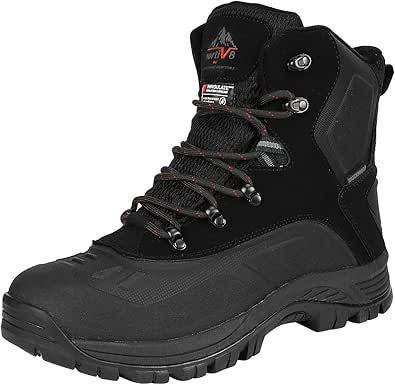 | Best for Cold-Weather Hiking | Outer material: Faux leather and mesh | Sole material: EVA and rubber | Shaft height: Ankle | VIEW LATEST PRICE | See Our Full Breakdown |
| winter-proof shoe | Sole material | Shaft height | Outer material |
|---|---|---|---|
| NORTIV 8 Men’s Waterproof Ankl | EVA and rubber | Ankle | — |
| Men’s Waterproof Winter Snow B | Rubber and nylon | — | Waterproof nylon Oxford cloth and microfiber |
| The North Face ThermoBall Trac | Ethylene vinyl acetate | — | — |
| EQW Men’s Waterproof Insulated | Rubber | Ankle | — |
| NORTIV 8 Men’s Insulated Winte | — | — | Polyurethane (PU) |
| Men’s Insulated Waterproof Win | Rubber | Ankle | Leather |
| NORTIV 8 Men’s Waterproof Insu | Rubber | 9.45 inches | Nylon, PVC |
| SOREL Women’s Out N About Clas | Rubber | Ankle | — |
| ALEADER Men’s Waterproof Insul | Rubber | 10 inches | — |
| Men’s Lightweight Waterproof F | Rubber | Ankle | — |
| Hanani Men’s Waterproof Fleece | Rubber | Ankle | Waterproof Oxford fabric |
| QUH Men’s Waterproof Winter Sn | Rubber or synthetic rubber | Ankle | Leather |
| NORTIV 8 Men’s Waterproof Wint | EVA and rubber | Ankle | Faux leather and mesh |
More Details on Our Top Picks
NORTIV 8 Men’s Waterproof Ankle Hiking Boots
The NORTIV 8 Men’s Waterproof Ankle Hiking Boots suit winter walkers who value a lighter, more flexible feel over heavy insulation. Their EVA midsole and removable shock-absorbing insole are geared toward cushioning on varied trails, while the rubber outsole adds grip on wet or muddy ground. Compared with the NORTIV 8 Men’s Insulated Winter Hiking Boots, this pair has no listed plush lining or thermal insole, so it is less suited to prolonged exposure to deep cold. It may make more sense for brisk hikes and changeable conditions than for standing around in snow. The ankle-height shaft is another limit: it offers less coverage against snow entering at the cuff, and the product details do not explain the waterproof construction. I’d choose it for mobility, not the strongest cold-weather protection.
Pros:- Lightweight EVA midsole is designed to cushion steps without a heavy feel.
- Removable shock-absorbing insole allows adjustment or replacement.
- Rubber outsole provides traction on wet and muddy terrain.
- Ankle-height design suits varied outdoor activities.
Cons:- No specific waterproof construction details are provided.
- No insulation or cold-weather temperature rating is listed.
- Ankle shaft offers less snow protection than a taller boot.
Best for: Hikers who want a flexible, cushioned ankle boot for active outings in cool, wet conditions and can add their own warm socks.
Not ideal for: People spending long periods in deep snow or severe cold who need documented waterproof construction and substantial insulation.
- Upper:Fabric and synthetic
- Origin:Imported
- Sole material:EVA and rubber
- Shaft height:Ankle
- Insole:Removable, shock-absorbent cushioned
- Outsole:Rubber with traction
Our verdict“Choose these for flexible, cushioned hikes in damp winter conditions, but pick an insulated snow boot for deep cold or snow exposure.”
Men’s Waterproof Winter Snow Boots with Fur Lining
For buyers who put warmth first, these fur-lined snow boots pair a waterproof nylon Oxford upper with a plush synthetic lining. That combination is aimed at keeping feet warm and dry on snowy walks, while the anti-slip rubber sole is intended for icy and wet surfaces. Compared with the EQW Men’s Waterproof Insulated Snow Boots, this pair emphasizes a soft fur lining rather than a stated 200g 3M Thinsulate insulation rating or a specified low-temperature rating. The difference is useful if you prefer a plush feel, but leaves less detail for judging performance in severe cold. Synthetic materials may also feel less breathable during strenuous hikes, and the lining can hold moisture when feet sweat. I’d favor these for everyday snow outings over intense, high-output trekking.
Pros:- Waterproof nylon Oxford upper is intended to keep out rain and snow.
- Plush synthetic fur lining adds warmth in cold weather.
- Rubber sole is designed for grip on snow, ice, and wet surfaces.
- Lace-up ankle-boot design offers an adjustable fit.
Cons:- Synthetic upper may be less breathable during intense activity.
- Plush lining may retain sweat and moisture.
- No insulation weight or temperature rating is specified.
Best for: Men who want a warm, plush-lined boot for winter errands, snowy walks, and moderate outdoor activity.
Not ideal for: Hikers who generate a lot of heat or need a stated insulation rating and breathable materials for sustained strenuous use.
- Outer material:Waterproof nylon Oxford cloth and microfiber
- Inner material:Synthetic fur and plush fabric
- Sole material:Rubber and nylon
- Closure:Lace-up
- Style:Ankle boot
- Listed features:Waterproof, anti-slip, warm, lightweight
Our verdict“Pick these for plush warmth and wet-weather protection on casual winter outings, not for highly active hikes where breathability matters.”
The North Face ThermoBall Traction Bootie
The The North Face ThermoBall Traction Bootie is the easy-on option for short trips outside, camp use, and cold surfaces where a full snow boot feels excessive. Its recycled polyester ThermoBall insulation is designed to retain warmth in damp conditions, and the rubber outsole offers grip on slick ground. The slip-on shape is more convenient than the lace-up Men’s Waterproof Winter Snow Boots with Fur Lining, but it also provides less adjustability and is not described as a full waterproof boot. Its non-PFC DWR finish is intended for light moisture and snow, not prolonged exposure or slushy, deep snow. That makes this a useful warmth-and-convenience pick rather than a trail boot. I’d skip it if dependable coverage through wet snow is the priority.
Pros:- ThermoBall recycled polyester insulation is designed to retain warmth in damp conditions.
- Slip-on construction makes it quick to put on and remove.
- Non-PFC DWR finish repels light moisture and snow.
- High-traction rubber outsole helps on slick surfaces.
Cons:- DWR protection is described for light moisture, not heavy or prolonged exposure.
- Slip-on fit offers less adjustability than a lace-up boot.
- EVA sole material may feel less flexible than some alternatives.
Best for: People seeking an easy-to-wear insulated bootie for brief outdoor trips, camp use, or cold indoor-outdoor routines.
Not ideal for: Commuters crossing deep slush or hikers needing a fully waterproof, supportive boot for extended winter trails.
- Upper:Recycled P.E.T. ripstop polyester with non-PFC DWR finish
- Insulation:100% recycled polyester ThermoBall
- Outsole:High-traction rubber, made with up to 20% recycled rubber
- Sole material:Ethylene vinyl acetate
- Fit and style:Men’s slip-on bootie
- Intended conditions:Light moisture, snow, and cold surfaces
- Origin:Imported
Our verdict“Choose this bootie for convenient warmth in light winter conditions, but use a waterproof lace-up boot for wet snow or longer hikes.”
EQW Men’s Waterproof Insulated Snow Boots
Among these five picks, the EQW Men’s Waterproof Insulated Snow Boots provide the clearest cold-weather specifications: waterproof, breathable construction and 200g of 3M Thinsulate, with warmth rated down to -25°F. A cold-resistant rubber lug outsole is intended to grip snow, ice, and wet pavement, while the padded collar and cushioned insole add comfort for longer wear. Compared with the The North Face ThermoBall Traction Bootie, the EQW is better suited to sustained exposure and wet conditions; the North Face bootie is easier to slip on but only described for light moisture. The tradeoff is ankle-height coverage, which leaves less protection above the cuff than a taller snow boot. The listed warmth rating also does not tell every buyer how the boot will fit their activity level or socks.
Pros:- Waterproof, breathable construction is specified.
- 200g 3M Thinsulate insulation is rated for warmth down to -25°F.
- Cold-resistant rubber lug outsole is designed for snow, ice, and wet pavement.
- Cushioned insole, padded collar, and reflective accents support comfort and visibility.
Cons:- Ankle-height shaft provides less coverage in deep snow than a taller boot.
- Available sizes and fit details are not specified.
- A stated temperature rating may not reflect every wearer’s activity level or layering.
Best for: People facing very cold, wet winter days who want specified insulation, waterproof construction, and lugged traction in an ankle boot.
Not ideal for: Buyers walking through deep snow who need calf coverage, or shoppers who need detailed sizing and fit guidance before choosing.
- Construction:Waterproof and breathable
- Insulation:200g 3M Thinsulate
- Insulation material:78% recycled fibers
- Sole material:Rubber
- Outsole:Cold-resistant rubber with lug tread
- Shaft height:Ankle
- Shaft circumference:13.3 inches
- Features:Cushioned insole, padded ankle collar, reflective accents
Our verdict“Choose the EQW for specified insulation and waterproofing in severe cold, provided ankle-height coverage suits your winter routes.”
NORTIV 8 Men’s Insulated Winter Hiking Boots
The NORTIV 8 Men’s Insulated Winter Hiking Boots balance warmth, cushioning, and trail-minded details for buyers who need more than a casual snow boot. A gusseted tongue helps block snow and debris at the opening, while the plush lining and 3M thermal insole materials add warmth. The product also specifies waterproof protection for up to four hours of static exposure, a useful limit to know when choosing between this and the EQW Men’s Waterproof Insulated Snow Boots: EQW gives a colder stated warmth rating and breathable waterproof construction, while NORTIV 8 adds the gusseted tongue and cushioned EVA midsole for varied terrain. Its waterproof duration is qualified, however, and the ankle-height shaft cannot match a taller boot in deep snow. I’d pick it for active winter walks, not prolonged standing in extreme cold.
Pros:- Plush lining and 3M thermal insole materials add cold-weather warmth.
- Waterproof protection is specified for up to four hours of static exposure.
- Gusseted tongue helps keep snow and debris out.
- Cushioned EVA midsole and anti-slip rubber outsole suit varied terrain.
Cons:- Waterproof duration is limited to a stated four hours of static exposure.
- Ankle-height shaft offers less protection in deep snow.
- No specific low-temperature warmth rating is provided.
Best for: Winter hikers who want a warm, cushioned ankle boot with a gusseted tongue for ordinary snowy trails and mixed terrain.
Not ideal for: People who need calf-high snow coverage, a stated extreme-cold rating, or waterproof protection beyond the specified static exposure.
- Upper:Water-resistant vegan leather
- Outer material:Polyurethane (PU)
- Lining:Short plush
- Insole:3M thermal materials
- Waterproof duration:Up to four hours of static exposure
- Midsole:Cushioned EVA
- Outsole:Anti-slip rubber
- Shaft height and circumference:Ankle; 12 inches
- Tongue design:Gusseted
Our verdict“Choose these for cushioned, insulated winter hikes with manageable snow depth, but favor the EQW for a stated severe-cold rating.”
Men’s Insulated Waterproof Winter Snow Boots
For buyers who want a stated cold-weather rating without a tall shaft, these ankle-height leather boots offer a useful middle ground. Sealed seams and thermal lining are specified for warmth down to -25°F, while the protective toe cap adds a buffer against knocks on rough winter walks. Compared with the NORTIV 8 Men’s Waterproof Insulated Winter Snow Boots, this pair uses leather rather than a nylon-and-PVC upper and has a shorter shaft, so it may suit everyday wear better but covers less of the lower leg.
The cushioned EVA midsole and lugged rubber outsole target comfort and grip across snow and uneven ground. The tradeoff is reduced protection above the ankle, and the product details give no weight or sizing guidance. I’d choose it for cold commutes and winter errands, not for deep snow where taller coverage matters.
Pros:- Sealed seams and thermal lining are specified for protection and warmth down to -25°F.
- Leather upper and protective toe cap add abrasion and impact protection.
- Cushioned EVA midsole supports comfort on longer walks.
- Lugged rubber outsole is designed for traction on snow and uneven terrain.
Cons:- Ankle-height shaft leaves more of the lower leg exposed than the taller NORTIV 8 insulated snow boot.
- Product details do not provide boot weight or sizing guidance.
Best for: Men seeking a leather ankle boot with a stated -25°F warmth rating for cold commutes and everyday winter walking.
Not ideal for: People who regularly walk through deep snow or need published boot-weight and sizing details before choosing.
- Outer material:Leather
- Sole material:Rubber
- Shaft height:Ankle
- Shaft circumference:28.2 cm
- Midsole:EVA
- Closure:Lace-up
- Waterproof construction:Sealed seams
Our verdict“Choose this pair for stated deep-cold protection in a leather ankle boot, but pick a taller snow boot for frequent deep-snow travel.”
NORTIV 8 Men’s Waterproof Insulated Winter Snow Boots
The 9.45-inch shaft gives this NORTIV 8 more lower-leg coverage than the ankle-height Men’s Insulated Waterproof Winter Snow Boots, making it the better match for slushy sidewalks and snow that piles above the shoe line. Its 200g 3M Thinsulate insulation, heat-reflective fabric, and waterproof shell are aimed at cold, wet outings; the listed temperature claim reaches -25°F. An adjustable ankle strap and toggle laces also make it easier to secure than a basic lace-up design.
That coverage comes with a fit caveat: the product says it runs small, so buyers should follow the recommendation to size up. The upper is water-resistant, while the shell provides the waterproof barrier, so I wouldn’t treat the whole upper as equivalent to a fully waterproof leather construction. Compared with the ALEADER Men’s Waterproof Insulated Winter Snow Boots, this model gives a specific insulation weight and shaft measurement, but requires more attention to sizing.
Pros:- 200g 3M Thinsulate insulation and heat-reflective lining are designed for cold conditions.
- Waterproof shell helps protect against wet snow and slush.
- 9.45-inch shaft provides more coverage than the ankle-height boots in this batch.
- Ankle strap and toggle laces allow a quickly adjustable fit.
Cons:- Runs small, so the listed guidance recommends sizing up.
- The upper is described as water-resistant, with waterproof protection attributed to the shell.
Best for: Men who need a taller insulated boot for wet winter walks and want adjustable closures to secure it around the ankle.
Not ideal for: Buyers who prefer standard sizing without adjustment or want a leather upper rather than nylon and PVC.
- Sole material:Rubber
- Shaft height:9.45 inches
- Outer material:Nylon, PVC
- Inner material:Microfiber and heat-reflective fabric
- Insulation:200g 3M Thinsulate
- Fit note:Runs small; sizing up is recommended
- Closure:Adjustable hook-and-loop ankle strap and toggle laces
- Temperature claim:Designed for warmth down to -25°F
Our verdict“Pick this NORTIV 8 for taller coverage and adjustable insulation, provided you account for its small fit.”
SOREL Women’s Out N About Classic Waterproof Boot
The SOREL Out N About Classic is the everyday wet-weather choice in this group, rather than the strongest pick for severe cold. Its waterproof upper sits over a vulcanized rubber shell, a construction well suited to puddles and slushy streets. The molded PU footbed and midsole offer a comfort-focused setup, while the rubber outsole is designed for everyday traction. Compared with the Men’s Insulated Waterproof Winter Snow Boots, this SOREL has no stated temperature rating or thermal insulation claim, so buyers facing prolonged subfreezing exposure should favor a purpose-built insulated model.
Its ankle-height profile keeps the look and coverage relatively low, which works for daily errands but leaves less protection in deeper snow than the NORTIV 8 Men’s Waterproof Insulated Winter Snow Boots. Upper materials vary by colorway, so checking the chosen version matters; the heel pull tab is the only closure detail supplied. I’d choose it for wet commutes and mild winter days, not as my first pick for long, frigid outdoor shifts.
Pros:- Waterproof upper and vulcanized rubber shell help block wet-weather exposure.
- Molded PU footbed and midsole are designed for everyday comfort.
- Molded rubber outsole provides traction for routine walking.
- Several upper-material options are available across colorways.
Cons:- No insulation or temperature rating is specified for extended exposure to severe cold.
- Ankle-height shaft offers less snow coverage than the taller NORTIV 8 boot.
- Upper materials vary by colorway, so construction is not identical across versions.
Best for: Women who want a waterproof ankle boot for rainy, slushy commutes and everyday wear in milder winter conditions.
Not ideal for: People who need a stated low-temperature rating, insulated warmth, or tall coverage for deep snow.
- Sole material:Rubber
- Shaft height:Ankle
- Shaft circumference:5.12 inches
- Footbed:Molded PU STEADYSOLE
- Midsole:Molded PU with vulcanized rubber foxing tape
- Outsole:Molded EVERTREAD rubber
- Upper materials:Waterproof leather, suede, felt combinations, or houndstooth textile with leather collar, depending on colorway
- Closure detail:Heel pull tab
Our verdict“Choose the SOREL for wet everyday conditions, but select an insulated, taller boot for severe cold or deep snow.”
ALEADER Men’s Waterproof Insulated Winter Snow Boots
The ALEADER stands out for a 10-inch shaft and simple drawstring closure, a practical combination for pulling boots on quickly and securing the opening against snow. Its upper is water- and wind-resistant, while a seam-sealed waterproof outsole adds a barrier underfoot. That construction differs from the NORTIV 8 Men’s Waterproof Insulated Winter Snow Boots, which provides a specified 200g Thinsulate fill and a stated -25°F claim; ALEADER lists insulation without a weight or temperature rating, leaving less guidance for buyers in severe cold.
A cushioned footbed and rugged rubber outsole make this a sensible option for winter errands and rougher outdoor paths. The drawstring, barrel lock, and hook-and-loop ankle strap offer flexible adjustment, though the brand advises checking its size chart because sizing may differ from standard shoes. Compared with the shorter Men’s Lightweight Waterproof Fur-Lined Snow Boots, ALEADER gives more shaft coverage, but its upper’s water resistance should not be read as a claim that every part of the boot is fully waterproof.
Pros:- 10-inch shaft offers more snow coverage than the ankle-height options.
- Drawstring with barrel lock and ankle strap makes the fit quick to secure.
- Seam-sealed waterproof outsole helps protect from water underfoot.
- Cushioned footbed and rugged rubber outsole suit walking on rough winter terrain.
Cons:- Insulation has no listed weight or temperature rating for judging performance in severe cold.
- Sizing may differ from standard shoe sizes, so the brand recommends using its size chart.
- Upper is described as water- and wind-resistant rather than fully waterproof.
Best for: Men who want a taller insulated boot with quick drawstring adjustment for winter errands and outdoor chores.
Not ideal for: Buyers who need a clearly stated temperature rating, a specified insulation weight, or straightforward standard sizing.
- Upper material:PU-coated synthetic textile
- Sole material:Rubber
- Shaft height:10 inches
- Closure:Drawstring with barrel lock and ankle hook-and-loop strap
- Water protection:Water- and wind-resistant upper; seam-sealed waterproof outsole
- Insulation:Insulated lining; weight not specified
- Footbed:Cushioned
- Outsole:Rugged, non-slip rubber
Our verdict“Choose ALEADER for easy-adjusting, taller coverage, but favor a boot with a stated cold rating if warmth needs are exacting.”
Men’s Lightweight Waterproof Fur-Lined Snow Boots
This pair focuses on lightweight everyday comfort rather than the tall coverage or quantified insulation of heavier snow boots. A waterproof, breathable membrane and wind-resistant tongue construction are intended to keep out wet weather, while fur lining from the ankle to the insole adds warmth around the foot. The removable fur-lined insole is handy for cleaning or replacing, and the multi-directional rubber tread targets traction for routine outdoor use. Compared with the ALEADER Men’s Waterproof Insulated Winter Snow Boots, it has a lower ankle-height shaft, so it is easier to wear casually but gives less protection in deep snow.
The main limitation is the lack of a temperature rating or waterproof test details; warmth and weather protection are not quantified. That makes the boot harder to match to prolonged exposure in severe cold than the NORTIV 8 Men’s Waterproof Insulated Winter Snow Boots, which lists an insulation weight and temperature claim. I’d choose this model for daily winter walks where low weight and a removable liner matter, not for demanding snow conditions.
Pros:- Waterproof, breathable construction is paired with a wind-resistant tongue.
- Fur lining and removable fur-lined insole add warmth and allow the insole to be removed.
- Lightweight rubber outsole has multi-directional tread for traction.
- Padded collar cushions around the heel.
Cons:- Ankle-height shaft provides less coverage than the 10-inch ALEADER boot.
- No temperature rating or waterproof test details are provided.
- The product information does not quantify insulation performance for prolonged severe cold.
Best for: Men seeking a lighter ankle boot for everyday winter walks who value a fur-lined removable insole.
Not ideal for: People who walk through deep snow or need a documented temperature rating and waterproof test standard.
- Shaft height:Ankle
- Lining:Fur
- Sole material:Rubber
- Waterproof construction:Waterproof, breathable membrane
- Tongue construction:Wind-resistant
- Insole:Removable, fur-lined
- Toe shape:Rounded
- Outsole tread:Multi-directional
Our verdict“Pick this boot for lighter daily winter wear and a removable fur-lined insole, not for deep snow or cold conditions that call for a published rating.”
Hanani Men’s Waterproof Fleece-Lined Ankle Snow Boots
For cold-weather errands where convenience matters as much as coverage, the Hanani ankle boot pairs a waterproof Oxford fabric upper with a soft synthetic fleece lining. Its side zippers make it easier to pull on than a lace-up option such as the NORTIV 8 Men’s Waterproof Winter Hiking Boots, though the tradeoff is less opportunity to adjust the fit around the foot. The rubber tread is described as slip-resistant, which suits everyday walks on wet or snowy ground, but the listing gives no insulation rating or temperature range. That makes this a simpler warmth-and-weather pick than the NORTIV 8’s specified 200 g insulation. Choose Hanani for quick outings and easy entry; skip it if you need dialed-in support or documented protection for severe cold.
Pros:- Waterproof Oxford fabric upper is intended to keep out rain and snow
- Soft synthetic fleece lining adds warmth for cold-weather outings
- Rubber sole has a tread designed for slip resistance
- Side zippers simplify putting the boots on and taking them off
Cons:- Laceless construction provides no way to adjust support or snugness
- No insulation weight or temperature rating is provided
- Ankle-height shaft offers limited coverage in deeper snow
Best for: People who want fleece-lined, weather-resistant ankle boots for short winter walks and quick outdoor errands, especially those who value easy entry.
Not ideal for: Hikers or workers who need adjustable lace-up support, a stated insulation rating, or more leg coverage for deep snow.
- Outer material:Waterproof Oxford fabric
- Lining:Synthetic short fleece
- Sole material:Rubber
- Shaft height:Ankle
- Shaft circumference:11.02 inches
- Closure:Side zipper
Our verdict“Choose Hanani for convenient, fleece-lined boots for everyday wet-weather outings, but pick a more adjustable or temperature-rated boot for demanding winter use.”
QUH Men’s Waterproof Winter Snow Boots, Fur-Lined
The QUH stands out for buyers who want a high-top ankle profile and a warm cotton-filled interior for walks, outdoor work, or casual hiking. Its rubber or synthetic-rubber sole is described as slip-resistant on snow, ice, and rugged terrain, giving it a more terrain-focused pitch than the zippered Hanani Men’s Waterproof Fleece-Lined Ankle Snow Boots. The main caveat is right in the product information: despite the title, it does not describe a waterproof construction method. That leaves its wet-weather protection less clearly supported than the NORTIV 8 Men’s Waterproof Winter Hiking Boots, which specify waterproof construction and 200 g insulation. QUH may suit buyers prioritizing warmth and ankle coverage, but I would not choose it for slushy commutes without clearer waterproof details.
Pros:- Cotton-filled lining provides insulation for cold-weather wear
- High-top design is intended to support the ankle
- Sole is described as slip-resistant on snow, ice, and rugged terrain
- Designed for varied activities including walking, hiking, and outdoor work
Cons:- Waterproof construction method is not specified despite the product title
- Sizing and fit details are not provided
- No insulation weight or temperature rating is listed
Best for: Buyers seeking a cotton-lined, high-top boot for cold-weather walking or outdoor tasks on snow-covered and rugged ground.
Not ideal for: People who regularly cross slush or wet snow and need clearly documented waterproof construction, or shoppers who require detailed fit guidance.
- Outer material:Leather
- Inner material:Cotton
- Sole material:Rubber or synthetic rubber
- Shaft height:Ankle
- Design:High-top
- Lining:Cotton-filled
Our verdict“Consider QUH for ankle coverage and warmth on snowy terrain, but choose a boot with explicit waterproof details for frequent wet or slushy conditions.”
NORTIV 8 Men’s Waterproof Winter Hiking Boots
Among these three, the NORTIV 8 is the clearest choice for longer winter walks on varied terrain: it combines waterproof construction, 200 g insulation, and an outsole designed for traction and abrasion resistance. The stated warmth down to -25°F gives buyers a more concrete cold-weather benchmark than the Hanani boots, whose listing provides no temperature rating. A removable, washable insole with moisture-absorbing pile fabric also helps manage dampness inside after active use. The tradeoff is its ankle-height shaft, which offers less lower-leg coverage than a taller snow boot, and its faux leather-and-mesh upper may not appeal to buyers seeking a more rugged material. For day-to-day convenience, Hanani’s side zipper is simpler; for winter hiking and specified insulation, this NORTIV 8 is better equipped.
Pros:- Waterproof construction and synthetic toe caps help shield feet from wet and windy conditions
- 200 g insulation is rated for temperatures as low as -25°F
- Removable, washable insole uses moisture-absorbing pile fabric
- EVA-and-rubber outsole is designed for traction and abrasion resistance
Cons:- Ankle-height shaft leaves less leg coverage than taller winter boots
- Faux leather and mesh upper may not suit buyers seeking a more rugged material
- More activity-focused construction may be less convenient to put on than Hanani’s side-zip design
Best for: Winter hikers and outdoor walkers who want waterproof construction, stated insulation, and a washable insole for regular use on varied terrain.
Not ideal for: People who need a tall shaft for deep snow or prefer an all-leather upper and greater lower-leg coverage.
- Outer material:Faux leather and mesh
- Sole material:EVA and rubber
- Shaft height:Ankle
- Shaft circumference:16 inches
- Insulation:200 g
- Insole:Removable and washable
Our verdict“Choose this NORTIV 8 for cold-weather hikes where waterproofing and specified insulation matter more than tall-shaft coverage or quick zip-on convenience.”
How We Picked
I ranked these shoes around the conditions that make winter footwear useful: water protection, warmth, traction, coverage, comfort, and versatility. A winter-ready shoe needs to do more than feel insulated indoors; its design should also suit the likely surface and exposure, whether that means slushy sidewalks, brief outdoor errands, or a cold-weather hike. I gave more weight to options whose stated design suggests a broader range of everyday winter use, while keeping specialized booties and heavily lined snow boots in roles that match their strengths.
The order reflects those tradeoffs rather than treating every insulated boot as interchangeable. The NORTIV 8 ankle hiking boot leads as the most balanced style for general use, while the Sorel and ThermoBall options rank as stronger fits for narrower needs. Waterproof claims alone do not establish performance in deep snow, and insulation alone does not guarantee secure footing, so I also considered boot height, intended use, and the practical downsides of bulk or limited versatility. Product names and supplied descriptions do not provide comparable test data for every model, so buyers should verify specific sizing, materials, and care guidance before choosing.
| winter-proof shoe | Sole material | Outer material |
|---|---|---|
| NORTIV 8 Men’s Waterproof Ankl | EVA and rubber | — |
| Men’s Waterproof Winter Snow B | Rubber and nylon | Waterproof nylon Oxford cloth and microfiber |
| The North Face ThermoBall Trac | Ethylene vinyl acetate | — |
| EQW Men’s Waterproof Insulated | Rubber | — |
| NORTIV 8 Men’s Insulated Winte | — | Polyurethane (PU) |
| Men’s Insulated Waterproof Win | Rubber | Leather |
| NORTIV 8 Men’s Waterproof Insu | Rubber | Nylon, PVC |
| SOREL Women’s Out N About Clas | Rubber | — |
| ALEADER Men’s Waterproof Insul | Rubber | — |
| Men’s Lightweight Waterproof F | Rubber | — |
| Hanani Men’s Waterproof Fleece | Rubber | Waterproof Oxford fabric |
| QUH Men’s Waterproof Winter Sn | Rubber or synthetic rubber | Leather |
| NORTIV 8 Men’s Waterproof Wint | EVA and rubber | Faux leather and mesh |
Factors to Consider When Choosing Best Winter-proof Shoes
Before choosing a pair, I would start with the winter conditions you actually face rather than the coldest weather imaginable. These factors help separate shoes for wet commutes from boots for snow and longer outdoor stretches.
Match Boot Height to Snow Depth
Waterproofing can only protect the areas covered by the shoe, so shaft height matters as much as the membrane or treated material. An ankle boot can work well for puddles and salted sidewalks but may let snow enter over the top when you walk through drifts. Taller snow boots offer more coverage, though they can feel heavier and less natural for indoor wear. A common mistake is buying for waterproofing alone and overlooking the opening where snow or slush can get in. Think about the deepest snow you regularly cross, not an occasional storm. If your winter is mostly wet pavement, lower, more flexible footwear may be easier to wear day to day.
Choose Insulation for Your Activity, Not Just the Forecast
More lining is not automatically better if you walk briskly, spend time indoors, or tend to run warm. Thick insulation can help during slow outdoor activity, but it can also leave feet sweaty on a commute and make a boot less comfortable through a full day. Consider whether you will be standing outside, moving continuously, or taking shoes on and off between indoor and outdoor settings. Thick socks change the fit, so a snug boot may become uncomfortable even if it feels right in a thin sock. Leave enough room for your intended socks without allowing your heel to slide. For long, active outings, a less bulky design may be a better balance than the warmest-looking option.
Read Waterproofing as a Coverage Question
Waterproof construction and water-resistant materials are not interchangeable, and neither tells you how high protection extends. Check the maker’s description for construction details and follow its care instructions; worn treatments or damaged seams can reduce protection over time. Also ask whether your likely exposure is rain, slush, or snow pressed against the boot for hours. A low-cut shoe may handle wet streets yet be a poor match for deep snow, even if its lower section resists water. Do not assume that a warm lining seals out moisture. If your routes include prolonged wet exposure, prioritize clearly described waterproof construction and enough height for the conditions.
Think About Traction on Your Actual Routes
Winter traction depends on the surface, tread, and conditions, not on insulation or waterproofing. Sidewalk slush, packed snow, and smooth ice each pose different challenges, and an everyday winter sole may not be designed for icy trails. Look for tread descriptions and outsole details, but treat broad claims such as “non-slip” as a starting point rather than a guarantee. For frequent ice, footwear alone may not replace removable traction devices. A common buying error is choosing the warmest boot and assuming it will also have the safest grip. Match the sole to your routine, and slow down when conditions exceed what the shoe is designed to handle.
Check Fit With Winter Socks and Your Whole Day in Mind
A comfortable winter fit needs room for socks without sacrificing stability. Try shoes with the socks you expect to wear, and check for toe room, heel hold, and pressure across the instep. Too little space can make a warm boot uncomfortable; too much can allow rubbing and make walking less secure. Consider whether you will wear the pair mainly outside or keep it on indoors, since a bulky snow boot can feel excessive in a heated workplace or shop. Also check whether the opening is easy to pull on if you will use the shoes for quick errands. The best fit is the one that stays comfortable across your real routine, not just while standing still.
Plan for Care and Seasonal Use
Winter footwear needs care that suits its materials, especially after exposure to road salt, mud, and repeated wetting. Check the maker’s cleaning and drying instructions before using heat or household cleaners, which may damage materials or affect water protection. Let wet footwear dry fully between wears when possible; lining that stays damp can become uncomfortable and take longer to warm. If you need one pair for daily use, versatility and ease of maintenance may matter more than maximum insulation. A specialized snow boot can make sense for severe conditions, but it may spend much of the season unused if your routine is mostly urban. Choose the level of protection you will use often enough to justify its bulk and upkeep.
Frequently Asked Questions
Are ankle-height winter boots enough for walking through snow?
They can work for shallow snow and wet sidewalks, but height limits protection. Snow can enter over the collar if it rises above the ankle or gets pushed inside while walking. For regular routes through deeper snow, choose a taller boot that covers more of the lower leg. Also check that the upper closure helps keep snow out, since height alone does not seal the opening. If your usual winter route is cleared pavement, ankle height may be the easier everyday choice.
Should I choose the warmest lining if my feet get cold easily?
Not automatically: fit, socks, activity, and time outdoors all affect warmth. A thick lining may help if you stand outside for extended periods, but it can feel too warm during brisk walks or indoors. Make sure the boot still has room for the socks you plan to wear; a tight fit can make the shoe uncomfortable and restrict toe movement. For long outdoor stretches, prioritize both insulation and a secure, roomy fit. If you mostly move between heated buildings and short outdoor trips, a less bulky option may be easier to wear.
Can one pair handle both winter hikes and everyday commuting?
A waterproof hiking-style boot is often the most adaptable starting point, but no single design is ideal for every winter task. A boot that feels stable on outdoor walks may look and feel bulky at work or indoors. A soft bootie can be convenient for quick errands but may not offer the coverage or support you want on a longer hike. Consider your most frequent use first, then decide whether a second pair is warranted for deep snow or formal settings. For mixed use, check fit, tread, and coverage together rather than relying on a “winter” label.
Does waterproofing mean a shoe is safe on ice?
No; water protection and grip solve different problems. Waterproof construction helps keep moisture out, while traction comes from the outsole and its contact with the surface. Ice can remain slippery even under a boot with deep-looking tread, particularly when the surface is smooth or glazed. Check the sole details for the maker’s intended use, and use removable traction aids when your route regularly includes ice. Walk cautiously in conditions that exceed the footwear’s stated purpose.
How much room should I leave for thick winter socks?
Enough for your toes to move comfortably, without allowing your foot to slide. Try the shoe with the thickest socks you expect to wear and check for pressure at the toes, instep, and sides. A boot that is too tight can feel uncomfortable, while excess space can lead to rubbing and an unstable step. Do not assume that sizing up solves every fit issue; the shape of the toe box and heel matters too. If ordering without trying the pair on, check the maker’s fit and return guidance before deciding.
Conclusion
For the broadest everyday mix of wet-weather protection and walking versatility, I would start with the NORTIV 8 Men’s Waterproof Ankle Hiking Boots as the best overall. The lineup does not provide enough comparable information to name a defensible best value or best premium based on cost or premium materials, so I would choose between those labels only after checking current construction details, fit, and care requirements. For a beginner buying one winter pair, the ankle hiking-boot format is the clearest all-purpose starting point; confirm that its height suits your snow depth. Choose SOREL Women’s Out N About Classic Waterproof Boot for a women’s-specific wet-weather city option, and the North Face ThermoBall Traction Bootie for quick errands where easy on-off use matters more than hiking coverage. If your winters bring deep snow or long periods outdoors, prioritize a taller insulated boot from the lineup and verify its fit and tread against your conditions before buying.