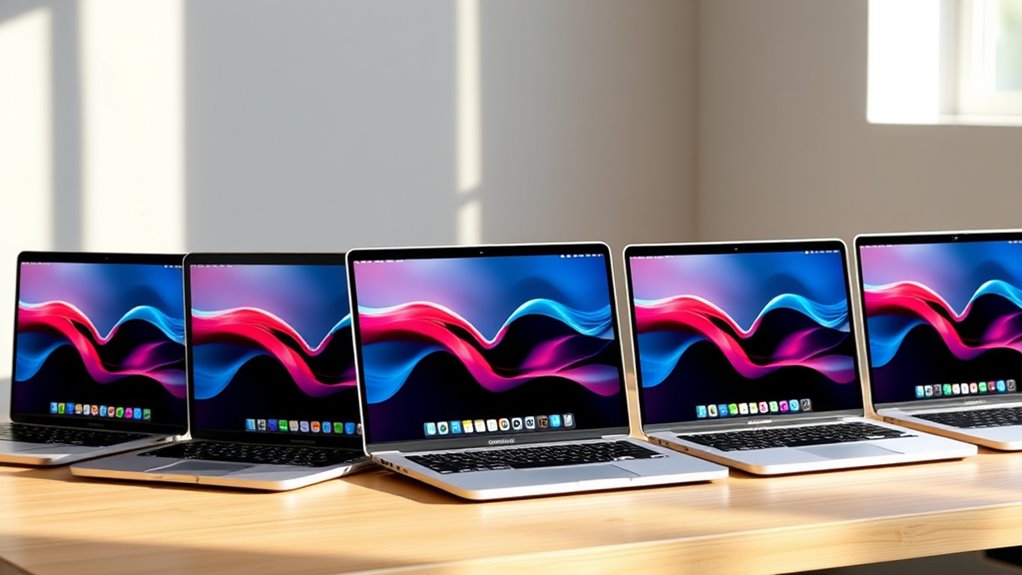

Choosing a MacBook Pro with 64GB unified memory requires balancing raw processing power against portability and budget. My top recommendation for most professionals is the Apple 14-inch MacBook Pro with M5 Pro Chip, which offers an ideal blend of portability and sufficient GPU cores for heavy multitasking without the bulk of a 16-inch chassis. For those needing maximum graphical throughput for 3D rendering or video effects, the 16-inch MacBook Pro with M5 Max is the superior choice, though it sacrifices battery life and portability. The primary tradeoff you will face is between the newer M5 architecture’s efficiency and the cost savings found in renewed M3 or M2 Max models, which still hold up remarkably well for static workflows. Continue reading to see how these ten configurations stack up against specific professional needs.

Get your wardrobe favorites delivered free with Prime
- Fast, free delivery on millions of items
- Prime Video, Amazon Music and more included
- Member-only deals all year
Key Takeaways
- The M5 Pro chip represents the sweet spot for most users, offering 64GB unified memory without the thermal throttling risks associated with smaller chassis housing M5 Max silicon.
- Newer M5 architecture models provide better power efficiency and Wi-Fi 7 connectivity compared to renewed M2 or M3 Max units, justifying the price premium for long-term ownership.
- The 14-inch form factor with 64GB RAM is often preferred by field professionals over the 16-inch model due to weight differences, despite the smaller display area.
- Renewed M3 Max models remain a viable high-value option for users whose workflows do not require the latest neural engine capabilities or AV1 hardware decoding.
- Storage configuration matters less than memory type; 64GB unified memory allows for seamless multitasking that 32GB cannot handle, making it a non-negotiable spec for heavy editors.


| macbook pro with 64gb unified memory | Memory | Storage | Display | Color |
|---|---|---|---|---|
| Apple 14-inch MacBook Pro with | 64 GB Unified Memory | 2 TB SSD | 14.2-inch Liquid Retina XDR (120Hz) | Space Black |
| Apple MacBook Pro 16.2-inch wi | 64GB unified memory | 2TB SSD | 16.2-inch Liquid Retina XDR | — |
| Apple 14-inch MacBook Pro with | 64GB | 1TB SSD | 14.2-inch Liquid Retina XDR (120Hz) | Space Black |
| Apple MacBook Pro 16-inch with | 64GB unified memory | 1TB SSD | 16.2-inch Liquid Retina XDR | Space Black |
| Apple MacBook Pro 14-inch | 64 GB Unified Memory | 2 TB SSD | 14.2-inch Liquid Retina XDR (1600 nits peak) | Silver |
| Apple 2026 MacBook Pro Laptop | 48GB Unified Memory | 1TB SSD | 16.2-inch Liquid Retina XDR | — |
| Apple 16-inch MacBook Pro with | 64GB Unified Memory | 1TB SSD | 16.2-inch Liquid Retina XDR | Space Black |
| Apple 2023 MacBook Pro 16.2-in | 64GB Unified Memory | 1TB SSD | 16.2-inch Liquid Retina XDR | — |
| Apple 2021 MacBook Pro with M1 | 64GB RAM | 2TB SSD | 14-inch Retina LED (2560 x 1600) | Silver |
| Apple MacBook Pro 16.2" | 64GB Unified Memory | 1TB SSD | 16.2-inch Liquid Retina XDR (Mini-LED) | Space Gray |
More Details on Our Top Picks
Apple 14-inch MacBook Pro with M5 Pro Chip (18-Core CPU, 20-Core GPU), 64GB RAM, 2TB SSD, Space Black
This configuration strikes the most practical balance for professionals who need serious power without the bulk of the 16-inch chassis. Compared to the 16-inch M5 Max model, this 14-inch variant offers nearly identical CPU performance for coding and multitasking but with a much more portable footprint. The 64GB unified memory is the standout feature here, allowing you to run multiple virtual machines or heavy video editing timelines without swapping files to disk. However, you trade some graphical horsepower; the 20-core GPU is excellent but will hit limits faster than the 40-core GPU found in Max chips if you are doing heavy 3D rendering. The 2TB SSD provides ample room for large project files, eliminating the need for external drives for most users. It is a refined choice for those who value mobility alongside high-end compute capability.
Pros:- Balanced performance with the M5 Pro chip handles heavy multitasking efficiently.
- 64GB unified memory prevents bottlenecks in memory-intensive workflows.
- 2TB storage eliminates the immediate need for external drives.
- Superior portability compared to 16-inch models while retaining pro-grade specs.
Cons:- GPU performance is capped by the 20-core configuration, limiting heavy 3D work.
- Premium pricing for the 64GB/2TB configuration may exceed many budgets.
Best for: Mobile professionals, developers, and video editors who need high RAM for multitasking but prefer a laptop that fits easily in a backpack.
Not ideal for: 3D artists or AI researchers who require the absolute maximum GPU core count for rendering or model training.
- Processor:Apple M5 Pro (18-core CPU, 20-core GPU)
- Memory:64 GB Unified Memory
- Storage:2 TB SSD
- Display:14.2-inch Liquid Retina XDR (120Hz)
- Battery Life:Up to 24 hours
- Weight:Approx. 3.5 pounds (estimated based on 14-inch chassis)
- Color:Space Black
Our verdict“This is the ideal choice for professionals who prioritize portability and CPU-heavy tasks over raw GPU power.”
Apple MacBook Pro 16.2-inch with M5 Max, 18-core CPU, 40-core GPU, 64GB Memory, 2TB SSD, Space Black
If your workflow involves 3D rendering, complex simulations, or AI model training, this machine is the clear leader. The 40-core GPU on the M5 Max chip offers double the graphical throughput of the M5 Pro models, making it vastly superior for GPU-accelerated tasks compared to the 14-inch M5 Pro. The massive 16.2-inch Liquid Retina XDR display provides more screen real estate for timeline editing and coding environments, reducing the need for external monitors. However, this power comes at the cost of portability; at 8.5 pounds, it is a desktop replacement rather than a travel companion. The extensive port selection, including Thunderbolt 5 and HDMI, ensures you can connect to high-end peripherals without dongles. This is a powerhouse designed for stationary or semi-stationary professional use.
Pros:- M5 Max chip with 40-core GPU delivers top-tier graphical performance.
- 16.2-inch display offers significant screen real estate for complex workflows.
- Comprehensive port selection reduces reliance on hubs or adapters.
- Thunderbolt 5 support ensures future-proof connectivity speeds.
Cons:- Heavy weight makes it impractical for daily commuting or travel.
- Overkill for users who do not utilize GPU-intensive applications.
Best for: 3D animators, data scientists, and video editors who need maximum GPU performance and a large built-in display.
Not ideal for: Frequent travelers or users who prioritize lightweight devices and ease of carrying.
- Chip:Apple M5 Max
- GPU:40-core
- Memory:64GB unified memory
- Storage:2TB SSD
- Display:16.2-inch Liquid Retina XDR
- Weight:8.5 pounds
- Wireless:Wi-Fi 7, Bluetooth 6
- Ports:Three Thunderbolt 5, MagSafe 3, SDXC, HDMI
Our verdict“Buy this if you need the highest possible GPU performance in a laptop form factor and rarely move your workstation.”
Apple 14-inch MacBook Pro with M5 Pro, 18-core CPU, 20-core GPU, 64GB memory, 1TB SSD, Space Black
This model offers the same processing muscle as its 2TB sibling but with half the storage, making it the most cost-effective way to access 64GB of unified memory. For users who rely on cloud storage or external drives for their large media files, the 1TB SSD is often sufficient, allowing you to save significantly compared to the 2TB M5 Pro model. The M5 Pro chip handles CPU-bound tasks like compiling code and multitasking with ease, though it lacks the graphical punch of the Max chips. The 14.2-inch Liquid Retina XDR display remains a standout feature, offering color accuracy and brightness that rival much larger screens. This configuration is best for developers and writers who need RAM for running multiple apps but do not store massive local libraries of video or music.
Pros:- Most affordable entry point for 64GB RAM on the M5 Pro chip.
- Identical CPU performance to the higher-storage variants.
- Excellent display quality with high brightness and color accuracy.
- Lighter and more portable than 16-inch alternatives.
Cons:- 1TB storage may fill up quickly with large project files.
- Requires external storage management for media-heavy workflows.
Best for: Developers, writers, and cloud-centric professionals who need high RAM but manage storage externally or via cloud services.
Not ideal for: Photographers, videographers, or music producers who store large libraries of high-resolution media locally.
- Chip:Apple M5 Pro
- CPU:18-core
- GPU:20-core
- Memory:64GB
- Storage:1TB SSD
- Display:14.2-inch Liquid Retina XDR (120Hz)
- Battery life:Up to 24 hours
- Color:Space Black
Our verdict“This is the smartest choice for professionals who need high memory capacity but do not require massive local storage.”
Apple MacBook Pro 16-inch with M5 Pro, 18-core CPU, 20-core GPU, 64GB Memory, 1TB SSD
This laptop bridges the gap between the compact 14-inch models and the high-end 16-inch Max machines. It provides the 16.2-inch Liquid Retina XDR display for better multitasking visibility without the premium price tag of the M5 Max chip. Compared to the 16-inch M5 Max model, it sacrifices GPU cores, making it less suitable for heavy 3D rendering, but it retains the same excellent CPU performance and 64GB memory capacity. The 1TB SSD is adequate for many professionals, though those with large local libraries may find it restrictive. The Space Black finish offers a sleek, professional aesthetic that hides fingerprints well. This is an excellent option for editors who want a large screen for their timeline but do not need the extreme graphical power of the Max variant.
Pros:- Large 16.2-inch display improves productivity for multitasking and editing.
- M5 Pro chip delivers strong CPU performance for professional apps.
- 64GB memory supports heavy multitasking and complex projects.
- More affordable than the M5 Max 16-inch configurations.
Cons:- 1TB storage may require external drives for large media projects.
- Lacks the GPU power of the M5 Max for intensive 3D rendering.
Best for: Video editors and designers who prioritize screen real estate over portability and do not need top-tier GPU performance.
Not ideal for: Users who need a lightweight laptop for travel or those requiring maximum GPU power for 3D work.
- Chip:Apple M5 Pro
- CPU:18-core
- GPU:20-core
- Memory:64GB unified memory
- Storage:1TB SSD
- Display:16.2-inch Liquid Retina XDR
- Refresh Rate:120Hz
- Color:Space Black
- Warranty:1-year limited warranty
Our verdict“Ideal for professionals who want a large, high-quality display and high RAM without paying for unnecessary GPU power.”
Apple MacBook Pro 14-inch (M5 Max, 18-Core CPU, 40-Core GPU, 64GB RAM, 2TB SSD, Silver)
This configuration combines the extreme power of the M5 Max chip with the compact form factor of the 14-inch chassis. It is the only model in this lineup that offers 40 GPU cores in a package that is easier to carry than the 16-inch Max model. The Silver finish offers a classic, professional look that contrasts with the darker Space Black options. With 64GB of RAM and 2TB of storage, it is fully equipped for high-end professional work, from AI development to 4K video editing. Compared to the 14-inch M5 Pro model, this machine offers significantly better graphical performance for GPU-accelerated tasks. However, the premium pricing and soldered components mean there is no room for error in configuration; what you buy is what you keep.
Pros:- M5 Max chip provides desktop-class GPU performance in a laptop.
- Compact 14-inch size makes high power portable.
- 2TB storage and 64GB RAM handle the largest professional workflows.
- Silver finish offers a distinct, classic aesthetic.
Cons:- Significantly more expensive than the M5 Pro equivalents.
- Limited upgradability means you must choose the exact specs upfront.
Best for: High-end professionals who need maximum GPU performance in a portable, 14-inch form factor.
Not ideal for: Budget-conscious buyers or those who do not require the full power of the M5 Max chip.
- Processor:Apple M5 Max (18-core CPU, 40-core GPU)
- Memory:64 GB Unified Memory
- Storage:2 TB SSD
- Display:14.2-inch Liquid Retina XDR (1600 nits peak)
- Color:Silver
- Weight:5.5 pounds
- Ports:3x Thunderbolt 5, MagSafe 3, SDXC, HDMI
- Audio:Six speakers with Spatial Audio
Our verdict“The ultimate choice for professionals who refuse to compromise on GPU power or portability.”
Apple 2026 MacBook Pro Laptop with M5 Pro Chip, 16.2-inch Liquid Retina XDR Display, 48GB RAM, 1TB SSD, Wi-Fi 7, Space Black
This model stands out for offering 48GB of unified memory, which is a sweet spot for many professionals who find 64GB overkill but need more than 32GB. Compared to the 64GB M5 Pro model, this configuration saves on cost while still handling heavy multitasking and virtual machines with ease. The M5 Pro chip provides significant AI acceleration, making it ideal for local LLM inference and machine learning tasks. However, the 4.71-pound weight makes it less portable than the 14-inch variants, so frequent travelers might find it cumbersome. The inclusion of Wi-Fi 7 ensures future-proof connectivity, a distinct advantage over older renewed models. If your workflow doesn’t strictly require the extra 16GB of RAM, this option delivers excellent value without the premium price tag of the maximum memory configurations.Pros:- 48GB unified memory balances capacity and cost effectively
- Latest M5 Pro architecture with advanced AI capabilities
- Wi-Fi 7 support for faster and more reliable wireless connections
- 16.2-inch Liquid Retina XDR display with excellent color accuracy
Cons:- Heavier chassis at 4.71 pounds reduces portability
- 48GB RAM may be insufficient for extremely memory-intensive 3D rendering
- Premium pricing remains a barrier for budget-conscious buyers
Best for: Software developers and data scientists who need substantial RAM for virtualization but do not require the absolute maximum capacity.
Not ideal for: Video editors working with 8K raw footage who might hit memory ceilings faster than those using the 64GB variants.
- Processor:Apple M5 Pro chip (18-core CPU, 20-core GPU)
- Memory:48GB Unified Memory
- Storage:1TB SSD
- Display:16.2-inch Liquid Retina XDR
- Connectivity:Wi-Fi 7, Bluetooth 6, Three Thunderbolt 5
- Weight:4.71 pounds
- Camera:12MP Center Stage
Our verdict“This is the smart choice for professionals who want next-gen M5 Pro speed without paying for unnecessary 64GB RAM.”
Apple 16-inch MacBook Pro with M5 Pro Chip, 64GB RAM, 1TB SSD, Space Black (2026)
As the primary benchmark for this roundup, the 64GB M5 Pro MacBook Pro represents the current standard for high-end mobile workstations. It outperforms the 48GB variant by providing headroom for complex AI training runs and massive database operations where memory swapping would otherwise slow down performance. The M5 Pro chip offers a significant leap in efficiency and power over the M3 Max found in renewed models. While the 16.2-inch screen is stunning, the physical bulk means this laptop is best used as a desktop replacement rather than a travel companion. It lacks the raw GPU power of the M5 Max models but strikes a better balance for users who prioritize CPU and unified memory bandwidth over pure graphics throughput. This is the definitive pick for those who need maximum reliability and current-generation silicon.Pros:- 64GB unified memory eliminates bottlenecks in heavy workflows
- M5 Pro chip delivers top-tier single-core and multi-core performance
- 16.2-inch Liquid Retina XDR display offers exceptional brightness and contrast
- All-day battery life supports full professional workdays
Cons:- Significant weight and size make it poor for frequent travel
- Higher cost compared to 48GB or older generation models
- Limited upgradeability after purchase
Best for: Professional video editors and developers who require maximum RAM capacity for heavy multitasking and local AI workloads.
Not ideal for: Students or casual users who will never utilize more than 32GB of RAM and don’t need the largest screen.
- Processor:Apple M5 Pro (18-core CPU, 20-core GPU)
- Memory:64GB Unified Memory
- Storage:1TB SSD
- Display:16.2-inch Liquid Retina XDR
- Color:Space Black
- Power Adapter:140W USB-C Power Adapter
- Battery Life:All-day
Our verdict“The definitive choice for professionals who need the best balance of M5 Pro performance and massive 64GB memory.”
Apple 2023 MacBook Pro 16.2-inch with M3 Max, 16-Core CPU, 40-Core GPU, 64GB RAM, and 1TB SSD (Renewed, Space Black)
This renewed M3 Max MacBook Pro offers a compelling alternative for those who need raw GPU power but want to avoid the newest price premiums. The 40-core GPU significantly outpaces the M5 Pro’s 20-core GPU in graphics-intensive tasks like 3D rendering and high-res video encoding. With 64GB of unified memory, it matches the RAM capacity of the newer M5 Pro models, ensuring longevity for memory-hungry applications. However, being a renewed device introduces uncertainty regarding battery health and cosmetic condition, which is a risk not present in new models. The M3 Max architecture is still incredibly capable, often outperforming the M5 Pro in multi-core tasks due to its higher core count. This is a strategic buy for users who understand the risks of refurbished electronics and prioritize GPU horsepower over the latest AI-specific silicon features.Pros:- M3 Max chip with 40-core GPU excels in graphics-heavy tasks
- 64GB unified memory matches current high-end configurations
- Significant cost savings compared to new M5 Max models
- Liquid Retina XDR display with high sustained brightness
Cons:- Renewed condition may include cosmetic imperfections
- Battery life and health may be degraded compared to new units
- Lacks the latest AI optimizations found in M5 series chips
Best for: 3D artists and video editors who need high GPU core counts and can accept renewed condition risks.
Not ideal for: Users who require pristine condition, full warranty coverage, or the latest AI-specific neural engine capabilities.
- Chip:Apple M3 Max (16-core CPU, 40-core GPU)
- Memory:64GB Unified Memory
- Storage:1TB SSD
- Display:16.2-inch Liquid Retina XDR
- Condition:Renewed
- Battery Life:Up to 22 hours
- Warranty:90-day limited warranty
Our verdict“A powerful, cost-effective option for graphics pros who need M3 Max horsepower without paying for new hardware.”
Apple 2021 MacBook Pro with M1 Max Chip, 14-inch, 64GB RAM, 2TB SSD, Silver (Renewed)
This 14-inch M1 Max model is the only option in this batch that combines 64GB of RAM with a truly portable form factor. Unlike the bulky 16-inch variants, this laptop weighs significantly less and fits easily into standard backpacks, making it ideal for professionals on the move. The 2TB SSD is a standout feature, doubling the storage of most other entries and accommodating large media libraries without external drives. While the M1 Max is an older generation, it remains highly capable for most professional tasks, though it falls behind the M5 Pro in efficiency and AI performance. The renewed status means you must verify battery health, as a degraded battery can severely impact the portability advantage. This is the best pick for those who prioritize size and storage over the absolute latest processor generation.Pros:- Compact 14-inch design offers superior portability
- 2TB SSD provides ample storage for large media files
- 64GB RAM handles complex multitasking and virtualization
- M1 Max chip remains highly efficient and powerful
Cons:- Older M1 Max architecture lacks latest AI features
- Renewed condition risks include battery degradation
- Smaller screen may feel cramped for detailed video editing
Best for: Photographers and editors who travel frequently and need high RAM and storage in a compact chassis.
Not ideal for: Users who need the latest AI acceleration or maximum GPU core counts for heavy 3D work.
- Processor:Apple M1 Max (10-core CPU, 24-core GPU)
- Memory:64GB RAM
- Storage:2TB SSD
- Display:14-inch Retina LED (2560 x 1600)
- Weight:6.9 pounds
- Condition:Renewed
- Color:Silver
Our verdict“The ideal choice for mobile professionals who need massive storage and RAM without the bulk of a 16-inch machine.”
Apple MacBook Pro 16.2″ (2023, Renewed) – M2 Max Chip, 64GB RAM, 1TB SSD, Space Gray
Sitting between the M1 and M3 generations, this M2 Max renewed model offers a solid middle ground for buyers who want a large 16.2-inch screen without the newest price tag. The 38-core GPU provides robust performance for video editing and design, though it trails the M3 Max’s 40-core GPU slightly in raw power. With 64GB of unified memory, it handles heavy workflows well, but users should be aware that the M2 Max lacks some of the efficiency improvements seen in later chips. The renewed condition requires careful inspection, particularly for screen uniformity and battery health, which can vary significantly. This option makes sense for those who specifically want the M2 Max architecture and prefer a large display, offering a balance of performance and value that newer models cannot match at this price point.Pros:- M2 Max chip delivers strong performance for pro workflows
- 64GB RAM supports heavy multitasking and large projects
- 16.2-inch Liquid Retina XDR display with high brightness
- Up to 22 hours of battery life for extended use
Cons:- Renewed condition may have minor cosmetic flaws
- M2 Max is less efficient than newer M3/M5 chips
- 1TB SSD may be limiting for 8K video workflows
Best for: Video editors and designers who prefer a large display and want M2 Max performance at a reduced cost.
Not ideal for: Users who need the latest AI capabilities or the highest possible GPU core counts available.
- Processor:Apple M2 Max (12-core CPU, 38-core GPU)
- Memory:64GB Unified Memory
- Storage:1TB SSD
- Display:16.2-inch Liquid Retina XDR (Mini-LED)
- Condition:Renewed
- Color:Space Gray
- Battery Life:Up to 22 hours
Our verdict“A reliable, large-screen workhorse for creative professionals who want M2 Max power without the newest generation premium.”

How We Picked
I evaluated these laptops based on their ability to sustain performance under sustained load, which is critical when working with 64GB of unified memory. The ranking prioritizes the latest silicon architecture (M5 series) for future-proofing, while still acknowledging the value proposition of renewed M3 and M2 Max models for budget-conscious buyers. I specifically looked at the balance between CPU core count and GPU core count, as this ratio determines how well the machine handles mixed workloads like compiling code while rendering video previews.
Portability was another key factor, with the 14-inch models ranked higher for general professional use due to their manageable weight and battery efficiency. I also considered connectivity standards, giving preference to models supporting Wi-Fi 7 and Thunderbolt 5, which are becoming standard for high-speed external storage and displays. Finally, I assessed the practicality of the storage configurations paired with each memory option, ensuring that no model was bottlenecked by insufficient SSD capacity for a 64GB RAM system.
| macbook pro with 64gb unified memory | Processor | Battery Life | Color |
|---|---|---|---|
| Apple 14-inch MacBook Pro with | Apple M5 Pro (18-core CPU, 20-core GPU) | Up to 24 hours | Space Black |
| Apple MacBook Pro 16.2-inch wi | — | — | — |
| Apple 14-inch MacBook Pro with | — | Up to 24 hours | Space Black |
| Apple MacBook Pro 16-inch with | — | — | Space Black |
| Apple MacBook Pro 14-inch | Apple M5 Max (18-core CPU, 40-core GPU) | — | Silver |
| Apple 2026 MacBook Pro Laptop | Apple M5 Pro chip (18-core CPU, 20-core GPU) | — | — |
| Apple 16-inch MacBook Pro with | Apple M5 Pro (18-core CPU, 20-core GPU) | All-day | Space Black |
| Apple 2023 MacBook Pro 16.2-in | — | Up to 22 hours | — |
| Apple 2021 MacBook Pro with M1 | Apple M1 Max (10-core CPU, 24-core GPU) | — | Silver |
| Apple MacBook Pro 16.2" | Apple M2 Max (12-core CPU, 38-core GPU) | Up to 22 hours | Space Gray |
Factors to Consider When Choosing Macbook Pro With 64gb Unified Memory
Selecting the right configuration goes beyond just picking the highest number of cores. You need to align the hardware capabilities with your specific software dependencies and mobility requirements.
Chip Architecture: M5 Pro vs. M5 Max vs. Legacy Silicon
The processor generation dictates your machine’s longevity and efficiency. M5 Pro chips are designed for balanced performance, handling complex multitasking and moderate GPU loads without excessive heat. In contrast, M5 Max chips offer significantly more GPU cores, which is beneficial for 3D rendering, machine learning training, and high-resolution video effects. If you are considering renewed models with M3 Max or M2 Max, be aware that you are buying previous-generation efficiency. While these chips are still powerful, they lack the updated media engines and neural accelerator improvements found in the M5 series, which can slow down specific AI-driven workflows in future software updates.
Form Factor: 14-Inch Portability vs. 16-Inch Screen Real Estate
The choice between a 14-inch and 16-inch model is often a lifestyle decision rather than a purely technical one. The 14-inch MacBook Pro is significantly lighter and easier to transport, making it ideal for developers and writers who work from coffee shops or travel frequently. However, it has less thermal headroom, meaning sustained heavy loads might throttle sooner than in a larger chassis. The 16-inch model provides a larger canvas for timeline editing and coding, plus better cooling for sustained high-performance tasks. If you primarily work at a desk with an external monitor, the 14-inch might save you weight without sacrificing productivity, but if you rely on the built-in display for detailed visual work, the 16-inch is worth the extra bulk.
The Value of Unified Memory vs. Discrete RAM
Apple’s unified memory architecture allows the CPU and GPU to access the same pool of memory, eliminating the need to copy data between dedicated VRAM and system RAM. With 64GB of unified memory, you can run virtual machines, large databases, and heavy creative suites simultaneously without swapping to disk. This is a massive advantage over traditional PC laptops where you might need 32GB of system RAM plus 12GB of VRAM separately. When comparing models, remember that you cannot upgrade this memory later, so buying 64GB is a long-term investment. If your workflow involves handling 8K video files or complex 3D scenes, this unified pool prevents bottlenecks that would occur with smaller memory configurations.
Storage Configuration and Speed Dependencies
Pairing 64GB of RAM with insufficient storage creates a bottleneck. For professional workflows, I recommend a minimum of 1TB SSD, with 2TB being preferable for video editors and photographers. The speed of the SSD impacts how quickly your system can swap memory pages if you exceed the 64GB limit, though this should be rare. More importantly, fast read/write speeds are critical for launching applications and loading project files. Newer models often feature faster NAND speeds, so a 1TB drive in an M5 model may outperform a 2TB drive in an older renewed unit. Always check the specific SSD generation if available, as this affects your daily workflow efficiency more than you might expect.
New vs. Renewed: Risk and Reward
Buying a renewed MacBook Pro with an older chip like the M2 Max or M3 Max can save money, but it comes with tradeoffs. You typically receive a shorter warranty period and potentially reduced battery health. However, for static workflows like coding or audio production, the performance gap between M3 Max and M5 Max is negligible. The risk lies in software compatibility over time; as macOS updates roll out, older hardware may lose support for certain features or security patches sooner. If you choose a renewed model, ensure it has a strong return policy and check the battery cycle count if possible, as a degraded battery diminishes the portability advantage of the laptop.
Frequently Asked Questions
Is 64GB of unified memory overkill for standard video editing?
For standard 4K editing with simple cuts and color grading, 64GB is often more than necessary. However, if your workflow involves multi-cam editing, heavy motion graphics in After Effects, or working with 8K footage, 32GB can quickly become a bottleneck. The unified memory architecture means this 64GB is available to both the CPU and GPU, allowing for smoother playback of complex timelines. If you plan to keep this laptop for five years or more, 64GB future-proofs you against increasing software requirements and larger project files.
Can I upgrade the RAM or SSD in these MacBook Pro models?
No, neither the unified memory nor the SSD storage is user-upgradable in any modern Apple Silicon MacBook Pro. All components are soldered directly to the logic board to maintain the slim profile and thermal efficiency. This means you must select the correct configuration at the time of purchase. I strongly advise against trying to save money by buying a lower-spec model with the intention of upgrading later, as it is physically impossible. Choose your configuration based on your maximum anticipated needs, not just your current ones.
Does the 14-inch model with 64GB RAM throttle more than the 16-inch?
Generally, yes, due to physical constraints. The 14-inch chassis has less surface area for heat dissipation and smaller fans, which can lead to thermal throttling during sustained heavy loads like long video exports or 3D renders. The 16-inch model has a larger vapor chamber and more robust cooling system, allowing it to maintain peak performance for longer periods. For intermittent heavy tasks, the difference is minimal, but for continuous all-day rendering, the 16-inch provides more consistent performance stability.
Is Wi-Fi 7 worth waiting for on a new MacBook Pro?
Wi-Fi 7 offers faster speeds, lower latency, and better congestion management, but its benefits depend on your network infrastructure. If you already have a Wi-Fi 7 router, a new M5 model will provide a noticeably snappier experience on large file transfers over the network. If you are on an older network, the improvement will be marginal. However, having Wi-Fi 7 support ensures your hardware is ready for the next generation of networking standards, making it a worthwhile feature for long-term ownership even if your current router does not support it.
Are renewed M3 Max models still good for professional work in 2027?
Yes, renewed M3 Max models remain highly capable for professional work in 2027, particularly for tasks that do not rely on the latest AI-specific hardware accelerators. The M3 Max still offers excellent single-core performance and sufficient GPU power for most creative applications. The main drawbacks are the lack of Wi-Fi 7, slightly lower power efficiency, and a shorter remaining software support window compared to M5 models. If budget is a primary constraint and you do not need the absolute latest media engine features, a renewed M3 Max is a smart financial decision.
Conclusion
Selecting the right MacBook Pro with 64GB unified memory depends on how you balance power, portability, and budget. For most professionals, the Apple 14-inch MacBook Pro with M5 Pro Chip is the best overall choice, offering a perfect mix of portability and performance for demanding multitasking without the bulk of a 16-inch machine. If you require maximum graphical power for 3D rendering or heavy video effects, the 16-inch MacBook Pro with M5 Max is the best premium option, providing superior thermal management and GPU cores despite its larger footprint. For those prioritizing value, the Renewed M3 Max models offer significant savings while still delivering professional-grade performance for static workflows, though you sacrifice some future-proofing features like Wi-Fi 7. Beginners or users with lighter workloads might find the 64GB configuration excessive, but for field professionals needing to run virtual machines and creative suites simultaneously, the 14-inch M5 Pro remains the most versatile tool in the lineup.