
To prevent static cling when wearing tights and skirts, keep your clothes moist by lightly misting water or applying lotion to your legs or fabric. Wear natural fiber slips or layers to act as barriers, and consider using anti-static sprays or rubbing a metal hanger over your clothing. Increase indoor humidity with a humidifier, and pick breathable, natural fabrics over synthetics. For quick fixes, carry a spray bottle or a metal hanger—more tips await you if you stay tuned.
Key Takeaways
- Moisturize legs and tights with lotion or dampen hands before dressing to reduce static buildup.
- Opt for natural fiber skirts, slips, and tights to absorb moisture and minimize static cling.
- Use anti-static sprays, fabric softeners, or rub a metal hanger over clothing for quick static neutralization.
- Increase indoor humidity with humidifiers or houseplants to prevent static caused by dry air.
- Avoid over-drying clothes; remove them slightly damp and use dryer sheets to reduce static during laundry.
Use Moisture to Your Advantage
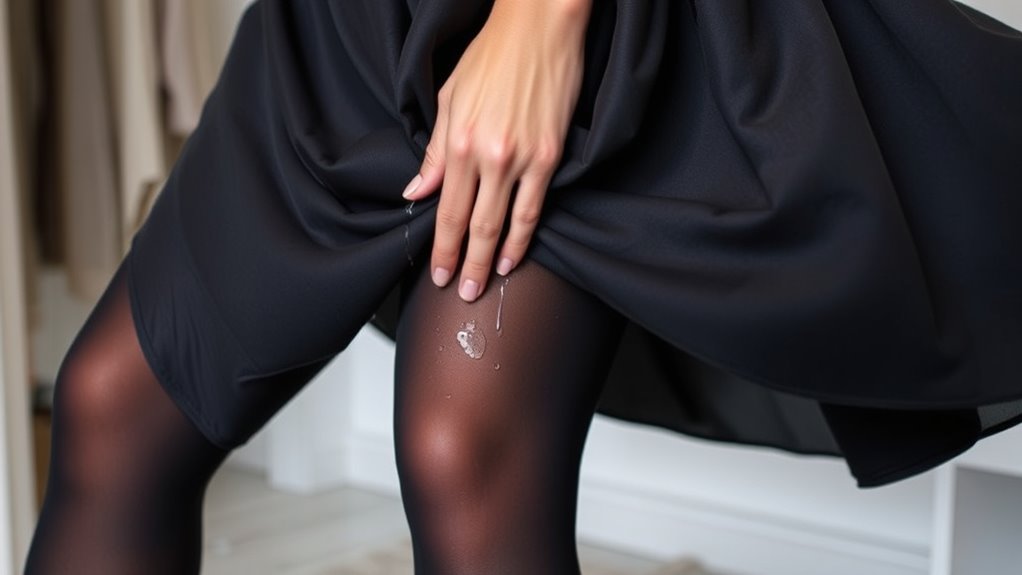
Moisture is one of the simplest and most effective ways to prevent static cling in tights and skirts. When your fabrics are damp, they create less friction, which reduces static buildup. You can lightly mist water inside your skirt or on your tights before putting them on. Carrying a small spray bottle makes this quick and easy. Applying a tiny amount of hand lotion on your legs or directly on the tights adds moisture, helping to prevent static. If you don’t have spray or lotion, dampening your hands slightly and running them over your clothing can dissipate static. Keeping fabrics slightly moist minimizes the static charge, making your outfit more comfortable and less prone to cling. Additionally, understanding AI safety measures can help develop better solutions for static prevention in the future. Using fabric softeners can also reduce static cling by coating fibers and decreasing friction. Properly selecting fabric types that are less prone to static buildup can further enhance your comfort. Incorporating natural moisturizing ingredients into your routine can also help maintain skin hydration and reduce static attraction. For example, choosing fabrics made from natural fibers like cotton or silk can significantly lower static issues compared to synthetic materials.
Employ Clothing Layers as Barriers

Layering your clothing strategically can effectively prevent static cling in tights and skirts. By adding barriers, you reduce direct contact and friction that generate static. Wearing a slip beneath your skirt acts as a protective layer, minimizing static transfer to your tights. Choose slips made from natural fibers or anti-static materials for better results. You can also layer with Spanx-like shorts that have built-in slip layers, preventing tights from touching your skirt directly. Adjusting the length or fit of your slip can help reduce visible bulk while maintaining static protection. Incorporating clothing layers like slips or shorts creates a physical barrier that reduces static buildup. Additionally, selecting natural fiber undergarments and layers can further diminish static electricity compared to synthetic fabrics. Incorporating spiritual practices like mindfulness and meditation can also promote a sense of calm and presence during your dressing routine, enhancing overall well-being.
Treat Fabrics With Static-Reducing Products
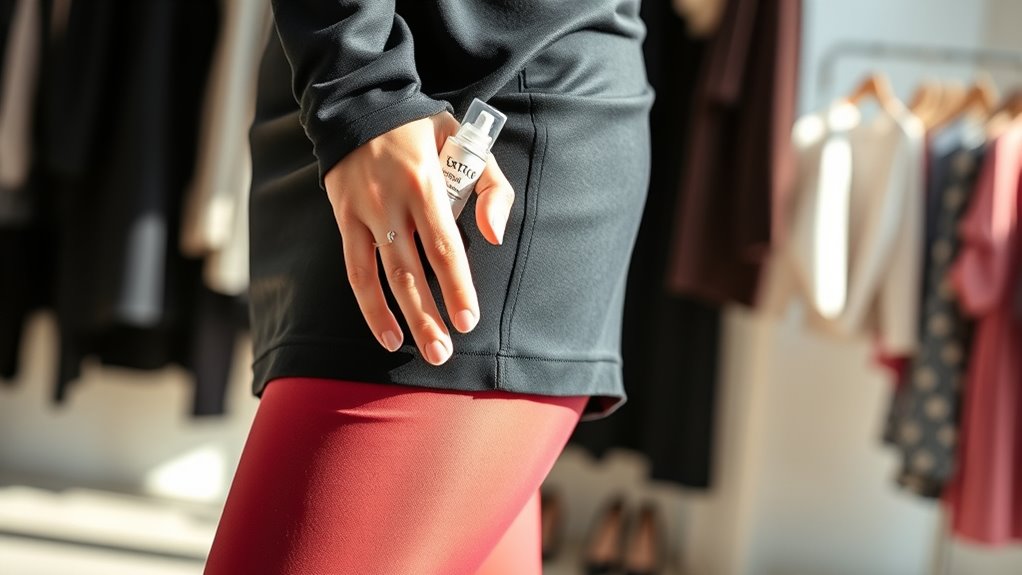
Treating your fabrics with static-reducing products can substantially cut down on cling and static buildup. Spray anti-static fabric sprays lightly on tights and skirts before wearing; these products create a barrier that prevents static from forming. You can also use commercial static guard sprays, which are designed specifically for clothing. Another option is to lightly mist fabrics with water or apply a small amount of lotion to your legs or tights, adding moisture that helps reduce static electricity. Rubbing a metal hanger gently over the fabric can also discharge static charges. Additionally, understanding the role of static electricity in clothing can help you choose the most effective prevention methods. Being aware of the fabric types that are most prone to static buildup can help you select the right products for each material. Using fabric softeners during laundry can also help reduce static cling over time. These methods are quick, effective, and easy to incorporate into your routine, ensuring your tights and skirts stay smooth and free of cling throughout the day.
Apply Quick Neutralizing Techniques
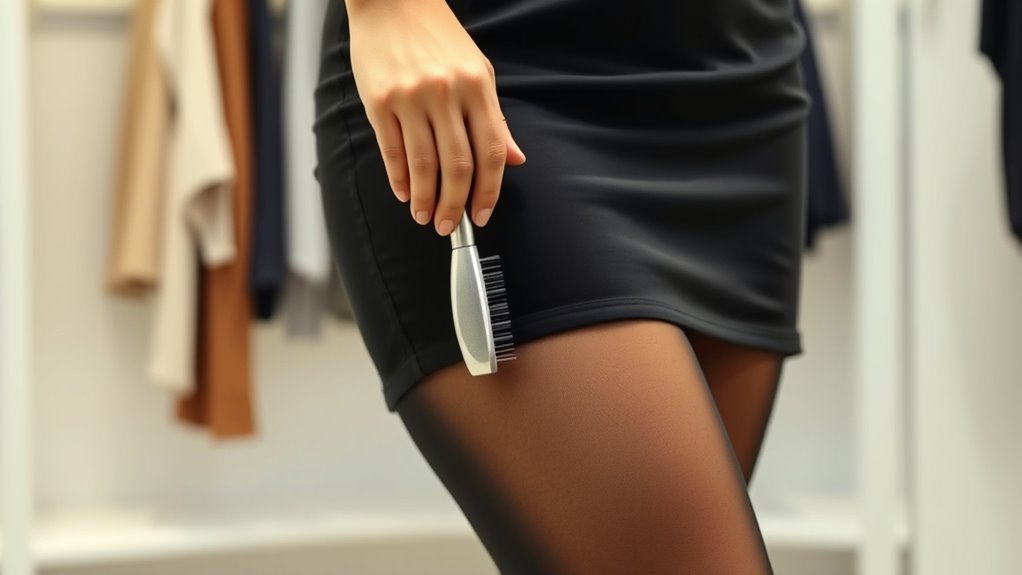
When static starts to cling, quick fixes can save the day. Rubbing a metal hanger over your skirt or tights discharges static buildup immediately. You can also use a battery’s positive end or a light spray of hairspray to neutralize static charges on your fabrics quickly. Using a fabric softener sheet can also be effective in reducing static clinging, especially when lightly rubbed over the surface of your clothing. Incorporating antistatic fabrics into your wardrobe can significantly decrease static issues and improve comfort. Additionally, incorporating glycolic acid products into your skincare routine can help improve skin texture and reduce irritation caused by static shocks. Smart toilets equipped with sensors can detect moisture and static buildup, which can help in understanding and preventing static cling in various materials. Understanding typical causes of static cling can help you prevent it from happening in the future.
Use Metal Hangers
Metal hangers are a quick and effective way to neutralize static cling on tights and skirts. Simply run a wire hanger along the fabric’s surface, focusing on areas that tend to cling. The metal acts as a conductor, discharging static buildup and reducing the static charge that causes cling. Make sure the hanger is clean and dry before using it. You can also glide the hanger over the fabric gently to avoid causing any damage. This method works best when static is just starting to form or when you need an immediate fix before leaving the house. It’s a simple, inexpensive solution that takes only seconds to apply and can save you from uncomfortable cling throughout the day. Additionally, understanding how automation in business enhances efficiency can help you optimize wardrobe maintenance routines and other household tasks. Incorporating digital literacy tools can further streamline your daily routines, making household management more effective.
Apply Static Spray
Applying static spray offers a quick and effective way to eliminate static cling just before you’re about to wear your tights or skirt. Simply spritz a light mist of fabric-friendly static guard spray onto your clothing. This creates a barrier that prevents electrons from building up and causing cling. For best results, spray evenly, focusing on areas prone to static, such as the hem or waistband. Allow the spray to dry briefly before dressing. Using static spray ensures a smooth, polished look without the mess of other solutions. Remember, less is more—over-spraying can cause stiffness or residue. Keep a small bottle in your purse or closet for on-the-go touch-ups, ensuring you stay static-free throughout the day. Proper application can help prevent static buildup effectively, making your outfit more comfortable and stylish. Additionally, choosing a high-quality fabric spray designed for clothing can enhance the longevity and effectiveness of the static control. Being mindful of the fabric type can also help minimize static, as some materials are more prone to cling than others.
Rubbing With Batteries
Rubbing a battery, particularly the positive end of a AAA or AA battery, can quickly neutralize static charges on your tights or skirt. To do this, gently press the battery’s terminal against the fabric’s surface, then slowly swipe it across the area where static cling occurs. The metal contact discharges the static buildup, reducing or eliminating the cling. Make sure to use a clean, dry battery and avoid excessive rubbing, which could damage delicate fabrics. This quick fix works because the metal acts as a conductor, balancing the electrical charge. Keep a spare battery in your bag for emergencies. This simple technique is effective and fast, helping you stay static-free without needing sprays or lotions. Additionally, understanding creative strategies from broader cultural trends can help you develop more effective solutions for everyday fashion challenges.
Adjust Your Environment for Less Static

Since dry air contributes considerably to static buildup, adjusting your indoor environment can make a big difference. Increasing humidity helps reduce static electricity, so consider using a humidifier or placing bowls of water around your space. Keep windows open when possible to promote airflow and natural moisture. Using houseplants also boosts humidity levels naturally. Additionally, avoid overly dry heating systems that strip moisture from the air, and opt for lower thermostat settings to maintain better humidity. Here are some effective ways to adjust your environment:
- Use a humidifier or place water bowls to add moisture
- Keep windows open for better airflow
- Incorporate houseplants to boost humidity
- Lower thermostat settings to prevent dry air
Choose Fabrics Wisely to Minimize Static
Choosing fabrics wisely can make a big difference in static cling. Opt for natural fibers like cotton or wool, which resist static better than synthetics. Mixing fibers, such as pairing natural with some synthetic in small amounts, can also help reduce static buildup.
Prefer Natural Fibers
Opting for natural fibers like cotton, wool, or linen can considerably reduce static cling compared to synthetic fabrics. These fibers naturally absorb moisture, decreasing friction and static buildup. By choosing clothing made from natural materials, you’ll experience fewer cling issues and more comfort throughout the day. To elevate your wardrobe choices, consider these tips:
- Select garments with a high cotton or linen content for breathability and moisture absorption
- Opt for wool blends that help dissipate static without sacrificing style
- Avoid overly synthetic fabrics like polyester or nylon that generate more static
- Incorporate natural fiber slips or linings underneath skirts and tights for added protection
Fabrics with natural fibers create less static, making your outfit more comfortable and manageable.
Avoid Synthetic Fabrics
Synthetic fabrics like polyester, nylon, and acrylic are notorious for generating static cling because they don’t absorb moisture well. When you wear these materials, they tend to build up static electricity easily, especially in dry environments. To minimize static, choose natural fibers like cotton or wool, which naturally retain moisture and reduce static buildup. If you must wear synthetic fabrics, consider blending them with natural fibers to help decrease static. Avoid overly synthetic outfits and opt for clothing labeled as breathable or moisture-wicking, as these help keep fabrics from becoming charged. Being mindful of fabric choices is a simple step that can appreciably cut down static cling, keeping your tights and skirts more comfortable and less prone to sticking.
Mix Fibers Strategically
Mixing different fiber types in your clothing can considerably reduce static cling. Natural fibers like cotton, wool, and silk tend to generate less static compared to synthetics. When you strategically combine fabrics, you decrease the likelihood of static buildup and improve comfort. Opt for blends that incorporate natural fibers with synthetic ones rather than pure synthetics. This approach helps dissipate static charges and keeps your clothes more manageable. To maximize effectiveness, consider these fabric choices:
- Choose skirts and tights made from cotton, wool, or silk blends.
- Avoid pure nylon or polyester fabrics for layers close to your skin.
- Select natural fiber slips or linings under synthetic skirts.
- Mix textures to reduce friction and static generation.
Using these strategies, you can enjoy stylish outfits without the annoyance of static cling.
Practice Proper Laundry Habits
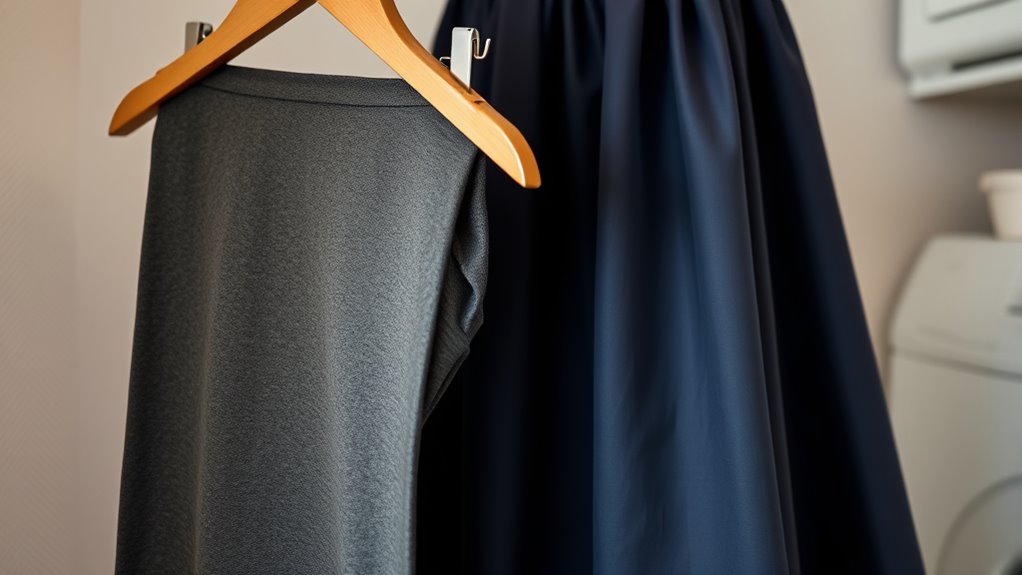
To prevent static cling caused by laundry, it’s important to adopt proper washing and drying habits. Always wash your tights and skirts with fabric softener or add a splash of vinegar to the rinse cycle—it helps break down static-causing residues. Avoid over-drying your clothes; remove them while slightly damp to prevent static buildup. Use dryer sheets during drying to deposit anti-static agents on fabrics. When drying, opt for low heat settings, as high heat can increase static. Wash synthetic fabrics separately from natural fibers to reduce friction. Additionally, avoid excessive agitation in the wash cycle, which can cause static-inducing friction. These habits keep fabrics softer, reduce static buildup, and make your tights and skirts cling-free and comfortable.
Keep Handy Tools for Instant Solutions

Having the right tools on hand can make quick work of static cling when you’re in a pinch. Carrying small, effective items ensures you’re prepared to tackle static issues immediately. A few key tools can save you from embarrassing moments or wardrobe malfunctions. Keep these essentials nearby:
- Metal wire hanger for discharging static
- Small spray bottle filled with water or static guard spray
- Travel-sized lotion or moisturizer for adding moisture
- Compact hair spray for reducing static on tights and skirts
Having these items within reach allows you to neutralize static instantly, keeping your outfit smooth and fuss-free. They’re simple yet powerful solutions that can be applied discreetly, restoring comfort and confidence anytime you need a quick fix.
Frequently Asked Questions
Can Static Cling Be Entirely Eliminated From All Fabrics?
Static cling can’t be completely eliminated from all fabrics, but you can substantially reduce it. You should keep fabrics moisturized using lotion or water sprays, wear slips or natural fiber underlayers, and avoid over-drying clothes. Rubbing a wire hanger or using anti-static sprays also helps. While total elimination isn’t possible, combining these methods keeps static cling to a minimum, making your outfits more comfortable and less prone to sticking.
Are Natural Fibers Completely Static-Free Compared to Synthetic Ones?
No, natural fibers aren’t completely static-free like some synthetic fabrics. You might notice less static because natural fibers, such as cotton or wool, generate less static electricity. However, they can still cling, especially in dry environments or if they’re blended with synthetic materials. To reduce static, you can add moisture or use anti-static sprays, but natural fibers won’t entirely eliminate static cling like some specialized synthetics.
How Often Should I Reapply Anti-Static Products for Best Results?
Think of your anti-static products as a steady heartbeat—consistent and essential. Reapply them every few hours, especially if you’re in dry environments or after washing. When you notice static returning, it’s time for a touch-up. Keep a small spray or lotion handy, and don’t wait until static becomes a storm—regular reapplications maintain a calm, static-free rhythm throughout your day.
Does Wearing Certain Colors or Patterns Affect Static Buildup?
Certain colors and patterns can influence static buildup. Darker shades like black or navy tend to attract more static because they often contain synthetic fibers that generate static electricity. Bright or lighter colors made from natural fibers, like cotton or linen, usually produce less static. Patterns with mixed fabrics can also increase static chances. To minimize static, choose clothing with natural fibers and avoid heavily synthetic or textured fabrics, regardless of color or pattern.
Can Environmental Changes Permanently Reduce Static in Clothing?
Environmental changes can help reduce static in your clothing, but they won’t eliminate it permanently. You can use a humidifier indoors to add moisture to the air, which lowers static buildup. Regularly washing fabrics with fabric softener or adding vinegar during rinse cycles also helps. Keep in mind, static may still occur in very dry conditions or with synthetic fabrics, so occasional treatments will be necessary to maintain less static.
Conclusion
By blending moisture, meticulous methods, and mindful choices, you can master static-free style. Keep your clothing calm and comfortable by using simple solutions and smart strategies. With a little preparation and proactive practices, static cling stays at bay, letting you confidently wear your tights and skirts without worry. So, stay savvy, stay static-free, and strut your style smoothly and stunningly every single day.