Religious norms guide how you choose your legwear, emphasizing modesty, identity, and spiritual values. For example, Islamic dress codes often require full leg coverage with long skirts or abayas, while Orthodox Jewish women wear skirts covering the knees to uphold modesty. Christian groups vary, with some preferring knee-length skirts, and Hindu attire often involves culturally significant fabrics covering parts of the legs. Exploring these differences reveals how faith shapes everyday clothing choices across cultures. If you continue, you’ll discover more about why these styles matter.

Get your wardrobe favorites delivered free with Prime
- Fast, free delivery on millions of items
- Prime Video, Amazon Music and more included
- Member-only deals all year
Key Takeaways
- Religious norms often prescribe specific legwear styles, emphasizing modesty, humility, and moral virtue across different faiths.
- Islam and Orthodox Judaism mandate full or knee-length leg coverings, while Christian practices vary widely.
- Traditional attire in Hinduism and regional cultures reflect religious symbolism and cultural identity through legwear choices.
- Clothing acts as a visible marker of faith, community belonging, and spiritual discipline within religious contexts.
- Variations in legwear norms influence daily activities, religious participation, and social interactions across denominations and cultures.
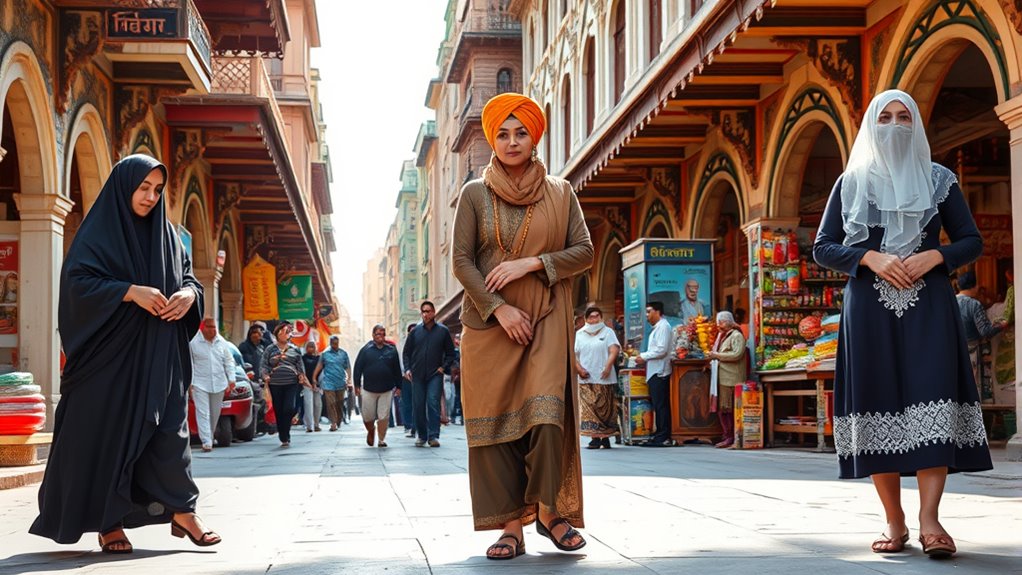
Exploring how religious norms shape legwear choices reveals a fascinating intersection of faith, culture, and personal expression. When you consider how different religions influence what people wear, it becomes clear that clothing isn’t just about style or comfort—it’s a symbol of identity, conformity, and devotion. Many faiths prescribe specific guidelines for modesty, which often extend to legwear, reflecting underlying values about humility and moral virtue. For example, in Islam, modest dress is emphasized, and women often wear long skirts, hijabs, or abayas that cover their legs entirely, adhering to the principles of modesty outlined in religious teachings. This isn’t merely about tradition; it’s a way of expressing faith outwardly and maintaining cultural continuity. Similarly, Orthodox Jewish women might wear skirts that cover the knees and avoid tight or revealing clothing as part of their commitment to modesty, which is a core aspect of their religious identity. These choices serve as a visible marker of belonging and reverence, reinforcing a sense of community and spiritual discipline. Additionally, many religious communities emphasize the importance of quality and appropriate materials in legwear to ensure comfort and reverence during worship or rituals. In contrast, Christian traditions vary widely depending on denominations and cultural contexts. Many conservative Christian groups encourage women to wear skirts or dresses that cover the knees, especially during worship or religious gatherings, reflecting an emphasis on modesty rooted in biblical teachings. However, in more liberal circles, legwear choices can be more relaxed, allowing personal expression within the bounds of modesty. Meanwhile, in Hindu culture, traditional attire like sarees or dhotis often covers the legs entirely or partially, with specific styles and fabrics symbolizing regional identities and social status. These garments are chosen not just for religious reasons but also as a reflection of cultural heritage, blending faith and tradition seamlessly. You’ll notice that across these religions, the emphasis on legwear is less about fashion and more about conveying respect, humility, and spiritual discipline. While secular fashion evolves rapidly and encourages individual expression, religious norms often prioritize collective identity and moral values, shaping what’s deemed appropriate. These choices influence daily life, special occasions, and community interactions, creating a visible language of faith. Recognizing these differences helps you appreciate how deeply intertwined clothing is with religious principles and cultural history. Whether it’s a woman in a hijab, a girl in a knee-length skirt, or a woman in a saree, each act of choosing legwear becomes a meaningful gesture rooted in tradition, faith, and personal devotion.
As an affiliate, we earn on qualifying purchases.
Frequently Asked Questions
How Do Religious Norms Influence Modern Fashion Choices?
Religious norms shape your fashion choices by guiding what you wear to align with spiritual beliefs and cultural expectations. You might opt for modest clothing, covering certain parts of your body, or avoid specific fabrics and styles deemed inappropriate. These norms influence your daily wardrobe, special occasions, and how you present yourself publicly. By respecting these traditions, you express your faith and identity, blending spirituality with contemporary fashion trends.
Are There Exceptions to Traditional Legwear Rules in Religious Contexts?
Yes, there are exceptions to traditional legwear rules in religious contexts. You might see individuals adapting or modifying norms based on personal beliefs, cultural influences, or practical needs. Some religious communities allow for variations, especially during special occasions or when comfort is a concern. These exceptions often reflect a balance between adhering to religious principles and accommodating contemporary lifestyles, showing flexibility within traditional frameworks.
How Do Religious Communities Adapt Their Dress Codes Over Time?
You might be surprised to learn how religious communities adapt their dress codes over time. They often start with strict rules, but as cultures change, so do interpretations. Leaders and followers negotiate these shifts, sometimes embracing modern styles or relaxing traditional norms. This evolution keeps their attire relevant, meaningful, and respectful of faith, all while reflecting contemporary influences. It’s a delicate balance of tradition and innovation that keeps their identity alive.
What Role Does Gender Play in Religious Legwear Regulations?
Gender notably influences religious legwear regulations, as many communities assign specific dress codes based on gender roles. You’ll notice women often face stricter guidelines, such as covering hair or legs, to symbolize modesty. Men typically have more relaxed rules, focusing on covering certain body parts. These regulations reinforce cultural and spiritual values, shaping how individuals express their faith through clothing, and often reflect long-standing traditions within each community.
Do Religious Norms Around Legwear Differ Across Regions?
Like a tapestry woven with diverse threads, religious norms around legwear differ across regions. You’ll find that in some areas, strict coverings like full-length skirts or veils are required, reflecting local traditions and interpretations. Elsewhere, more relaxed standards prevail, allowing for greater individual expression. These variations depend on cultural influences, religious teachings, and societal values, illustrating how deeply regional contexts shape what’s considered appropriate legwear in different parts of the world.
Islamic abayas with full leg coverage
As an affiliate, we earn on qualifying purchases.
As an affiliate, we earn on qualifying purchases.
Conclusion
As you reflect on these diverse norms, remember that legwear is more than fabric—it’s a symbol of faith, identity, and belonging. Each choice whispers a story of tradition and devotion, like a hidden prayer woven into everyday life. Embrace the beauty in these differences, for they remind us that our outer coverings mirror our inner convictions. Ultimately, understanding others’ symbols helps us build a world where respect and empathy flourish, like a garden blooming in shared harmony.
Orthodox Jewish knee-length skirts
As an affiliate, we earn on qualifying purchases.
As an affiliate, we earn on qualifying purchases.
hindu traditional fabrics for legwear
As an affiliate, we earn on qualifying purchases.
As an affiliate, we earn on qualifying purchases.
Halloween Picks
halloween
As an affiliate, we earn on qualifying purchases.