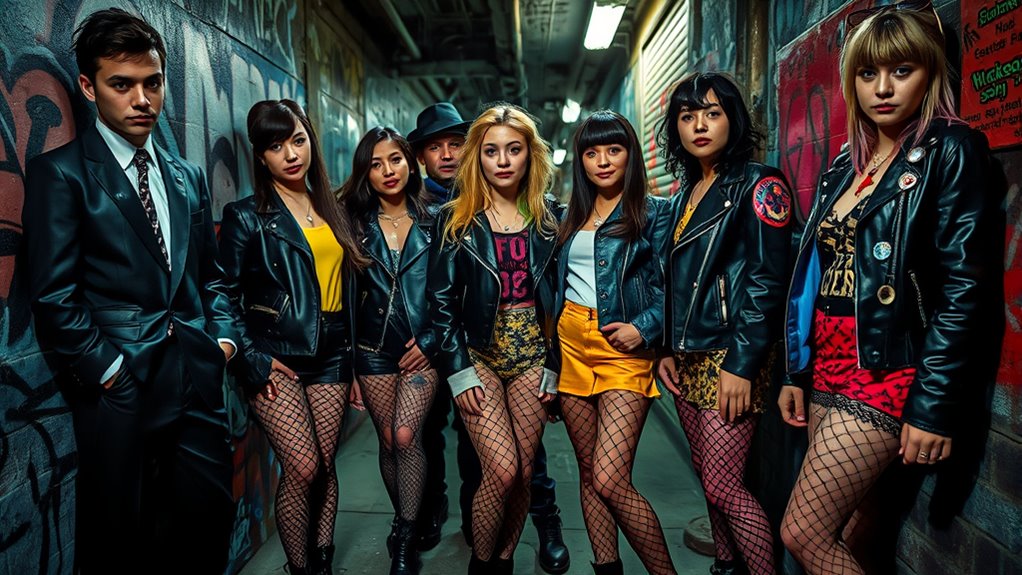

From the sleek mod scene of the 1960s to the rebellious punk movement of the late 1970s, hosiery became a powerful symbol of identity and defiance. Mods used tights and patterned stockings to express individuality and modern elegance, while punks tore, dyed, and layered fishnets to shock and challenge norms. If you explore further, you’ll discover how hosiery consistently reflected each subculture’s attitude, rebellion, and evolving sense of self.
Key Takeaways
- Mod subculture used hosiery to create sleek, modern looks, emphasizing individuality through bright colors and patterns.
- Punk culture adopted hosiery as a rebellious tool, tearing, dyeing, and layering fishnets and tights to defy societal norms.
- Hosiery evolved from fashion statement in Mod to an act of resistance and nonconformity in Punk.
- In goth and alternative scenes, hosiery symbolizes mystery, darkness, and complex identity, blending femininity with edginess.
- Across subcultures, hosiery serves as a versatile medium for self-expression, community belonging, and visual rebellion.
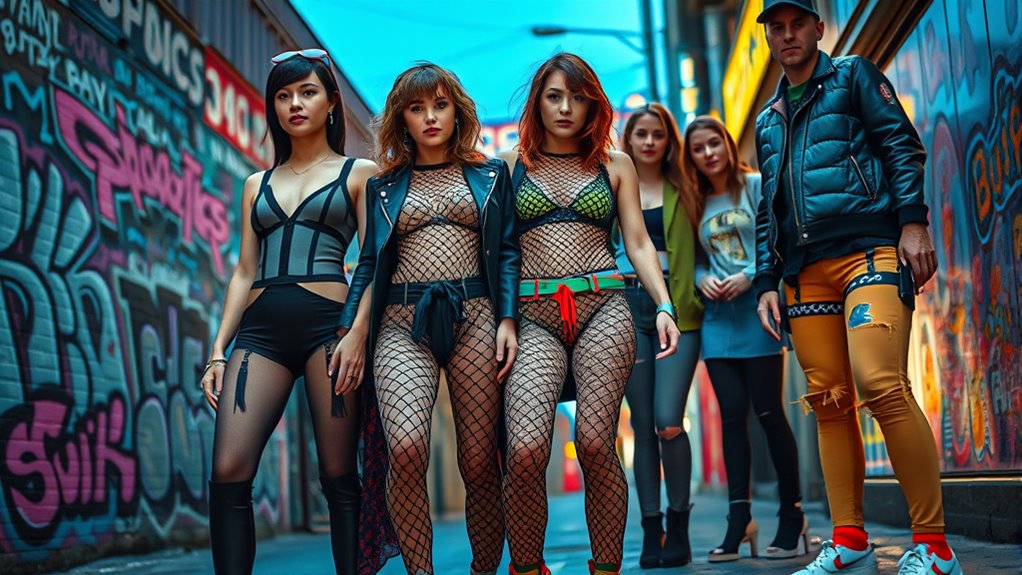
Throughout history, hosiery has served as more than just a functional clothing item; it has become a powerful symbol within various subcultures. When you look at the Mod scene of the 1960s, you’ll notice how hosiery choices helped define the movement’s sleek, polished aesthetic. Mod fashion embraced tights and stockings as essential accessories that complemented tailored suits and mini skirts, emphasizing a clean, modern look. Bright-colored tights or patterned stockings became a way to stand out and express individuality within the uniformity of the Mod style. Wearing bold hosiery wasn’t just about fashion—it was a statement of rebellion against traditional norms and a desire to create a youthful, energetic identity.
As you shift into the punk era of the late ’70s, hosiery takes on a different tone. Punks use stockings and tights as tools for shock and defiance. Fishnets, ripped pantyhose, and brightly dyed tights become rebellious symbols that challenge societal conventions. You’ll see how punks manipulate hosiery to convey raw attitude—wearing torn fishnets with safety pins or layering multiple pairs for a chaotic look. Hosiery in punk culture isn’t just about aesthetics; it’s about attitude, a middle finger to mainstream fashion and expectations. The textures, colors, and methods of destruction become a form of self-expression, a visual critique of societal standards. The act of ripping or embellishing hosiery becomes a rebellious ritual, emphasizing individuality and nonconformity. Additionally, the use of hosiery in these subcultures often reflects a Fashion Statement that communicates resistance and identity.
Punks flip hosiery into symbols of rebellion—ripping, dyeing, layering to defy norms and showcase raw attitude.
Moving into the 1980s and beyond, hosiery continues to evolve within subcultures like goths and alternative scenes. You might wear lace tights or darkly patterned stockings to evoke mystery or melancholy. Hosiery here isn’t just an accessory; it’s a way to communicate complex identity, blending femininity with darkness or edginess. The use of hosiery in these subcultures often carries a sense of theatricality—embracing both vulnerability and strength.
Across these movements, hosiery acts as a versatile canvas for self-expression. Whether in Mod’s sharp minimalism, punk’s anarchic chaos, or goth’s dark romanticism, it’s more than fabric; it’s a badge of belonging and rebellion. You see it as a way to visually communicate your stance, your uniqueness, and your connection to a community that values nonconformity. Hosiery’s shifting symbolism across subcultures reflects the evolving nature of identity and resistance, proving that what you wear on your legs can speak volumes about who you are and what you stand for.
Top picks for "punk subcultur hosiery"
Open Amazon search results for this keyword.
As an affiliate, we earn on qualifying purchases.
Frequently Asked Questions
How Did Hosiery Influence Subcultural Fashion Evolution?
Hosiery influenced subcultural fashion by allowing you to express individuality and challenge mainstream norms. You might choose bold patterns, bright colors, or ripped tights to stand out and signal your identity. In punk culture, torn fishnets and safety-pin adorned stockings became symbols of rebellion, while mods favored sleek, thigh-highs for a polished look. Hosiery became a versatile tool to communicate your style and align with your subcultural values.
Are There Specific Hosiery Styles Unique to Punk Culture?
Imagine a punk scene in the 1970s—yes, that era’s ripped fishnets, safety pins, and bold patterns define their hosiery style. You’ll notice fishnets and torn tights are iconic, symbolizing rebellion and anti-establishment attitudes. These styles often feature heavy embellishments or DIY modifications, making them uniquely punk. You can’t ignore how hosiery became a statement piece, reflecting defiance and individuality in punk fashion.
What Materials Are Commonly Used in Subcultural Hosiery?
You’ll find subcultural hosiery made from a variety of materials, including nylon, fishnet, spandex, and cotton. Punk styles often feature fishnet or ripped tights for a rebellious look, while goth subcultures might prefer black velvet or lace. Some styles incorporate leather or PVC for an edgy vibe. You can mix and match these materials to express your individual style and align with your subcultural identity.
How Has Hosiery Symbolism Changed Across Subcultures?
Hosiery has evolved from mere fabric to a powerful symbol, like a silent scream or a badge of honor. In punk culture, torn tights whisper rebellion, while in goth circles, dark fishnets cloak identity in mystery. You see, across subcultures, hosiery transforms into a language of defiance, belonging, or artistry, turning legs into canvases that tell stories without uttering a word.
Can Hosiery Be Considered a Form of Rebellion or Conformity?
Hosiery can definitely be a form of rebellion or conformity, depending on how you wear it. When you choose bold, unconventional styles, you’re making a statement against mainstream norms, signaling rebellion. Conversely, wearing hosiery that aligns with societal standards can help you blend in and conform. So, it’s versatile—your choice of style, attitude, and context determines whether hosiery becomes a symbol of defiance or conformity.
Conclusion
You see, subcultures and hosiery both challenge norms, both express identity, both inspire change. You embrace the history, the rebellion, the artistry woven into each pair of tights or boots. You celebrate individuality, question conventions, and push boundaries. In doing so, you connect past and present, tradition and innovation. Ultimately, you realize that whether from mod to punk, hosiery becomes more than fashion—it becomes a statement, a symbol, a movement.