
Tights play a key role in theater costuming, helping performers move smoothly and look polished on stage. They create a seamless look, hide distracting lines, and provide warmth for cooler venues. Tights also highlight leg lines, match costumes for different eras or styles, and make quick outfit changes easier. Their practicality and tradition support both performance quality and visual cohesion. Keep exploring, and you’ll uncover even more ways tights elevate theatrical productions.

Get your wardrobe favorites delivered free — and shop member deals
- Fast, free delivery on millions of items
- Access to Prime Big Deal Days deals on October 6–7
- Prime Video, Amazon Music and more included
Key Takeaways
- Tights provide performers with a smooth, polished appearance, eliminating distracting lines and wrinkles in leg coverings.
- They enable ease of movement and quick costume changes, essential for fast-paced theatrical productions.
- Tights serve as a blank canvas for vibrant costumes, enhancing visual cohesion and character embodiment.
- They offer warmth and muscle support, preventing injuries during physically demanding performances.
- Wearing tights reflects traditional standards of professionalism and attention to detail in theatrical costuming.

Tights have long been a staple in theater costuming, serving both practical and aesthetic purposes. They help performers move freely while creating a seamless, polished look that enhances the overall visual appeal on stage. When you wear tights, you eliminate distracting lines or wrinkles that can appear with other types of leg coverings, ensuring your movements look clean and precise. This smooth appearance is especially important in dance performances, where the fluidity of your movements contributes considerably to the storytelling. Tights also provide a layer of warmth, which is essential for performers working in cooler theaters or during productions that require long hours on stage. Their snug fit supports your muscles and can help prevent injuries by offering additional compression during vigorous routines. Additionally, the choice of material can influence the durability and comfort, which are key considerations in theater costumes.
In theater traditions, tights often serve as a canvas for costumes that need to be vibrant or intricate. Bright colors, patterns, or even sheer finishes can add depth to your character, making your role more believable and visually striking. For example, in classical ballet, white tights are standard because they highlight the lines of your legs and the precision of your movements. Similarly, in period plays or fantasy productions, tights can be customized to match specific historical or fantastical costumes, helping you fully embody the character’s world. The versatility of tights allows costume designers to experiment with different textures and shades, giving you the flexibility to adapt your look to various roles without needing entirely new garments.
Another key aspect of tights in theater is their ability to unify a cast’s appearance. When everyone wears similar tights, it creates visual cohesion, emphasizing the collective movement and choreography rather than individual quirks. This uniformity helps draw the audience’s attention to the performance itself rather than distracting wardrobe inconsistencies. Tights also make quick costume changes easier; since they stretch and fit snugly, you can slip into them rapidly, saving valuable stage time. This practicality is essential during fast-paced scenes or when multiple costume changes are required. Moreover, the selection of appropriate tights can contribute to the overall aesthetic and thematic tone of the production.
Finally, tights contribute to the tradition and discipline of theater costuming. They are a symbol of professionalism, indicating that you’re part of a production where attention to detail matters. Wearing tights signals your commitment to the craft, aligning with the historical standards of theatrical presentation. Whether you’re a dancer, actor, or part of the stage crew, understanding the importance of tights helps you appreciate their role in creating the seamless, immersive experience that theater aims to deliver. Recognizing the costume design aspect underscores their significance beyond mere functionality.
Frequently Asked Questions
How Have Tights Evolved Over Different Theater Eras?
Tights have evolved from simple, woolen coverings to sleek, stretchy fabrics that enhance movement and appearance. In earlier eras, they were often bulky and handmade, but now, you’ll find them made from nylon, spandex, and other modern materials. These changes allow for better fit, comfort, and durability, helping performers move freely and look polished on stage. Your choice of tights reflects both historical trends and contemporary innovations in theater costume design.
Are There Specific Tights for Different Theatrical Genres?
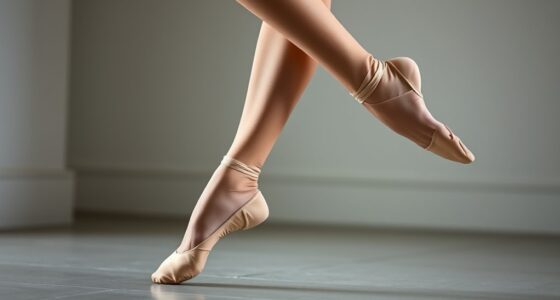
You’ll find that different theatrical genres often use specific tights to enhance the performance. For example, ballet dancers typically wear sheer, skin-toned tights that resemble a second skin, making movements seamless. Meanwhile, comedy or clown acts may opt for brightly colored or exaggerated tights to emphasize humor and exaggeration. About 80% of costume designers tailor tights to genre, ensuring the costume complements storytelling and character expression effectively.
What Materials Are Most Common in Theater Tights?
You’ll find that nylon is the most common material for theater tights because it’s stretchy, durable, and fits snugly. Spandex or Lycra are often blended in to enhance elasticity and comfort, allowing for movement during performances. Some tights also incorporate cotton for breathability or polyester for added durability. These materials work together to guarantee the tights stay in place, provide flexibility, and withstand repeated wear on stage.
How Do Tights Influence Character Portrayal and Audience Perception?
Tights are the silent storytellers of the stage, shaping how your character is perceived. They highlight your movements, accentuate your personality, and evoke specific emotions—like a painter’s brush revealing depth or simplicity. When you wear bold, bright tights, you suggest confidence or playfulness; subdued tones imply subtlety or seriousness. Your choice influences audience perception, making them see your character’s essence even before you speak a word.
Are There Cultural Variations in Theater Tights Worldwide?
Yes, there are cultural variations in theater tights worldwide. You’ll find different styles, colors, and materials reflecting local traditions and aesthetics. For example, European theater often uses sheer, neutral tights to emphasize naturalism, while Japanese Kabuki costumes may incorporate more vibrant, patterned tights. In India, colorful, ornate tights are common in traditional dance-drama. These differences help convey cultural identity and enhance storytelling in each unique theatrical context.
Conclusion
So, next time you see a performer in tights on stage, remember they’re more than just a costume piece—they’re part of a rich tradition. Tights help bring characters to life and connect us to centuries of theatrical history. Isn’t it fascinating how such a simple garment can carry so much meaning? Next time you watch a show, appreciate the art and history woven into those tights—you might see them in a whole new light.
Fall Picks
fall essentials
As an affiliate, we earn on qualifying purchases.