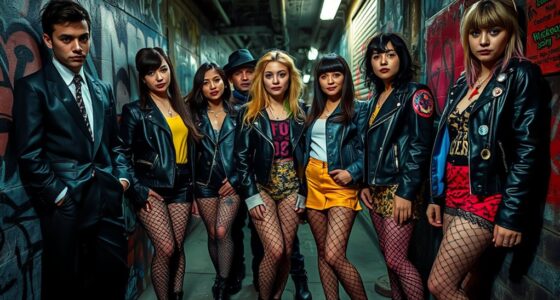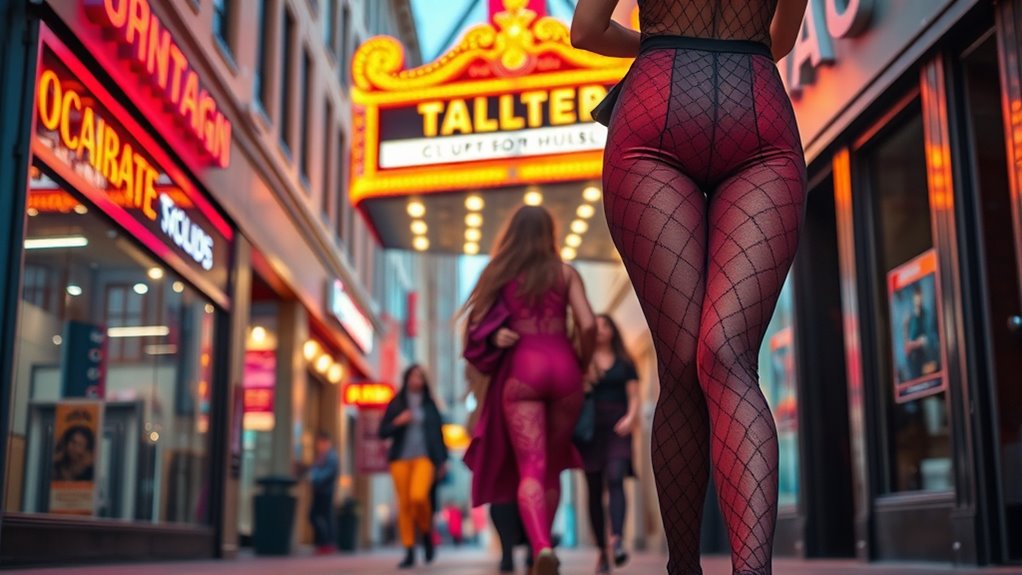
Theatrical tights started on stage, helping performers move freely and highlighting their physicality. Over time, they migrated into everyday fashion, embraced by streetwear for their comfort, versatility, and bold style. Innovators used lightweight fabrics and simple designs, making them accessible and fashionable outside the theater. Influential performers and celebrities further popularized tights, shaping modern trends. To discover how these stage origins transformed casual style, keep exploring the journey from stage to streetwear.
Key Takeaways
- Theatrical tights’ flexible, form-fitting design transitioned into streetwear for comfort and style versatility.
- Influential performers and celebrities popularized tights as bold fashion statements beyond the stage.
- Innovations in textile technology made tights durable, affordable, and suitable for everyday wear.
- Minimalist and colorful styles of tights became key elements in modern, gender-neutral fashion.
- Sustainable fabrics and bold patterns in tights reflect current eco-conscious and individualistic fashion trends.
The Origins of Theatrical Tights and Their Early Uses
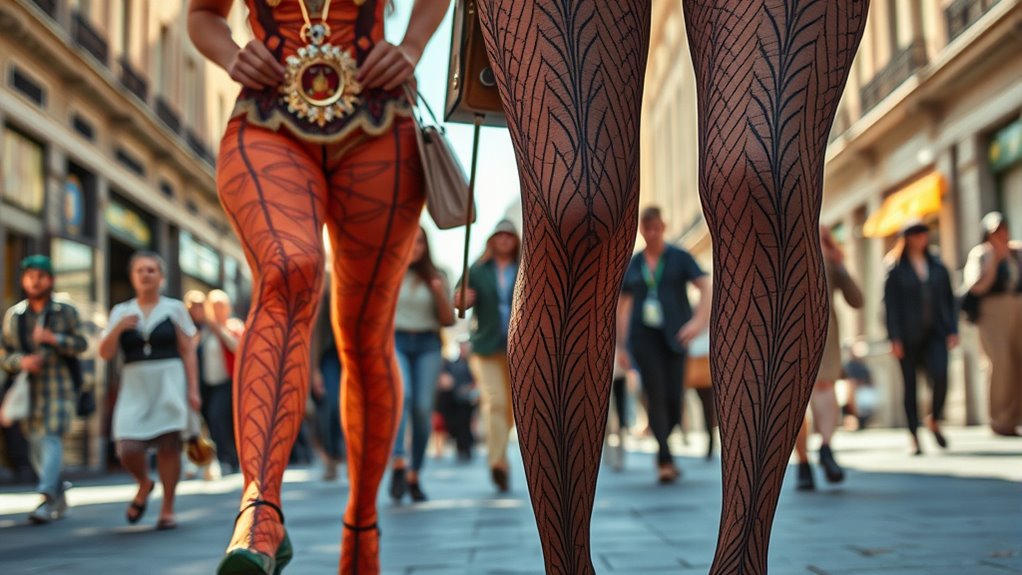
The origins of theatrical tights trace back centuries to ancient civilizations where performers wore form-fitting garments to enhance their stage presence. In a historical context, these early costumes allowed actors to move freely and emphasized their physicality, making their performances more expressive. During the Renaissance and Baroque periods, costume design evolved, incorporating tights as a practical and decorative element. They helped create a uniform look for dancers and actors, emphasizing their movements and personality. The tight-fitting nature of these garments also served to highlight the contours of the body, adding to the theatrical effect. Over time, tights became an essential part of costume design, blending functionality with aesthetics, and laying the groundwork for their later influence on fashion beyond the stage. Additionally, the use of tights in theatrical costumes contributed to the development of performance costumes that have since permeated everyday fashion trends.
Transitioning From Stage to Streetwear: the Rise of Tights in Fashion
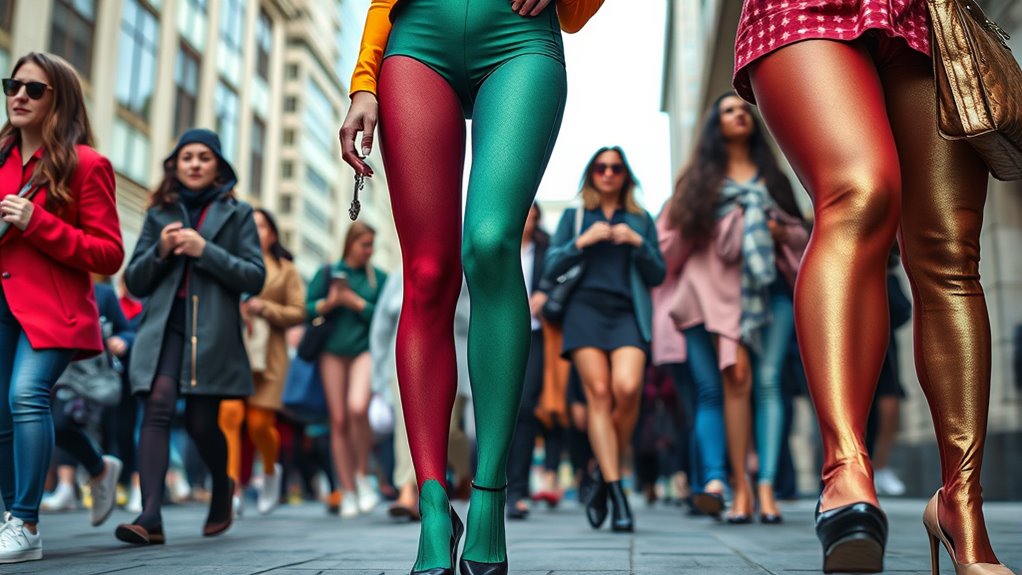
As fashion evolves, tights have shifted from stage costumes to everyday streetwear, transforming how you express yourself. Originally part of dance costumes and ballet footwear, tights provided flexibility and sleekness for performers. Today, they’re embraced by streetwear enthusiasts for their comfort and versatility. You can pair tights with oversized sweaters, leather jackets, or sneakers, blending theatrical roots with modern style. The conversion was fueled by designers who saw the appeal of tights’ form-fitting nature and their ability to add edge to casual outfits. This movement allowed you to incorporate a piece once reserved for dancers into your daily wardrobe, making tights a symbol of bold, artistic expression. The use of color accuracy and innovative materials in tights has enhanced their visual appeal and durability, further cementing their place in contemporary fashion. Now, tights are a staple that bridges performance art and contemporary fashion seamlessly.
Key Styles and Materials That Bridged Theatre and Everyday Wear
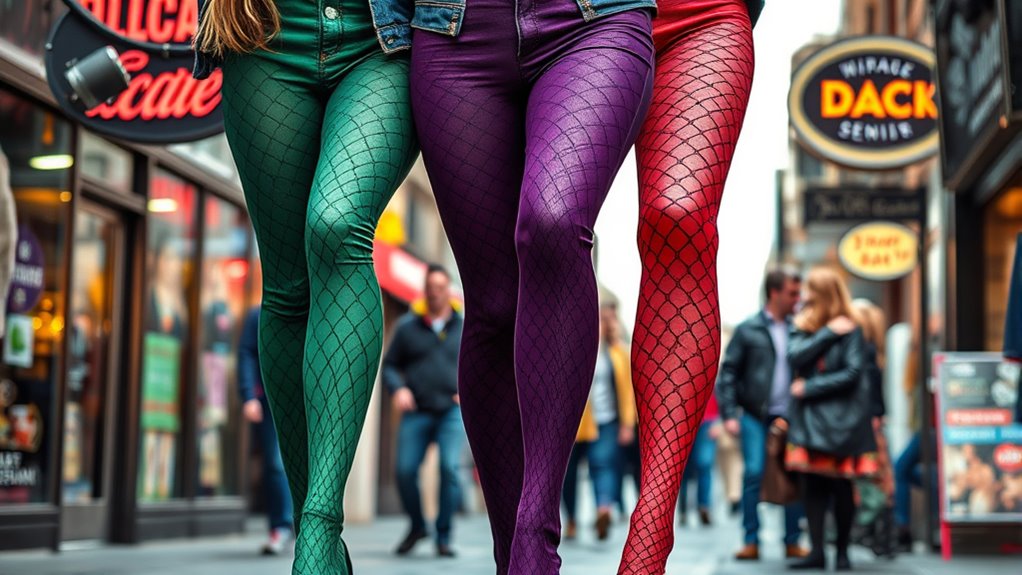
Several styles and materials have played a key role in bringing theatre-inspired tights into everyday fashion. As dancewear evolved, designers adopted lightweight, flexible fabrics like nylon and spandex, making tights more comfortable and versatile. Textile innovations enabled the creation of opaque, durable, and affordable options that could withstand daily wear while maintaining a sleek appearance. These advances allowed tights to evolve from stage costumes to essential streetwear pieces. The use of simple, clean designs, such as solid colors and minimal patterns, made them adaptable for various styles. By combining functional textile innovations with the aesthetic appeal of dancewear, these tights became accessible, fashionable, and easy to incorporate into everyday outfits—bridging the gap between theatrical performance and casual style.
Iconic Figures and Trends That Popularized Tights in Modern Culture
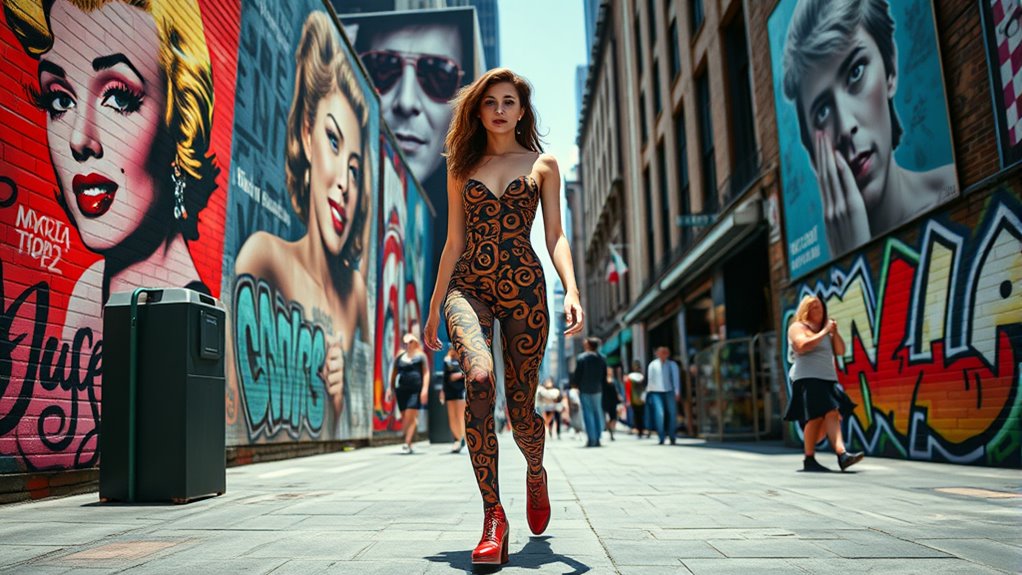
Throughout modern culture, iconic figures and trending movements have played a pivotal role in making tights a mainstream fashion statement. Dancers in striking dance costumes and ballet footwear brought tights into the spotlight, showcasing their versatility beyond the stage. Ballet stars like Anna Pavlova and Rudolf Nureyev popularized the sleek, elegant look that many aspire to emulate. Celebrities such as Madonna and Lady Gaga embraced tights in their music videos and performances, blending theatricality with everyday style. These influential figures demonstrated how tights could be both functional and fashionable, inspiring trends across streetwear and high fashion alike. Their adoption of tights helped shift perceptions, transforming them from theatrical essentials into a symbol of modern confidence and style. Additionally, understanding how leadership skills influence fashion trends highlights the importance of strategic influence and cultural leadership in shaping consumer preferences.
The Impact of Tights on Contemporary Fashion and Street Style
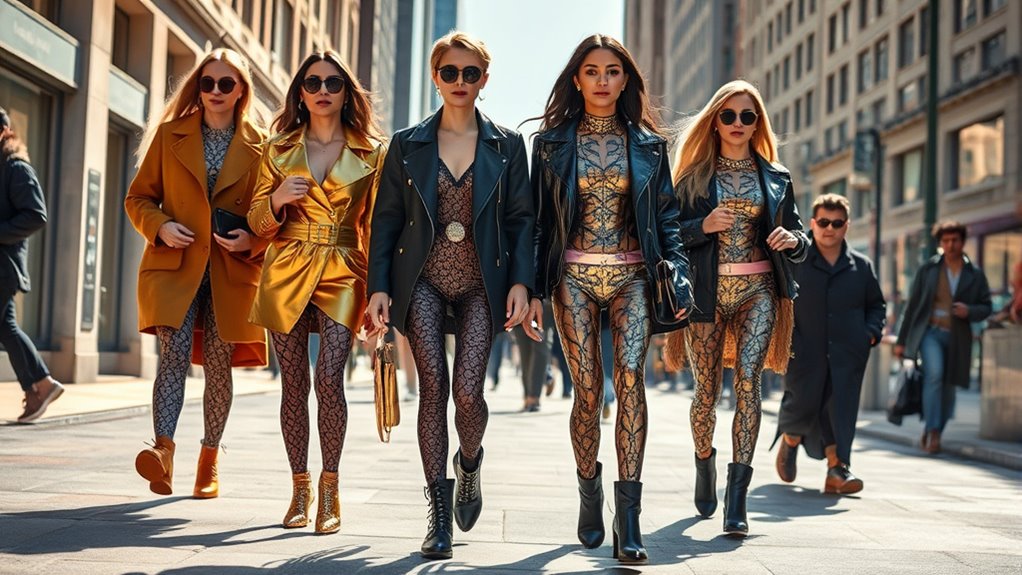
Tights have become a versatile staple in contemporary fashion and street style, seamlessly blending functionality with bold self-expression. Today, you’ll find them in sustainable fabrics like recycled nylon and organic cotton, reflecting an eco-conscious shift in style. Tights also play a key role in gender-neutral fashion, breaking traditional boundaries and allowing everyone to experiment with their look. They’re no longer just a clothing item; they’re a statement of individuality and social awareness. From vibrant patterns to minimalist designs, tights help you stand out or blend in effortlessly. Their adaptability and sustainability make them essential in modern wardrobes, empowering you to express your identity while supporting environmental responsibility. The evolution of tights from theatrical accessories to everyday symbols of style is also influenced by innovative fabric technologies that enhance comfort and durability.
Frequently Asked Questions
How Did Theatrical Tights Evolve Into Everyday Fashion Staples?
You see, theatrical tights evolved into everyday staples through a mix of historical evolution and textile innovations. Originally designed for stage performance, their stretchy, durable fabric caught on in fashion for comfort and versatility. Over time, textile innovations made tights more affordable and varied in design, encouraging people to wear them beyond theaters. This transformation turned theatrical tights into a fashionable, functional part of daily wear.
What Cultural Factors Contributed to Tights’ Popularity Outside the Theater?
You see, the historical influence of fashion trends and cultural adoption played huge roles in tights’ popularity outside theater. As society embraced new styles and rejected restrictive clothing, tights became a symbol of freedom and modernity. Cultural shifts like the women’s liberation movement also encouraged practical, comfortable clothing, making tights a versatile, fashionable choice. These factors combined to turn theatrical tights into everyday essentials, blending style with social change.
Are There Specific Designers Credited With Transforming Tights Into High Fashion?
You might think only iconic fashion icons like Madonna or Kate Moss transformed tights into high fashion, but designer collaborations truly pushed their status further. Designers such as Jean Paul Gaultier and Alexander McQueen are credited with blending theatrical tights into runway shows and streetwear, elevating them from simple accessories to statement pieces. Their innovative use of tights changed how we see everyday fashion, making them a symbol of bold, artistic expression.
How Have Tights Influenced Gender Expression in Modern Streetwear?
Tights have become a powerful tool for gender fluidity and self-expression in modern streetwear. You can wear bold colors, patterns, and textures to challenge traditional gender norms, blending masculine and feminine styles effortlessly. Tights give you the freedom to experiment and showcase your individuality, making them a versatile staple for expressing your authentic self. Embracing tights helps you redefine fashion boundaries and celebrate diverse gender identities confidently.
What Are the Environmental Impacts of Manufacturing Tights Today?
You might not realize it, but the environmental impact of manufacturing tights is staggering. Today, companies are shifting towards sustainable manufacturing and eco-friendly fibers to reduce pollution and waste. These efforts help cut down water usage, lower carbon emissions, and lessen chemical runoff. By choosing tights made from eco-friendly materials, you’re supporting a greener future and helping protect the planet from the harmful effects of traditional textile production.
Conclusion
So, next time you slip into tights, remember you’re wearing a piece of theatrical history that transformed street style. Imagine a fashion-forward teen in 2024 pairing bold, patterned tights with sneakers—turning a stage costume into everyday cool. Tights aren’t just functional—they’re a statement shaped by centuries of performance and culture. Embrace your own style journey, knowing you’re part of a trend that’s both artistic and endlessly adaptable.