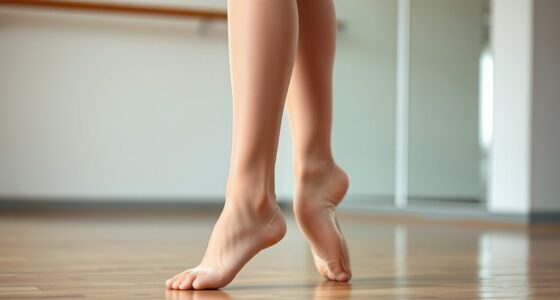
Tights became standard in ballet during the early 20th century, changing how dancers showcase their lines and move effortlessly. Developed from earlier form-fitting garments, they provided a sleek, flexible layer that emphasized technique and body shape. Their introduction was driven by advancements in fabric technology and a focus on practicality. As you explore further, you’ll discover how these innovations transformed ballet costumes into essential elements of performance and expression.
Key Takeaways
- Tights were developed by Maillot to provide a smooth, close-fitting layer that emphasized the dancer’s lines and technique.
- Flesh-colored tights mimicking bare skin became standard in the early 20th century to enhance natural form.
- The rise of pointe work in the 19th century increased the need for supportive, form-fitting tights for stability.
- Tights replaced previous leg coverings like stockings, becoming essential for visibility of leg lines and movement.
- Advances in fabric technology and cultural inclusivity drove the widespread adoption of tights as a ballet staple.
Origins of Ballet Costumes in the 14th Century
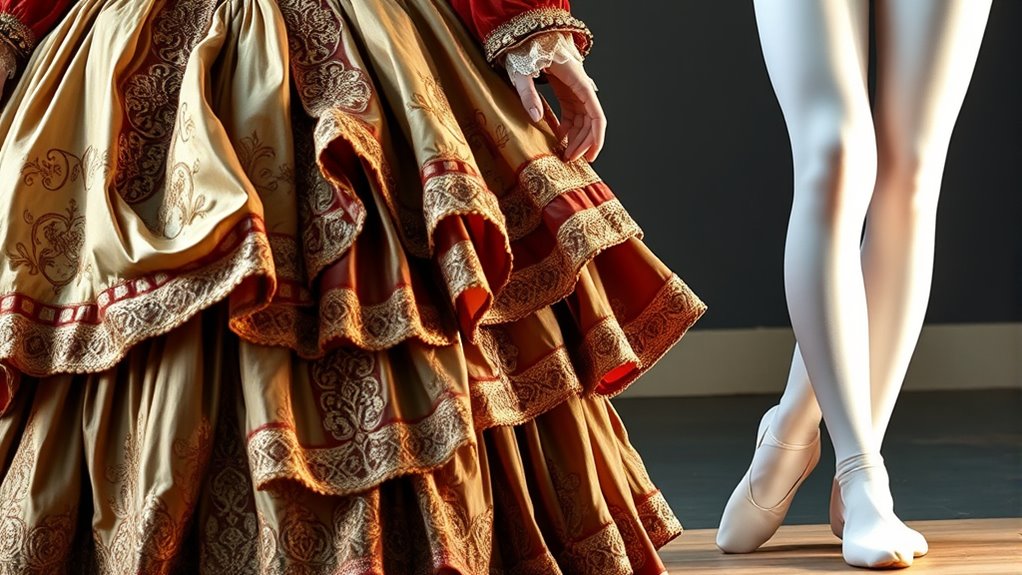
The origins of ballet costumes in the 14th century trace back to France and Italy, where ballet began as a form of court entertainment. During this period, performers wore traditional court attire, including stockings, elaborate garments, and masks, suited for royal balls and masquerades. Women’s costumes featured luxurious fabrics like silk, adorned with embellishments, and often included floor-length tunics that emphasized elegance. Men dressed in ornate uniforms, such as helmets and breastplates, reflecting the rigid gender roles of court dances. Movement was small and restrained, so costumes prioritized appearance over mobility. You’ll notice that these early costumes served to showcase status and wealth, rather than facilitate physical expression. Their ornate nature set the foundation for the evolving styles seen in later ballet eras. Additionally, the use of costume design began to incorporate more functional elements as dance movements became more expressive over time. As dance techniques advanced, costume designers started to focus on mobility and comfort, enabling dancers to perform more dynamic and expressive movements.
Costume Reforms During the Romantic Era
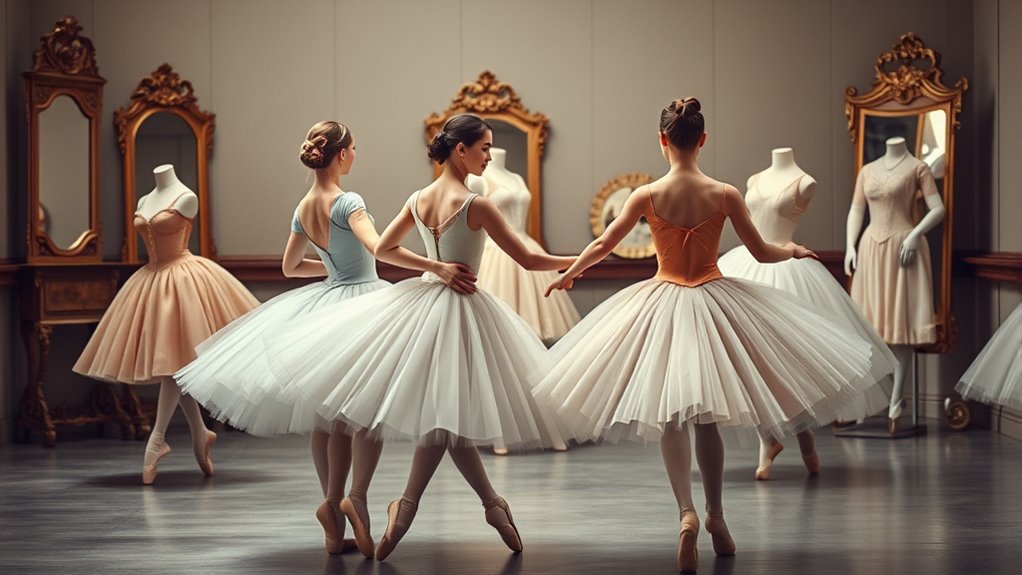
During the Romantic era, ballet costume design shifted dramatically to emphasize natural beauty and emotional expression. You notice a move away from ornate, restrictive garments toward lighter, more flowing attire that highlights the dancer’s form. This period champions the idea of the idealized, ethereal female ballerina, often draped in soft fabrics that evoke a sense of fantasy. You’ll see these costume reforms reflected in features like:
- Shorter skirts to reveal more of the leg and enhance movement
- Lighter fabrics like chiffon and tulles for a delicate, airy appearance
- Emphasis on natural waistlines instead of constrictive corsetry
- Minimal embellishments to focus on the dancer’s expressiveness
These changes allowed for greater freedom of movement and helped convey the emotional stories central to Romantic ballet.
The Advent of Pointe Shoes and the Rise of Tights
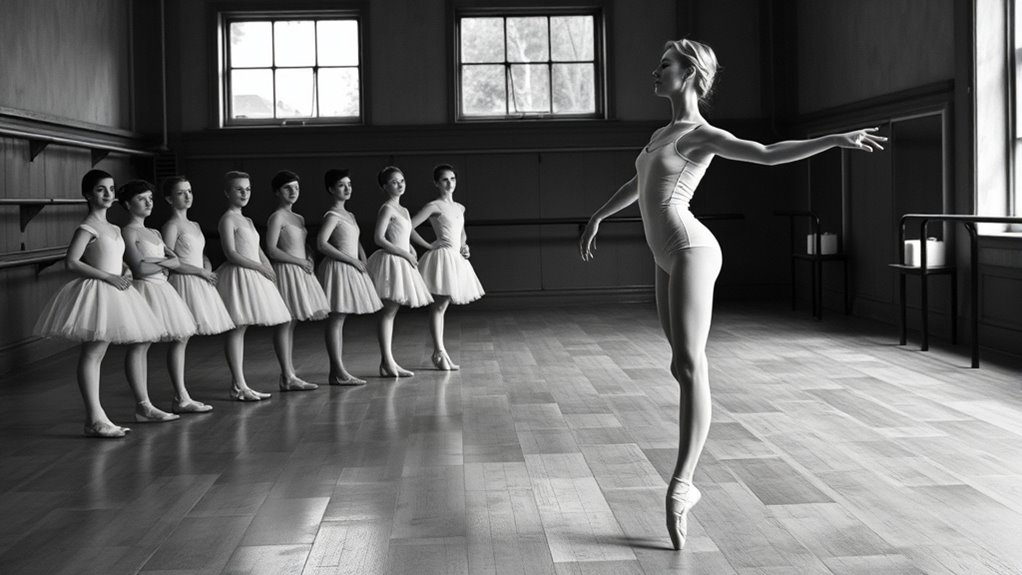
Around 1820, the invention of blocked-toe shoes revolutionized ballet by allowing women to perform on pointe, creating the illusion of weightlessness and ethereal grace. You now see dancers balancing effortlessly on the tips of their toes, showcasing technical skill and delicate elegance. Tights, initially developed by Maillot at the Paris Opera, gained popularity as they provided a smooth, close-fitting layer that enhanced the dancer’s lines. Early flesh-pink tights shocked audiences by mimicking bare skin, emphasizing the illusion of nude movement. Over time, pink tights became standard, matching the skin tones of many European dancers. This combination of pointe shoes and tights transformed ballet into a more expressive art form, emphasizing the dancer’s natural form and enabling new levels of technical virtuosity. The development of costume design also played a crucial role in highlighting the evolving aesthetics of ballet performance. Additionally, the emergence of performance attire standards helped unify the visual presentation of ballet, making costumes an integral part of storytelling and artistic expression. The use of fabric decorating markers in costume design further allowed for personalized and detailed embellishments, enhancing the visual impact of ballet costumes and facilitating costume customization for individual performances. Moreover, these costume innovations reflected broader trends in dream symbolism, emphasizing the importance of visual storytelling in the art form.
Development of the Romantic Tutu and Its Impact
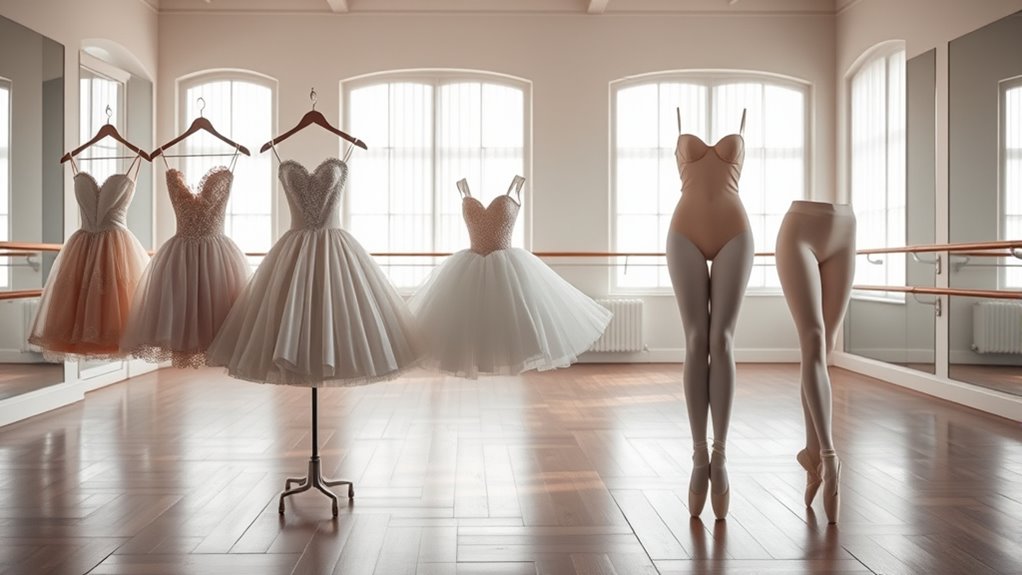
In 1832, Marie Taglioni introduced the Romantic tutu, marking a pivotal moment in ballet costume design. This shift emphasized lightness and ethereal beauty, transforming how audiences experienced dancers. The Romantic tutu’s features include:
- A delicate, multi-layered silhouette that reached midcalf, enhancing the illusion of floating
- Emphasis on femininity and romantic ideals, aligning with the era’s artistic themes
- Use of lightweight fabrics like tulle and muslin for a flowing, airy appearance
- A focus on revealing the leg to showcase pointe work and expressive movement
- Its design incorporated costume construction techniques that allowed for greater freedom of movement and expressive gesture, further elevating the art form. This evolution also reflected advancements in fabric technology, which enabled more innovative and comfortable costume designs.
This costume changed ballet’s visual language, encouraging more dramatic storytelling and emotional expression. Its design influenced future costume trends, making ballet costumes more expressive, while setting a standard for grace and ethereal elegance.
Transition to Modern Practice Wear in the 20th Century

In the 20th century, ballet shifted toward more practical and comfortable practice attire, moving away from elaborate costumes. The rise of leotards transformed rehearsal wear, offering dancers greater freedom of movement. This change reflected a focus on functionality and modern aesthetics in ballet training. Additionally, the adoption of functional clothing principles by dancers and choreographers contributed to a healthier approach to rigorous training schedules. Proper gear maintenance ensured that costumes remained durable and suitable for frequent use.
Shift to Practice Attire
As ballet evolved in the 20th century, performers began shifting away from elaborate costumes toward more practical attire that prioritized comfort and flexibility. This progression reflected changing artistic priorities and a desire for ease of movement. You’ll notice several key developments:
- Leotards gained popularity as flexible, form-fitting practice wear.
- Dancers moved toward simpler, streamlined clothing to focus on technique.
- Street-style influences led to the adoption of casual, comfortable rehearsal outfits.
- The emphasis on versatility prompted the decline of traditional tutus in practice settings.
- The use of functional and performance cookies in modern dance studios and costume production reflects the broader shift toward practicality and efficiency in the dance community.
- This movement toward comfort and simplicity also aligns with the principles of yoga, emphasizing mindful practice and unrestricted movement.
- The trend toward minimalism and functionality in costumes is also supported by advances in fabric technology, which enhance durability and comfort during performances. Additionally, innovations in stretch fabrics have allowed for greater freedom of movement and a more natural fit.
This shift made rehearsals more functional, allowing dancers to perform full range of motion without restriction. It also marked a cultural move toward inclusivity and practicality, setting the stage for the modern, diverse wardrobe choices seen today.
Rise of Leotards
The rise of leotards in the 20th century revolutionized ballet practice wear by offering dancers a sleek, flexible, and form-fitting alternative to traditional costumes. You’ll notice that leotards allow for greater freedom of movement, making it easier to execute complex jumps and turns. Named after the French acrobat Jules Léotard, these garments gained popularity in the 1960s, especially during rehearsals. Dancers moved away from layered skirts and elaborate tutus, favoring simplicity and functionality. High-waisted styles and stretch fabrics like lycra became standard, providing comfort and support. This shift helped emphasize the dancer’s technique and body lines, aligning with modern aesthetics. As a result, leotards became a symbol of contemporary ballet practice, blending practicality with a sleek, minimal look. Additionally, the adoption of genre conventions in design helped meet reader expectations for modern dancewear. The integration of AI-driven design tools in the manufacturing process has further optimized the development of these costumes, ensuring precision and innovation. Moreover, advancements in AI security have contributed to protecting intellectual property rights in the fashion and dancewear industries, fostering innovation while safeguarding designers’ creations. Furthermore, innovations in fabric technology have allowed for more breathable and durable materials, enhancing dancer performance and comfort. The ongoing research into performance-enhancing fabrics continues to push the boundaries of what dancewear can achieve.
Embracing Diversity: The Move Toward Inclusive Attire
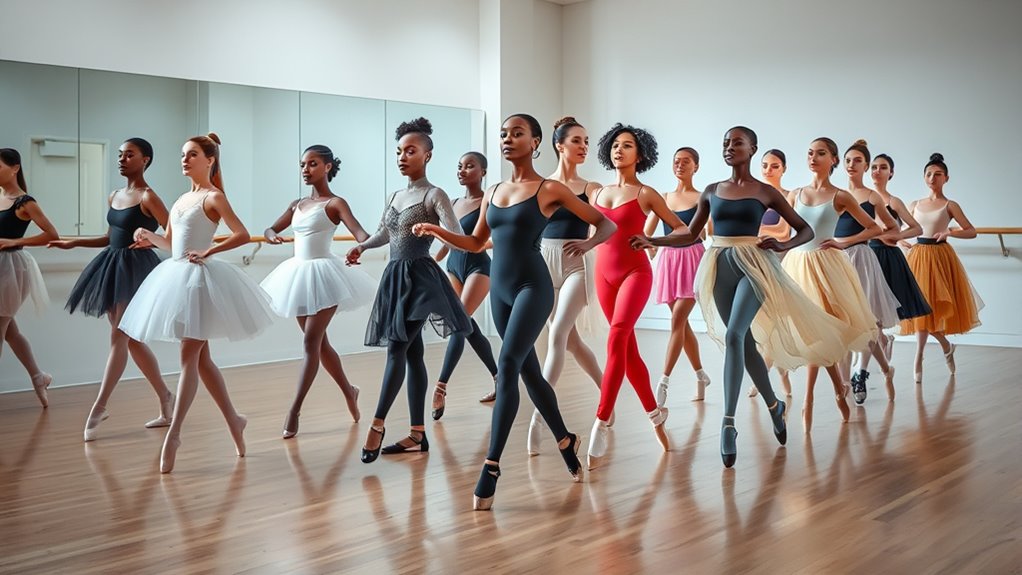
You can see how ballet costumes are shifting to better reflect the diversity of dancers today. By incorporating skin tone adaptations and celebrating different cultural backgrounds, companies are making the art form more inclusive. This movement toward inclusive design standards helps break down barriers and broadens the audience’s appreciation of ballet. As part of this evolution, designers are also exploring vetted materials to ensure comfort and flexibility for all dancers.
Skin Tone Adaptations
Have you ever noticed how traditional ballet tights primarily matched white European skin tones, often ignoring the diversity of dancers’ backgrounds? This limited color palette reinforced exclusion and made dancers with darker skin stand out awkwardly on stage. Today, many companies embrace skin tone adaptations, recognizing the importance of inclusivity. You’ll see:
- Tights available in multiple shades to match various skin tones
- Brands developing materials that blend seamlessly with darker skin
- Dancers advocating for custom options that honor their identities
- Performers feeling more confident and authentic in their roles
These changes help break down barriers, promote representation, and make ballet more welcoming for everyone. By matching tights to skin tones, the art form moves closer to celebrating diversity and fostering a truly inclusive stage environment.
Celebrating Cultural Diversity
Ever wondered how ballet is evolving to reflect the world’s rich cultural diversity? Today, companies embrace different cultural backgrounds by incorporating varied costumes that honor tradition and identity. This shift allows dancers to express their heritage authentically, enriching performances with meaningful symbolism. You’ll see costumes inspired by African, Asian, Latin American, and Indigenous cultures, blending traditional patterns, fabrics, and colors into modern ballet attire. Such inclusivity fosters a sense of pride and representation for dancers from diverse backgrounds. It also broadens audiences’ appreciation of global traditions, breaking down stereotypes. By celebrating cultural diversity through costume choices, ballet moves toward a more inclusive future, where every dancer’s identity is valued and visible on stage.
Inclusive Design Standards
As ballet continues to evolve, the industry is increasingly adopting inclusive design standards that prioritize diversity and representation. You’ll notice more companies offering attire in a range of shades to match different skin tones, breaking away from the traditional pink tights. This shift aims to:
- Celebrate dancers’ natural appearances and identities
- Promote equity by providing options for all skin colors
- Challenge Eurocentric beauty standards ingrained in ballet history
- Encourage dancers to feel confident and authentic on stage
Contemporary Trends and Innovations in Ballet Costuming
Contemporary ballet costuming reflects a dynamic blend of innovation, inclusivity, and practical functionality. You now see costumes designed with diverse skin tones, lightweight fabrics, and flexible materials that enhance movement. Technology influences design, with moisture-wicking fabrics and seamless construction improving comfort and stage presence. Bold color choices and experimental shapes challenge traditional aesthetics, inspiring creativity. Companies prioritize sustainable options, reducing environmental impact.
| Trend | Impact |
|---|---|
| Inclusive Colors | Embrace diversity, boost confidence |
| Tech-Integrated Fabrics | Enhance comfort, optimize performance |
| Experimental Shapes | Push artistic boundaries |
| Sustainable Materials | Promote eco-conscious practices |
Frequently Asked Questions
When Did Colored Tights First Become Popular in Ballet?
Colored tights first gained popularity in ballet during the 1970s when Dance Theatre of Harlem introduced flesh-tone tights and shoes to match dancers’ skin colors. You’ll notice this shift was driven by dancers like Llanchie Stevenson, who wanted more natural-looking costumes. Since then, many ballet companies have expanded their options, offering tights in various shades to better reflect diverse skin tones, making performances more inclusive and visually cohesive.
How Did Tights Influence the Physicality of Ballet Performances?
Tights transformed ballet by allowing dancers to move more freely and comfortably. You can perform greater extensions, jumps, and turns without restrictions, enhancing your physical expression. They provide a close fit that reveals muscle tone and alignment, helping both dancers and choreographers perfect technique. With tights, your movements appear smoother and more precise, enabling you to push your physical limits and bring more energy and clarity to your performance.
What Materials Are Commonly Used in Contemporary Ballet Tights?
Contemporary ballet tights are commonly made from materials like nylon, Lycra, spandex, or a blend of these fabrics. These materials provide stretch, durability, and a snug fit, allowing you to move freely and perform with ease. You might also find tights in various shades, including flesh tones and other colors, to match different skin tones and aesthetic preferences. The choice of material enhances comfort, flexibility, and the overall visual effect on stage.
How Do Different Skin Tones Impact Ballet Costume Choices Today?
Imagine your skin as a canvas, vibrant and unique. Today, ballet costume choices embrace this diversity, with tights available in a rainbow of shades that match various skin tones. You can select hues that blend seamlessly or stand out boldly. This inclusivity enhances your performance, making you feel confident and authentic. No longer one-size-fits-all, your costume now celebrates your individuality and the beauty of all skin colors.
Are There Cultural Differences in Ballet Costume Evolution Worldwide?
You’ll notice that ballet costume evolution varies worldwide due to cultural influences. In Western countries, traditions emphasize specific styles like tutus and pink tights, while other cultures incorporate local fabrics and colors. Some companies prioritize inclusivity by offering diverse skin-tone tights. You might see different interpretations of ballet attire reflecting cultural values, history, and societal norms, making the costumes a rich tapestry of global artistic expression.
Conclusion
As you watch ballet evolve, you see costumes transform like a chameleon in a vibrant jungle, blending tradition with innovation. Tights, once a simple necessity, have become a symbol of elegance and versatility. Embracing diversity and modern trends, ballet costumes now reflect a rich tapestry of culture and creativity. So, next time you see a dancer glide across the stage, remember that their attire tells a story as dynamic as their performance itself.