To make your home dance practice more structured, use tools like mirrors for real-time feedback and a timer to stay disciplined. Clear your space of clutter and set up sound systems and accessories to create an inspiring environment. Keep a practice journal or app to track your progress and goals, helping you stay motivated. Combining improvisation with technique drills and an organized space will boost your focus and growth—stay tuned to learn more ways to refine your routine.

Get your wardrobe favorites delivered free with Prime
- Fast, free delivery on millions of items
- Prime Video, Amazon Music and more included
- Member-only deals all year
Key Takeaways
- Use mirrors for real-time feedback to improve form and maintain focus during practice.
- Implement a structured schedule with timers to ensure disciplined, goal-oriented sessions.
- Maintain an organized, clutter-free environment to minimize distractions and promote consistency.
- Track progress and set goals using journals or apps to foster motivation and clarity.
- Incorporate designated improvisation and technique drills to create a balanced, purposeful practice routine.

Ever wonder how you can make the most of your practice sessions without leaving home? The key lies in using the right tools to create a structured environment that fuels your growth as a dancer. One of the most effective ways to keep practice engaging and productive is by incorporating tools that encourage creative improvisation. For example, setting aside a specific time to experiment freely with movements helps access your creativity and develop your unique style. These improvisation sessions can be guided by prompts or music, but the goal is to let your instincts lead. This not only keeps practice fresh and exciting but also boosts your ability to respond spontaneously, which is essential during live performances.
Unlock your creativity with spontaneous improvisation to enhance your dance skills and develop your unique style.
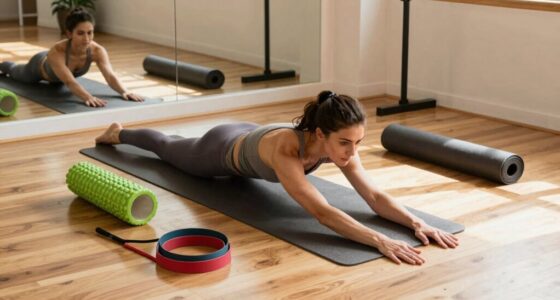
Alongside improvisation, focusing on technique refinement is crucial. Having access to mirrors, for instance, allows you to observe your form and make immediate adjustments. A full-length mirror placed strategically in your space offers real-time feedback, helping you identify areas for improvement without needing an instructor present. Coupling this with a timer or a structured schedule guarantees you stay disciplined and cover all necessary aspects of your technique, from balance to alignment. Additionally, using online tutorials or video recordings of professional dancers can serve as visual aids, giving you detailed insights into proper execution and helping you mimic refined movements.
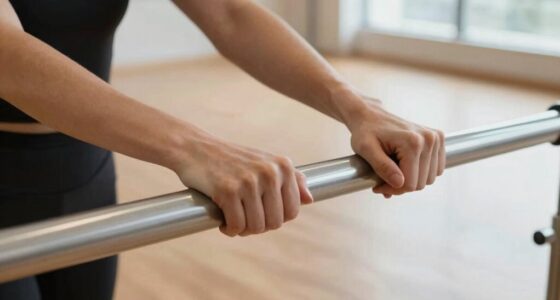
Another essential tool is a dedicated practice space that minimizes distractions. Clear the area of clutter, set up your sound system, and affirm your flooring is suitable for movement. When your environment is organized, you can focus entirely on your craft, making each session more effective. Incorporate small accessories like resistance bands, foam rollers, or ballet barres if space permits, as these tools help deepen your practice and target specific muscles or techniques. Recognizing the importance of biodiversity in creating a sustainable environment underscores how a well-organized, balanced space can enhance your practice and well-being. Creating a structured environment can also help establish a routine that makes your practice more consistent and goal-oriented. Establishing a routine is further supported by understanding the importance of consistency, which helps reinforce progress and builds discipline over time.
To add more structure, consider using a practice journal or app to track your progress. Record what you work on each day, note improvements, and set goals. This creates a sense of accountability and helps you stay motivated over time. Incorporating environmental organization into your setup can reduce distractions and promote a more mindful practice. Combining creative improvisation with targeted technique refinement, supported by the right tools, transforms your home practice into a dynamic, disciplined routine. With consistency and the right tools, you’ll find yourself progressing faster, feeling more confident, and truly enjoying each session. The secret is in making your environment conducive to focused, intentional practice—so every day becomes an opportunity to grow as a dancer, right from your own space.
Popular right now

Vitamix VX1 Professional-Grade Blender, 64 oz, Black

Dyson Cyclone V10 Origin Cordless Vacuum

Hisense 43-Inch E6 Cinema Series Hi-QLED 4K UHD Smart Fire TV (43E6QF)
As an affiliate, we earn on qualifying purchases.
Frequently Asked Questions
How Can I Stay Motivated to Practice at Home Consistently?
To stay motivated for consistent practice at home, focus on boosting your mental motivation by setting clear, achievable goals. Create a dedicated practice space and stick to a schedule, making it part of your routine. Celebrate small progress to keep your spirits high. Remember, practice consistency builds confidence and skill, so stay patient and persistent. Keep your passion alive by visualizing your dance goals and reminding yourself why you started.
What Are the Best Affordable Tools for Home Dance Practice?
You should invest in a portable dance floor and a good mirror to improve your home practice. A dance floor provides a safe, cushioned surface, while strategic mirror placement helps you monitor your movements and improve technique. Both tools are affordable and make your practice more effective and engaging. With these, you’ll stay motivated, see progress faster, and enjoy your dance sessions more consistently.
How Do I Track My Progress Effectively During Practice?
Think of your progress journal as a mirror reflecting your growth, and technique recordings as footprints marking your journey. You keep a progress journal, noting improvements and challenges, to see your evolution over time. Recording specific techniques helps you identify areas of strength and those needing focus. By regularly reviewing these, you stay motivated, recognize patterns, and guarantee your dance practice stays purposeful and aligned with your goals.
Can Home Practice Tools Improve My Dance Performance Quickly?
Yes, home practice tools can improve your dance performance quickly. They help you focus on dance technique and muscle strengthening, essential for better control and flexibility. By consistently using tools like mirrors, resistance bands, or online tutorials, you reinforce proper movements and build strength. This targeted approach accelerates progress, boosts confidence, and makes your practice more effective, leading to noticeable improvements in your dance skills in less time.
What Safety Precautions Should I Take While Practicing at Home?
To guarantee dance safety and injury prevention at home, always warm up thoroughly before practicing. Clear your space to avoid tripping hazards, and wear proper footwear or go barefoot if needed. Listen to your body, taking breaks when necessary, and avoid pushing through pain. Keep your practice area well-lit and ventilated. Following these safety precautions helps protect you from injury and promotes healthy, sustainable dance progress.
Conclusion
With the right tools, your dance practice becomes both a sanctuary and a studio, blending the comfort of home with the discipline of a classroom. It’s like having a personal coach guiding you through every step, even when the music stops. While the world outside may be unpredictable, your dedication to dance remains steady, transforming your home into a space where passion and structure dance hand in hand. Keep practicing—you’re creating your own rhythm, wherever you are.