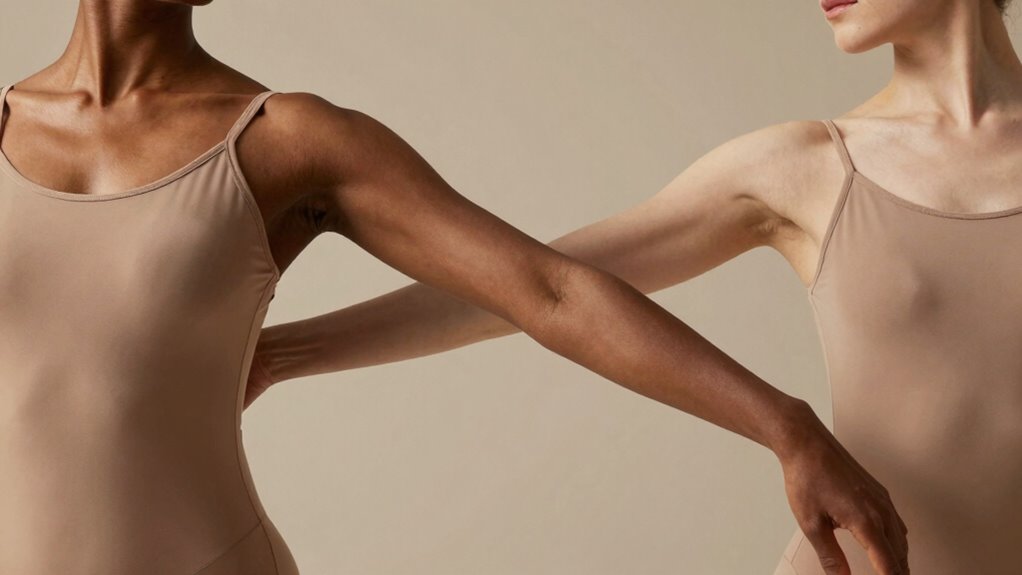

Matching dancewear to your skin tone is essential for a sleek, cohesive look on stage. It helps you create a polished appearance that minimizes distractions and highlights your movements. When your costume complements your skin, it enhances your natural glow and guarantees your stage presence is powerful. Lighting can affect how colors appear, making intentional choices even more important. Keep exploring to discover how thoughtful color selection can elevate your performance and overall style.

Get your wardrobe favorites delivered free with Prime
- Fast, free delivery on millions of items
- Prime Video, Amazon Music and more included
- Member-only deals all year
Key Takeaways
- Skin-tone matching creates a cohesive, polished appearance that enhances stage presence and visual harmony.
- It minimizes distractions, allowing dancers’ movements to stand out more effectively.
- Proper color choices complement natural features, boosting confidence and overall aesthetic appeal.
- Matching skin tones with costume colors helps achieve a sleek, elongated silhouette on stage.
- Consideration of lighting conditions ensures costume colors remain flattering and true under stage illumination.
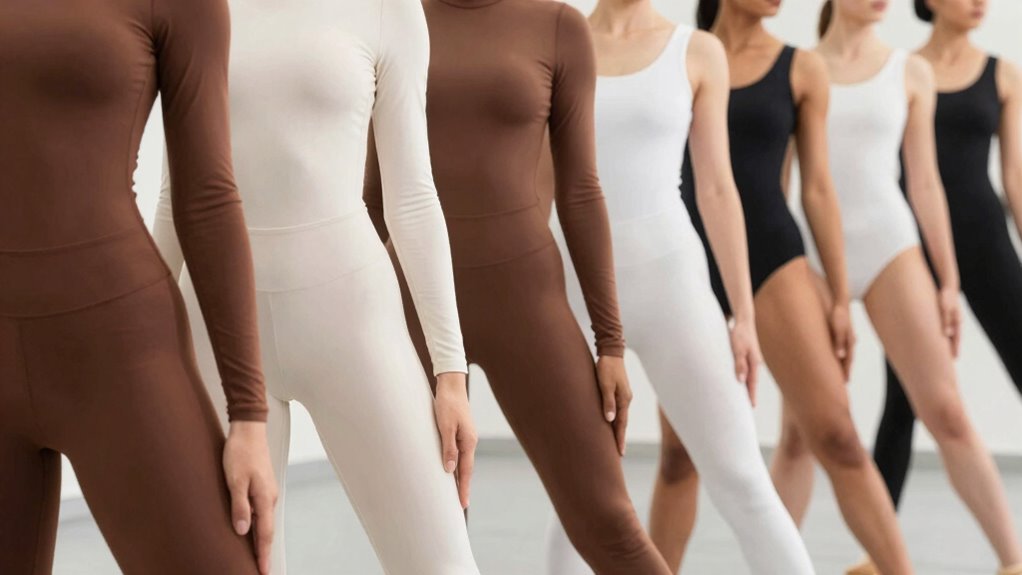
Matching dancewear to your skin tone isn’t just about aesthetics—it’s about creating a seamless, polished look that boosts your confidence on stage. When you consider dance costume design, the goal is to make your movements stand out without any distractions from your attire. The right fabric color selection plays an essential role in achieving this. If your costume complements your skin tone, it blends smoothly, allowing your performance to take center stage rather than your clothing. This harmony between your skin and your dancewear highlights your lines and enhances the overall visual impact.
Choosing colors that match or complement your skin tone can make your movements appear more fluid and natural. For example, if you have a warm undertone, earthy shades like terracotta, caramel, or warm beige tend to enhance your natural glow. Conversely, if you have a cool undertone, jewel tones such as sapphire, emerald, or cool grays often work best. When selecting fabric colors, it’s vital to think about how they interact with your complexion, not just how they look in isolation. This thoughtful approach to fabric color selection ensures your costume complements your unique features rather than competing with them. Additionally, understanding the importance of fabric choices in relation to your skin tone can help you make more informed decisions that elevate your overall look. Recognizing the impact of color harmony can further enhance your costume’s effectiveness and your stage presence.
Furthermore, matching your costume to your skin tone can enhance your stage presence by creating a cohesive look that draws attention to your performance. When you pick the right fabric color, you also help define the mood and style of your dance. A color that matches your skin tone can create a sleek, monochromatic effect that elongates your silhouette. It can also make your costume appear more sophisticated and cohesive. On the other hand, contrasting colors can make your movements pop but require careful consideration to avoid clashing or looking overly busy. Ultimately, your choice should serve your performance, highlighting your strengths and making you feel comfortable and confident. Considering lighting conditions during your performance can also influence how your costume colors appear on stage, further emphasizing the importance of color harmony.
Popular right now

Samsung 42-Inch S90H OLED 4K Smart TV Bundle

Roborock RockNeo Q110H Wire-Free Robot Lawn Mower

KitchenAid Artisan 5-Quart Tilt-Head Stand Mixer, Almond Cream
As an affiliate, we earn on qualifying purchases.
Frequently Asked Questions
How Do I Determine My Exact Skin Tone for Dancewear?
To determine your exact skin tone for dancewear, start by observing how your skin blends with different colors in natural light. Test various shades with small fabric swatches against your skin to see which ones blend seamlessly. Focus on fabric selection that complements your undertones, whether cool or warm. This process guarantees color blending that enhances your overall look, making your dancewear both comfortable and visually harmonious.
Are There Cultural Considerations in Skin-Tone Matching?
Imagine a vibrant tapestry woven with threads of cultural diversity. Yes, there are cultural considerations in skin-tone matching, as it honors your unique background and promotes authentic representation. Wearing dancewear that respects your skin tone isn’t just about aesthetics; it’s about celebrating identity and fostering inclusion. When brands recognize the importance of representation, they create a richer, more inclusive dance community where everyone feels seen and valued.
Can Skin-Tone Matching Improve Dance Performance?
Yes, skin-tone matching can improve your dance performance by enhancing your overall presence on stage. When your costume blends seamlessly with your skin, color perception under various lighting effects becomes more natural, reducing distractions. This consistency helps you focus more on your technique and expression, rather than worrying about contrasting tones. Proper skin-tone matching guarantees your movements appear fluid and cohesive, boosting your confidence and allowing your artistry to shine through.
What Materials Are Best for Skin-Tone Matching Dancewear?
Did you know that over 60% of dancers prefer skin-tone matching dancewear for seamless color coordination? The best materials for this are stretchy, breathable fabrics like spandex, nylon, or microfiber blends. These materials hug your skin comfortably, blend well with your tone, and allow for ease of movement. When selecting fabric, prioritize those that match your skin tone closely while offering durability and moisture-wicking properties for ideal performance.
How Do I Care for and Maintain Skin-Tone Matched Dance Clothing?
To care for your skin-tone matched dance clothing, wash them gently with mild detergent to preserve color blending. Always follow the manufacturer’s fabric selection guidelines, avoiding harsh chemicals or high heat that can damage delicate fabrics. Store your pieces properly, folding them carefully to prevent color fading or stretching. Regularly inspect for signs of wear, and if needed, get minor repairs to maintain their seamless, natural look during performances.
Conclusion
Matching your dancewear to your skin tone might seem like a small detail, but it truly enhances your confidence and stage presence. Some might think it’s unnecessary or fancy, but it’s about feeling comfortable and authentic on stage. When your outfit seamlessly blends with your skin, your movements look cleaner, and your performance shines. Don’t overlook this simple step—embrace skin-tone matching to elevate your dance experience and truly express yourself.