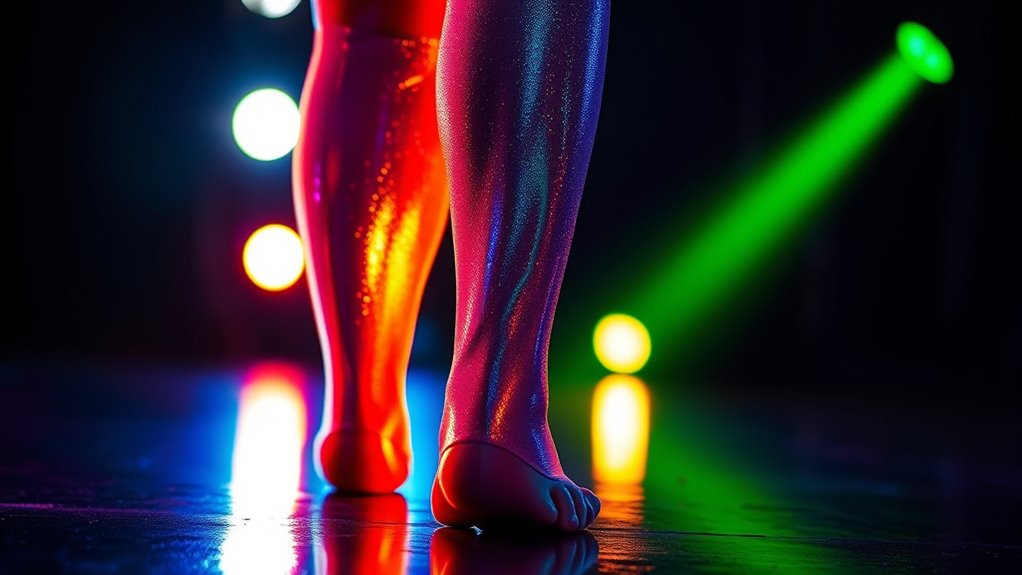

Under LED stage lighting, tights’ colors can appear different depending on their fabric and hue. Bright and saturated shades like reds and blues become more vivid, while whites may look pink or muted under red lights and cooler or duller under blues. Matte tights soften colors, while shiny fabrics reflect light for striking effects. To get the best visual impact, consider how your tights will interact with various LED colors—you’ll find more tips if you keep exploring.

Get your wardrobe favorites delivered free with Prime
- Fast, free delivery on millions of items
- Prime Video, Amazon Music and more included
- Member-only deals all year
Key Takeaways
- Tights’ colors can appear altered or muted under LED lights due to light reflection and absorption.
- Bright, saturated tights enhance visibility, while matte finishes soften colors under stage LEDs.
- Red LED lighting can make white tights look pinkish, blue lighting can create cooler tones.
- Shiny tights reflect more light, intensifying colors; matte tights absorb light for subdued effects.
- Testing tights under actual stage lighting helps determine how colors will read to the audience.

Have you ever wondered how performers look so flawless under stage lights? It’s all about how the colors from the lighting interact with your tights and costumes. When you step onto the stage, the way your tights reflect and absorb light can dramatically change based on the colors and brightness of the LEDs shining down. Stage lighting isn’t just about visibility; it’s about creating a mood, emphasizing movement, and making sure every detail pops. But the colors you wear, especially tights, play an essential role in how everything appears to the audience.
Stage lighting transforms how tights look, emphasizing mood and movement through color and brightness.
Different LED lights can cast a wide range of colors—reds, blues, greens, purples—and each of these can alter the way your tights look. For example, if you wear white tights under red stage lights, they might appear more pinkish or muted, while under blue lights, they could seem cooler or more subdued. This effect isn’t just aesthetic; it influences how your movements are perceived. Bright, saturated colors can make your legs stand out more vividly, while darker or matte tights absorb light, giving a more understated look. Understanding how these interactions work helps you choose the right tights for your performance, ensuring your look aligns with the mood or theme.
The type of fabric your tights are made from also affects how colors read under LEDs. Shiny, satin-like tights tend to reflect more light, making colors appear brighter and more intense, while matte tights absorb light, softening the color’s impact. If you’re performing under a variety of lighting schemes, selecting tights with a finish that complements your act can make a big difference. For instance, glossy tights work well under intense, colorful LEDs because they reflect light beautifully, creating a striking visual. Conversely, matte tights help create a more muted, mysterious vibe when the lighting is softer or more subdued.
Another factor to contemplate is how your skin tone interacts with these colors. Bright or contrasting tights can make your legs pop against your skin, but if the color clashes or is too close to your skin tone, it might wash you out or make your limbs less defined. When choosing tights for stage, think about how the color will read from a distance and under different lighting conditions. Testing your costume under the actual lighting setup before the performance can help you see how everything looks in real time, allowing adjustments if needed.
Ultimately, understanding how stage lighting affects the appearance of tights empowers you to make smarter costume choices. When you pick the right color, fabric, and finish, you enhance your performance’s visual impact, ensuring you look flawless under those dazzling LED lights. Being aware of how lighting conditions influence color perception can help you select tights that truly shine on stage.
As an affiliate, we earn on qualifying purchases.
Frequently Asked Questions
How Do Different Fabric Materials Affect Color Visibility Under LEDS?
Different fabric materials considerably affect color visibility under LEDs. Smooth, reflective fabrics like spandex or satin enhance color brightness and clarity because they reflect light more effectively. matte or textured fabrics, such as cotton or velvet, tend to absorb light, dulling colors and making them less vibrant. You should choose fabrics with good reflective qualities for brighter, more vivid colors under LED lighting, especially for stage performances.
Can Stage Lighting Cause Tights to Fade or Degrade Over Time?
A stitch in time saves nine, and the same applies to your tights under stage lighting. Yes, prolonged exposure to intense LEDs can cause tights to fade or degrade over time, especially if they’re made from delicate fabrics. To preserve them, limit their exposure to harsh lights, use appropriate lighting settings, and opt for durable materials. This way, you keep your costume looking fresh longer.
What Are the Best Lighting Techniques to Enhance Costume Color Accuracy?
You should use full-spectrum LED lights or those with high color rendering index (CRI) ratings to enhance costume color accuracy. Position your lights at ideal angles to minimize color distortion and avoid overly harsh or uneven lighting. Incorporate dimming and color correction gels when needed, and regularly test under your specific setup. This approach guarantees your costume colors appear vibrant, true-to-life, and consistent on stage.
How Do LED Color Temperatures Influence Tights’ Appearance?
LED color temperatures markedly influence how tights appear on stage. Higher temperatures (cooler, bluish light) can make tights look more muted or washed out, while lower temperatures (warmer, yellowish light) enhance their richness and vibrancy. You should match the LED temperature to the costume’s palette, ensuring the tights’ true color reads clearly. Adjusting the color temperature helps you achieve accurate and visually appealing results for your performance.
Are There Specific Tights Designed for Optimal Visibility Under LED Lighting?
Think of tights as chameleons, shifting with the light they encounter. Yes, there are tights designed specifically for LED lighting, often made with high-visibility or reflective materials. These special tights amplify under LED beams, ensuring you stay visible and vibrant on stage. Opt for tights with reflective fibers or bright, luminous dyes—they’re your best allies in making sure your costume pops under those dynamic LED hues.
As an affiliate, we earn on qualifying purchases.
Conclusion
Now that you understand how LED lighting interacts with tights and skin tones, you can make smarter choices for your stage look. Have you ever wondered why certain colors seem off under different lights? Remember, testing your lighting setup beforehand can save you from surprises during the performance. By paying attention to color nuances, you’ll guarantee your costume and tights look flawless under any LED setting, leaving your audience captivated and your performance seamless.
matte stage tights for performance
As an affiliate, we earn on qualifying purchases.
As an affiliate, we earn on qualifying purchases.
As an affiliate, we earn on qualifying purchases.
Halloween Picks
halloween
As an affiliate, we earn on qualifying purchases.