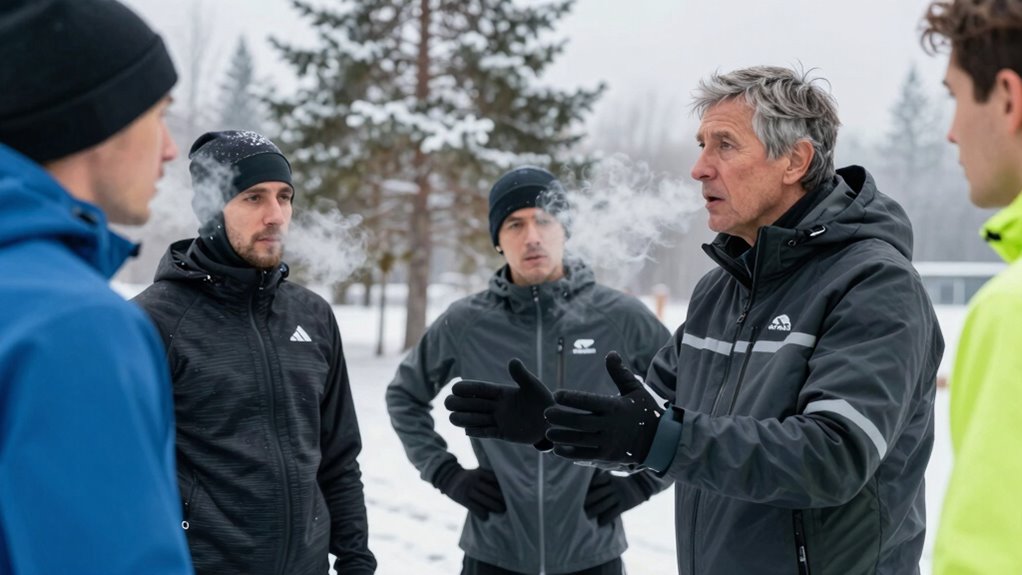

Sports coaches advise you to layer properly for cold training by starting with a moisture-wicking base layer to stay dry and warm. Add an insulating middle layer, like fleece, to keep your body heat in, and finish with a breathable outer shell to protect against wind, rain, or snow. Adjust your layers as your activity level changes, and listen to your body signs. Keep exploring to discover more tips on staying safe and effective during cold workouts.

Get your wardrobe favorites delivered free with Prime
- Fast, free delivery on millions of items
- Prime Video, Amazon Music and more included
- Member-only deals all year
Key Takeaways
- Use moisture-wicking base layers to keep skin dry and prevent chills during cold training.
- Add insulating middle layers like fleece or lightweight down for warmth without bulk.
- Wear a breathable outer shell to shield from wind, rain, or snow while allowing moisture escape.
- Adjust layers gradually based on activity intensity and weather conditions to avoid overheating or cold exposure.
- Remove or add layers as needed to maintain comfort and prevent moisture buildup or restriction.
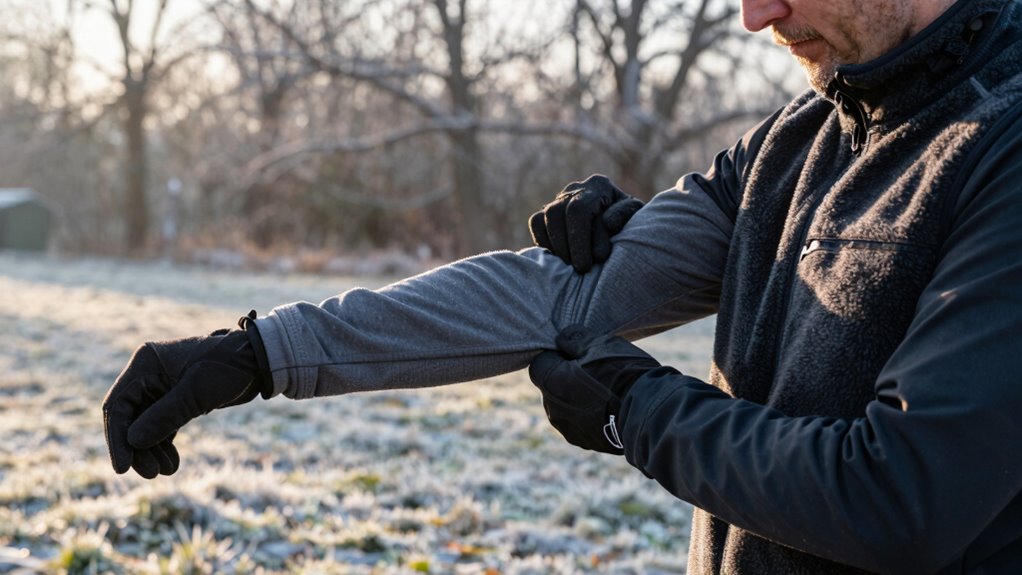
Have you ever wondered how top sports coaches stay warm and comfortable during training and games in cold weather? It all comes down to smart layering and knowing how to adapt to the conditions. Coaches emphasize that proper layering isn’t just about staying warm; it’s also about maintaining performance and safety. One of the key points they stress is that layering should be flexible. You want a base layer that wicks moisture away from your skin, preventing chills and keeping you dry. A good base layer, made of synthetic or merino wool materials, helps you stay warm without overheating as you start to sweat. Over that, coaches recommend a middle layer that provides insulation—think fleece or a lightweight down jacket—that traps your body heat. Finally, an outer shell should shield you from wind, rain, or snow, ideally being breathable to prevent overheating and moisture buildup.
Coaches also highlight that staying hydrated is vital, even in cold weather. Many athletes mistakenly believe they don’t need as much water when it’s cold, but dehydration can impair performance and increase injury risk. Consequently, your hydration strategies should include regular sips of warm fluids if possible, or at least water and electrolyte drinks to replenish lost minerals. Proper hydration helps regulate your body temperature, making it easier to stay warm and preventing injuries caused by muscle cramps or fatigue. When layering, make sure your clothing doesn’t restrict movement or blood flow, as tight clothing can cause discomfort and increase injury risk. Comfortable, well-fitted layers allow free movement, helping you stay agile and reducing strain on your muscles and joints. Additionally, choosing moisture-wicking fabrics can significantly improve your comfort and athletic performance in cold conditions. Understanding how clothing materials respond to different weather conditions can help you make better choices for layering and avoid the pitfalls of improper gear. Proper layering also involves selecting the right insulation materials to keep you warm without adding unnecessary bulk. Athletes should also consider the breathability of clothing to manage sweat and moisture efficiently. Injury prevention also ties into your layering choices. Wearing too many bulky layers can restrict your range of motion, leading to awkward movements that might cause strains or sprains. Conversely, inadequate insulation can leave you exposed to extreme cold, risking frostbite or hypothermia. Coaches advise gradually adjusting your layers based on activity level and weather conditions. If you start to sweat, remove a layer to prevent moisture from cooling your body too quickly, which can cause chills and increase injury risk. It’s also essential to incorporate proper clothing materials that facilitate moisture management and breathability. Always pay attention to your body signals—shivering, numbness, or discomfort are signs you need to re-layer or seek warmth.
moisture-wicking base layer for cold weather
As an affiliate, we earn on qualifying purchases.
As an affiliate, we earn on qualifying purchases.
Frequently Asked Questions
How Do I Adjust Layering for Unexpected Weather Changes?
When unexpected weather changes occur, you should quickly adjust your layers using effective layer adjustment strategies. Add an insulating layer if it gets colder or remove a layer if it warms up. Carry lightweight, quick-drying clothing to adapt on the go. Focus on maintaining core warmth and protecting extremities. Staying flexible with your layering guarantees you stay comfortable and safe, no matter the weather surprises.
What Materials Are Best for Moisture-Wicking Layers?
You should choose fabrics with advanced technology like polyester or nylon for moisture-wicking layers, as they efficiently pull sweat away from your skin. Look for materials with fabric technology designed for quick drying and durability. Thermal insulation properties are less critical in moisture-wicking layers but guarantee the fabric maintains breathability. This way, you’ll stay dry and comfortable, preventing chills and maximizing your performance during cold-weather training.
How Can I Prevent Overheating During Intense Cold Workouts?
To prevent overheating during intense cold workouts, focus on adjusting your layers. Use clothing with thermal insulation that wicks moisture away and allows temperature regulation. Incorporate wind-resistant outer layers to block chilly gusts, which helps maintain core warmth without overheating. Remove or unzip layers as your intensity increases, and stay attentive to your body’s signals. Proper layering guarantees you stay warm enough without sweating excessively, optimizing comfort and performance.
What’s the Ideal Number of Layers for Extreme Cold?
Think of layering like building a snowman: your base layer is the snow’s core, keeping moisture away, while insulation layers add fluff to trap warmth. For extreme cold, aim for two to three layers—start with a moisture-wicking base, add an insulating layer like fleece, and top with a windproof shell. This combo keeps your body warm without overheating during intense workouts, just like a well-built snowman stays sturdy in winter.
How Often Should I Replace Worn-Out Cold-Weather Gear?
You should replace worn-out cold-weather gear, especially your base layer and insulation layer, whenever they show signs of damage, thinning, or loss of insulation. Worn-out base layers lose moisture-wicking ability, while insulation layers become less effective, increasing cold risk. Regularly inspect your gear before each use, and if you notice tears, thinning fabric, or diminished warmth, it’s time for new gear to guarantee maximum performance and warmth during cold training.
insulating fleece mid-layer for outdoor training
As an affiliate, we earn on qualifying purchases.
As an affiliate, we earn on qualifying purchases.
Conclusion
Remember, layering properly keeps you warm and focused during cold training sessions. Coaches recommend a moisture-wicking base, an insulating middle layer, and a waterproof outer shell. Did you know that athletes who dress appropriately for cold weather reduce their risk of hypothermia by over 50%? So, gear up correctly, listen to your coach’s advice, and stay safe out there. Staying warm isn’t just comfort — it’s your secret weapon for peak performance in winter workouts.
breathable waterproof outer shell jacket
As an affiliate, we earn on qualifying purchases.
As an affiliate, we earn on qualifying purchases.
cold weather athletic hydration gear
As an affiliate, we earn on qualifying purchases.
As an affiliate, we earn on qualifying purchases.
Fall Picks
fall essentials
As an affiliate, we earn on qualifying purchases.