To make tights truly run-resistant, the key is in choosing high-quality, strong fibers like nylon that resist snags and tears. Manufacturers also use innovative weaving techniques, such as reinforced lace patterns and denser stitch work, to distribute stress and prevent runs. Chemical treatments further boost durability by cross-linking fibers and adding protective finishes. Proper care, including gentle handling and washing, helps maintain this resilience. Keep exploring to discover even more ways to keep your tights lasting longer.
Key Takeaways
- Using high tensile strength fibers like nylon enhances yarn and fabric durability against snags.
- Implementing reinforced knitting patterns and dense stitch techniques distribute stress evenly, reducing runs.
- Applying chemical finishes and cross-linking agents strengthen fibers and improve resistance to unraveling.
- Reinforcing vulnerable areas and blending fibers increase overall tights’ resilience to damage.
- Proper care, including gentle washing and careful handling, extends run-resistant properties and overall longevity.
The Role of Fiber Selection in Durability

Choosing the right fibers is essential when it comes to making tights that resist runs. Fiber strength directly impacts how well the tights hold up under stress, preventing snags and tears. Stronger fibers enhance yarn durability, meaning the fabric can withstand stretching, pulling, and everyday wear without quickly deteriorating. When selecting fibers, look for those with high tensile strength, such as nylon or certain blends that reinforce the fabric’s resilience. These fibers help maintain the tights’ shape and integrity, even after multiple wears. Proper fiber selection also involves considering the type of fiber treatment applied, which can further improve the durability of the tights. Poor-quality fibers may be cheaper but often result in weaker yarns that snag easily or develop runs quickly. By prioritizing fiber strength and yarn durability, you ensure your tights last longer and perform better, keeping you comfortable and confident.
Innovative Weaving and Knitting Techniques for Strength

Once you’ve selected strong, durable fibers, the way they are woven or knitted plays a significant role in enhancing tights’ resilience. Innovative weaving techniques, like reinforced lace patterns, distribute stress more evenly, reducing the risk of runs. Knitting methods such as flatlock or flat seams add extra strength at vulnerable points, preventing tears. These techniques also influence how tights handle color fading; tightly knit fabrics retain dye longer, maintaining vibrant hues. Incorporating specialized stitch patterns creates a denser, more resistant fabric that withstands daily wear. These advanced techniques are often used in WWE Raw’s financial impact to enhance overall durability and longevity. By choosing advanced weaving and knitting methods, you improve overall durability and extend the lifespan of your tights, making them less prone to snags and runs while keeping their color bright for longer.
Chemical Treatments and Finishes That Enhance Resistance
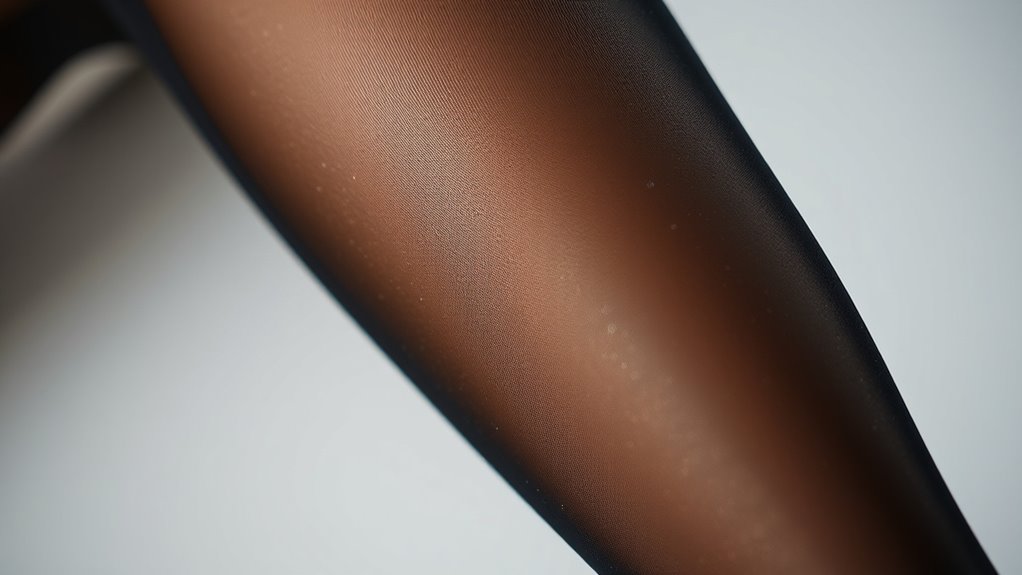
Chemical treatments and finishes play a essential role in making tights more resistant to runs and snags. During dyeing processes, special finishes are applied to improve durability and reduce fiber breakage, which helps prevent snags from turning into runs. These treatments often involve cross-linking agents that strengthen the fibers and make them less prone to unraveling. Additionally, the elastic content in your tights benefits from chemical finishes that enhance stretch retention while maintaining strength. By treating fibers with specific finishes, manufacturers can improve resistance to snagging without sacrificing comfort or elasticity. These chemical processes create a protective barrier on the fibers, ensuring your tights stay intact longer and resist the common causes of runs and snags more effectively. Moreover, implementing robust safety measures during manufacturing can help detect and mitigate vulnerabilities that might lead to quality issues or failures over time.
Common Causes of Runs and How They Are Addressed
Runs in tights often result from contact with rough surfaces, sharp objects, or excessive stretching, which can cause fibers to snag or break. Fashion trends influence how tights are designed, but manufacturing standards are key to minimizing runs. Higher-quality tights use stronger fibers and tighter knit constructions that resist snagging. For example, some brands incorporate reinforced areas or blended fibers to improve durability. When you wear tights in trendy fabrics or styles, be mindful of sharp jewelry, rough textures, or rough surfaces that can cause damage. Manufacturers also address common causes of runs by adhering to strict manufacturing standards, ensuring consistent quality and fiber strength. Additionally, fiber reinforcement techniques are employed to further enhance the durability of tights. By understanding these causes and standards, you can better avoid runs and choose tights that last longer.
Tips for Caring for Run-Resistant Tights to Maximize Longevity
To make your run-resistant tights last longer, you should handle them with care during both wearing and washing. Always wash them in cold or lukewarm water to prevent color fading and preserve their vibrant look. Use a gentle cycle and avoid harsh detergents, which can weaken the fabric’s integrity. Dry your tights flat or hang them to air dry instead of using a dryer, as high heat can damage the fibers and reduce their run-resistance. Be cautious when putting them on or taking them off to avoid snags or tears. Store your tights properly, folded or hung, away from rough surfaces. Proper fabric care practices help maintain their color, elasticity, and run-resistance, ensuring they stay looking good and lasting longer.
Frequently Asked Questions
How Do Different Fiber Blends Influence Tights’ Run Resistance?
Different fiber blends influence tights’ run resistance through fiber chemistry and blend optimization. When you choose blends with strong, elastic fibers like nylon and Lycra, you get improved stretch and durability, reducing runs. Combining fibers strategically enhances tear resistance and flexibility. By optimizing the blend, you guarantee the tights resist snags and runs longer, giving you a more reliable, comfortable fit. So, fiber chemistry and clever blend optimization are key to run-resistant tights.
Can Manufacturing Processes Be Customized for Increased Durability?
Yes, manufacturing processes can be customized for increased durability. You can optimize fabric dyeing techniques to guarantee the tights resist wear and fading, while tailoring packaging design can protect them during transit and storage. By choosing advanced weaving methods and durable materials, you enhance run resistance. These customizations help create tights that last longer, maintain their appearance, and satisfy your customers’ expectations for quality and resilience.
Are There Environmental Factors That Affect Tights’ Resistance Over Time?
Environmental factors like UV exposure and temperature fluctuations can weaken tights over time. When you wear tights in direct sunlight, UV rays break down the fibers, reducing their run resistance. Similarly, extreme temperature changes cause fibers to expand and contract, creating tiny weaknesses that make runs more likely. To prolong their durability, avoid prolonged sun exposure and extreme temperature shifts, and choose tights with added UV protection or thermal resistance.
What Innovative Materials Are Emerging for Even Stronger Tights?
You’ll see innovative materials like sustainable fibers and nanotechnology coatings making tights stronger and more durable. Sustainable fibers reduce environmental impact while providing resilience, and nanotech coatings create a barrier against runs and tears. These advancements work together to enhance stretchability, longevity, and resistance. As you choose new tights, look for brands integrating these cutting-edge materials for superior performance and eco-friendliness, ensuring your tights stay sleek, strong, and sustainable longer.
How Do Customer Habits Impact the Longevity of Run-Resistant Tights?
Your customer habits, like careful handling and avoiding frequent washing, directly impact the longevity of run-resistant tights. When you handle them gently, you reduce the risk of snags and tears. Limiting frequent washes prevents fabric breakdown, helping the tights stay resilient longer. By following these habits, you guarantee your tights maintain their run-resistant features, giving you more wear for your money and extending their lifespan considerably.
Conclusion
By choosing the right fibers, embracing innovative weaving techniques, and applying smart finishes, you can keep your tights looking flawless longer. Treat them gently, avoid sharp objects, and follow care tips to prevent runs from sneaking in. Remember, with the right care, your tights can stay as resilient as a knight’s armor—ready to face everyday adventures without a snag. Keep them strong, and they’ll serve you well, run-resistant and confident!