
Doctor’s orders for wearing compression tights depend on your health needs. You should wear them to support circulation, reduce swelling, or recover from surgery, especially if your doctor recommends specific compression levels. Avoid wearing them if you have severe artery disease, skin wounds, or other contraindications. Proper fit and timing are vital for effectiveness and safety. To learn more about how to wear them correctly and safely, keep going for detailed guidelines.
Key Takeaways
- Wear compression tights to support circulation, reduce swelling, and aid recovery for specific medical conditions or during prolonged standing or travel.
- Use moderate compression (15–20 mm Hg) unless advised otherwise; higher levels require medical supervision.
- Avoid wearing compression tights if you have severe peripheral artery disease, skin wounds, or other contraindications.
- Ensure proper fitting to prevent discomfort, skin irritation, or circulation issues; replace tights regularly.
- Consult your healthcare provider before use, especially if you have underlying health issues or are recovering from surgery.
Understanding the Medical Reasons for Compression Tights
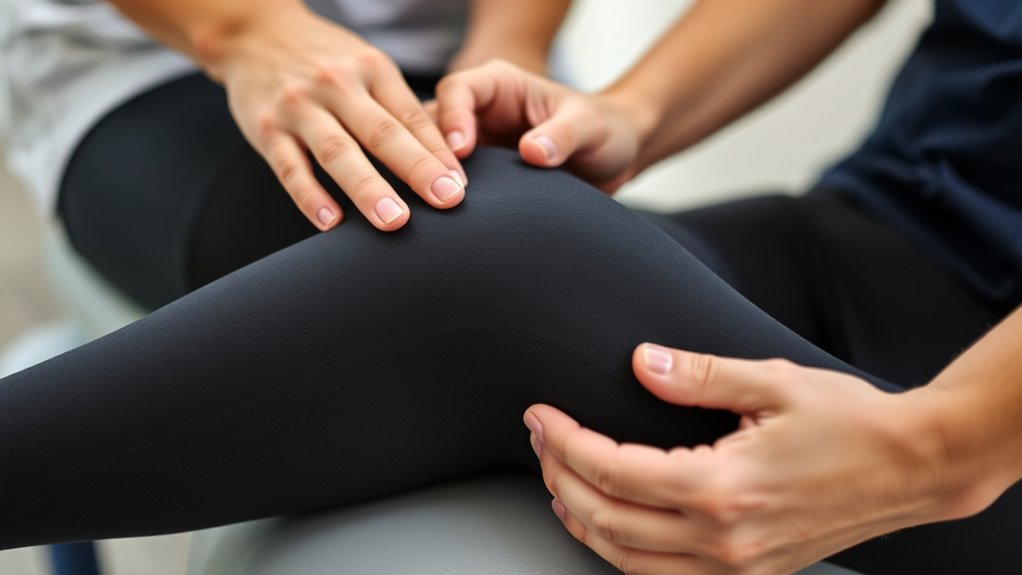
Understanding the medical reasons for compression tights is essential if you’re considering their use. These garments are designed to support your veins and improve blood flow, especially for specific health issues. If you have chronic venous insufficiency, compression tights help reduce leg swelling and prevent ulcers from recurring. They’re also effective in managing deep vein thrombosis symptoms like pain and edema. Post-surgery, they help prevent blood pooling and lower clot risks. For varicose veins and spider veins, compression provides added vein support. People with lymphedema rely on these tights to promote lymphatic drainage. Wearing compression tights can also enhance athletic performance and recovery by reducing muscle fatigue and soreness, which is an additional benefit for active individuals. Proper fitting techniques are crucial to ensure maximum comfort and effectiveness when wearing these garments at home. Using the right compression level is vital to match your specific condition and ensure safety. Additionally, the medical benefits of compression tights are supported by various clinical studies that demonstrate their effectiveness. Knowing these medical benefits helps you determine if compression tights are suitable for your condition, ensuring you get the right support and avoid unnecessary risks.
How Compression Levels Impact Effectiveness
Choosing the right compression level can substantially affect how well your tights work for your needs. Moderate compression (15–20 mm Hg) often provides enough support for symptom relief without discomfort, while higher levels aren’t necessarily more effective and may cause issues. Understanding how these levels impact results helps you select the best option for your condition. Additionally, selecting the appropriate compression can help prevent health complications, ensuring you benefit safely from the tights. Proper fitting techniques can also influence the effectiveness of compression by ensuring the tights fit correctly and deliver consistent pressure. Recognizing individual differences in compression tolerance can help tailor the choice to your specific needs, enhancing comfort and efficacy. Considering air quality factors, such as ensuring the environment is free of pollutants and stale air, can also contribute to overall comfort and health benefits when wearing compression tights.
Moderate vs. High Compression
While higher compression levels might seem more effective, studies show that moderate compression—typically between 15 and 20 mm Hg—is often just as beneficial for reducing swelling and improving circulation. Higher levels, above 20 mm Hg, don’t necessarily provide markedly better results and can be uncomfortable or harder to wear consistently. Moderate compression offers enough pressure to support venous return, decrease edema, and promote healthy blood flow without risking skin irritation or circulation issues. Additionally, proper fit can significantly influence the overall effectiveness of compression garments, ensuring even pressure distribution. For most people, especially those using compression tights for daily activities or mild symptoms, moderate levels strike the right balance between effectiveness and comfort. Furthermore, fabric elasticity in compression garments ensures that pressure remains consistent over time and during movement. When selecting compression tights, considering proper fit can further enhance their efficacy and comfort. If you need higher compression, consult a healthcare professional to ensure it’s appropriate for your specific condition. Choosing the right compression level is essential to maximize benefits while maintaining comfort and safety. Additionally, understanding compression garment materials can help in selecting the most suitable product for your needs.
Impact on Symptom Relief
Different compression levels can considerably influence how effectively you experience symptom relief. Higher compression might seem better, but studies show that moderate levels (15–20 mm Hg) often provide the best results for swelling and discomfort. Excessively high compression doesn’t necessarily improve outcomes and can cause discomfort or circulation issues. For most people, tailored compression offers ideal relief without side effects. Additionally, understanding compression levels helps ensure you select the appropriate severity for your needs. When choosing compression tights, it’s important to consider the pressure gradient to optimize comfort and effectiveness. The individual needs of each user can vary widely, making personalized assessments crucial. For example, proper sizing plays a key role in achieving the desired benefits. Here’s a quick comparison:
| Compression Level | Symptom Relief Effectiveness |
|---|---|
| 15–20 mm Hg | Significant reduction in swelling, pain |
| 20–30 mm Hg | Slightly improved, but increased risk of irritation |
| Above 30 mm Hg | Minimal added benefit, higher discomfort |
| Below 15 mm Hg | Limited symptom relief |
| No compression | No symptom relief |
When to Wear Compression Tights for Best Results
To get the best results, you should wear compression tights during activities that involve prolonged standing, sitting, or exercise. Consistently wearing them during these times helps improve circulation and reduce swelling effectively. Make sure to choose the right compression level and wear them for the recommended duration to maximize their benefits. Additionally, selecting the proper greenhouse environment can enhance comfort and effectiveness when using compression wear in outdoor or greenhouse settings. Proper fit and material are also crucial factors that influence the overall comfort and performance of compression tights.
Optimal Timing and Duration
Wearing compression tights at the right times can maximize their benefits, especially for managing swelling, improving circulation, and supporting recovery. To get the most out of them, consider these key moments:
- During your daytime activities, especially if you stand or sit for long periods.
- Immediately after exercise to promote quicker muscle recovery.
- During travel, particularly on long flights or drives, to prevent blood pooling.
- When you’re experiencing swelling or fatigue in your legs, as they can help reduce discomfort.
Keep in mind, consistency is essential. Wear them regularly during these times, but avoid overnight use unless your healthcare provider advises otherwise. Proper timing ensures you reap their full benefits efficiently.
Appropriate Compression Levels
Choosing the right compression level is key to maximizing the benefits of your tights. If your goal is to reduce swelling or improve circulation, a moderate compression of 15–20 mm Hg usually suffices. This level supports vein function without causing discomfort. For medical conditions like varicose veins, post-surgical recovery, or lymphedema, your healthcare provider may recommend higher compression, up to 30–40 mm Hg. Avoid using higher levels without medical advice, as they can impair circulation or cause skin issues. Keep in mind that excessive compression isn’t necessarily more effective and can be uncomfortable. Always ensure your tights fit well—too tight can restrict blood flow, and too loose won’t provide the intended support. Choose the appropriate level based on your specific needs and medical guidance.
Situations Where Compression Tights Are Not Recommended
While compression tights offer many benefits, there are certain situations where their use isn’t advisable. You should avoid wearing them if:
Avoid wearing compression tights if you have severe artery disease or skin wounds.
- You have severe peripheral artery disease, which can restrict blood flow further.
- You’re experiencing untreated septic phlebitis, risking infection or worsening symptoms.
- You have congestive heart failure, as compression may increase fluid retention.
- You suffer from advanced neuropathy or skin conditions like open wounds, ulcers, or skin breakdown.
In these cases, compression tights could worsen your condition or cause complications. Always consult your healthcare provider before using compression garments if you have underlying health issues. Proper assessment guarantees you gain benefits safely without risking adverse effects.
Choosing the Right Fit and Style for Your Needs
To get the most benefit from your compression tights, you need to find the right fit and style for your needs. Pay attention to proper sizing techniques and choose materials that offer comfort and breathability. Ensuring a snug but comfortable fit helps prevent skin irritation and enhances circulation.
Proper Sizing Techniques
Getting the right fit when selecting compression tights is essential to guarantee they provide the intended benefits without causing discomfort. To make certain a proper fit, follow these key steps:
- Measure your leg at multiple points—ankle, calf, and thigh—to get accurate sizing.
- Use size charts provided by manufacturers, as sizing varies between brands.
- Opt for a snug but not painful fit—your tights should feel firm but not restrict blood flow or cause pinching.
- Check for smooth, wrinkle-free fabric to prevent chafing and ensure even compression.
Style and Material Options
Selecting the right style and material for compression tights depends on your specific needs and preferences. Choose from various lengths, like below-knee or thigh-high, based on targeted areas. For daily wear, lightweight and breathable fabrics such as nylon, spandex, or a blend provide comfort and flexibility. If you need extra support for longer hours, look for thicker, more durable materials with higher compression levels. Consider seamless designs to reduce irritation and enhance comfort. Moisture-wicking fabrics help keep you dry during active days. Color and style options vary, allowing you to select subtle or bold designs that match your wardrobe. Ultimately, picking the right combination ensures you get effective compression without sacrificing comfort or style.
Ensuring Comfortable Fit
Choosing the right fit and style for your compression tights is essential for both comfort and effectiveness. Ill-fitting tights can cause skin irritation, restrict circulation, or slip during wear. To guarantee a proper fit:
- Measure your legs accurately to select the right size, avoiding tightness or looseness.
- Choose a compression level suited to your needs, typically 15–20 mm Hg for everyday use.
- Opt for styles that match your activity—below-knee for daily wear, thigh-high for more support.
- Test the material’s elasticity and breathability, ensuring it’s snug but not constrictive.
Risks and Side Effects to Watch Out For
While compression tights offer many benefits, they also carry potential risks and side effects you should watch out for. Poor fit can cause skin irritation, itching, and discomfort. In rare cases, they may lead to skin breakdown, ulcers, or nerve damage if worn improperly or for too long. People with severe peripheral artery disease or congestive heart failure should avoid them unless prescribed by a doctor. Also, avoid using compression tights if you have untreated septic phlebitis or advanced neuropathy. If you experience pain, numbness, or skin changes, remove the tights immediately. To help you understand common issues, here’s a quick overview:
| Risk/Side Effect | Warning Sign | Recommended Action |
|---|---|---|
| Skin irritation | Itching, redness | Remove and consult healthcare provider |
| Skin breakdown/ulcers | Open sores | Discontinue use and seek medical advice |
| Nerve damage | Persistent numbness | Stop use immediately |
| Circulation issues | Cold extremities | Ensure proper fit, consult doctor |
| Contraindicated conditions | Worsening symptoms | Do not wear without approval |
How Compression Tights Aid in Post-Surgical Recovery
After surgery, wearing compression tights can considerably speed up your recovery by improving blood flow and preventing complications. They help reduce swelling, minimize the risk of blood clots, and support tissue healing. Here’s how they work:
- They enhance venous return, preventing blood pooling in your legs.
- They decrease inflammation and swelling around the surgical site.
- They support the skeletal-muscle pump, aiding circulation during movement.
- They reduce the risk of deep vein thrombosis by maintaining consistent pressure.
The Role of Compression in Managing Venous Insufficiency and Varicose Veins

Compression tights play a crucial role in managing venous insufficiency and varicose veins by supporting your leg veins and improving blood flow. They help prevent blood from pooling in your legs, reducing swelling and discomfort. The graduated pressure design increases venous return, making it easier for your blood to flow back to your heart. Wearing compression tights regularly can slow the progression of varicose veins and reduce symptoms like aching, heaviness, and throbbing. They also help prevent the formation of new varicose or spider veins by supporting healthy vein function. For best results, choose the right compression level and make sure a proper fit. While compression tights won’t cure venous issues, they are an effective tool to manage symptoms and support your circulatory health.
Using Compression Tights During Athletic Activities and Recovery
Many athletes wear compression tights during and after exercise to help reduce muscle soreness and enhance recovery. These tights can provide several benefits:
- Improve blood flow, aiding nutrient delivery and waste removal.
- Reduce perceptions of muscle fatigue and soreness post-workout.
- Support muscle stability, decreasing vibration and micro-tears.
- Accelerate recovery, allowing for quicker training sessions.
While some studies show improved circulation and faster recovery, performance enhancement remains limited and mostly perceptual. Wearing compression tights during athletic activities can help manage muscle fatigue and promote quicker recovery, especially after intense workouts. However, they’re not a substitute for proper training, hydration, or rest. Confirm proper fit to avoid discomfort, and remove the tights after exercise unless otherwise advised.
Tips for Proper Use and Maintenance of Compression Garments
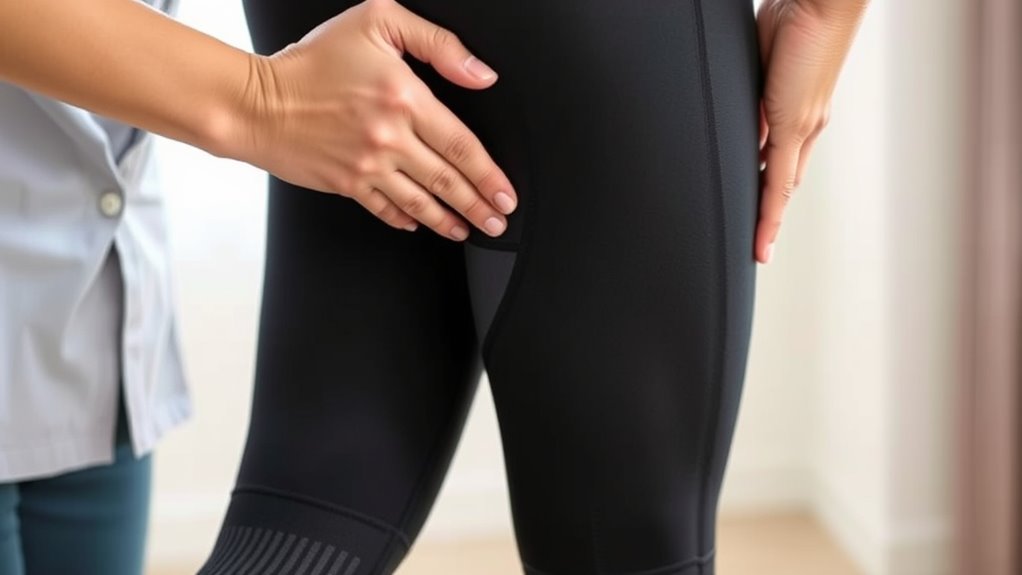
Wearing compression garments correctly and maintaining them properly can maximize their benefits and minimize potential issues. Always follow the manufacturer’s instructions for donning and removing your tights to ensure they fit snugly without causing discomfort or restricting circulation. Choose the right size—too tight can damage skin or impair blood flow, while too loose won’t provide adequate compression. Wash your garments regularly with gentle detergent, avoiding bleach or fabric softeners, which can degrade elasticity. Hand washing is best, but if machine washing, use a gentle cycle. Air dry your compression tights to preserve elasticity; avoid tumble drying. Replace them every 3 to 6 months or sooner if they lose their elasticity or show signs of wear. Proper use and maintenance keep your compression garments effective and comfortable.
Frequently Asked Questions
Can I Wear Compression Tights Overnight Safely?
You shouldn’t wear compression tights overnight unless your doctor advises it. Most experts recommend removing them at night because extended compression can restrict circulation or cause skin issues. If you have specific medical conditions, your healthcare provider might suggest continuous wear, but generally, you should take them off during sleep to avoid potential problems. Always follow your doctor’s guidance to ensure safe and effective use.
Are There Any Long-Term Risks of Continuous Compression Use?
Wearing compression tights continuously over the long term can pose risks like skin irritation, breakdown, or nerve damage if they’re poorly fitted or used improperly. It’s essential to guarantee proper fit and follow your doctor’s advice. Prolonged use without breaks might impair circulation or cause discomfort. Regularly check your skin and remove tights if you notice any issues. Consult your healthcare provider for personalized guidance to minimize long-term risks.
How Do I Know if My Compression Tights Fit Properly?
If your compression tights don’t fit perfectly, it’s like trying to squeeze into shoes two sizes too small—you’ll feel discomfort instantly. To check, verify they’re snug but not painfully tight, with no pinching or leaving marks on your skin. Stand up straight, and if they slide down or feel like they’re cutting off circulation, they’re too tight. A proper fit feels firm yet comfortable, supporting your legs without causing pain.
Can Compression Tights Help With Sports Injuries Besides Recovery?
Compression tights mainly aid recovery rather than preventing or treating sports injuries. They can improve circulation and reduce muscle soreness, making you feel better after exercise. However, there’s limited evidence that they prevent injuries like strains or sprains during activity. You should wear them during or after exercise if you find them comfortable, but don’t rely on them solely for injury prevention. Proper warm-up and technique are essential for injury prevention.
Are There Specific Materials Best for Sensitive Skin?
If you have sensitive skin, choosing the right material can make all the difference. Look for compression tights made from soft, breathable fabrics like cotton blends or nylon with spandex, as they reduce irritation. Avoid harsh synthetic fibers or latex, which can cause itching or rashes. Always check for seamless designs and hypoallergenic labels—these small details can keep you comfortable and prevent uncomfortable skin reactions during wear.
Conclusion
Think of compression tights as your trusted armor, shielding your legs through life’s marathon. When worn wisely, they can boost recovery, improve circulation, and keep you moving confidently. But like any armor, they need the right fit and timing. So, listen to your body, follow your doctor’s orders, and embrace this gear as your ally—guiding you smoothly toward healthier, more comfortable strides, just as a steady ship stays true to its course amidst the waves.