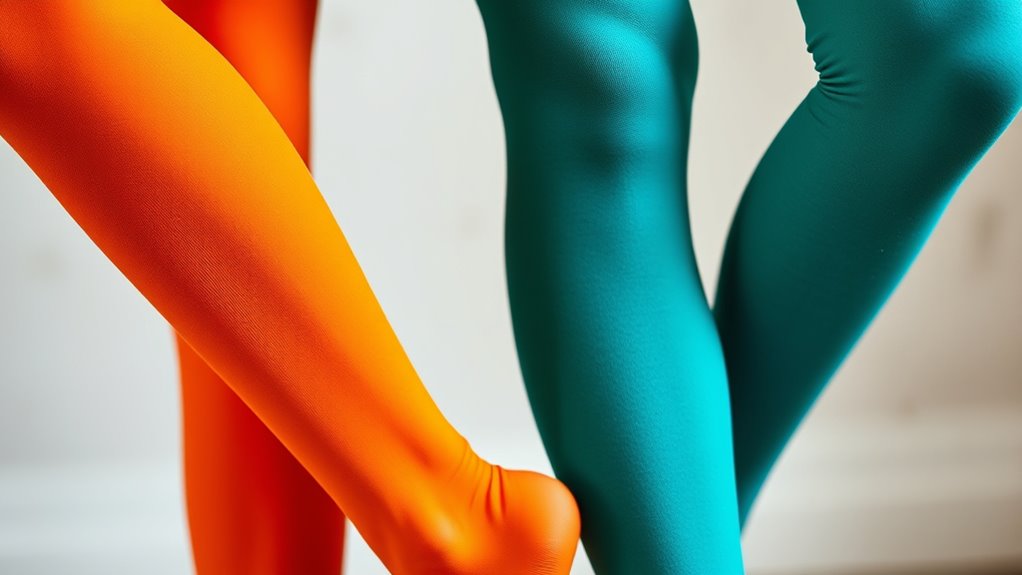

When choosing tights, understanding the difference between complementary and analogous colors helps you create striking or harmonious outfits. Complementary schemes, with colors opposite on the wheel, bring bold contrast and vibrancy, perfect for making a statement. Analogous colors, which sit next to each other, produce a unified, soothing look ideal for a polished, subtle style. Knowing these distinctions allows you to reflect your personality through wardrobe choices—continue exploring to discover more style-smart tips.
Key Takeaways
- Complementary tights (opposite on the color wheel) create bold, vibrant contrasts, ideal for making a statement.
- Analogous tights (adjacent on the wheel) offer harmonious, subtle color combinations for a polished look.
- Choose complementary schemes for energetic, eye-catching outfits; opt for analogous schemes for cohesive, elegant styles.
- Balancing complementary colors with neutrals prevents overwhelming visuals; analogous schemes naturally blend for smooth ensembles.
- Understanding these schemes helps tailor tights choices to reflect personality and style intentions effectively.
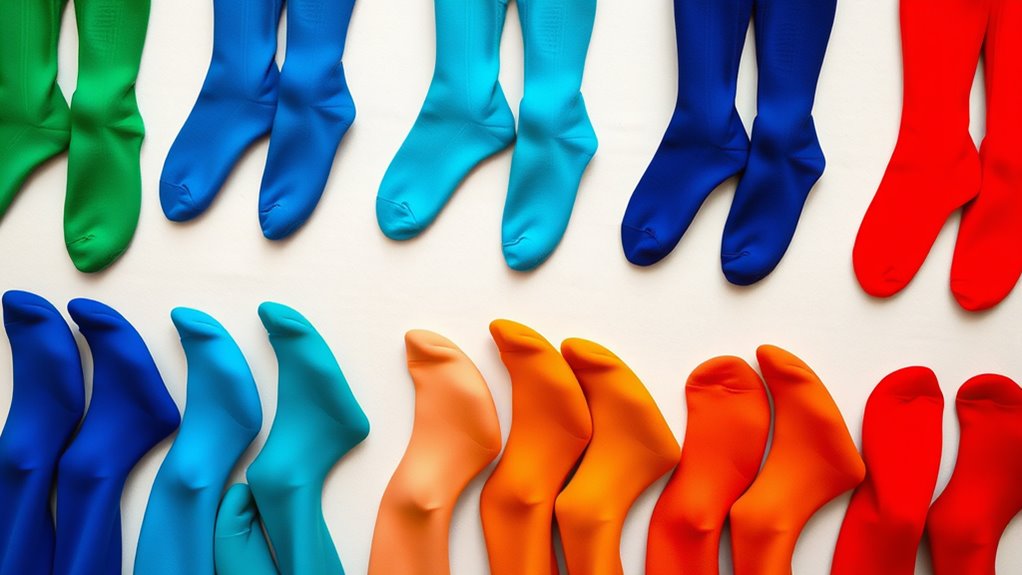
Understanding color theory can dramatically improve your choice of tights and elevate your overall look. When you grasp how different colors interact, you can create outfits that are visually appealing and harmonious. Two fundamental concepts in color theory—complementary and analogous colors—play a significant role in how your tights can enhance your ensemble. Knowing when and how to use each can help you make smarter styling decisions, whether you’re aiming for bold contrast or a more subtle, cohesive appearance.
Complementary colors sit opposite each other on the color wheel, such as red and green, blue and orange, or yellow and purple. When you choose tights in these shades, you’ll create a vibrant, eye-catching contrast that makes both colors stand out. For example, pairing bright red tights with a green dress or accessories can give your outfit a striking, energetic vibe. This approach is perfect when you want to draw attention to your legs or make your outfit pop. However, it’s crucial to balance these bold choices with more neutral pieces, so the overall look doesn’t become overwhelming. Complementary tights work well for statement pieces or when you’re aiming for a daring, fashion-forward appearance.
On the other hand, analogous colors are next to each other on the color wheel, like blue and green or yellow and orange. These combinations tend to produce a more harmonious, soothing effect because they share similar undertones. If you choose tights in analogous shades, your outfit will appear more unified and polished. For instance, pairing teal tights with a matching or slightly different shade of blue can create a seamless, elegant look. This approach is ideal for casual or professional settings where you want to look put-together without being too loud. Analogous color schemes also give you more flexibility, as blending shades within the same family makes it easier to coordinate with other clothing items. Additionally, understanding the Color Wheel can help you identify and combine these hues more effectively.
Understanding when to use complementary versus analogous colors depends on your mood and the statement you want to make. If you’re feeling bold and want to stand out, go for complementary tights. If you prefer a more refined, cohesive appearance, choose analogous shades. Both strategies allow you to leverage color theory to craft outfits that reflect your personality and style preferences. Experimenting with these concepts can boost your confidence in mixing and matching tights with your wardrobe, helping you develop a more intentional, stylish look every time you get dressed.
Frequently Asked Questions
How Do I Choose Tights for Different Skin Tones?
To choose tights for your skin tone, focus on complementary shades that create contrast or analogous colors for a harmonious look. If you have fair skin, try nude or pastel tones to complement your complexion. For medium skin, rich browns or deep hues work well. Darker skin tones look stunning in bold, vibrant colors or deep neutrals. Always consider your outfit and occasion, and don’t be afraid to experiment for a personalized touch.
Can Color Theory Apply to Patterned Tights?
A stitch in time saves nine, and the same applies to patterned tights. Yes, color theory definitely applies. You can create contrast with complementary colors or harmony with analogous shades. When choosing patterned tights, consider how the colors interact with your outfit and skin tone. Use contrast to make a statement or blend for a subtle look. Understanding color relationships helps you make bold or understated fashion choices effortlessly.
What Accessories Best Complement Colorful Tights?
You should choose accessories that either contrast or harmonize with your tights. For bold, colorful tights, opt for neutral accessories like black or beige to let the tights stand out. If your tights are more subdued, add vibrant accessories to create a lively look. Simple jewelry, a statement bag, or a scarf in complementary or analogous colors will enhance your outfit without overwhelming it. Keep balance in mind for a stylish finish.
How Do Lighting Conditions Affect Tights Color Perception?
Think of lighting as a magic wand that transforms your tights’ colors, like a painter’s brush blending hues on a canvas. Bright daylight reveals vibrant, true shades, making your tights pop. Dim or yellowish light, however, can dull or warm their hues, washing out details. To keep your tights looking their best, choose lighting that mimics natural daylight whenever possible, ensuring your colors stay bold and true.
Are There Seasonal Color Trends for Tights?
Yes, seasonal trends heavily influence tights colors. In winter, you’ll see darker shades like deep reds, blacks, and navys, adding warmth and sophistication. Spring and summer favor brighter, pastel, or vibrant hues that reflect freshness and energy. Fall trends often include earthy tones like browns, olives, and burnt oranges. Keep an eye on fashion forecasts, as these trends shift yearly, helping you choose colors that stay stylish and seasonally appropriate.
Conclusion
Now that you understand complementary and analogous color schemes, you can confidently choose tights that enhance your outfit, express your mood, and showcase your style. Whether you opt for bold contrasts or harmonious shades, let your choices reflect your personality. Embrace experimentation, enjoy the process, and remember that fashion is about self-expression. With these color theories in mind, you’re ready to step out with confidence, creativity, and a wardrobe that truly speaks your truth.