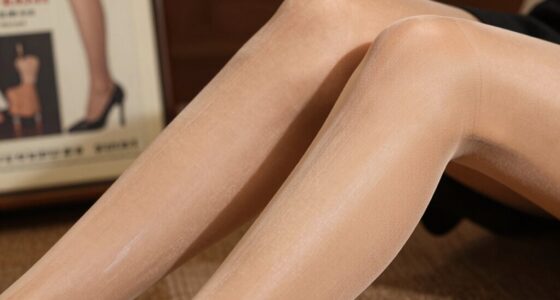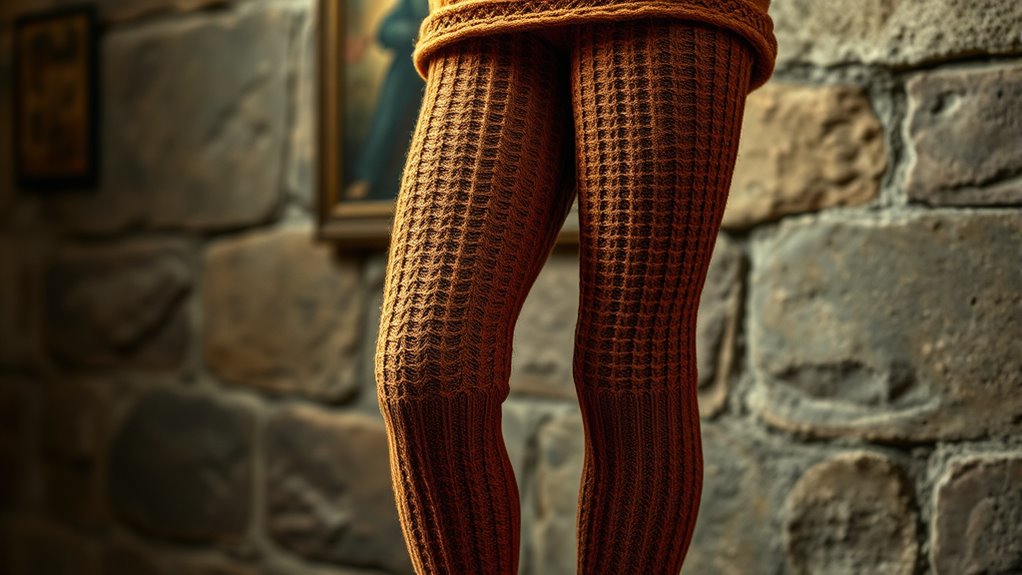

Medieval legwear, called hose, started as simple wool or linen tubes that kept you warm and displayed social status. Over time, they became fitted, often decorated, and secured with points or laces, showing off wealth and taste. Nobles wore brightly colored, embroidered hose, making legwear a symbol of rank. This evolution from basic coverings to elaborate attire laid the groundwork for modern pantyhose. Explore further to discover how these styles influenced contemporary fashion and function.

Get your wardrobe favorites delivered free with Prime
- Fast, free delivery on millions of items
- Prime Video, Amazon Music and more included
- Member-only deals all year
Key Takeaways
- Medieval hose evolved from simple leg coverings into fitted, decorative garments reflecting social status and fashion trends.
- Early hose were made from wool or linen, sewn in two pieces and secured with points or laces.
- Finer materials like silk and intricate embroidery signaled wealth and nobility.
- The design shifted towards ornate, brightly colored, and embellished legwear over time.
- Modern pantyhose trace their origins to medieval legwear that combined functionality with decorative elements.

Legwear during the medieval period has a history that reflects both practicality and evolving fashion trends. When you look back at this era, you’ll notice that leg coverings served more than just a decorative purpose; they were essential for warmth, protection, and social status. Early on, people wore simple garments like tunics that extended to the knees or lower, and to keep their legs warm, they added basic coverings such as leggings or chausses. These were often made from wool or linen, materials readily available and suitable for the cold climate. As you trace the development of medieval legwear, you’ll see that it became more than just functional; it also became a symbol of fashion and rank. Nobles and royalty, for instance, often sported ornate, brightly colored hose that showcased their wealth and taste, setting trends that others followed.
During the early medieval period, hose were typically made from two separate pieces—one for each leg—stitched together at the waist. These garments were snug-fitting, serving both as insulation and as a foundation for showcasing fine fabrics or embroidery. As fashion advanced, the design of hose evolved from simple tubes to more fitted, decorative items, often featuring intricate patterns or embellishments. Men of higher social standing would wear hose that extended up to the waist and were sometimes made from silk or fine wool, highlighting their status. To secure these tight-fitting leg coverings, they used points or laces, which connected the hose to doublets or tunics, preventing them from slipping down during movement. Additionally, the use of ornate embellishments on hose became a way to display wealth and craftsmanship.
As an affiliate, we earn on qualifying purchases.
Frequently Asked Questions
How Did Legwear Influence Medieval Social Hierarchy?
Your legwear in medieval times signified your social status. Nobles wore finely woven, brightly colored hose to display wealth and rank, while peasants had only coarse, plain coverings. The more elaborate and luxurious your legwear, the higher your social standing. You could easily identify someone’s class based on their hose, making legwear a clear symbol of hierarchy and privilege in medieval society.
Were There Regional Differences in Medieval Legwear Styles?
Imagine vibrant dyes flowing through the streets like living rainbows—medieval legwear styles varied greatly by region. In Italy, fine silk hose painted the town with bright colors, while in England, sturdy woolen coverings kept nobles warm. These regional differences reflected local resources, climate, and social customs, making legwear a colorful tapestry of medieval life. You’d notice these distinctions as you traveled across the diverse lands of the Middle Ages.
What Materials Were Used for Medieval Leg Coverings?
You’ll find that medieval leg coverings were made from a variety of materials depending on your social status and region. Commonly, people used wool for its warmth and availability, while wealthier individuals opted for silk, fine linen, or even velvet for their legwear. Leather was also popular, especially for riding garments. These materials provided both practicality and a display of social distinction, reflecting the wearer’s wealth and regional customs.
How Did Legwear Evolve During the Renaissance Period?
Imagine intricate silk and fine wool weaving their way into your attire during the Renaissance. You notice how legwear evolves from simple hose to more elaborate, form-fitting designs, often decorated with embroidery and vibrant dyes. You’d wear luxurious fabrics that hug your legs closely, showcasing craftsmanship and status. This period saw the rise of tight-fitting, patterned, and colorful leg coverings, transforming everyday wear into a statement of style and sophistication.
Did Medieval Legwear Have Any Symbolic or Religious Significance?
Medieval legwear often carried symbolic or religious meaning. You’ll notice that certain colors and styles indicated social status or religious devotion, like green or red hues representing wealth or faith. Knights wore chainmail for protection and status, while clergy favored simple, modest garments reflecting humility. You might see legwear used in rituals or to demonstrate allegiance to a faith or social order, emphasizing morality, hierarchy, and cultural identity during that era.
As an affiliate, we earn on qualifying purchases.
Conclusion
As you reflect on the journey from humble hose to elegant pantyhose, it’s clear that legwear has long been a subtle symbol of style and status. Though times have changed, the craftsmanship and tradition behind these garments remain quietly influential. Embrace this history as a refined reminder that elegance often lies in the details, whispering of centuries past. In wearing them, you partake in a timeless dance of tradition and modernity, graceful and discreet.
As an affiliate, we earn on qualifying purchases.
As an affiliate, we earn on qualifying purchases.
Halloween Picks
halloween
As an affiliate, we earn on qualifying purchases.