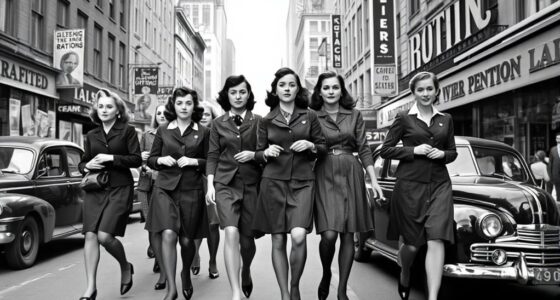
In 1960s America, pantyhose became a symbol of modernity and confidence. They replaced traditional stockings, reflecting a shift toward practicality and streamlined fashion. Widely promoted by designers and affordable for many women, pantyhose helped boost self-esteem and express personal style. Their popularity grew alongside cultural changes emphasizing youth, sophistication, and independence. If you explore further, you’ll discover how these sheer garments revolutionized women’s fashion and societal perceptions during the decade.
Key Takeaways
- Pantyhose symbolized modern fashion, replacing traditional stockings and reflecting cultural shifts toward practicality and sophistication.
- Mass production and affordability made pantyhose accessible across social classes, boosting widespread adoption.
- Innovations in nylon created sheer, durable hosiery in various shades, enhancing women’s confidence and self-expression.
- Media campaigns linked pantyhose to independence, youthfulness, and the image of the liberated, modern woman.
- Technological advances in manufacturing supported style diversity and contributed to the rapid rise of pantyhose popularity.

In the 1960s, pantyhose became a symbol of changing fashion and social attitudes in America. You might have noticed how women moved away from traditional stockings and garters, embracing a new, streamlined look that pantyhose provided. This shift wasn’t just about style; it reflected a broader cultural transformation. As women sought more freedom and practicality in their clothing, pantyhose offered a sleek, versatile alternative that fit seamlessly into this new mindset. They became an essential part of the modern wardrobe, helping women appear polished and confident while simplifying their daily routines.
You probably saw how quickly pantyhose gained popularity during this decade. Fashion designers and retailers promoted them as a must-have accessory, making them accessible to women across different social classes. The rise of mass production made pantyhose affordable, so many women could include them in their outfits without breaking the bank. This accessibility encouraged widespread adoption, and soon, wearing pantyhose was almost mandatory for formal occasions and professional settings. They symbolized a move toward a more refined, fashionable image that aligned with the era’s emphasis on youth, vitality, and sophistication.
Pantyhose became an accessible, essential fashion staple for women across all social classes in the 1960s.
The material used for pantyhose also played a role in their popularity. Innovations in nylon, a newly developed synthetic fiber, allowed for the production of sheer, durable, and affordable hosiery. You could find pantyhose in a variety of shades, from nude to bold colors, accommodating personal style and mood. They also helped create a uniform, smooth silhouette that was considered elegant and modern. This new fabric and design made women feel more confident in their appearance, boosting their self-esteem and empowering them to express themselves more freely through fashion choices.
Media and advertising campaigns pushed pantyhose as a symbol of the liberated woman. You saw images of stylish women confidently walking down the streets or heading to work, all wearing sleek, sheer tights. These portrayals reinforced the idea that pantyhose were more than just functional; they were a statement of independence and modernity. The cultural shift was also reflected in how women started to view their bodies differently, embracing a more streamlined and youthful aesthetic. Wearing pantyhose became a way to align oneself with the contemporary ideals of beauty and sophistication that defined the 1960s. Additionally, the technological innovations in manufacturing contributed significantly to the widespread adoption and evolving styles of pantyhose during this era.
Frequently Asked Questions
How Did Pantyhose Influence Women’s Fashion Choices Beyond the 1960S?
You notice that pantyhose continue to shape women’s fashion choices today by offering a sleek, streamlined look that complements a variety of outfits. They make skirts and dresses more versatile, allowing you to experiment with different styles and colors. Pantyhose also boost confidence by providing a polished appearance, and their convenience encourages you to wear more elegant or professional attire. Overall, they remain a staple that influences your fashion decisions beyond the 1960s.
Were There Any Cultural or Societal Controversies Surrounding Pantyhose Adoption?
Yes, you’ll find plenty of controversy surrounding pantyhose adoption. They sparked societal shame and scandal, as many saw them as symbolizing sexual liberation or moral decline. Women faced scrutiny for embracing the sheer, sleek style, with some critics calling them inappropriate or provocative. Despite the push for progress, the debates about decency and decorum persisted, making pantyhose a symbol of both style and societal struggle.
How Did Manufacturing Technology Evolve to Produce Pantyhose During This Era?
During the 1960s, manufacturing technology advanced markedly to produce pantyhose more efficiently. You see, new knitting machines with circular designs enabled faster, seamless production of delicate nylon hosiery. Automation and improved synthetic fibers made the process cost-effective and allowed for mass production. This evolution meant you could easily find stylish, affordable pantyhose, fueling their popularity and transforming fashion trends across America.
What Were the Major Marketing Strategies Used to Promote Pantyhose?
You’ll notice that marketers in the 1960s heavily promoted pantyhose through glamorous magazine ads and TV commercials, emphasizing fashion and convenience. They targeted women by showcasing how pantyhose could transform their look effortlessly, often featuring relatable models and catchy slogans. Retail displays and free samples also played a big role, encouraging women to try and adopt pantyhose as a must-have wardrobe staple, boosting their popularity rapidly.
Did Pantyhose Impact Hosiery Sales and the Economy During the 1960S?
Imagine the economy as a vibrant garden; pantyhose were the new seeds that sprouted rapidly. During the 1960s, their popularity skyrocketed, boosting hosiery sales and invigorating the industry. You’d see stores flooded with colorful options, and manufacturers expanding. This surge also stimulated related sectors like advertising and textiles, making pantyhose a catalyst for economic growth and transforming hosiery sales into a lively, blooming market.
Conclusion
As you embrace the rise of pantyhose in 1960s America, you see fashion transform, confidence grow, and style evolve. You witness the seamless blend of practicality and elegance, the shift from stockings to pantyhose, and the bold new look it brings. You feel the era’s energy, the spirit of change, and the desire for modernity. In this revolution, you find yourself part of a movement that reshaped fashion, empowered women, and defined a generation.