The nylon riots of 1945 happened when shortages and high demand for nylon stockings created huge frustration. Wartime restrictions limited supply, and after the war, civilian demand soared, leading to long queues, rationing, and aggressive crowds. Rumors of hoarding and unfair distribution added to tensions, causing violent clashes in shopping districts. These riots reveal how scarcity and unmet desires can spark social unrest. To understand what triggered this chaos, you’ll discover more about the economic and social influences behind it.

Get your wardrobe favorites delivered free with Prime
- Fast, free delivery on millions of items
- Prime Video, Amazon Music and more included
- Member-only deals all year
Key Takeaways
- The riots were triggered by shortages and high demand for nylon stockings post-WWII, leading to anger over rationing and unfair distribution.
- Crowds became violent in shopping districts, smashing windows and fighting over limited nylon products amid long queues.
- Factory repurposing during wartime reduced nylon supply, and post-war scarcity fueled societal frustration and desire for luxury items.
- Rumors of hoarding and unfair practices increased mistrust, escalating tensions and contributing to the unrest.
- The riots highlighted post-war economic hardships, social tensions, and the fragile stability during reconstruction.
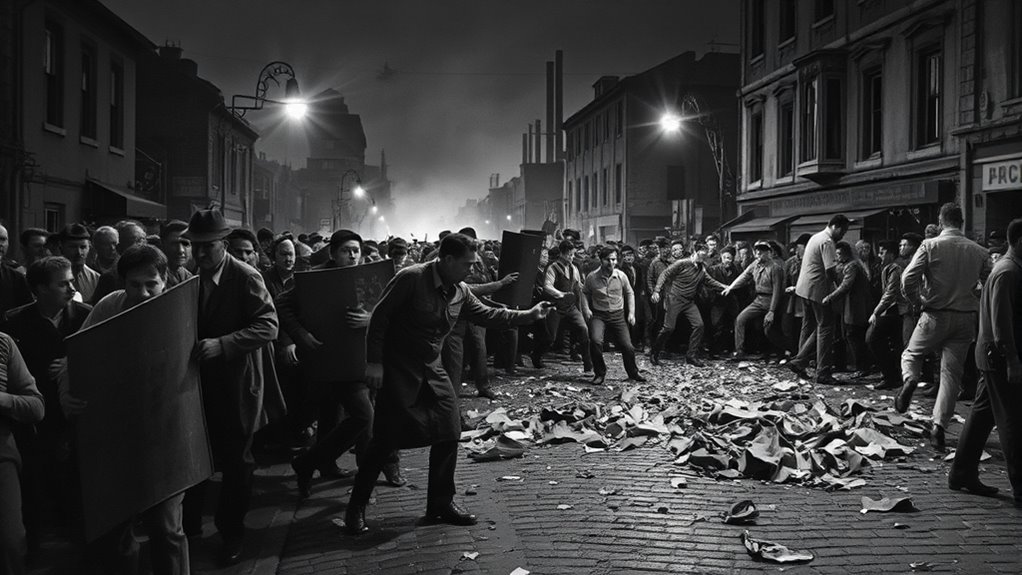
What sparked the Nylon Riots of 1945? You might think it was simply about a shortage of nylon, but the truth runs deeper. During World War II, nylon became a highly sought-after resource, used extensively for military gear like parachutes, socks, and ropes. As the war drew to a close, civilians began craving nylon products just as fiercely as the military had relied on them. This demand created a stark contrast between supply and desire, fueling frustration among consumers and merchants alike.
The Nylon Riots of 1945 stemmed from wartime shortages, high demand, and social tensions over scarce essentials.
The shortages weren’t just due to wartime restrictions; they also reflected the broader economic upheaval of the time. Factories had been repurposed for war production, leaving limited capacity for consumer goods. Once the war ended, the sudden surge in demand for nylon clashed with the limited production capacity, leading to long queues, rationing, and fierce competition for the remaining supplies. People grew impatient, and tensions simmered beneath the surface.
You should also understand that the riots weren’t purely spontaneous acts of anger. They were fueled by anger over rationing policies, perceived unfairness, and the scarcity of everyday essentials. Many believed that the government and retailers were hoarding or unfairly distributing what little nylon was available. Rumors spread quickly, exacerbating mistrust and leading to clashes in shopping districts. Crowds would sometimes turn violent, smashing windows and fighting over products, all driven by the desperation to secure something as simple as a nylon stocking.
The social and economic context also played a role. Post-war Britain, for example, faced austerity, rationing, and widespread hardship. People had endured years of deprivation, and the craving for luxury items like nylon stockings symbolized a yearning for normalcy and comfort. When these items became scarce, the frustration boiled over. The riots weren’t just about nylon; they represented a broader dissatisfaction with post-war austerity and the struggle to rebuild a life that felt increasingly out of reach. Additionally, the technological limitations of the time affected the production and distribution of nylon, further intensifying shortages.
Authorities struggled to maintain order as the riots spread across cities. Police often found themselves overwhelmed, trying to control mobs and restore calm. In some cases, arrests were made, but the underlying issues remained unresolved. The riots eventually subsided, but they left a lasting impression of the social tensions simmering beneath the surface of post-war recovery. The Nylon Riots of 1945 serve as a stark reminder of how scarcity and unmet desires can ignite collective unrest, revealing the fragile balance between consumer demand and social stability.
As an affiliate, we earn on qualifying purchases.
Frequently Asked Questions
What Triggered the Initial Protests During the Nylon Riots?
The initial protests during the nylon riots were triggered by shortages of nylon stockings, which many women relied on for fashion and personal expression. You might have felt frustrated or disappointed as supplies dwindled, sparking outrage and anger. When stores ran out or limited sales, you and others could have gathered to demand fair access, quickly escalating into broader unrest fueled by economic hardship, wartime rationing, and social tensions.
How Did Government Policies Influence the Riots’ Escalation?
You might be surprised to learn that government policies considerably fueled the riots’ escalation. When authorities imposed strict rationing and price controls on nylon, shortages worsened, causing frustration among consumers and manufacturers. This led to widespread protests turning violent, with over 1,000 arrests. Your actions or reactions to these policies could have either calmed tensions or intensified the chaos, as people fought to secure their access to essential goods during that turbulent time.
Were There Any Long-Term Societal Impacts From the Riots?
You might notice that the Nylon Riots led to lasting societal changes, such as greater awareness of racial and economic inequalities. These events sparked discussions on segregation and labor rights, prompting reforms in policies and attitudes. Over time, communities worked towards integration and fair treatment, though challenges persisted. The riots became a catalyst for social activism, encouraging ongoing efforts to address systemic issues and promote equal rights in the long term.
Did International Events Affect the Occurrence of the Riots?
International events definitely influenced the Nylon Riots, much like how the post-World War II economic shifts affected local unrest. For example, the global shortage of nylon yarn caused supply issues, leading to price hikes and frustration. Your country’s reliance on imported materials meant that international trade disruptions directly impacted local industries, fueling unrest. So, worldwide events created ripples that heightened tensions, ultimately contributing to the outbreak of the riots.
How Did the Media Cover the Nylon Riots at the Time?
You notice that media coverage of the Nylon Riots was quite intense, with newspapers and radio broadcasts highlighting the chaos and violence. They often sensationalized the events, emphasizing the disorder and economic impact. Some outlets portrayed the rioters negatively, while others highlighted underlying tensions. As a result, public perception was shaped by these reports, influencing opinions on the causes and consequences of the riots.
As an affiliate, we earn on qualifying purchases.
Conclusion
As you step back and see the chaos unfold, it’s like a storm tearing through a delicate fabric of peace. The nylon riots of 1945 weren’t just about scarce materials—they revealed a society fraying at the edges, desperate for comfort and beauty. Remember, beneath the turmoil lies a tapestry of human desire and resilience, fighting to stay intact. In the end, it’s a vivid reminder that even the strongest threads can unravel when pushed to their limits.
As an affiliate, we earn on qualifying purchases.
As an affiliate, we earn on qualifying purchases.
Fall Picks
fall essentials
As an affiliate, we earn on qualifying purchases.