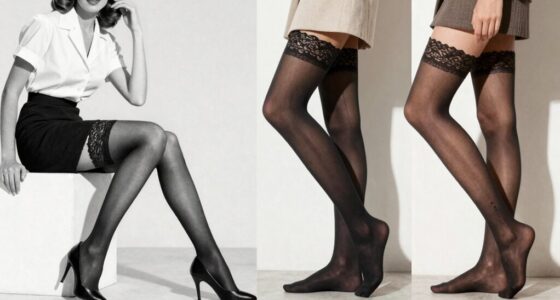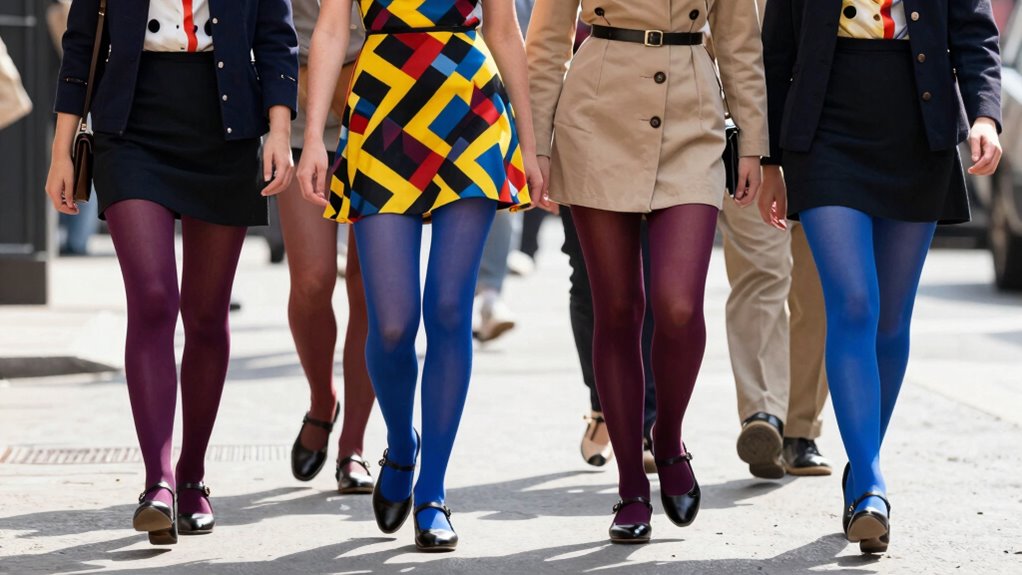

In 1960s youth fashion, tights became a key way to express individuality and rebellion. You could choose bold patterns like stripes, floral, or psychedelic designs to make a statement. They paired with mini skirts and mod dresses, transforming everyday outfits into vibrant, daring looks. Vintage tights offered nostalgic appeal and a chance to stand out. Keep exploring to discover how these colorful, creative accessories shaped a rebellious and expressive style that still influences fashion today.

Get your wardrobe favorites delivered free with Prime
- Fast, free delivery on millions of items
- Prime Video, Amazon Music and more included
- Member-only deals all year
Key Takeaways
- Tights became a bold fashion statement, enabling youth to express individuality and creativity.
- Bright patterns and geometric designs reflected psychedelic influences, challenging traditional fashion norms.
- Vintage hosiery sourced from thrift shops added nostalgic appeal and allowed modern reinterpretations.
- Tights symbolized youth culture, pairing with mini skirts and mod dresses to showcase rebellion and freedom.
- Modern fashion reimagines 1960s tights, blending nostalgia with contemporary styles for versatile, expressive looks.

During the vibrant decade of the 1960s, tights became a key element in youth fashion, transforming everyday style into a bold statement. You’d notice how young people started using vintage hosiery to stand out and express individuality. These tights weren’t just functional; they carried a sense of rebellion and creativity. Vintage hosiery, often characterized by unique textures and designs, became a staple for those wanting to break away from traditional clothing norms. As the era embraced experimentation, tights with colorful patterns emerged as a popular choice, allowing you to showcase your personality through vivid designs. Bright stripes, geometric shapes, and floral motifs decorated the legs of many young fashion enthusiasts, making tights an essential accessory for creating eye-catching outfits.
In the 1960s, colorful patterned tights became a bold symbol of youthful rebellion and creative expression.
You might have also observed how tights with colorful patterns offered endless opportunities for mixing and matching. They turned simple skirts and dresses into standout ensembles, giving your look a playful, youthful edge. Instead of plain, neutral shades, you gravitated toward tights that added visual interest and vibrancy. These patterns often reflected the psychedelic influence of the era, with swirling designs and kaleidoscopic colors that captured the spirit of the times. Wearing patterned tights became a way to challenge conventional fashion rules, making your outfit feel fresh, daring, and uniquely yours. The influence of vintage hosiery was also felt in how young people sourced these tights from thrift shops or vintage stores, appreciating their nostalgic appeal and affordability. This era marked a shift towards bold, expressive fashion, which encouraged experimentation and individual style.
Vintage hosiery wasn’t just about style; it was also about accessibility. Many young people sourced these tights from thrift shops or vintage stores, appreciating their nostalgic appeal and affordability. You could find tights from previous decades reimagined with new, modern twists, fostering a sense of connection to the past while staying current. The tactile variety of vintage hosiery — from sheer to opaque, with intricate lace or bold prints — gave you options to customize your look for any occasion. The combination of vintage elements and colorful patterns created a playful yet sophisticated aesthetic that made tights a versatile fashion statement. Additionally, the influence of fashion trends from different decades helped inspire innovative ways to wear vintage hosiery, blending nostalgia with modern style.
In the 1960s, tights evolved from mere coverage to an essential part of youth culture’s visual vocabulary. You embraced the boldness of vintage hosiery and colorful patterns, knowing that your choice of tights could communicate your individual style and attitude. Whether paired with mini skirts, mod dresses, or go-go boots, these tights helped define the era’s vibrant, rebellious spirit. As you looked back on this transformative decade, you’d see how tights became much more than an accessory — they became a symbol of youthful freedom and creative expression.
As an affiliate, we earn on qualifying purchases.
Frequently Asked Questions
How Did Tights Influence Gender Norms in 1960S Youth Culture?
Tights in the 1960s challenged traditional gender norms by enabling gender expression shifts among youth. You might wear tights as a statement of individuality, blurring lines between male and female fashion. This trend supports fashion democratization, making style more accessible and less rigid. As a result, tights helped foster a culture where young people felt freer to experiment with gender-affirming clothing, encouraging greater acceptance of diverse gender expressions.
What Materials Were Most Popular for 1960S Tights?
In the 1960s, you’d see tights made from nylon, thanks to fabric innovations that made them affordable and durable. The vibrant color palette trends also influenced your choices, with bold hues and patterns becoming popular. These materials and colors allowed you to experiment with your style, making tights a versatile accessory that reflected the youthful energy and changing fashion landscape of the decade.
Were Tights Affordable for All Socio-Economic Groups?
Tights in the 1960s were somewhat affordable for many, but not all socio-economic groups. You’d find that affordable fashion options emerged, making tights accessible to middle-class youth, yet wealthier teens had access to higher-end, designer styles. The socio-economic impact was significant, as tights became a symbol of modern, youthful style, allowing a broader audience to participate in the fashion trend. However, affordability still varied depending on brand and material quality.
How Did Tights Differ Across Various Regions or Countries?
You’ll notice tights varied widely across regions, reflecting regional fashion variations and cultural symbolism. In the UK, tights often featured bold patterns, while in France, sheer, elegant styles symbolized sophistication. In the US, tights became a symbol of youthful rebellion and modernity. These differences showcase how local culture and fashion trends shaped the way tights were worn, making them a versatile and meaningful accessory worldwide.
What Were the Common Colors and Patterns of 1960S Tights?
You see, 1960s tights were a rainbow of possibilities. Bright colors like bold reds, blues, and pinks dominated, reflecting the lively spirit of the era. Pattern variations ranged from simple solid hues to playful geometric and floral designs, capturing the youthful energy. These vibrant choices allowed you to express your personality and stay on trend, making tights an essential accessory for making a statement in 1960s youth fashion.
psychedelic design tights for women
As an affiliate, we earn on qualifying purchases.
As an affiliate, we earn on qualifying purchases.
Conclusion
As you embrace the spirit of the 1960s, remember that tights weren’t just clothing—they symbolized rebellion, freedom, and a break from tradition. They cloaked young rebels in a new world of possibilities, empowering you to express individuality. Just as tights stretched to fit every movement, they encouraged you to stretch boundaries and challenge norms. In your own way, you become part of that vibrant tapestry, where every step you take is a stride toward self-discovery.
As an affiliate, we earn on qualifying purchases.
As an affiliate, we earn on qualifying purchases.
Halloween Picks
halloween
As an affiliate, we earn on qualifying purchases.