
To choose the right denier, consider your occasion, weather, and desired look. For a natural, barely-there finish, opt for tights below 20 denier, perfect for warm weather or casual wear. For more coverage and warmth, go with 30–50 denier; ideal for office or *alternative* seasons. For cold weather or a bold statement, select thicker tights over 50 denier. Understanding how denier affects comfort, durability, and style helps you pick the perfect pair—learn more to refine your choice further.
Key Takeaways
- Match denier to occasion: lower (15–20) for formal or summer, higher (60+) for cold weather or winter.
- Consider seasonal needs: lightweight tights for warm months, thicker for warmth in colder seasons.
- Balance comfort and durability: thinner tights are comfortable but less resistant; thicker denier offers better longevity.
- Select based on style preference: sheer for a natural look, opaque for bold, coverage-heavy styles.
- Think about activity and environment: snag-resistant higher denier tights suit outdoor or active wear better.
Understanding Denier and Its Impact on Appearance
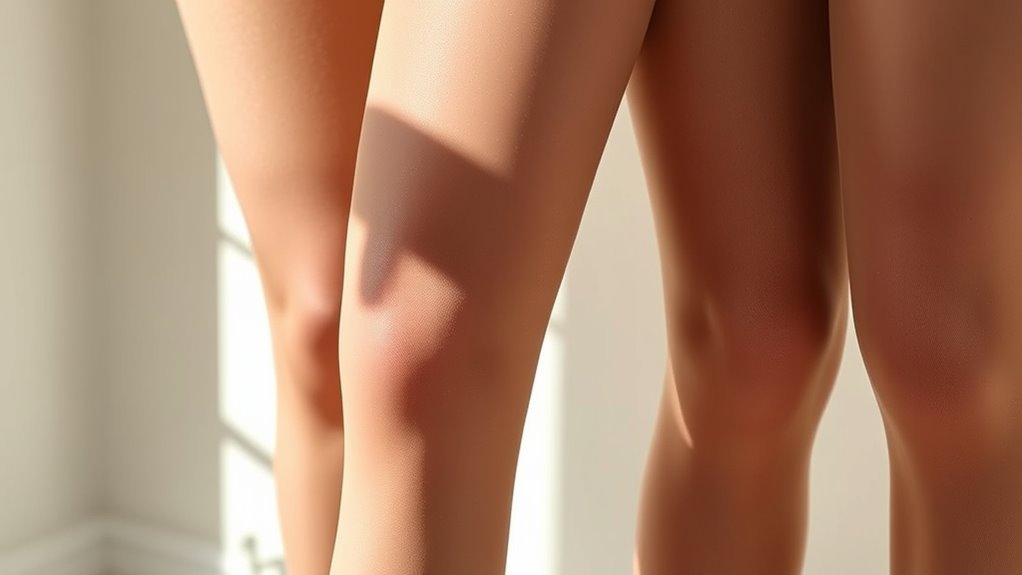
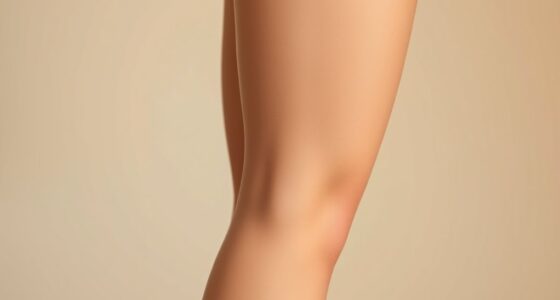
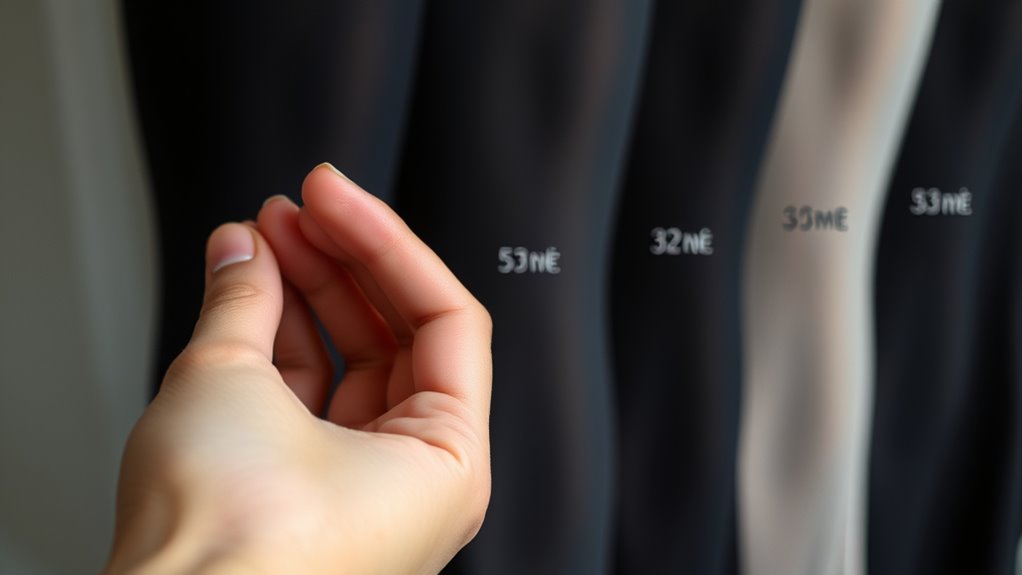
Understanding denier is essential because it directly influences the look of your tights. The denier determines how sheer or opaque your tights appear, affecting the overall style. Lower denier tights, under 20, give a natural, barely-there finish, ideal for a subtle, delicate look. They’re perfect for warmer weather or when you want a light touch of coverage. Medium denier (30–50) offers a balance, providing moderate coverage with a semi-sheer or semi-opaque appearance, suitable for most outfits and seasons. Higher denier tights, above 50, create a bold, opaque look, perfect for colder weather or when you want a more polished, uniform appearance. Your choice of denier impacts how much skin shows, how elegant or casual your outfit appears, and the overall aesthetic you want to achieve.
Selecting the Ideal Denier for Different Occasions
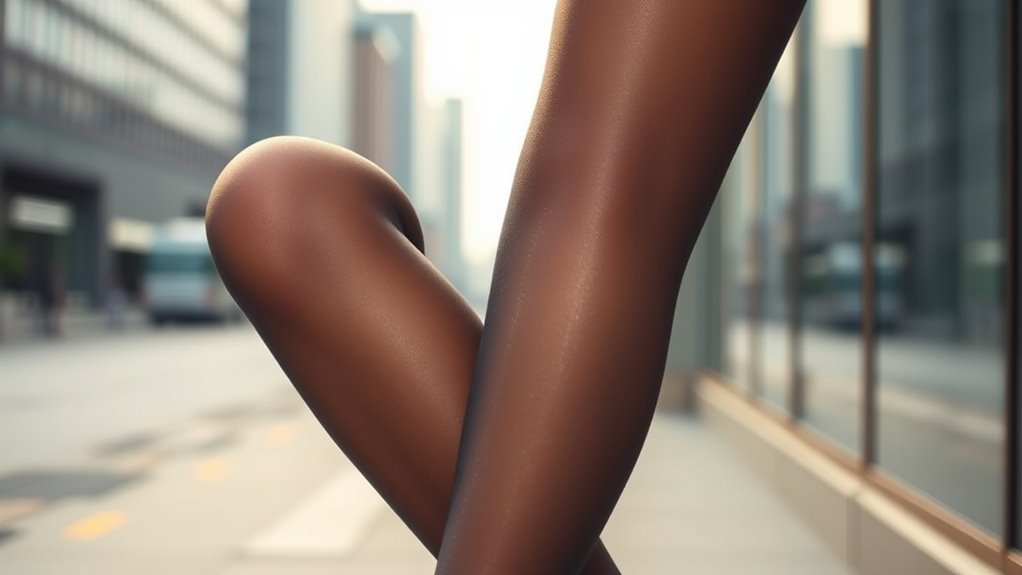
When choosing tights for different occasions, you need to take into account the event’s formality, your comfort, and the weather. For formal events, opt for sheer or semi-opaque tights that add elegance without overpowering your outfit. On casual days or in cold weather, thicker, opaque tights provide warmth and a relaxed look. Additionally, selecting tights with appropriate denier thickness can enhance the overall appearance and functionality for each occasion. Considering the specific tights thickness can also influence your choice of footwear and style, ensuring a cohesive and comfortable look. Being aware of resources and tools available for selecting the right tights can help you make more informed decisions. Implementing leadership skills such as research and strategic planning can also streamline your shopping process, making it more efficient. Furthermore, understanding how personality traits may influence your style preferences can aid in choosing tights that complement your overall look and confidence.
Formal Event Attire
Choosing the right denier for a formal event depends on the occasion and your desired look. For most formal occasions, opt for tights between 15 and 40 denier. These sheer to semi-sheer tights offer a polished, elegant appearance without appearing too heavy or casual. If you want a classic, understated look, choose 15–20 denier tights that subtly enhance your legs while maintaining sophistication. For a more refined, professional vibe, go for 30–40 denier tights with a semi-opaque finish, providing a smooth, uniform appearance. Avoid very thick or very sheer tights, as they can disrupt the formal aesthetic. Remember, darker shades like black or navy complement formal attire best, and choose a denier that balances elegance with comfort for your event. Additionally, considering the Vetted options for tights can help ensure quality and durability. When selecting tights, it’s also helpful to consider the optimum denier for different skin tones and outfit types to achieve the best overall look. Incorporating the right material quality can further enhance comfort and longevity.
Casual Daywear Options
For casual daywear, selecting the right denier depends on your comfort, style, and the occasion. If you prefer a natural, barely-there look, choose tights below 20 denier, perfect for warm days and relaxed outings. They add a touch of elegance without feeling heavy. For a slightly more coverage and durability, opt for 20–40 denier tights, which work well for errands or casual meet-ups. They provide a balance of semi-sheer coverage and some protection against minor snags. If you want a bit more warmth or a more opaque appearance, go for 40–50 denier tights, ideal for transitional weather or when you need extra coverage. These options keep your look casual yet polished, with enough variety to suit different day-to-day activities. Incorporating material types such as nylon or elastane can also influence the tights’ comfort, stretch, and longevity, helping you choose the best option for your needs. Additionally, understanding tights construction can guide you toward selecting more durable and comfortable options for everyday wear, especially when considering fabric blend for enhanced performance. A thorough knowledge of environmental considerations can also help you make eco-friendly choices in your wardrobe.
Cold Weather Wear
In cold weather, selecting the right denier for your tights is essential to stay warm and comfortable while maintaining your style. Higher denier tights, such as 60 or 80, provide extra insulation and durability, making them perfect for chilly days. These opaque options shield your legs from the cold, offering a cozy layer without sacrificing fashion. If you prefer a semi-opaque look, 40 or 50 denier tights balance coverage and warmth, ideal for transitional seasons or milder winter days. Avoid ultra-sheer tights below 20 denier, as they won’t provide enough warmth or protection. Remember, thicker tights also tend to be more resistant to snags and tears, making them a practical choice for winter activities and outdoor wear. Additionally, choosing tights with advanced fabric technology can enhance comfort and longevity during cold weather, especially as innovations in thermal insulation fabrics continue to improve performance. Incorporating proper layering techniques can further optimize warmth and style in colder climates, and selecting tights with moisture-wicking properties can help keep your skin dry and comfortable throughout the day.
How Denier Affects Comfort and Durability
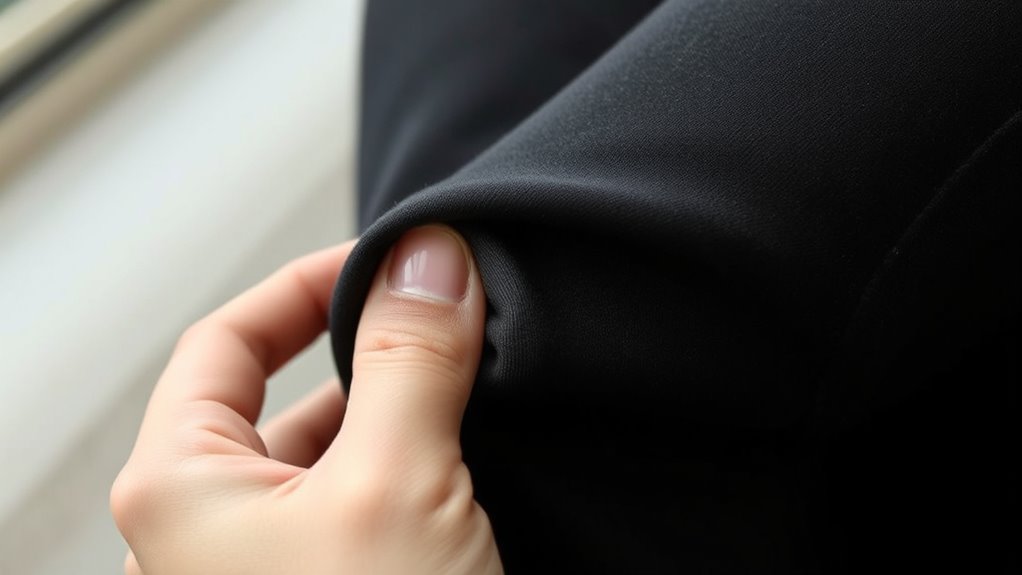
Your choice of denier directly impacts how comfortable and durable your tights feel throughout the day. Thinner, sheer options offer more flexibility but are more prone to snags, while thicker tights provide better resistance and last longer. Consider the season and your daily activities to find the right balance between comfort and strength. For a truly authentic look, opt for tights that incorporate natural materials, as they can enhance both comfort and durability. Additionally, understanding Gold IRA Rollovers can help you diversify your investments and secure your financial future.
Sheerness and Flexibility
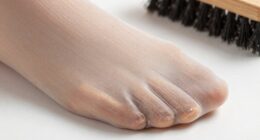
Sheerness and flexibility are directly influenced by a tights’ denier, with lower denier options offering a delicate, barely-there feel that molds closely to your legs. These tights are lightweight, providing a natural, almost invisible look, perfect for creating a subtle, elegant appearance. Because they’re thin, they tend to be more flexible, allowing for easy movement without feeling restrictive. This flexibility comes with less durability, making them more prone to runs or tears. Higher denier tights are thicker and less sheer, offering more structure and support. They tend to be less flexible but more resistant to damage, making them better suited for everyday wear or colder weather. Your choice depends on balancing the desired look with comfort and longevity. Additionally, the contribution of color accuracy in visual presentation can influence how these tights appear under different lighting conditions, impacting overall style and appearance. For optimal style and function, considering how the vibrational state affects your choices can help you select tights that align with your energy and aesthetic goals.
Resistance to Snags
Higher denier tights generally resist snags and tears better than their lower denier counterparts. Thicker yarns create a sturdier fabric that can withstand everyday hazards like jewelry, rough surfaces, or accidental pulls. While no tights are completely snag-proof, higher denier options reduce the likelihood of laddering and tearing, making them more durable for frequent wear. Sheer tights, with their delicate fibers, are more prone to catching and ripping, especially in busy environments. If you’re looking for longevity and resilience, opting for tights with a denier above 50 provides better protection against snags. Keep in mind, though, that even high-denier tights can be damaged if handled roughly or caught on sharp objects. Durability improves as denier increases, but careful wear remains essential.
Comfort in Different Seasons
Choosing the right denier for different seasons can substantially impact your comfort and the tights’ durability. In warmer months, lower denier tights (below 20) keep you cool and provide a natural, barely-there feel. They’re lightweight and breathable but tend to be less durable, so handle them carefully. For transitional seasons, tights with 30–50 denier strike a balance between comfort and coverage, offering moderate warmth without overheating. In colder weather, thicker tights (above 50 denier) provide insulation and help keep you warm, though they may feel heavier. Higher denier tights are more resistant to snags and tears, making them more durable for winter wear. Matching your tights’ denier to the season guarantees you stay comfortable while also enjoying their longevity. Additionally, Nike Tech innovations have influenced some of the latest performance tights, blending style with functionality for active wear throughout the year.
Matching Denier to Seasonal Climate Conditions
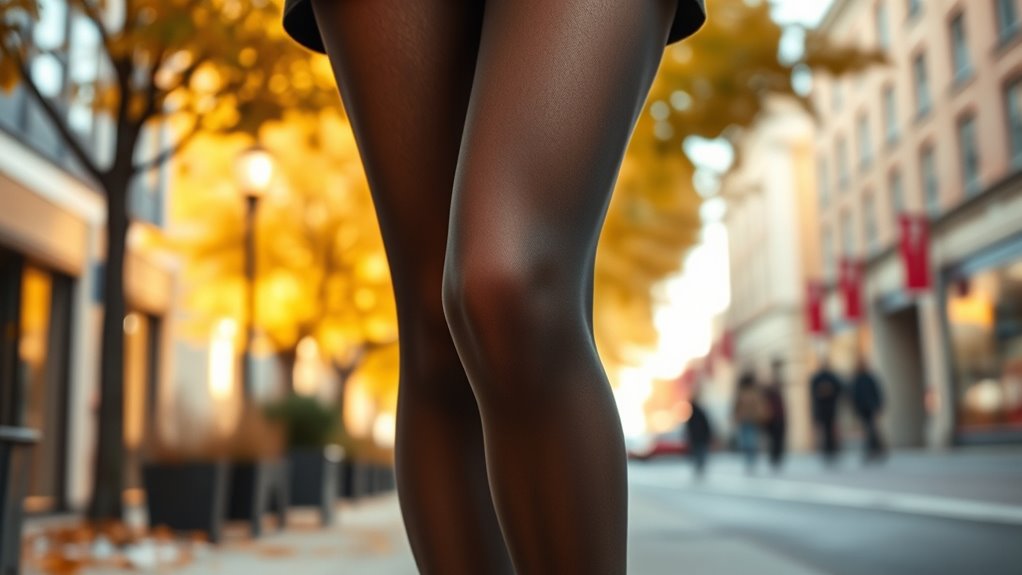
Matching the right denier to seasonal temperatures guarantees your tights are comfortable and practical. In warmer months, opt for lower denier tights, like 15–30, which are sheer and breathable, keeping your legs cool and natural-looking. These are perfect for spring and summer, especially when paired with light dresses or skirts. As temperatures drop, choose higher denier tights—around 40–60—offering more coverage and insulation without feeling heavy. For cold winter days, thicker tights, 80 denier or more, provide warmth and durability, ideal under thicker skirts or pants. Adjusting your tights’ denier based on seasonal weather ensures you stay comfortable, stylish, and appropriately layered, no matter the forecast. Always consider both temperature and your activity level when selecting the right denier for each season.
Tips for Choosing the Right Denier Based on Your Style
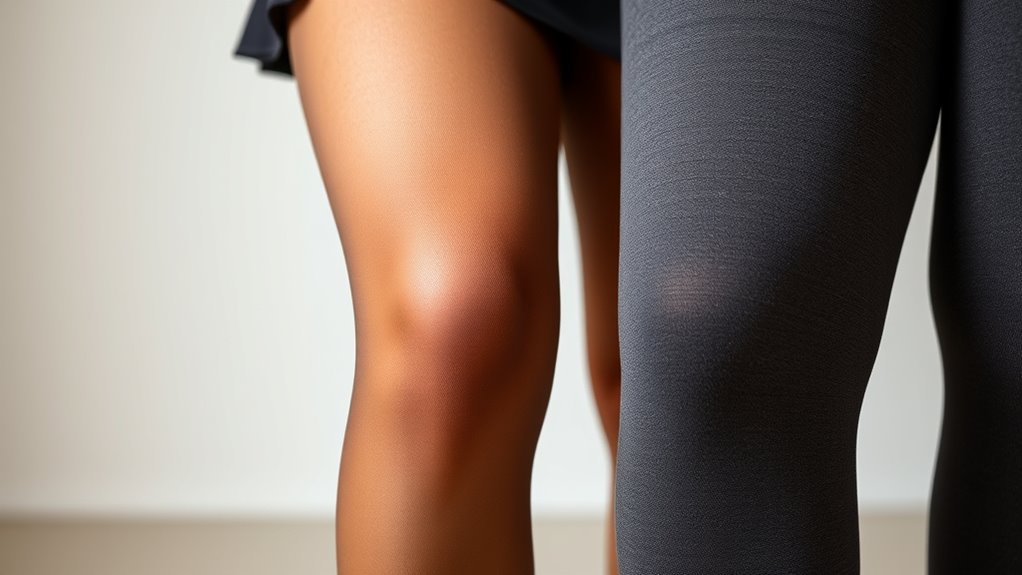
Your personal style plays a key role in selecting the right denier for your tights. If you prefer a delicate, natural look, opt for sheer tights below 20 denier—perfect for spring or summer outfits, especially with mini skirts or dresses. For a polished, professional appearance, choose semi-opaque tights between 30 and 50 denier, which balance coverage with elegance, ideal for office wear or trans-seasonal looks. If your style leans toward cozy, layered, or winter-ready outfits, higher denier tights above 50 provide warmth and a bold finish, especially with shorts or skirts in colder weather. Consider your overall aesthetic—shiny tights for a glamorous vibe or matte for understated sophistication. Matching your tights’ denier to your style ensures your look feels intentional and comfortable.
Common Mistakes to Avoid When Picking Tights
One common mistake is selecting the wrong denier for the climate or occasion, which can lead to discomfort or an unsuitable look. If you choose very sheer tights in cold weather, you won’t stay warm, and your outfit might look out of place. Conversely, opting for thick, opaque tights during hot summer months can cause overheating and discomfort. Another mistake is ignoring the occasion’s formality; sheer tights are better for delicate, elegant looks, while opaque tights suit casual or colder weather. Also, don’t assume higher denier always means better durability—choosing too thick tights for a quick outing can be unnecessary. Be mindful of the setting, weather, and your comfort needs to select the appropriate denier and avoid these common pitfalls.
Frequently Asked Questions
Can I Wear Different Denier Tights in the Same Outfit?
Yes, you can wear different denier tights in the same outfit to add visual interest or extra warmth. For example, pair sheer tights with opaque shorts or a skirt for contrast, or layer thicker tights under a dress for warmth. Just make sure the textures and shades complement each other, creating a cohesive look. Mixing denier levels lets you play with style and functionality simultaneously.
How Do I Care for and Wash Tights of Varying Denier?
You should hand wash or use a delicate cycle with cold water for tights of all denier levels. Avoid harsh detergents and twisting the fabric to prevent damage. For extra care, lay them flat to dry instead of hanging or using a dryer. Higher denier tights are more durable, but all tights benefit from gentle handling to keep them looking their best and lasting longer.
Are Higher Denier Tights Suitable for All Skin Tones?
Did you know that opaque tights (above 50 denier) can hide most skin tones and imperfections? Higher denier tights are generally suitable for all skin tones because they provide a uniform leg color, making them versatile. If you choose a shade close to your skin tone, you’ll get a natural look. Don’t worry—these tights work well for everyone, offering coverage and warmth regardless of your skin color.
Does the Denier Affect the Tights’ Stretchability?
Yes, the denier can affect the tights’ stretchability. Generally, lower denier tights are more elastic and tend to stretch more easily, providing a snug fit. Higher denier tights, made with thicker yarns, may have less stretch but offer more structure and durability. However, the actual stretch also depends on the material blend and design. So, choose tights that balance your desired fit, comfort, and appearance.
How Does Denier Influence the Tights’ Price Point?
Higher denier tights usually cost more because they’re thicker, more durable, and require more yarn. These qualities make them last longer and resist snags better, which adds to their price. Sheer, lower-denier tights are generally cheaper since they use less material and aren’t as durable. So, your budget and needs for durability or transparency will influence what denier tights you choose and how much you’ll spend.
Conclusion
Choosing the right denier enhances both your style and comfort. Remember, the average woman owns about seven pairs of tights, each suited for different occasions and seasons. By understanding denier’s impact on appearance, durability, and comfort, you can make smarter choices. Don’t overlook seasonal needs or common pitfalls—doing so can extend your tights’ lifespan. With the right knowledge, you’ll confidently pick tights that match your style and ensure you feel great every time you wear them.