
To prevent runs in tights, handle them gently and avoid rough fabrics or snagging accessories. Store them flat and use mesh laundry bags to protect against damage during washing. For quick repairs, act fast with fabric glue or sew small tears with matching thread to keep them intact longer. Following proper care routines and choosing durable fabrics help extend their lifespan. If you want to learn effective tips, keep exploring ways to keep your tights looking their best.
Key Takeaways
- Choose tights made from durable fabrics like nylon-spandex blends to reduce the risk of runs and tears.
- Handle tights gently when putting on or removing, smoothing out wrinkles to prevent snags.
- Store tights flat or in mesh bags to minimize stretching and surface damage.
- Act quickly with small tears by sewing a zigzag stitch or applying fabric glue to prevent further damage.
- Follow proper washing and drying instructions, such as air drying and using delicate cycles, to maintain fabric integrity.
Choosing the Right Tights for Durability
When selecting tights for durability, it is vital to focus on the materials and construction. Fabric blends play a significant role in how well your tights hold up over time. Look for tights made from sturdy combinations like nylon and spandex, which offer both stretch and strength. Avoid cheap, single-fiber options that tend to snag or rip easily. Brand durability also matters; reputable brands often maintain higher quality standards, ensuring your tights last longer. Check product reviews and labels to gauge their resilience. Well-made tights should have flat seams and reinforced toes, which add to their robustness. By choosing the right fabric blends and trusted brands, you can enjoy tights that resist runs and keep you comfortable through repeated wear. Additionally, understanding the differences between various fabric blends can help you select products that match your lifestyle and preferences for durability and comfort. Being aware of fabric quality can further guide you toward more durable options and help you avoid less reliable products. Choosing high-quality materials such as nylon-spandex blends can significantly improve longevity. Moreover, proper care and washing techniques can significantly extend the lifespan of your tights, preventing unnecessary wear and tear.
Proper Handling and Storage Techniques
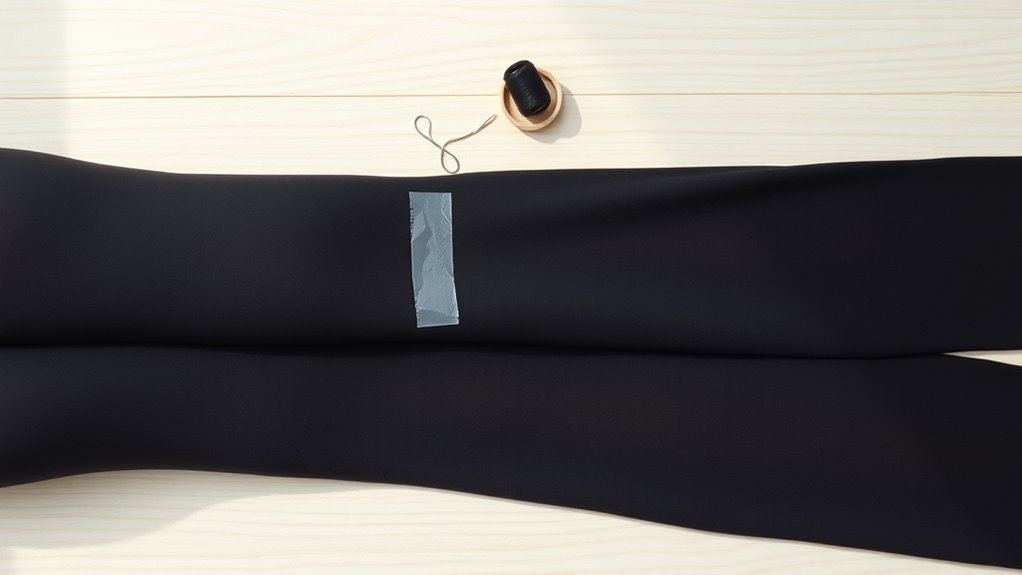
To keep your tights in great shape, handle and store them carefully. Store them flat to prevent stretching, and keep them away from sharp objects that could cause runs. Always wash with gentle care to preserve their elasticity and fabric quality. Consider using proper storage techniques to further protect your hosiery from damage. Additionally, following recommended washing methods can help maintain their overall integrity and extend their lifespan.
Store Tights Flatly
Storing tights flat helps prevent them from stretching or developing unwanted creases that can lead to runs. When you fold tights carefully, you reduce the risk of damage and keep them looking their best. To organize efficiently, consider color coordination and current fashion trends, making it easier to find the perfect pair quickly. Use the table below to help with your storage strategy:
| Color Coordination | Fabric Type | Trendy Styles |
|---|---|---|
| Neutrals & Basics | Sheer & Opaque | Patterned & Solid |
| Brights & Pastels | Textured Fabrics | Classic & Modern |
Proper folding and organized storage preserve your tights’ elasticity and appearance, ensuring they last longer and stay fashionable. Incorporating proper handling and storage techniques into your storage routine can also help maintain the quality of your tights over time. Additionally, avoiding unnecessary tension and stress during handling is crucial for preventing runs and extending the lifespan of your tights. For added protection, consider using storage accessories like hosiery organizers or small pouches to prevent snags and damage. Being mindful of fabric care can further extend the durability of your tights and keep them looking new longer.
Avoid Sharp Objects
Ever wonder how sharp objects can damage your tights? They’re the main culprits behind runs and tears. To prevent this, follow these tips:
- Keep jewelry contact minimal; remove rings, bracelets, and sharp accessories before handling tights.
- Store tights away from items with jagged edges, like scissors or pins.
- Be mindful when reaching into bags or drawers—avoid contact with sharp objects that can snag fabric.
- Use soft storage options, such as tissue paper or garment bags, to protect your tights from accidental contact with sharp items.
- Regularly inspect your storage area to ensure no potential hazards are lurking that could cause damage.
- Be aware that material strength varies among tights, so choosing durable fabrics can reduce the risk of runs.
- Additionally, understanding the technology used in tights can help select more resistant options, minimizing the chance of tears. Incorporating proper handling techniques can also extend the lifespan of your tights, preventing damage from mishandling.
- Remember that proper water care and avoiding exposure to harsh chemicals can help maintain the integrity of your tights over time.
Wash With Care
Proper handling and storage during washing can considerably extend the life of your tights. Start by choosing a gentle detergent suited for delicate fabrics; harsh chemicals can weaken the fibers and cause runs. When washing, always opt for cold or lukewarm water, as high temperatures can damage the elasticity and fabric structure. Turn your tights inside out to protect the outer surface and prevent pilling. Use a mesh laundry bag to minimize friction and stretching during the wash cycle. Avoid wringing or twisting your tights, as this can cause tears. After washing, lay them flat to dry instead of hanging, which helps maintain their shape. Proper handling and storage techniques preserve elasticity and prevent damage, keeping your tights looking their best longer. Additionally, incorporating sound vibrations in your routine can promote cellular health and contribute to overall fabric resilience.
Tips for Wearing Tights Without Snags
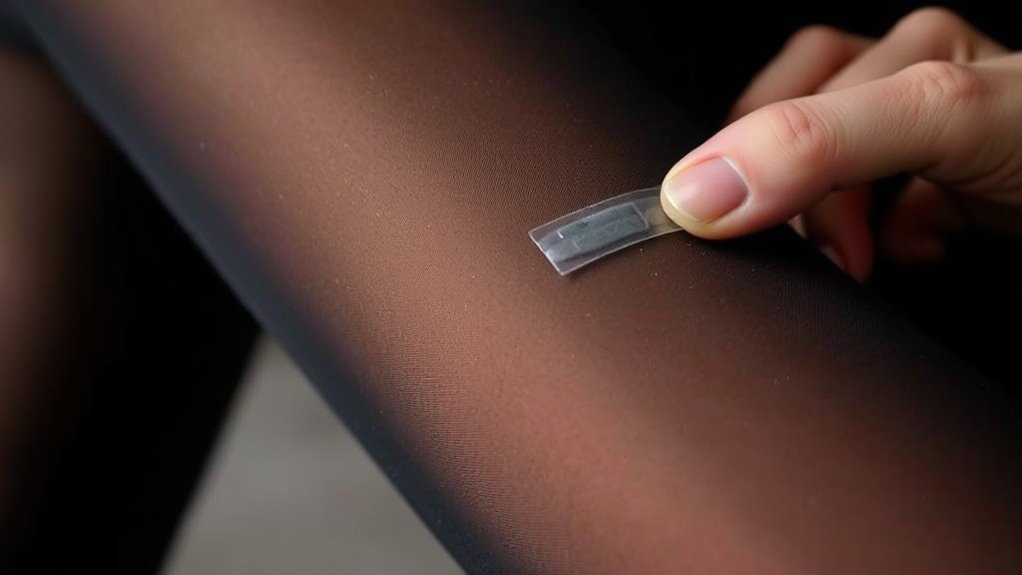
Wearing tights without snagging them requires some careful attention to how you handle and dress in them. First, choose the right fabric types; smoother fabrics like nylon or spandex are less prone to snags. Second, pay attention to fashion coordination—avoid rough textures or accessories that could catch on your tights. Third, always step into your tights carefully, avoiding sharp jewelry or nails that might tear the fabric. Fourth, handle your tights gently when putting them on or taking them off, smoothing out wrinkles to prevent pulls. By selecting the proper fabric types and coordinating your fashion choices wisely, you can reduce snag risks and keep your tights looking flawless longer.
Preventive Measures During Daily Activities

To keep your tights snag-free throughout the day, it’s important to be mindful of your daily activities. Avoid sharp jewelry or rough surfaces that can catch on the fabric, which can compromise its elasticity and lead to runs. When sitting or bending, handle your tights gently to prevent overstretching, as excessive pulling weakens the fabric and causes color fading. Be cautious with seat edges or rough furniture to maintain the tights’ vibrant appearance. Also, opt for darker shades if you’re concerned about color fading from repeated washing. Regularly check your tights for signs of wear, and store them properly to avoid unnecessary stretching or snagging. Understanding fabric durability can help you choose tights that last longer and resist damage. Incorporating gentle washing techniques can further extend their lifespan. These simple measures help preserve the fabric elasticity and keep your tights looking fresh longer.
Quick Fixes for Small Runs and Tears
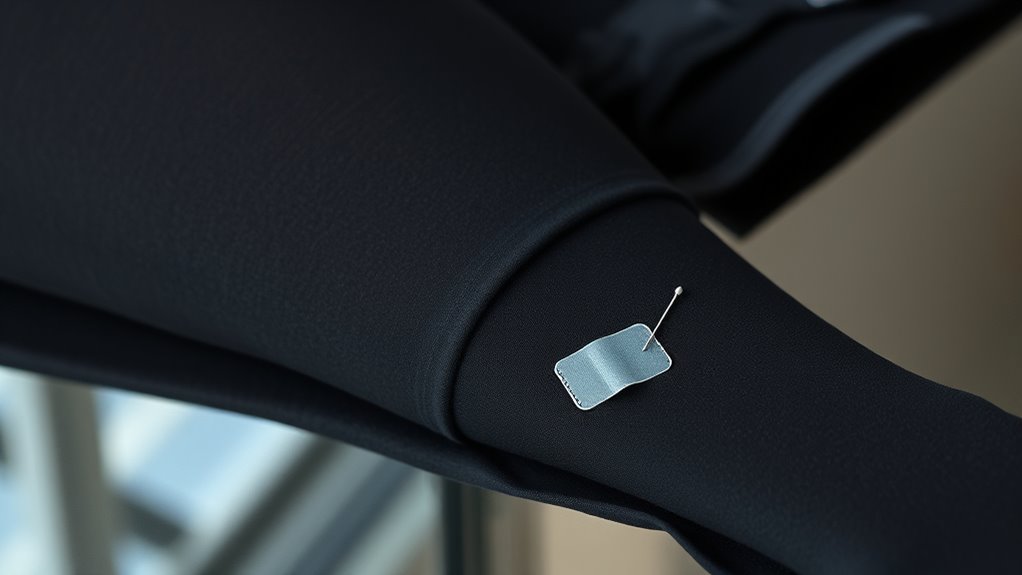
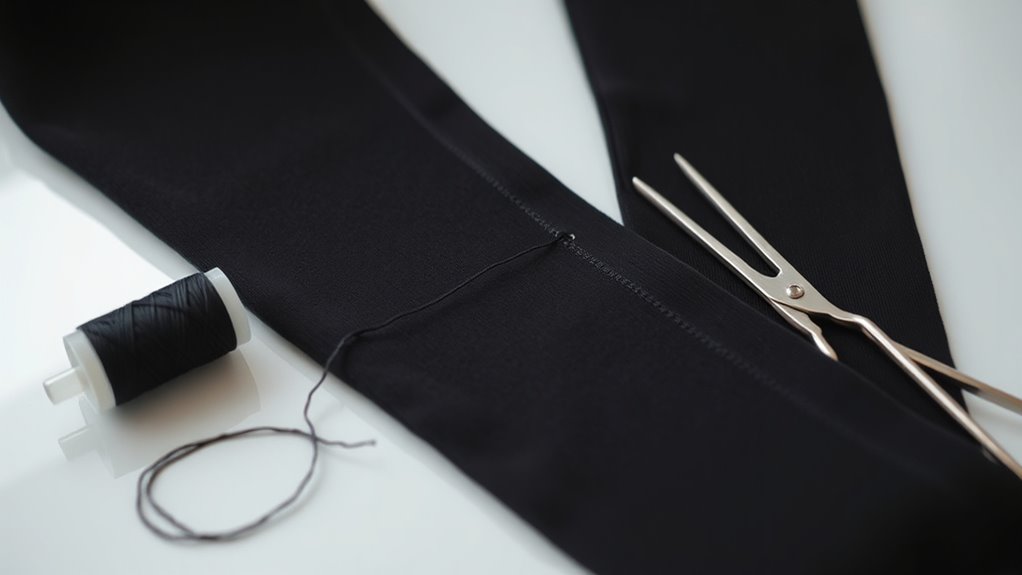
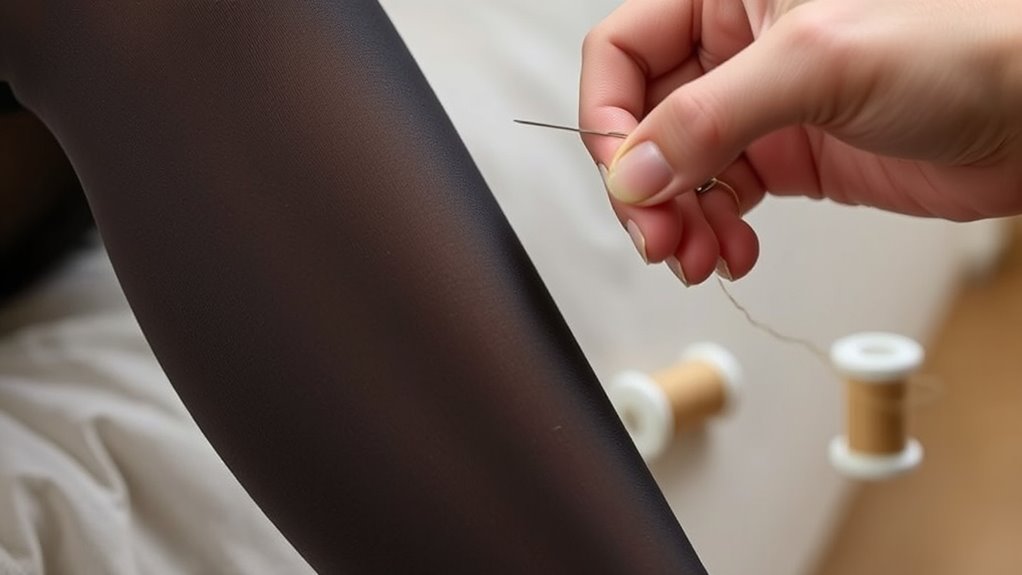
When you notice a small run or tear in your tights, acting quickly can prevent it from worsening. First, gather a needle and matching thread or a fabric glue designed for tights. Second, carefully apply fabric reinforcement around the tear to strengthen the area. Third, use tear mending techniques such as sewing a small zigzag stitch to secure the edges. Fourth, if you prefer a no-sew option, apply a clear fabric adhesive carefully over the tear. These quick fixes help keep your tights in shape and extend their wear. Whether you choose tear mending or fabric reinforcement, acting promptly prevents the damage from spreading and keeps your tights looking neat. Quick attention saves you time and money in the long run.
Long-Term Care to Extend Tights’ Lifespan

Proper long-term care is essential for maximizing your tights’ lifespan and maintaining their appearance. To do this, pay attention to fabric blends; some materials are more durable than others, and choosing tights with a sturdy blend can prevent runs and tears. Always follow the care instructions on the label, as improper washing can accelerate color fading and weaken fibers. Hand washing or using a delicate cycle helps preserve the fabric’s elasticity and vibrant colors. Avoid high heat when drying—air drying is best to prevent damage. Regularly rotating your tights also reduces stress on the fabric, extending their life. With proper care, you’ll enjoy your tights longer, keeping their fit, color, and smooth appearance intact over time.
Frequently Asked Questions
How Can I Identify Quality Tights That Resist Runs Before Purchasing?
When choosing tights that resist runs, you should look for high-quality fabric composition, like nylon blended with spandex for durability. Check the brand reputation for reliable, well-made products. Read reviews and product details to see if the tights are designed to withstand snags. You can also inspect the material’s weave and thickness in-store. By considering these factors, you’ll find tights that are more resistant to runs and last longer.
Are There Specific Detergents Best Suited for Maintaining Tights’ Durability?
Think of your tights as delicate dancers, needing gentle care to perform their best. You should avoid harsh fabric softeners and stain removers, which can weaken fibers and cause runs. Instead, opt for mild detergents designed for delicate fabrics, and skip fabric softeners altogether. These choices keep your tights resilient, smooth, and long-lasting. Treat them with care, and they’ll stay beautiful, run-free, and ready for your next stylish move.
Can Certain Fabrics or Weaves Reduce the Likelihood of Runs Forming?
Certain fabric blends and weave patterns can help reduce the chances of runs forming in your tights. Look for tights made from stronger fabric blends like nylon and spandex, which offer durability. Additionally, tights with tighter or denser weave patterns are less prone to snags and runs. Choosing these options allows you to enjoy longer-lasting tights, as the fabric and weave work together to resist damage during regular wear.
What Are the Signs That Tights Are Likely to Develop Runs Soon?
You notice tiny signs that tights might soon give way—fabric pilling, where small fuzz balls form, or subtle color fading that hints at wear. These clues suggest the fabric’s integrity is weakening, increasing your chances of runs. Stay alert to these early warnings, so you can take action before a tear appears. Recognizing these signs helps you protect your tights, keeping them looking fresh and intact longer.
How Do Environmental Factors Affect the Lifespan of My Tights?
Environmental factors considerably impact your tights’ lifespan. Exposure to sunlight weakens fabric strength, making runs more likely. Humidity and temperature fluctuations can also degrade the material over time. Proper storage methods, like keeping tights in a cool, dark drawer, help preserve their fabric strength and prevent damage. By protecting your tights from harsh conditions and storing them carefully, you extend their wear life and keep them looking new longer.
Conclusion
By choosing durable tights, handling them carefully, and taking preventive steps, you can keep runs at bay. Remember, a small snag today can become a tear tomorrow if neglected. Think of your tights as delicate treasures—nurture them with attention, and they’ll serve you longer. Don’t wait until it’s too late; act now to preserve their beauty. After all, your tights are more than just clothing—they’re a reflection of your care and style.