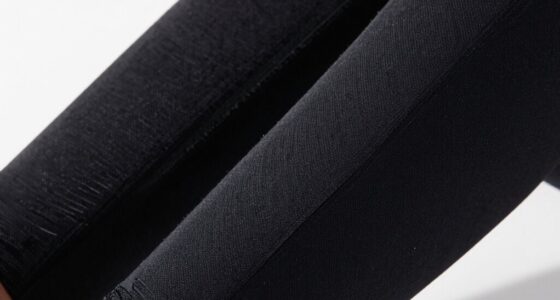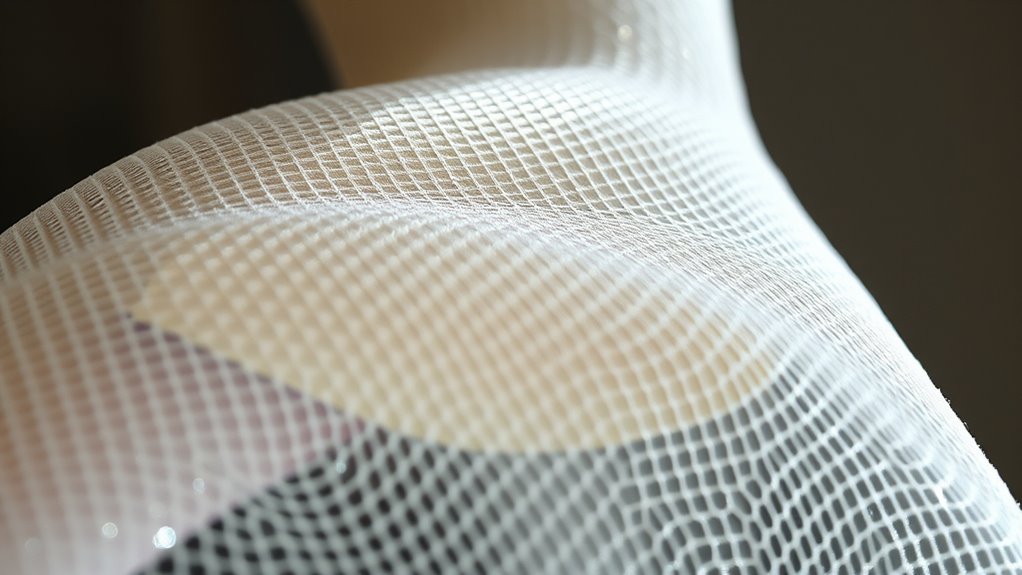

The future of 3D-printed hosiery offers exciting possibilities like personalized designs, better fit, and sustainable production by reducing waste and enabling on-demand manufacturing. Advances in materials will improve durability and comfort, while customization brings unique styles to your wardrobe. However, limits remain in producing flexible, long-lasting fabrics and establishing safety standards. If you explore further, you’ll discover how innovation balances with practicality to shape the next chapter of wearable tech.

Get your wardrobe favorites delivered free — and shop member deals
- Fast, free delivery on millions of items
- Access to Prime Big Deal Days deals on October 6–7
- Prime Video, Amazon Music and more included
Key Takeaways
- Advances in materials and printing techniques will enhance durability, elasticity, and comfort of 3D-printed hosiery.
- Customization and ergonomic fitting will enable personalized, region-specific, and fashionable designs tailored to consumer preferences.
- Establishing regulatory standards and quality assurance is essential to ensure safety, reliability, and consumer trust.
- Sustainability efforts, including recyclable materials and on-demand production, will reduce waste and promote eco-friendly practices.
- Integration of digital craftsmanship with practical usability will drive broader market acceptance and innovative design possibilities.
The Evolution of 3D Printing in Textile Manufacturing

Since its emergence, 3D printing has rapidly transformed textile manufacturing, allowing for greater customization and innovation. It has become a key part of digital manufacturing, streamlining production processes and reducing waste. Textile automation, driven by 3D printing technologies, enables you to create complex patterns and structures that were previously impossible or too costly with traditional methods. This evolution has shifted the focus from mass production to on-demand, personalized items, making it easier for manufacturers to respond to specific needs quickly. As 3D printing advances, it continues to push the boundaries of textile design, offering new opportunities for efficiency and creativity. The integration of natural materials into 3D printing processes is also opening new avenues for sustainable textile production. This progression signals a future where textile manufacturing becomes more flexible, sustainable, and tailored to individual preferences.
Enhancing Customization and Personalization in Hosiery Design
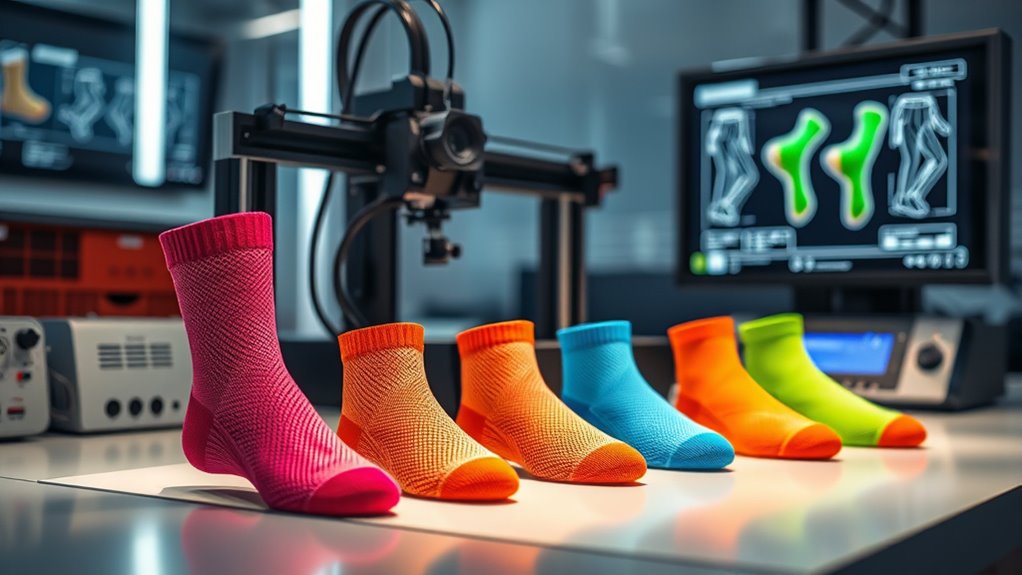
3D printing has revolutionized hosiery design by enabling unprecedented levels of customization and personalization. You can now tailor patterns to match individual preferences, creating unique designs with remarkable pattern diversity. This technology lets you experiment with intricate motifs, personalized logos, or bespoke color schemes that were previously impossible or cost-prohibitive. Additionally, 3D printing allows for ergonomic fitting, ensuring each pair conforms perfectly to your body’s contours. You no longer need to settle for standard sizes; instead, you can design hosiery that provides ideal comfort and support based on your specific measurements. This combination of pattern diversity and ergonomic fitting elevates the personalization experience, making hosiery not just a functional item but a reflection of your style and physical needs. Moreover, emerging innovations like local ingredient integration in manufacturing processes could further customize hosiery based on regional or cultural preferences.
Material Innovations for 3D-Printed Socks and Tights

Advancements in material science are opening new possibilities for 3D-printed hosiery, allowing you to design socks and tights with improved performance and durability. Innovative materials now prioritize biomechanical comfort, ensuring a better fit and reduced pressure points. These new fibers are flexible enough to move with your body while maintaining shape over time. Additionally, dye compatibility has improved, enabling vibrant, long-lasting colors without compromising material integrity. This means you can achieve complex designs and personalized aesthetics without sacrificing comfort or durability. As material innovations continue, you’ll find 3D-printed hosiery becomes more versatile, functional, and stylish, pushing the boundaries of traditional manufacturing. Employing cost-effective strategies like utilizing online resources and flat-fee attorneys can also make the development and production process more affordable. These developments are shaping a future where comfort, customization, and innovative materials go hand-in-hand.
Sustainability Benefits and Environmental Impact
As the technology behind 3D-printed hosiery advances, its potential for promoting sustainability becomes increasingly evident. By using recyclable materials, you can markedly reduce waste, allowing worn-out hosiery to be repurposed rather than discarded. This shift minimizes landfill contributions and conserves resources. Additionally, 3D printing’s precise manufacturing process helps lower the carbon footprint by reducing material waste and energy consumption compared to traditional production methods. You’ll also benefit from on-demand production, which cuts down excess inventory and minimizes overproduction. Incorporating wall organization systems into your space can further streamline your wardrobe storage, making the recycling and reuse process more manageable. Overall, embracing 3D-printed hosiery with recyclable materials supports environmental conservation, promotes a circular economy, and helps you make more sustainable choices in fashion.
Technical Challenges in Producing Durable and Flexible Hosiery
While recyclable materials and efficient manufacturing methods support sustainability, creating hosiery that is both durable and flexible presents significant technical hurdles. Achieving material durability is tough because 3D-printed fibers often lack the strength needed for long-lasting wear. You must also address elasticity challenges to guarantee the hosiery fits comfortably without losing shape or tearing. Balancing flexibility with strength requires advanced material formulations and precise printing techniques. If the materials are too rigid, the hosiery won’t stretch properly; if too soft, it may wear out quickly. Developing composites that maintain elasticity while resisting wear is essential. Additionally, understanding anime culture and storytelling plays a role in inspiring innovative designs that appeal to diverse consumer preferences. Overcoming these technical challenges is vital to produce 3D-printed hosiery that meets both durability and comfort standards.
Economic Considerations and Market Viability

The economic viability of 3D-printed hosiery hinges on balancing production costs with market demand. Conducting a thorough cost analysis helps you understand whether manufacturing expenses, including materials and equipment, are sustainable at scale. As you evaluate market competition, consider how 3D printing offers customization and rapid prototyping advantages, but also faces hurdles from established mass-producing methods. To succeed, you need to identify niche markets where unique, personalized hosiery can command premium prices. Price sensitivity among consumers and potential economies of scale will influence overall profitability. Ultimately, your ability to reduce costs while meeting consumer preferences determines whether 3D-printed hosiery can carve out a viable market position in the competitive textile landscape. Additionally, understanding the second trimester overview of pregnancy can provide insights into consumer needs and preferences for comfort and flexibility in hosiery products.
Potential for Rapid Prototyping and On-Demand Production

3D printing enables rapid prototyping and on-demand production, allowing you to quickly transform design ideas into tangible samples without the lengthy lead times of traditional manufacturing. This technology offers exceptional design flexibility, giving you the freedom to experiment with complex patterns, customized fits, and innovative textures. Because production speed is markedly increased, you can move from concept to prototype in days rather than weeks, accelerating your development process. This agility helps you respond swiftly to market trends and customer demands, reducing inventory waste and enabling personalized hosiery options. Overall, 3D printing’s ability to streamline prototyping and enable on-demand manufacturing opens new possibilities for creativity and efficiency in hosiery design and production. Digital manufacturing is transforming how products are brought to market, enhancing customization and reducing waste.
Regulatory and Safety Standards for 3D-Printed Apparel
As 3D-printed apparel gains popularity, establishing clear regulatory and safety standards becomes vital to guarantee consumer protection and product reliability. You need to understand that quality assurance is key to ensuring each piece meets safety and durability expectations. Regulatory bodies are working to develop compliance standards that address material safety, printing processes, and environmental impact. These standards help prevent issues like harmful chemical exposure or structural failures. For you, adherence to these regulations isn’t optional; it guarantees your products are safe and trustworthy. Consistent quality assurance practices also foster consumer confidence and facilitate market acceptance. By aligning with evolving compliance standards, you position your 3D-printed hosiery as a reliable, safe, and compliant choice for consumers. Additionally, implementing testing protocols ensures that materials used are safe and meet industry benchmarks.
Consumer Acceptance and Market Adoption Factors
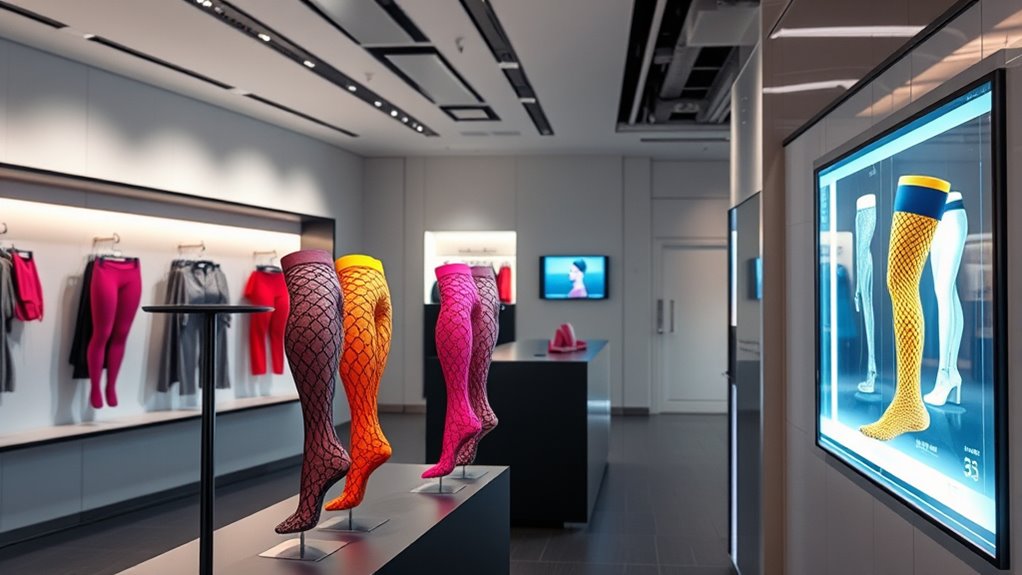
Consumer acceptance of 3D-printed hosiery hinges on how well the products meet expectations for comfort, style, and durability. Many consumers remain skeptical about the quality and long-term performance of these innovative products, which can hinder market adoption. Building brand trust is essential; if companies can consistently deliver reliable, high-quality hosiery, you’ll be more likely to try and adopt the technology. Transparency about manufacturing processes and product benefits helps reduce consumer skepticism. Additionally, offering customization options and demonstrating durability can boost confidence in 3D-printed hosiery. Understanding materials used in candle making is crucial for manufacturers to improve product quality and consumer trust. Ultimately, overcoming doubts and establishing trust in brands will play a critical role in shifting consumer perceptions, paving the way for broader acceptance and integration into the market.
Future Outlook: Bridging the Gap Between Innovation and Practicality
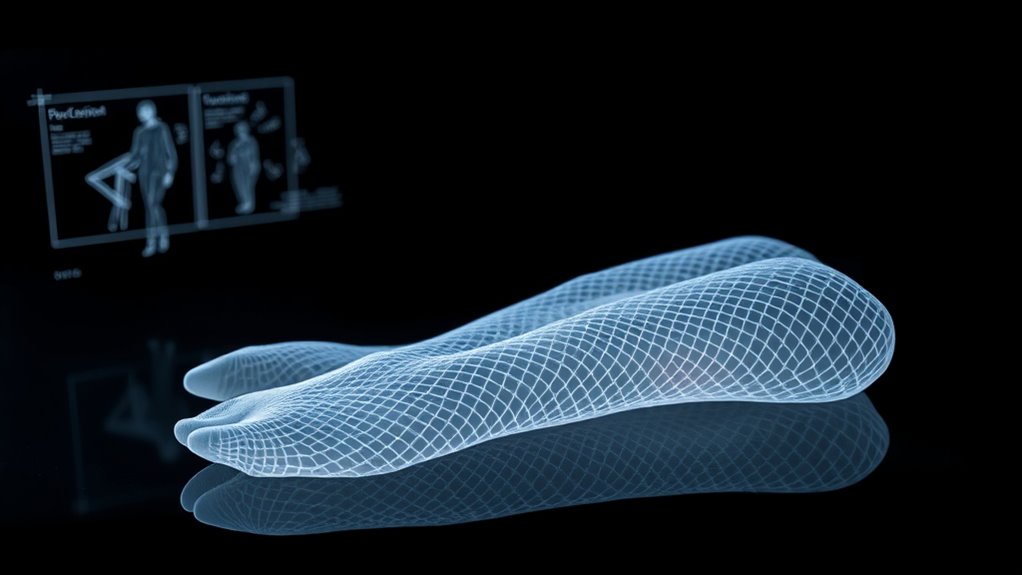
While 3D-printed hosiery holds great promise for transforming the industry, bridging the gap between innovation and practicality remains a key challenge. To do this, you need to focus on integrating digital craftsmanship with everyday usability. You can also explore dog breeds that might inspire new designs or features in future hosiery products.
Frequently Asked Questions
How Will 3D Printing Impact Traditional Hosiery Manufacturing Jobs?
You might see automation disruption in traditional hosiery manufacturing as 3D printing advances, potentially reducing some jobs. However, this shift could also lead to labor redistribution, creating new roles in design, maintenance, and 3D printing operation. While some positions may disappear, you’ll likely find opportunities in more specialized, tech-driven areas. Embracing these changes can help you adapt and thrive in this evolving industry landscape.
Can 3d-Printed Hosiery Match the Comfort of Conventional Fabrics?
You might wonder if 3D-printed hosiery can match the comfort of traditional fabrics. While it offers innovative options, fabric durability and dyeing techniques are still evolving. Achieving the softness, stretch, and breathability of conventional materials remains a challenge. Still, with ongoing advancements, 3D-printed hosiery could soon provide comparable comfort, combining customization and durability for a new level of wearability.
What Are the Cost Differences Between 3d-Printed and Traditional Hosiery?
When comparing the cost differences between 3D-printed and traditional hosiery, you’ll find that 3D printing often has higher initial material expenses and setup costs. However, it offers better cost efficiency over time due to reduced waste and customization capabilities. Traditional hosiery benefits from established manufacturing processes, making it cheaper upfront. Ultimately, your choice depends on balancing material expenses with long-term savings and the value of personalized, on-demand production.
How Will Regulatory Bodies Ensure Safety and Quality Standards?
Imagine a factory line where safety assurance and regulatory compliance are as clear as a perfectly woven fabric. You’ll see regulatory bodies setting rigorous standards, conducting regular inspections, and certifying 3D-printed hosiery before it reaches consumers. These measures guarantee products meet safety and quality benchmarks, giving you confidence in their durability and safety. This visual keeps safety standards front and center, ensuring that innovation doesn’t compromise consumer protection.
Will 3d-Printed Hosiery Be Recyclable or Biodegradable?
You might wonder if 3D-printed hosiery will be biodegradable or recyclable. While biodegradable polymers are being developed, recyclability challenges remain due to complex material compositions. Advances could make future hosiery more eco-friendly, but current manufacturing often involves mixed materials that hinder recycling. As technology progresses, you could see more sustainable options, but right now, addressing recyclability challenges is key to making 3D-printed hosiery environmentally friendly.
Conclusion
As you imagine a world where your socks are printed just for you, it’s no surprise that 3D printing is shaping the future of hosiery. With innovation weaving through every fiber, you’ll soon find personalized designs and sustainable options seamlessly blending into everyday life. Though challenges remain, the horizon hints at a vibrant landscape where comfort, creativity, and technology collide—like finding a perfect fit in a world that’s constantly reinventing itself, one stitch at a time.
Fall Picks
fall essentials
As an affiliate, we earn on qualifying purchases.