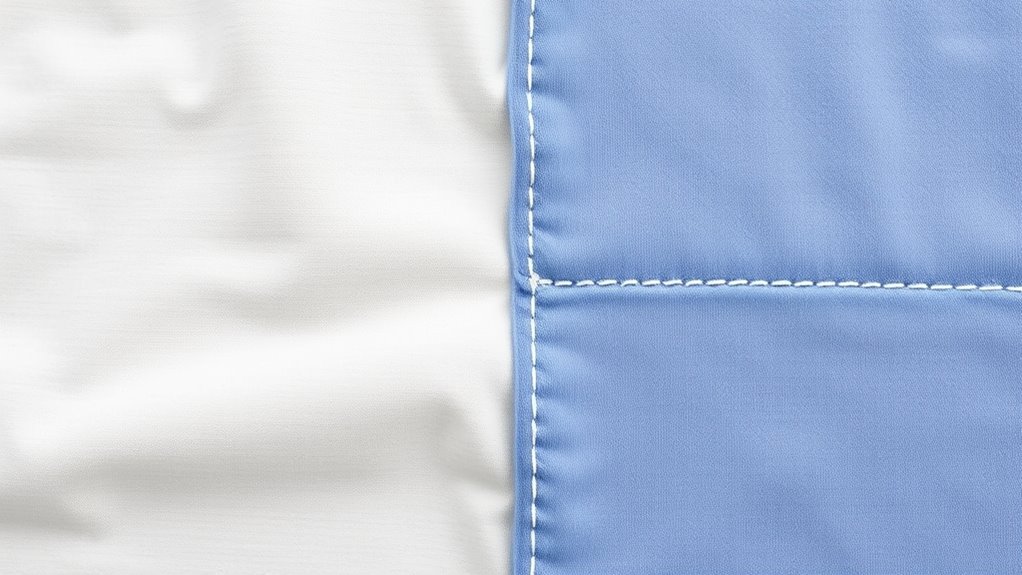

When comparing flat‑seam and overlock construction methods, you’ll find that flat-seams produce smooth, comfortable finishes ideal for activewear, but may take more time to sew. Overlocks use multiple threads for strong, neat edges, perfect for stretchy fabrics and quick production. Each method has its strengths and suitable applications; understanding their differences helps you choose the right technique. Keep exploring how these methods can elevate your sewing projects further.

Get your wardrobe favorites delivered free with Prime
- Fast, free delivery on millions of items
- Prime Video, Amazon Music and more included
- Member-only deals all year
Key Takeaways
- Flat-seam offers a smooth, low-bulk finish ideal for activewear, while overlock provides strong, flexible edges suitable for stretchy fabrics.
- Overlock stitches use multiple threads for durability and prevent fraying, whereas flat-seam focuses on a seamless, comfortable appearance.
- Flat-seam requires a standard sewing machine with zigzag or coverstitch functions; overlock needs a specialized serger with multiple thread tensions.
- Overlock is faster and efficient for quick seam finishing, but may involve higher initial investment; flat-seam is more cost-effective but more time-consuming.
- Both methods are suitable for different fabrics and garment types, with overlock excelling in knit fabrics and flat-seam preferred for minimal seam bulk.
Overview of Flat‑Seam Construction
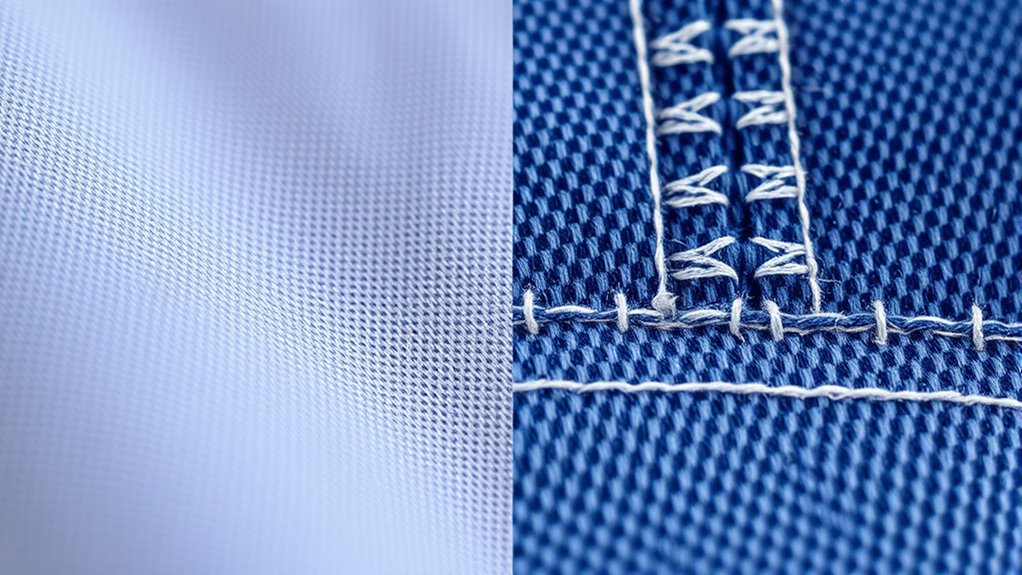
Flat-seam construction is a technique that creates a smooth, comfortable finish by sewing fabric edges together without overlapping. This method minimizes seam visibility, making it ideal for athletic wear or other garments where a sleek look matters. Because the seams lie flat against the skin, it reduces irritation and chafing. You’ll notice that flat-seam construction also handles fabric stretch well, maintaining durability without compromising comfort. This technique often uses specialized sewing machines that stitch the fabric edges carefully, ensuring a clean, even seam. The result is a seamless appearance that enhances the overall quality of your clothing. Whether for performance gear or everyday apparel, flat-seam construction offers a practical solution for a smooth, flexible, and professional finish. Durability is also a key benefit, as the seams hold up well over time with frequent use and washing.
Overview of Overlock Construction

Overlock construction offers strong seam durability and clean edge finishes that prevent fraying. It works well with a variety of fabrics, providing flexibility and a professional look. Understanding these points helps you see why many choose overlock techniques for their projects. For optimal results, selecting the appropriate spray tips and maintaining your equipment regularly can significantly enhance the quality of your finish.
Seam Strength and Durability
Because overlock construction involves multiple threads working together to secure the fabric edges, it generally produces seams that are both strong and flexible. This method offers excellent seam reinforcement, preventing fraying and unraveling under stress. The interlocked stitches distribute tension evenly, enhancing fatigue resistance over time. As a result, overlock seams maintain their integrity through repeated wear and washing, making them ideal for garments requiring durability. The flexibility of these seams also helps prevent tearing or seam failure when the fabric is stretched or moved frequently. Overall, the combination of seam reinforcement and fatigue resistance makes overlock construction a reliable choice for high-stress or active-use clothing, ensuring long-lasting durability without sacrificing comfort or flexibility. Additionally, consistent messaging about the benefits of overlock techniques can help reinforce brand quality and reliability in the marketplace.
Edge Finishing Techniques
Edge finishing is a key aspect of overlock construction, designed to prevent fabric fraying and guarantee neat, professional-looking seams. It helps minimize issues like seam pucker and edge fraying, which can compromise the garment’s appearance and durability. Overlock machines use different techniques to achieve clean edges, including:
- Simultaneous cutting and sewing to create a neat, finished edge
- Using multiple threads to secure fabric layers
- Applying overlock stitches that stretch with the fabric, reducing seam pucker
These techniques ensure your seams remain smooth and secure, preventing unraveling. Proper edge finishing not only enhances the look of your sewing projects but also extends their lifespan by maintaining a tidy, resilient edge that withstands wear and washing. Additionally, choosing the right construction method can significantly impact the overall quality and durability of your garments.
Fabric Compatibility and Flexibility
Understanding fabric compatibility is essential when choosing an overlock construction method, as not all fabrics respond equally to different stitches and tensions. Overlock machines excel with stretchability, making them ideal for knit fabrics and stretchy materials like spandex or jersey. These fabrics benefit from the flexibility of overlock stitches, which allow seams to stretch without breaking. Dog breeds like the Black Golden Retriever are known for their adaptability, much like how overlock stitches can adapt to different fabric needs. However, delicate or lightweight fabric types, such as chiffon or fine silk, may require adjustments or alternative techniques to prevent puckering or damage. Heavier fabrics like denim or canvas can handle the robust seam finishes of overlock machines, but tension settings might need fine-tuning to achieve smooth, secure seams. Recognizing how fabric types react to overlock stitches ensures durability and professional quality in your finished garment.
Tools and Equipment Required for Each Method

When choosing between flat-seam and overlock construction methods, you’ll need specific tools and equipment tailored to each technique. For flat-seam sewing, a standard sewing machine with zigzag or coverstitch capabilities is essential, along with the right thread selection for durability. Overlock methods require an overlock or serger machine, designed to trim fabric edges while sewing, along with sharp blades and specialized thread. Additionally, selecting natural materials such as linen or reclaimed wood can enhance the authenticity of the finished product, especially when working on projects that emphasize durability and rustic charm. Consider these key tools:
- Sewing machine types: Standard or coverstitch machines for flat seams; sergers for overlock seams
- Thread selection: Heavy-duty or specialty threads suited for each method
- Additional accessories: Presser feet, seam guides, and proper needles for precise stitching
Step-by-Step Process of Flat‑Seam Sewing
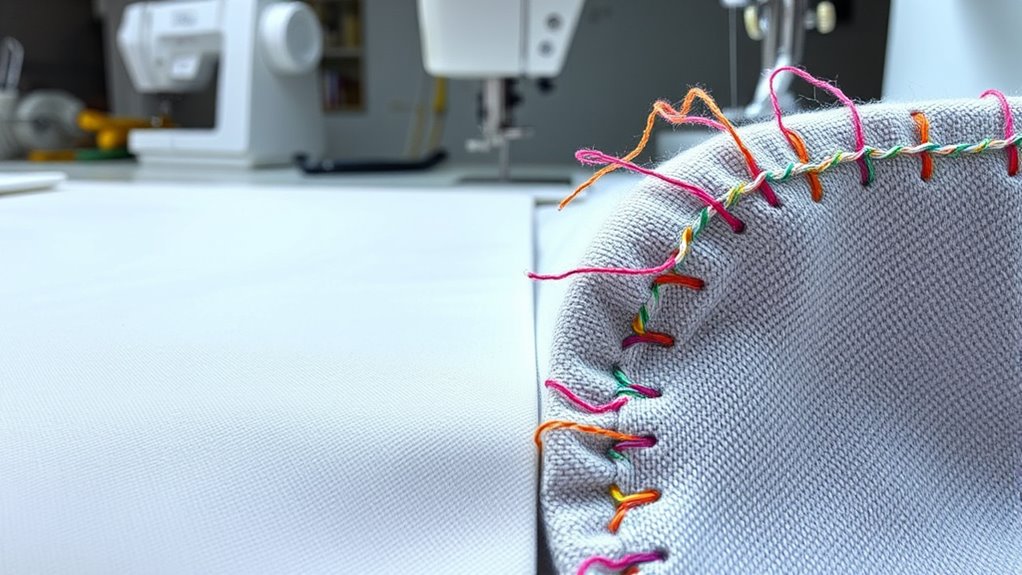
To create a flat seam, start by aligning the fabric edges you want to join, ensuring they’re smooth and properly positioned. Next, pin or clip the edges together to prevent shifting. Use correct fabric cutting techniques to achieve precise pieces, which simplifies sewing. Before sewing, check your sewing machine maintenance—clean and oil it to prevent skipped stitches. Stitch along the aligned edges with a straight stitch, maintaining a consistent seam allowance. Press the seam open with an iron, then topstitch for a clean finish. This process results in a smooth, durable flat seam. Here’s a helpful overview:
| Step | Action | Key Tip |
|---|---|---|
| 1 | Align fabric edges | Use pins or clips |
| 2 | Sew straight | Maintain seam allowance |
| 3 | Press seam open | Use steam for crispness |
| 4 | Topstitch | Secure and finish |
| 5 | Check machine maintenance | Prevent sewing issues |
Additionally, ensuring your sewing machine is properly maintained can significantly improve seam quality and durability.
Step-by-Step Process of Overlock Sewing

To start overlock sewing, you first prepare your fabric edges by trimming or stabilizing them. Then, set up your overlock machine with the correct stitch and tension settings. Finally, you execute the seam stitching, guiding the fabric smoothly through the machine for clean, professional edges. Many models also feature easy maintenance options that help keep your machine in optimal condition for consistent results.
Preparing Fabric Edges
Preparing fabric edges is a crucial first step before overlock sewing, ensuring your seams stay neat and durable. Proper edge finishing prevents fabric fraying and creates a polished look. To start, trim uneven edges for consistency. Then, press the raw edges flat to make handling easier. Finally, consider applying a stabilizer or lightweight interfacing if the fabric is prone to fraying. Automation technologies can be used to streamline this preparation process, especially when handling large projects or multiple fabrics.
Key steps include:
- Trimming excess fabric to achieve clean edges
- Pressing raw edges to flatten and prepare for overlocking
- Applying edge finishers or stabilizers to minimize fraying
These techniques help control fabric fraying, making your overlock stitches more effective and your finished project more professional. Taking these precautions ensures your seams stay secure and look tidy over time.
Setting Up Overlock Machine
Before you begin sewing, set up your overlock machine properly to guarantee smooth operation and professional results. Start by selecting the appropriate needle for your fabric, choosing between options like stretch or universal needles. Next, adjust the thread tension on each spool to ensure even, balanced stitches; improper tension can cause puckering or loose seams. Thread the machine carefully, following the threading guides to avoid tangles or missed loops. Check that the presser foot is in the correct position and that your cutting blade is securely in place if your machine has one. Test your setup on scrap fabric, making adjustments to tension and needle selection as needed. Proper setup ensures neat, durable seams and helps prevent common sewing problems. Additionally, verifying your threading accuracy can significantly improve stitch quality and prevent issues during sewing.
Executing Seam Stitching
Once your overlock machine is set up correctly, you can begin executing seam stitching by guiding the fabric steadily through the machine. Focus on maintaining proper seam alignment to guarantee even stitching. Adjust the stitch tension beforehand to prevent puckering or loose stitches. As you sew, keep a consistent speed, guiding the fabric smoothly without pulling. Pay attention to the seam allowance, keeping it aligned with the presser foot for neat results. Regularly check the stitch quality and tension, making adjustments as needed. Remember, a balanced stitch tension creates durable, professional seams.
- Keep the fabric aligned and steady throughout sewing
- Adjust stitch tension for smooth, even stitches
- Maintain consistent pace for neat, secure seams
Advantages and Disadvantages of Flat‑Seam and Overlock Techniques
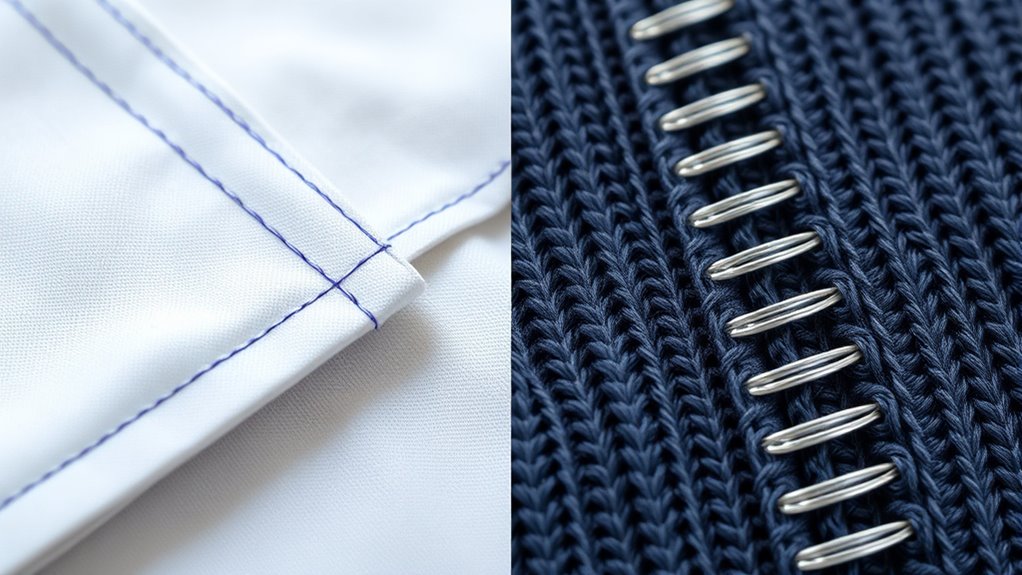
Understanding the advantages and disadvantages of flat-seam and overlock techniques helps you choose the right method for your sewing projects. Flat-seam construction offers a smooth, comfortable finish, reducing chafing, but it often takes more time, affecting sewing speed. It’s also more cost-effective since it uses fewer specialized machines and less thread. Overlock techniques, on the other hand, are faster and ideal for quick seams, increasing sewing speed, but they can be less durable and may require more investment in equipment. Overlocks provide a professional finish quickly, but the initial cost of the machine can be higher. Deciding between them depends on your priorities: flat seams for comfort and cost savings, or overlocks for efficiency and speed.
Best Applications and Fabrics for Each Method
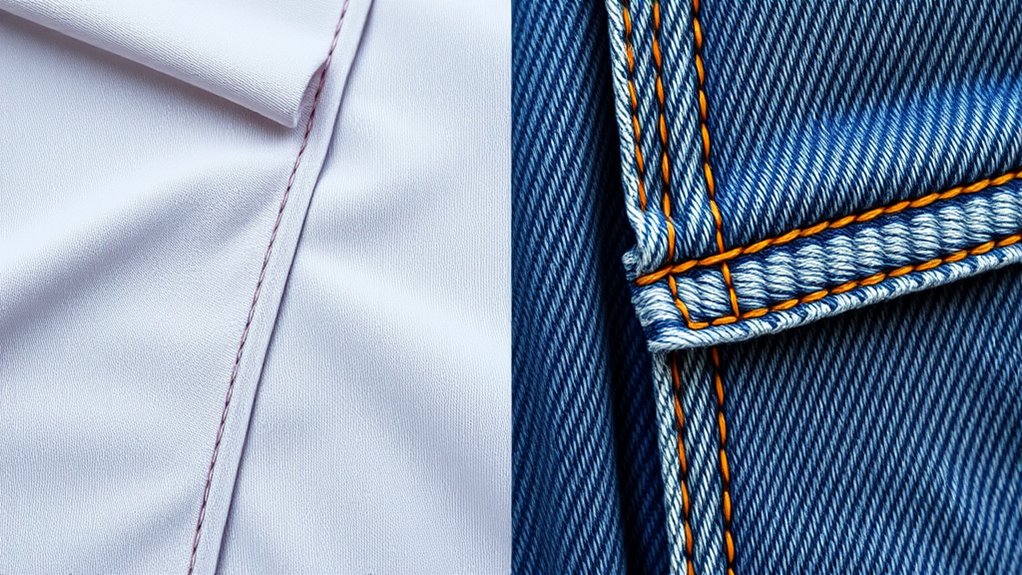
Choosing the right construction method depends heavily on the fabric and application. Flat‑seam works best with fabrics that require minimal seam bulk and a smooth seam appearance, especially in activewear and swimwear where fabric stretch is essential. Overlock is ideal for lightweight, stretchy fabrics like knits, offering quick finishes and durable seams.
Choosing the right construction method ensures comfort, durability, and a professional finish tailored to your fabric and project needs.
Consider these applications:
- Flat‑seam: sportswear, swimwear, and fitted garments with high fabric stretch
- Overlock: T-shirts, casual wear, and stretchy knit fabrics
- Both: layered garments or items needing clean seam appearance and flexibility
Matching the fabric stretch and seam appearance requirements ensures comfort, durability, and a professional finish, making it easier to select the best method for your project.
Frequently Asked Questions
How Do Flat‑Seam and Overlock Methods Impact Garment Durability?
Your garment’s durability depends on how well the seams hold up during wear. Flat-seam methods provide superior seam strength, making the garment more resistant to tearing, while also maintaining fabric flexibility for comfort. Overlock seams, on the other hand, offer good durability but might not be as strong, especially under stress. So, choosing the right technique affects how long your clothing lasts and how flexible it feels during use.
Can Both Techniques Be Combined in a Single Project?
Yes, you can combine flat‑seam and overlock techniques in one project. You’ll need to take into account fabric compatibility, as some fabrics work better with one method over the other. Also, check your sewing machine requirements—overlock stitches need a serger or overlock machine, while flat seams can be done with a standard sewing machine. Using both methods can enhance durability and finish, giving your garment a professional look.
Which Method Offers Better Resistance to Fraying?
Did you know that overlock stitches can reduce fabric fraying by up to 80%? When it comes to resistance to fraying and seam strength, overlock construction generally offers better protection. It neatly trims and encases raw edges, preventing unraveling. Flat-seam methods, while strong, expose raw edges more, making overlock the superior choice if you’re prioritizing durability and minimizing fabric fraying in your project.
Are There Specific Fabric Types Unsuitable for Either Method?
You should consider fabric stretch and sewing precision when choosing suitable fabrics. Delicate or highly stretchy fabrics, like silk or spandex, may be unsuitable for flat‑seam methods because they require precise sewing and can fray easily. Overlock machines handle stretch better, making them ideal for knit fabrics. If your fabric has minimal stretch and requires high sewing precision, flat‑seam methods might not be the best choice.
How Do Costs Compare Between Flat‑Seam and Overlock Sewing?
Think of sewing costs as a tug-of-war between fabric flexibility and sewing speed. Overlock machines often save you money with faster sewing, especially on stretchy fabrics, because they’re quick and efficient. Flat-seam methods may cost a bit more upfront, but they’re worth it for smoother finishes. Overall, overlock construction usually offers lower costs due to increased sewing speed, while flat-seam might add a few dollars for a cleaner, more durable seam.
Conclusion
Imagine your fabric edges seamlessly joining, whether you opt for the smooth, flat seams or the sleek overlock finish. Each method offers a unique touch—flat seams for a clean, polished look, and overlock for a professional, stretchy edge. By choosing the right technique, you craft garments that feel as good as they look, with stitches that dance along the fabric like a skilled artist’s brushstroke, turning your sewing project into a true masterpiece.
Halloween Picks
halloween
As an affiliate, we earn on qualifying purchases.