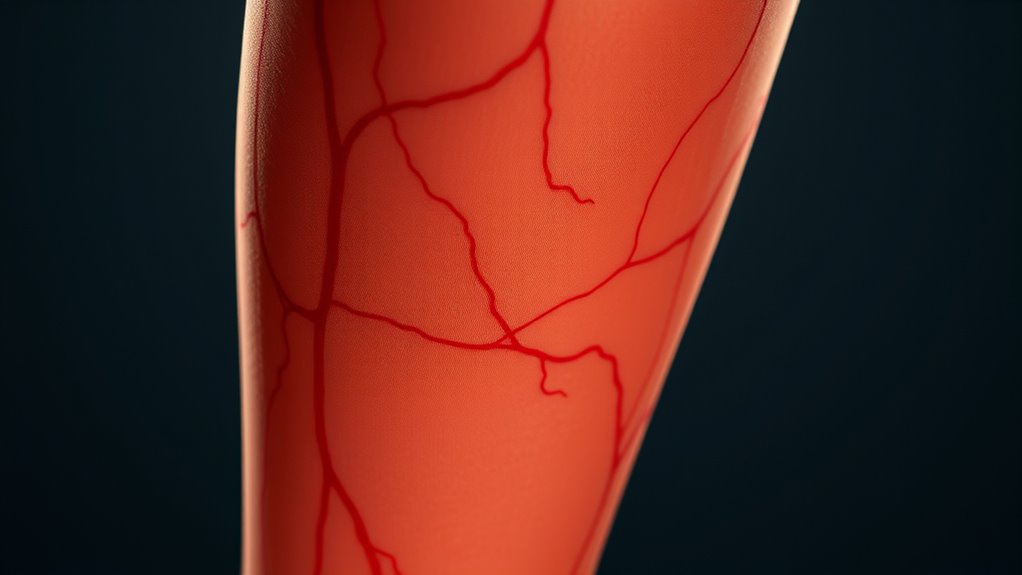
The biomechanics of compression enhance venous return by applying graduated external pressure, which reduces vein diameter and increases blood velocity. This pressure creates a gradient, helping blood flow upward toward the heart and preventing pooling. It also supports valve function, reducing reflux and dilation. The shear stress from compression stimulates nitric oxide release, improving vessel flexibility and circulation. Understanding these mechanics can help you optimize compression therapy and improve vascular health as you explore further.
Key Takeaways
- External compression applies graduated pressure, reducing vein diameter and increasing blood velocity to enhance venous return.
- Pressure gradients support valve function, preventing reflux and promoting unidirectional blood flow toward the heart.
- Compression decreases vessel compliance, making veins less distensible and resistant to dilation under increased blood volume.
- Mechanical pressure induces shear stress on endothelium, stimulating nitric oxide release, which relaxes vessel walls and improves circulation.
- Properly fitted compression gear optimizes biomechanical effects, ensuring effective support without impairing circulation.
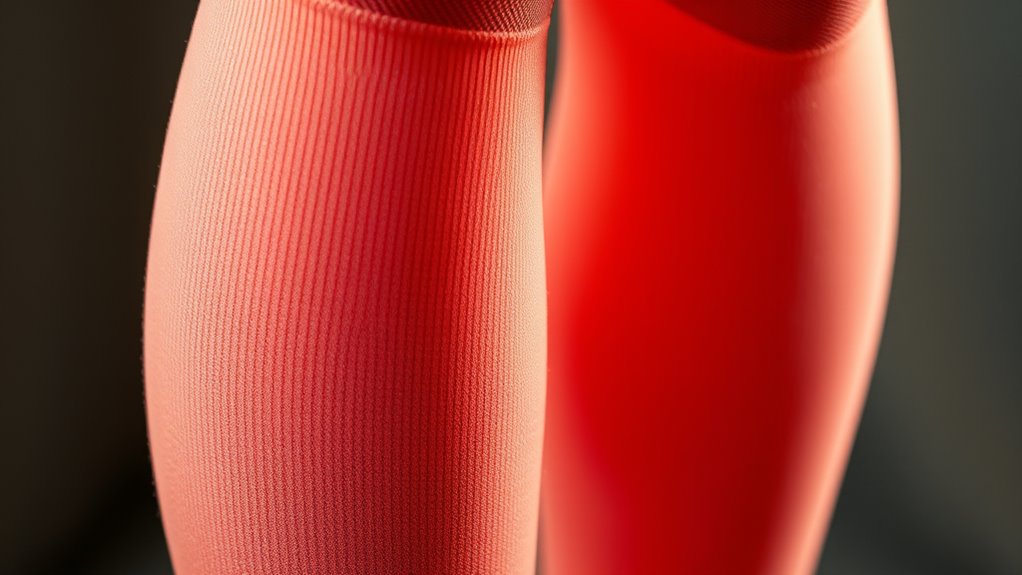
Understanding how compression influences venous return is key to grasping overall circulatory health. When you wear compression garments or apply external pressure, you’re actively affecting the way blood moves through your veins. The primary goal is to assist the natural flow of blood back to your heart, especially from the lower extremities where gravity can cause blood to pool. Compression works by exerting graduated pressure—tightest at the ankle and gradually looser as it moves up your leg. This gradient encourages blood to move upward, counteracting the effects of gravity and reducing venous stasis. As you wear compression, the external pressure compresses the veins, decreasing their diameter, which in turn increases blood velocity. This helps prevent blood from pooling and forming clots, making compression a crucial tool in managing conditions like varicose veins or deep vein thrombosis.
The biomechanics behind this process involve the principles of pressure gradient and vessel compliance. When external compression is applied, it reduces the compliance of the veins, making them less distensible. This means that veins are less likely to dilate under the influence of increased blood volume, which helps maintain a steady flow of blood toward the heart. The pressure exerted by compression garments or bandages also enhances the efficiency of the venous valves. These valves prevent backflow, and when veins are less distended, the valves function more effectively, reducing reflux and improving overall circulation. The increased venous return facilitated by compression not only supports cardiovascular health but also minimizes symptoms like swelling, fatigue, and discomfort often associated with venous insufficiency.
Furthermore, the biomechanics of compression influence the shear stress on the endothelial lining of blood vessels. Increased shear stress promotes the release of nitric oxide, a compound that relaxes blood vessel walls and enhances blood flow. This biological response complements the mechanical effects of compression, creating a positive feedback loop that maintains healthy circulation. It’s important to recognize that the effectiveness of compression depends on proper fit and graduated pressure levels; too tight can impair circulation, while too loose won’t provide sufficient support. Additionally, understanding the regulatory standards for compression garments ensures you select products that deliver appropriate pressure levels for optimal benefit. By understanding these biomechanics, you can choose suitable compression gear and use it effectively to optimize venous return, support your circulatory health, and prevent venous-related issues.
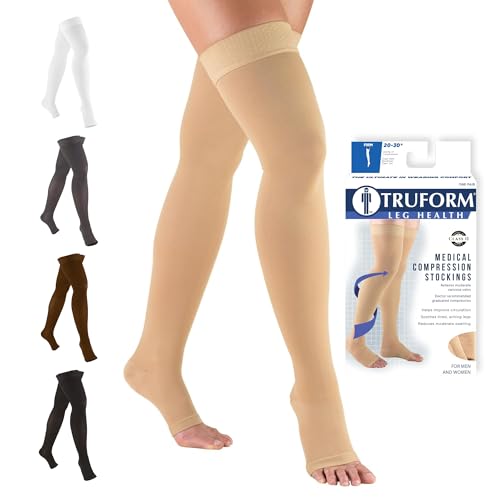
Truform 20-30 mmHg Compression Stockings for Men and Women, Thigh High Length, Dot-Top, Open Toe, Beige, Medium
Truform 0868; Medical support hose; Unisex style durable knit; 20-30 strength graduated compression
As an affiliate, we earn on qualifying purchases.
As an affiliate, we earn on qualifying purchases.
Frequently Asked Questions
How Does Muscle Fatigue Affect Venous Return Efficiency?
When your muscles get fatigued, their ability to effectively pump blood back to your heart decreases. You might notice swelling or heaviness in your legs because less venous blood is being returned efficiently. Fatigue weakens the muscle contractions that help compress veins, leading to slower circulation. To maintain ideal venous return, it’s important to stay active, avoid prolonged immobility, and give your muscles time to recover.
Can Compression Therapy Be Customized for Individual Biomechanics?
Yes, compression therapy can be tailored for your individual biomechanics. You should work with a healthcare professional to assess your specific needs, such as leg shape, muscle strength, and circulation issues. They can recommend the right compression level, garment type, and fit that optimize your venous return. Personalized compression ensures better comfort and effectiveness, helping you manage conditions like varicose veins or swelling more efficiently.
What Role Does Posture Play in Venous Blood Flow?
Posture plays a vital role in venous blood flow by influencing how effectively blood returns to your heart. When you sit or stand with poor posture, like slouching or crossing your legs, it can restrict blood flow and increase pressure in your veins. Conversely, maintaining good posture, such as keeping your back straight and feet flat on the ground, helps facilitate smooth venous return, reducing the risk of blood pooling and discomfort.
How Do Different Compression Materials Impact Circulation?
Different compression materials impact circulation by applying varying pressure levels and elasticity, which influence blood flow efficiency. Tight, high-elasticity fabrics promote better venous return by compressing veins more effectively, while looser or less elastic materials may offer less support. You should choose compression garments based on their pressure gradient and comfort, ensuring they enhance blood circulation without restricting movement or causing discomfort. Proper selection helps optimize circulation and reduces venous issues.
Are There Age-Related Changes in Venous Biomechanics?
Yes, age-related changes in venous biomechanics occur as your veins lose elasticity and valve function declines. This can cause blood to pool more easily, increasing the risk of varicose veins and swelling. You might notice your circulation slowing down, especially after long periods of standing or sitting. Regular exercise, compression therapy, and maintaining a healthy weight can help counteract these changes and support better venous health as you age.

BLITZU Calf Compression Sleeves for Men and Women. Footless Compression Socks Support for Varicose Vein, Nursing, Running. Leg Sleeve Brace for Shin Splints, Pain Relief & Reduces Swelling Black L-XL
Calf Compression Sleeve Sizing Information: For the best fit of your sizes, please refer to our sizing chart….
As an affiliate, we earn on qualifying purchases.
As an affiliate, we earn on qualifying purchases.
Conclusion
Now that you understand how compression techniques boost venous return, you realize it’s like rewiring the body’s plumbing system, much like an 18th-century engineer would tinker with steam engines. By applying the right pressure, you enhance blood flow and prevent issues like varicose veins. Remember, just as the wheel changed transportation forever, effective compression changes how your circulatory system operates—bringing you closer to better health with a simple, yet powerful, tool.

Geiserailie 4 Pcs 2 Layer Compression Bandage System Lymphedema Wraps for Legs Compression Wraps Lower Leg System Medical Foam Bandage for UNA Boot Edema
Package Contents: you will receive 2 rolls of beige self adhesive cohesive bandage wrap and 2 rolls of…
As an affiliate, we earn on qualifying purchases.
As an affiliate, we earn on qualifying purchases.

Medical Compression Pantyhose for Women & Men, 20-30mmHg Graduated Support Compression Tights Footless Medical Compression Stockings & Leggings for Edema, Varicose Veins, Swelling(Black,L)
Premium Soft & Breathable Fabric:Our carefully crafted women's compression tights are made of 70% nylon, 30% spandex, which…
As an affiliate, we earn on qualifying purchases.
As an affiliate, we earn on qualifying purchases.