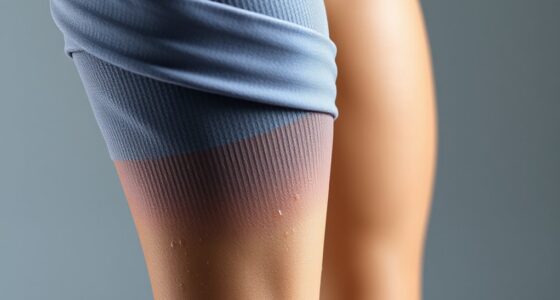
When your skirt clings to your tights, static electricity is the culprit. Friction between fabrics causes electrons to transfer, building charges that make the materials repel or attract. Synthetic fabrics like polyester or nylon tend to generate more static, especially in dry conditions. To fix this, you can use fabric softeners, static guard sprays, or attach a metal pin to discharge static. Keep exploring for more tips to prevent and manage static cling effectively.
Key Takeaways
- Static electricity builds up when synthetic fabrics like polyester rub against tights, causing the skirt to cling.
- Friction transfers electrons between fabrics, creating static charges that lead to cling and shocks.
- Using fabric softeners or dryer sheets coats fibers, reducing static buildup and cling.
- Applying static guard sprays or lightly misting tights with water can neutralize static and prevent cling.
- Increasing humidity with a humidifier or attaching a metal safety pin helps discharge static and stop skirt cling.
The Science Behind Static Electricity and Fabrics

Static electricity occurs when electrons transfer between fabrics through friction, causing surfaces to build up charge. This process involves electrostatic interactions, where like charges repel and opposite charges attract, leading to the cling you notice. The triboelectric effect explains how different materials tend to gain or lose electrons when rubbed together, creating a charge imbalance. For instance, synthetic fabrics often become negatively charged, while natural fibers may become positively charged. As you move, friction between your skirt and tights causes electrons to transfer, building up static. When the charge becomes significant enough, it results in that familiar cling or shock. Understanding these fundamental principles helps explain why certain fabrics generate static and how to minimize its effects. Different fabrics can produce varying levels of static depending on their material composition and surface properties.
Common Causes of Static Cling in Clothing

One of the main causes of static cling in clothing is wearing synthetic fabrics, such as polyester or nylon, which easily build up electrical charges through friction. These materials tend to transfer electrons when rubbed against themselves or other fabrics, creating static electricity. Using fabric softener during laundry can help reduce this buildup by coating fibers with a lubricating layer, making them less prone to static. In contrast, natural fibers like cotton or wool generally generate less static because they don’t hold static charges as easily. However, even natural fibers can cling if they’re dry or rubbed vigorously. Understanding these causes can help you choose fabrics wisely and use products like fabric softener to minimize static cling effectively. Additionally, fabric types and laundry techniques can influence the likelihood of static buildup.
Tips to Reduce Static Buildup on Your Skirt and Tights

To keep your skirt and tights from clinging due to static, applying practical strategies can make a noticeable difference. Using fabric softeners in your laundry helps reduce static buildup by coating fibers and preventing them from generating static electricity. Opt for a fabric softener or a static guard spray on your tights before wearing. Additionally, increasing humidity in your environment can considerably cut static cling; using a humidifier benefits both your skin and your clothes by adding moisture to the air, which minimizes static charge. You can also lightly mist your tights with water or wear a metal safety pin attached to your skirt to discharge static buildup. These simple steps help keep your outfit smooth and comfortable, avoiding those pesky clingy moments.
Effective Remedies for Static Shocks and Clinginess

When you experience static shocks or clinginess, immediate action can help prevent discomfort and embarrassment. Using antistatic sprays can quickly neutralize static charges on your clothing, providing instant relief. Fabric softeners, applied during laundry or as a quick spray, also reduce static buildup by coating fibers and preventing charge accumulation. Additionally, natural ingredients in some remedies can promote skin health and further reduce static transfer.
Choosing Fabrics and Accessories to Minimize Static Electricity

Choosing the right fabrics and accessories can considerably reduce static electricity and keep you comfortable throughout the day. Opt for natural fibers like cotton or silk, which are less prone to static buildup compared to synthetic materials. Fabric softening can help, so use a fabric softener or dryer sheets to reduce static cling on your clothes. When selecting accessories, choose ones made of non-static materials, like leather or wood, instead of plastic or rubber. Avoid tight-fitting garments that trap static, and consider using a metal safety pin or a small metal accessory to discharge static charges safely. Incorporating anti-static materials into your wardrobe can further help prevent static buildup and maintain comfort. Proper fabric and accessory choices can make a significant difference in minimizing static electricity, helping you stay comfortable and confident in any outfit.
Frequently Asked Questions
Can Static Electricity Damage My Clothing or Fabric Fibers?
Static electricity generally won’t damage your clothing or fabric fibers, but it can cause discomfort and clinginess. To reduce static buildup, you can use fabric softeners in the wash or apply anti-static sprays. These products help neutralize static charge, protecting your fabrics from damage and making your clothes easier to wear. Just avoid overusing anti-static sprays, as they can sometimes leave residues that affect fabric quality.
Are Some Colors More Prone to Static Cling Than Others?
Some colors are more prone to static cling due to color contrast and fabric type. Lighter shades, especially whites and pastels, tend to attract more static because they often use synthetic fabrics like polyester or nylon, which generate more static electricity. Darker colors, like black or navy, usually have less static because they’re made from natural fibers or blends that resist static buildup. Choosing natural fabrics and avoiding tight, synthetic clothing helps reduce static cling.
How Does Humidity Affect Static Buildup in Clothing?
Did you know that increasing humidity levels by just 10% can cut static buildup by about 50%? When humidity is higher, your clothes absorb more moisture, which reduces static electricity. Low moisture absorption in dry air causes static to cling more, making your skirt stick to your tights. So, during humid days, static is less likely to be a problem, keeping your outfit smooth and comfortable.
Are There Natural or Eco-Friendly Ways to Reduce Static?
You can reduce static naturally with eco-friendly remedies and natural fabric choices. Opt for natural fabrics like cotton or silk, which generate less static. Use homemade solutions like a mixture of water and a few drops of essential oil, lightly spritzed on your clothes. Additionally, placing a piece of aluminum foil in your dryer or using eco-friendly dryer sheets can help minimize static buildup, keeping your skirts from clingy surprises.
Does Laundry Detergent Influence Static Formation in Clothes?
Laundry detergent itself doesn’t directly cause static, but fabric softeners and dryer sheets do. These products coat fabrics with lubricants that reduce static buildup during drying. Using a fabric softener in your wash or adding dryer sheets to your dryer can markedly cut down static cling. Be mindful to choose eco-friendly options when possible, and avoid overusing these products to keep your clothes soft and static-free.
Conclusion
Remember, an ounce of prevention is worth a pound of cure. By choosing the right fabrics, using anti-static sprays, and grounding yourself before dressing, you can keep static cling at bay. Don’t let static ruin your day or your outfit—take proactive steps to reduce buildup. With a little effort, you’ll stay comfortable and confident, free from unexpected shocks and clingy skirts. After all, a smooth day starts with a little static-smart thinking.